Tell us a little bit about yourself and what you do.
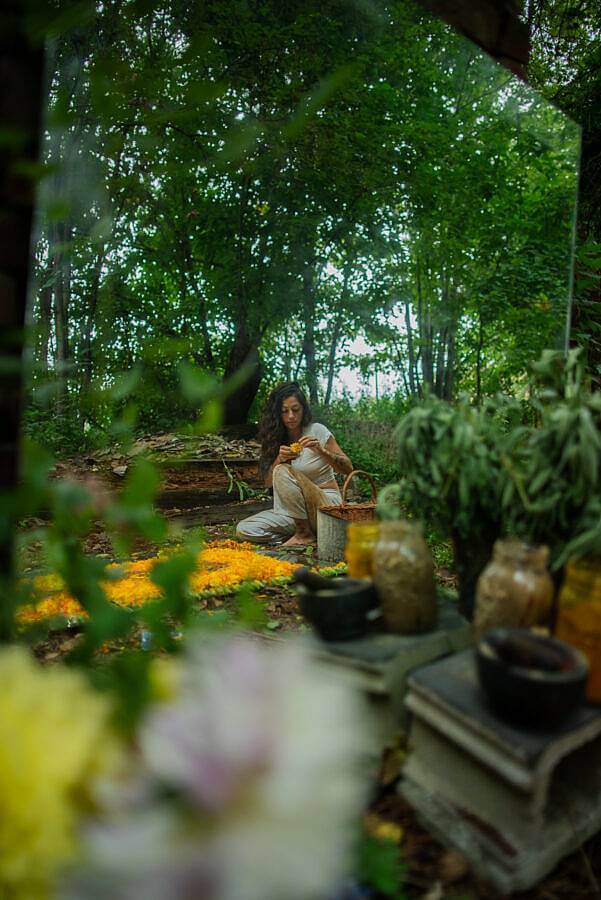
I’m a queer solo mother to a two-year-old, a grower/forager, and educator. Much of my adult life I’ve worked at the intersection of art, ecology, education, and cultural organizing.
My work as an educator has been largely in support of kids having access to cultivating a creative practice, knowing it is a portal for human development—supporting nervous system regulation, self-knowing, social-emotional connection, and our capacity to be in relationship with one another.
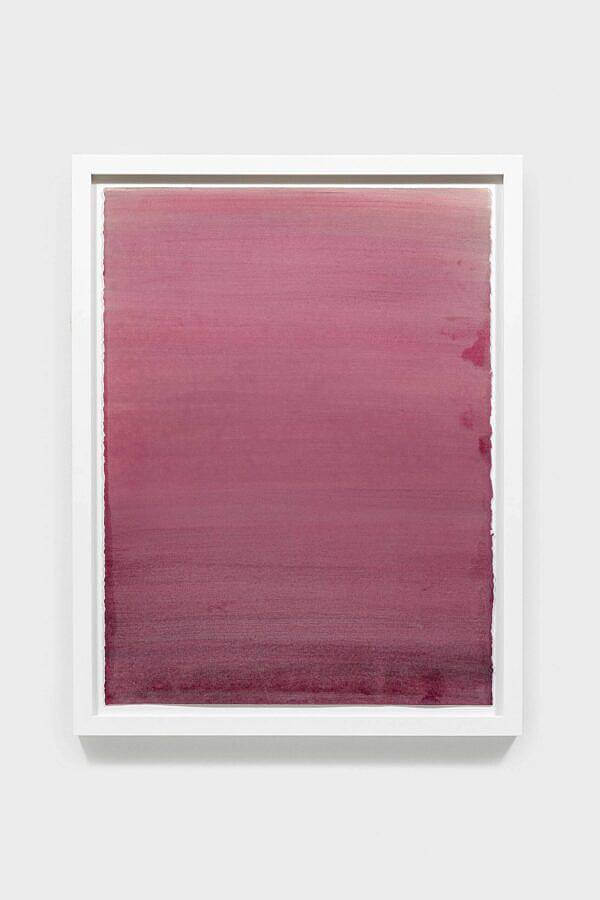
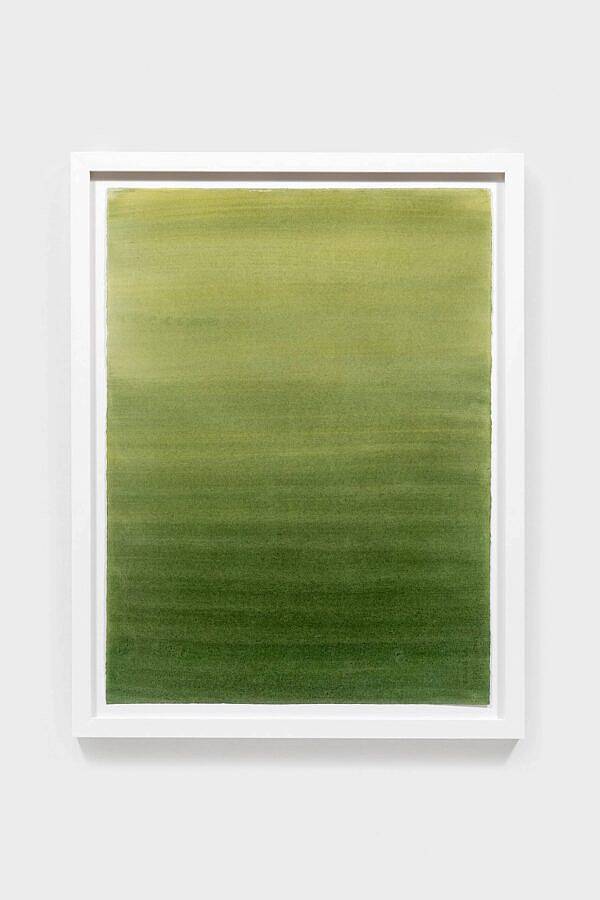
At the root of my art practice is an exploration of sensuous repair and the creation of contemporary rituals for ecological belonging. I think of sensuous repair as restoring our relationship to the world through touch, attention, material transformation, and shared experience. In a culture that often encourages speed, extraction, and disconnection, I’m interested in practices that help us remember ourselves as participants within living ecosystems rather than separate from them. I grow and gather plants, make pigments from/ with them. I find and make color through oxidation and decomposition with rocks and minerals along the waterways in the Midwest as well as discarded metal scraps from housing, industrial waste, and auto debris. Rather than imposing ideas onto materials, I try to collaborate with them, allowing their unique qualities and histories to shape the work. The resulting pieces become records of relationships between bodies, landscapes, memory, and time.
How did you get started as an artist?
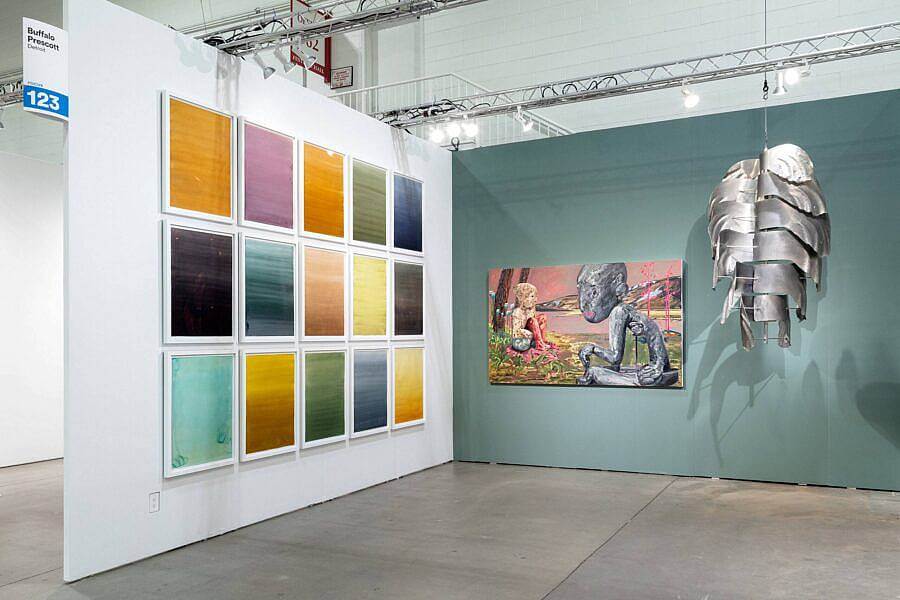
As a child I was much more drawn to live arts—dance, movement, and performance. Even though I work primarily in visual art now, I still think of myself as a movement-based artist in many ways because so much of my work is in the practice/ hope of embodiment. Growing plants, walking landscapes to gather materials, harvesting and processing botanicals, crushing stones into pigment, welding steel, or shaping sculpture all require a particular quality of presence — I’m paying attention to my breath, my posture, etc. I like having those check-ins with my body built into my practice because I am a bit dreamy and heady and need the reminders.
What is currently driving or haunting your practice?
Becoming a mother has fundamentally reshaped the way I move through the world. It’s both the force that’s driving my practice and the thing that haunts it. I think a lot about my experience as a mother being a universal one in all life giving things— and how hard it is to steward life as we are operating largely in systems of death and destruction. The experience has really reinforced my adherence to and study of ecological feminist thought— reflecting on ways mothers and ecologies are treated with similar disposability and overburdened with unending expectations. I’m interested in what it would mean to recenter matriarchal, life-affirming values—not as a nostalgic theory, but as a way of imagining and creating an alternative present and reciprocal futures. I think about care as infrastructure rather than sentiment. Reciprocity instead of extraction. Living in cyclical forms instead of unyielding expectations of production and growth. Interdependence instead of individualism. These principles shape the way I make work and the conditions I try to create around it.
I’m haunted by how disconnected many of us have become from the living systems that sustain us and from the truth and sensibilities carried in our own bodies. So much of contemporary life asks us to override our emotionality, senses, suppress our intuition, and measure and calculate value. I suppose I use art making as a playscape of resistance to those orientations. Through slow and materially focused reorientation– processes, shared rituals, and collaborative forms of making– I’m searching for ways to remember that we are all children of this big mother and need to learn how to act accordingly. I don’t expect art to solve these crises, and I know I can’t live in line with these values at all times, but I do believe it can help us rehearse different ways of living. If nothing else, it offers a space to practice the values that I want to model for my own child.
Could you tell us more about your involvement with Community as Medicine and what that space means to you?
Community as Medicine emerged from a moment of both immense hope and profound exhaustion. During the racial uprisings of 2020 and 2021, I was organizing alongside young educators and youth leaders through a partnership between two youth centered education organizations, People in Education and 482Forward in Detroit. There was an incredible sense of possibility as people mobilized and demanded systemic change. At the same time, that momentum was met with tremendous resistance, state violence, and the emotional weight of confronting generations of injustice and harm. I watched so many brilliant young people pour everything they had into movement work while receiving very little support for their own healing.
Around that time, the organizations that I was working with received some experimental funding from a local philanthropic organization to imagine what it might look like to care for the people doing that work. Rather than asking organizers to simply become more resilient, I wanted to ask a different question:
What are the conditions that allow educators and organizers to sustain a lifetime of caring for their communities?
That question became the prompt for Community as Medicine.
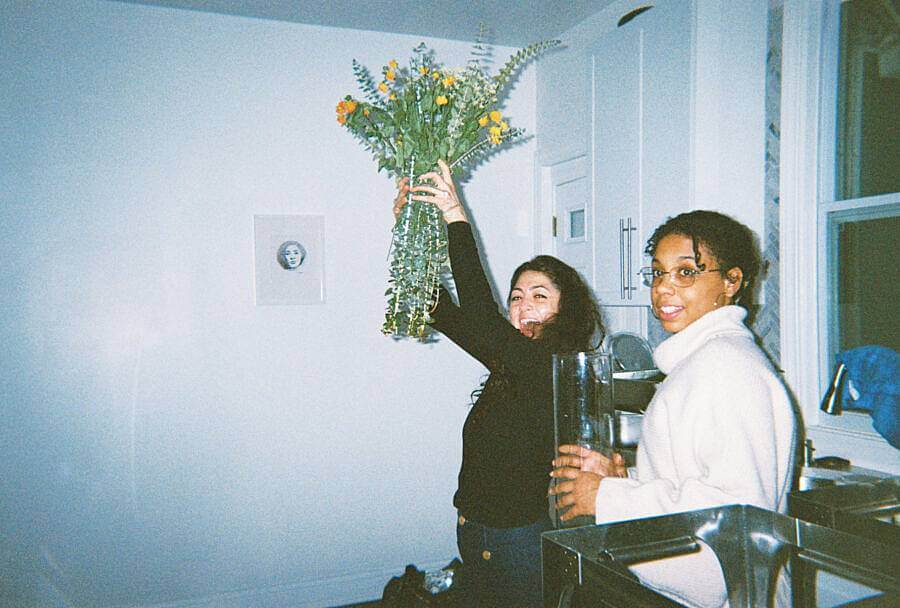
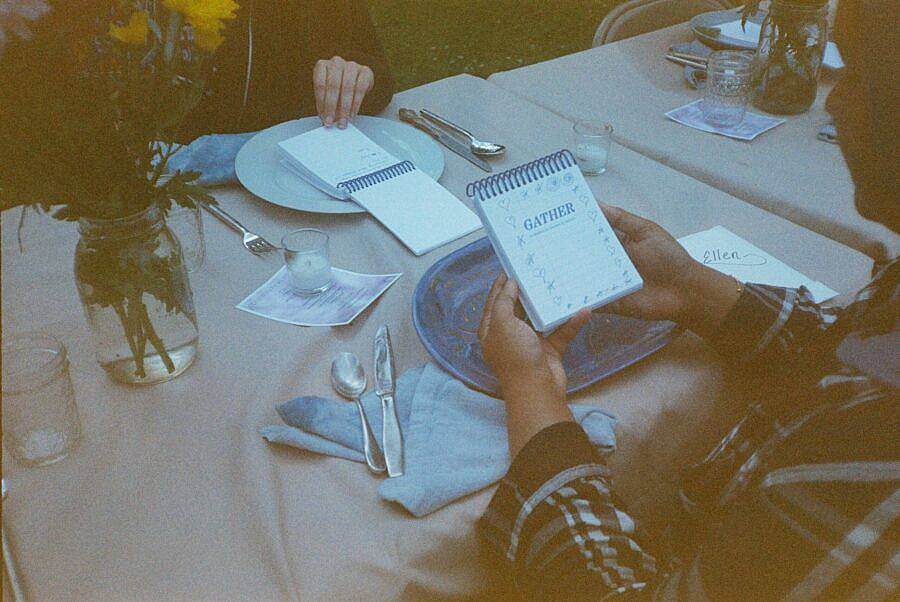
Over the next four years, the project grew into a cohort-based program for educators, artists, and organizers centered around shared meals, peer support, literary inspiration, somatic learning, and collective reflection. I had the privilege of co-creating and facilitating the program alongside artist and educator Maya Davis, whose lived experience as an early-career educator deeply shaped the project. Maya was passionate about ensuring that teachers had access to both personal and professional development, and she continually reminded us that educators deserve spaces for reflection, growth, and care—not only as professionals, but as whole people.
Together, we gathered not to become more productive, but to practice being human together. to build relationships rooted in trust, vulnerability, curiosity, and joy. We explored nervous system regulation, storytelling, conflict transformation, ritual, and the role of creativity in helping us imagine more sustainable futures for educators, caregivers, and organizers.
Describe your current studio or workspace. (Please provide a photo of it if you have one!)
My primary studio is at Buffalo Prescott in Detroit, an artist-run space that has become an important home for my practice. It’s part studio, part gathering place, and part gallery. I have been a resident there for nearly a year!
What I’ve appreciated most about Buffalo Prescott is that it values process as much as finished work. It has given me the space to move fluidly between mediums while being surrounded by artists whose practices challenge and inspire me. I’m deeply grateful to all of the people of BP!!! Especially thankful to my fellow residents, Jessica Wildman Kats and Halima Afi Cassells, whose friendship, conversations, and brilliant practices unfurl alongside mine in the space.
Can you talk about your relationship to craft and using craft techniques to create art with conceptual meaning?
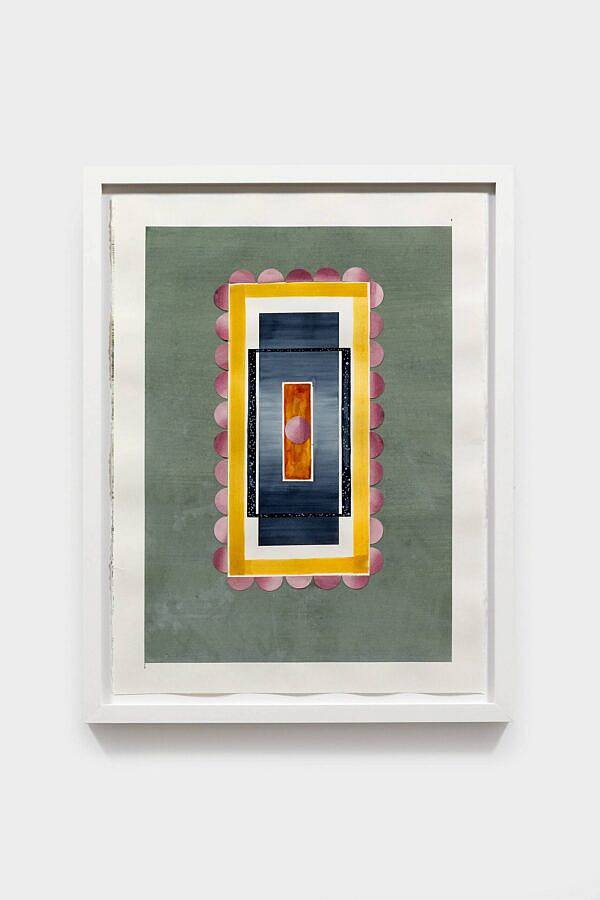
I’ve been especially influenced by Persian flatweave textiles, which are part of my cultural inheritance. What fascinates me about these traditions is that they carry generations of ecological, cosmological, mathematical, and cultural knowledge within everyday acts of making. The dyes come from plants, insects, and minerals gathered from specific landscapes. The woven forms record migration, memory, family, and place. They’re both utilitarian objects and living archives, collapsing distinctions between art, craft, design, and daily life.
That understanding has profoundly shaped my own practice. I’m interested in how knowledge is carried through the body and transmitted through repetition, touch, and material intimacy. I think many traditional craft practices ask us to develop relationships with time, with place, and with the more-than-human world in ways that our contemporary culture often overlooks. I see myself participating in a lineage of embodied knowledge. I’m interested in how these traditions can evolve with all the change happening rather than simply be preserved. What might a contemporary ritual of natural dyeing look like? What stories might locally sourced pigments tell? I guess that is why i am interested in working with things I find on belle isle right now. Like, instead of this cultivated practice of working with traditionally used pigment making plants- what happens when I integrate the industrial waste that is so prevalent into the conversation of landscape? What is my depiction of landscape is more honest? Its crumbling housing washing up on shore line, its automotive parts that have been discarded along alleyways, its invasive species creeping into our parks and prairies. Its How can we make with this ecosystem? What happens when we do?
How has your work shifted or evolved over time?
My work has shifted significantly over the past several years, but the most important change has been less about materials or form and more about my relationship to my own voice.
For a long time, I was deeply immersed in other artists’ work, movements, and institutional frameworks. That engagement was meaningful, but it also made it difficult for me to fully hear or prioritize my own practice. I was constantly in dialogue with external references, which sometimes overshadowed the quieter internal signals of what I actually wanted to make.
Over the last five years, there has been a gradual but profound shift toward rooting more fully in my own lived experience, interests, and intuition. I’ve been learning to trust that what I am drawn to—ecologically, materially, emotionally—is valid as a foundation for a practice, even when it doesn’t immediately align with dominant trends or expectations within contemporary art.
As that shift has taken place, my work has become more embodied and relational. In many ways, I see this evolution as a process of unlearning as much as learning. It has meant stepping away from the pressure to situate my work primarily through other people’s language, and instead developing a practice that is grounded in sensuous attention, ecological relationship, and a growing trust in my own way of seeing and making.
The work is still evolving, but it now feels more anchored: less about responding outwardly, and more about listening inwardly and maybe outwardly at the same time.
What is something you want to see more of in your world or in your community?
I’d love to see a cultural shift away from disposability. I don’t just mean our relationship to consumer goods, although that’s certainly part of it. I mean the broader mindset that treats people, human and not, as interchangeable/expendable. I want preciousness back.
Can you tell us a memory of someone interacting with your work that lingers with you?
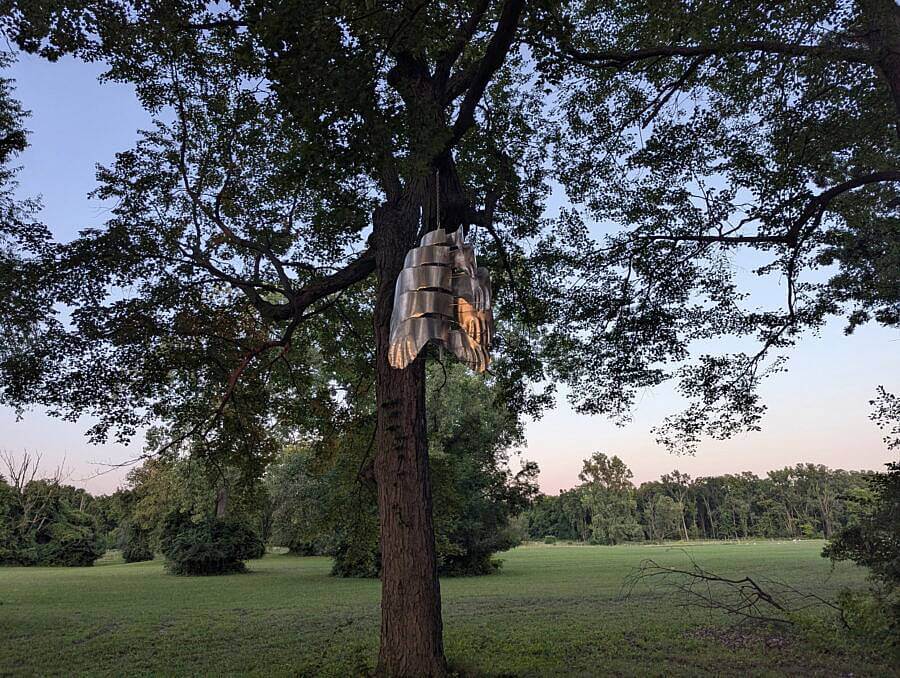
One memory that stays with me comes from installing my Samara sculptures at Eliza Howell Park for Sidewalk Detroit in 2025. I had imagined the work as something people might encounter while wandering through the woods—an unexpected interruption in the landscape. I was curious about those solitary moments of discovery, where someone might stumble upon the sculpture and spend time with it quietly, in their own way.
However, rather than passing through briefly, people often chose to stay. I would return to find individuals sitting beneath the sculpture for long periods of time, sometimes treating it almost like a shelter or gathering point. At other moments, people brought instruments and played music alongside it. That memory has stayed with me. It reminded me that even when I design something with a particular intention, the work ultimately belongs to the social and ecological context it enters.
Are there any recent, current, or upcoming projects that you’re excited about?
I’m currently really excited about a series of sculptural renewable-energy prototypes that transform wind into stored power. The project exists between kinetic sculpture and ecological infrastructure, and explores how small-scale energy systems might become sites of collective imagination and infrastructure rather than hidden industrial utilities.
One of the current installations within this series is being developed in collaboration with Women of Banglatown in Detroit, where I’m integrating a wind-powered sculpture into their garden that also supports a rainwater irrigation system. The work brings together several threads that have been central to my practice for a long time: ecological reciprocity, embodied technologies, and the idea that sculpture can be both symbolic and functional.
What feels especially meaningful about this project is that it is embedded in an already thriving ecosystem of care, education, and collective practice. Women of Banglatown has built a space where art, food, youth leadership, and ecological stewardship are already deeply intertwined, so the work is not being introduced into a passive environment—it is entering an active, living system of relationship.
What do you collect?
Oh my, what don’t I collect? I am currently collecting a lot of fresh water muscle shells with my daughter Juna and thinking about how bivalves are their own little water filtration system.
Interviewed by Seth Nguyen.