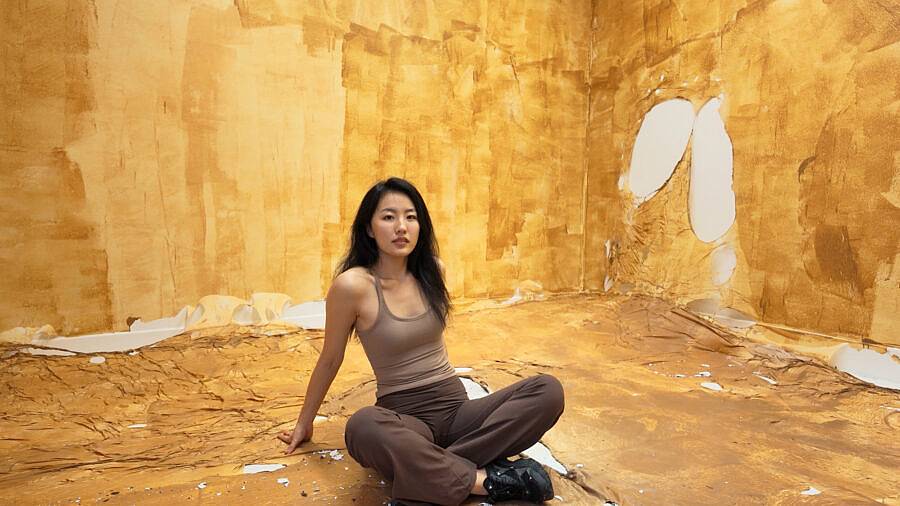
Tell us a bit about yourself and what you do.
I am Xing Raffaella Chen, currently pursuing my MFA degree at the University of Chicago. My main practice is performance and performance installation. I used to be a trainee in the Asian idol industry, then I went to Toronto for my undergraduate degree, that was when I first encountered contemporary art and performance art and began experimenting with using my body. I love cats, I hope one day I can use my body as my cats!
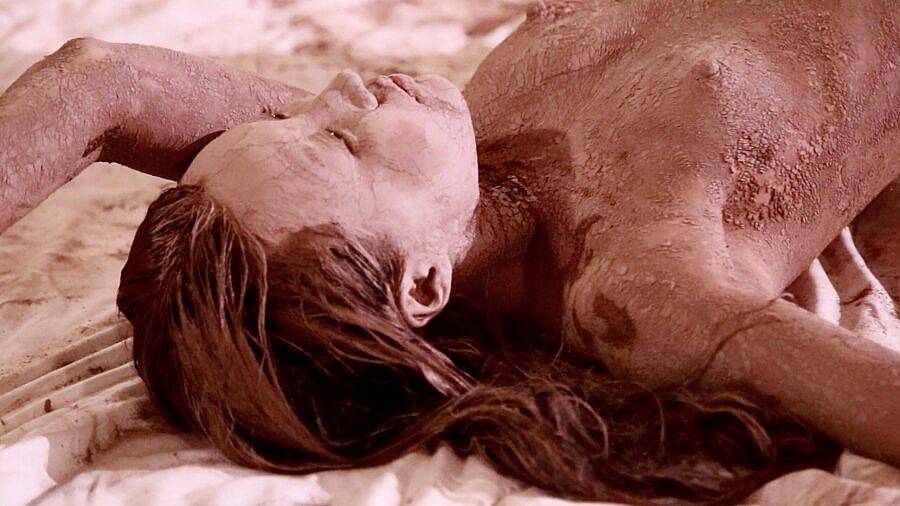
When and how did you decide you wanted to use movement to express your ideas?
When I left the idol industry, I was lost for a while. The industry exposes my body to the public, but not fully. They want the audience to love my body, but they want me to hate my own body, so that we would constantly trying to improve ourselves to catch up to their standards. And by then, I had already become a strange symbiosis of two opposing ideologies: one part of me had completely absorbed the habits of the industry, which were deeply rooted in my everyday life, while another part desperately wanted to escape those distorted standards. Then I realized that my own self was already an interesting material. My body was already carrying the contradiction I wanted to talk about. The movements I learned could be my most powerful forms of expression.
I always feel that humans are only using 30% of the body’s potential. The body is capable of saying much more than what we normally ask it to say in everyday life. It is the most direct and immediately resonant material we have. Unlike other art practices, performance can begin at any moment, because your material is already with you, and I find that extremely charming.
But there is also a contradiction. When humans push the body toward certain extremes (athletes, dancers), injury almost always comes with it. So I sometimes wonder if this is why people think performance art usually comes with discomfort, and that keeps me exploring with my body for an answer.
You work within a variety of mediums, spanning from performance, sculpture, video, and so on. How do these varying mediums inform and affect each other?
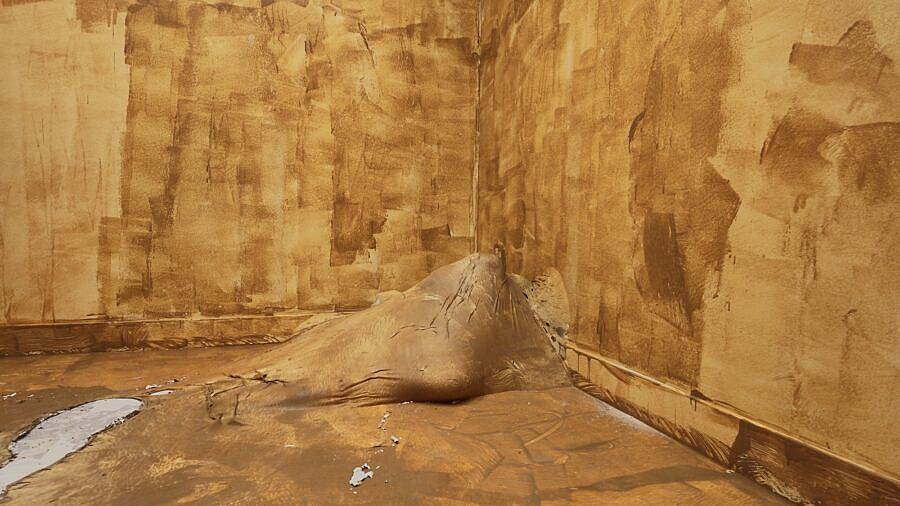
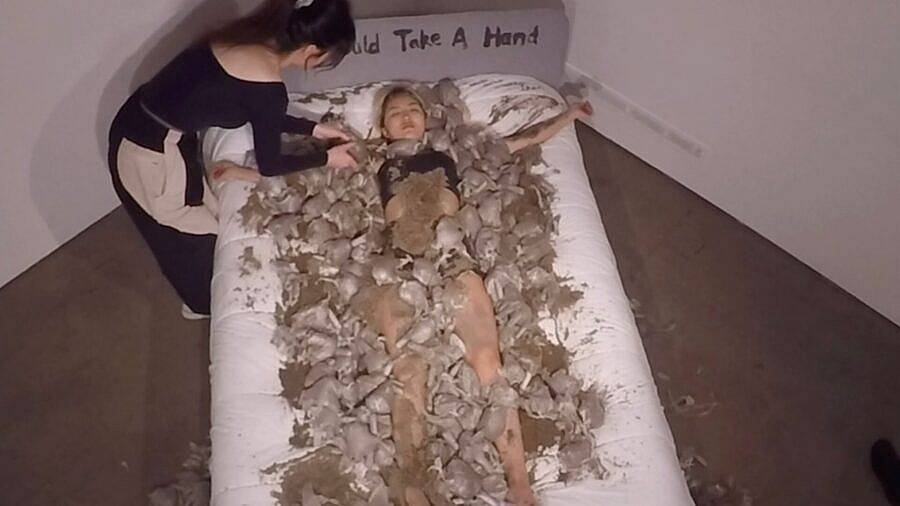
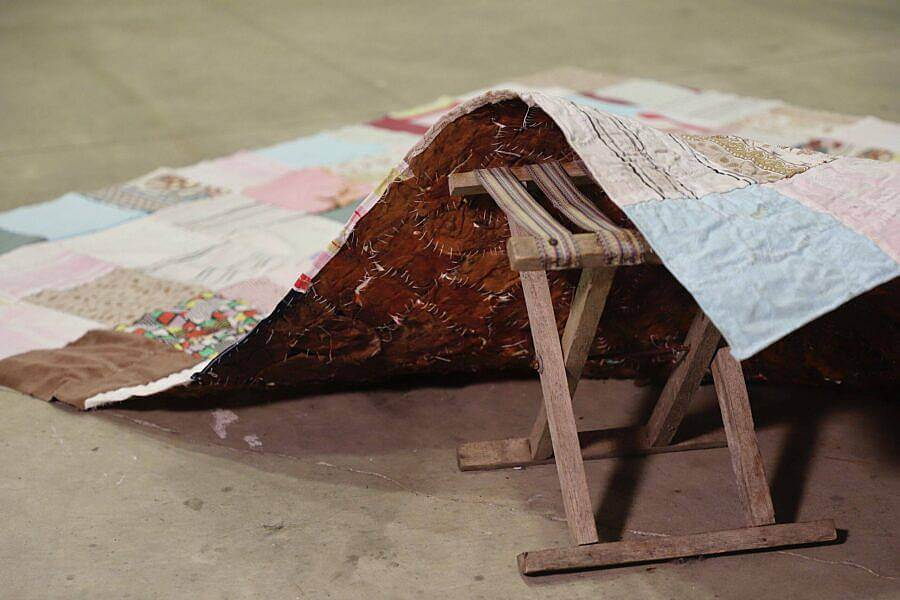
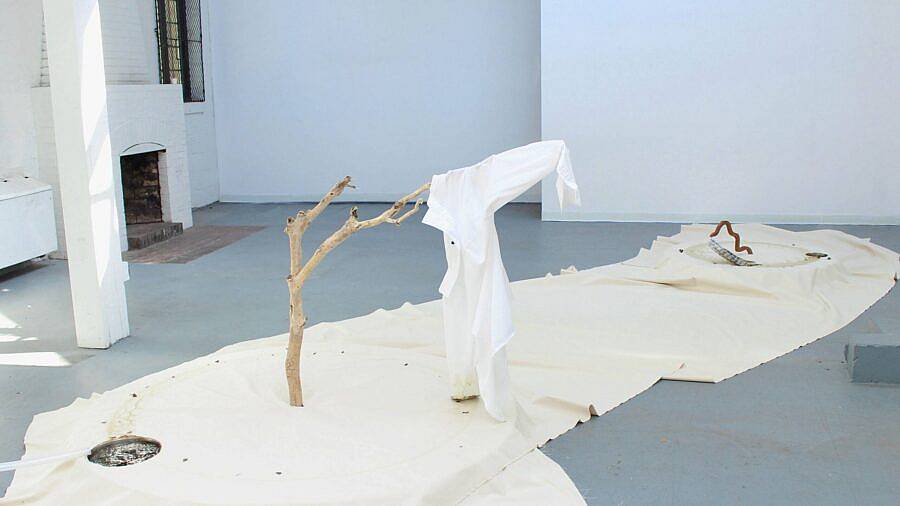
Performance and physical material will always come first for me. Video and photography feel more like extensions of the documentation of my performances. They play as the honest evidence that the action really happened, but at the same time they try to extend themselves into an aesthetic and artistic level, developing a new personality and eventually becoming independent works of their own. Video and photography are also very tricky for me: because there is so much room to edit, there is also room to cheat. They are different from live performance or sculpture with almost no distance between me and the audience. My sculptures are usually the living objects after my performances, so my works are more like a collection that starts from my performance, while other forms become related as a series.
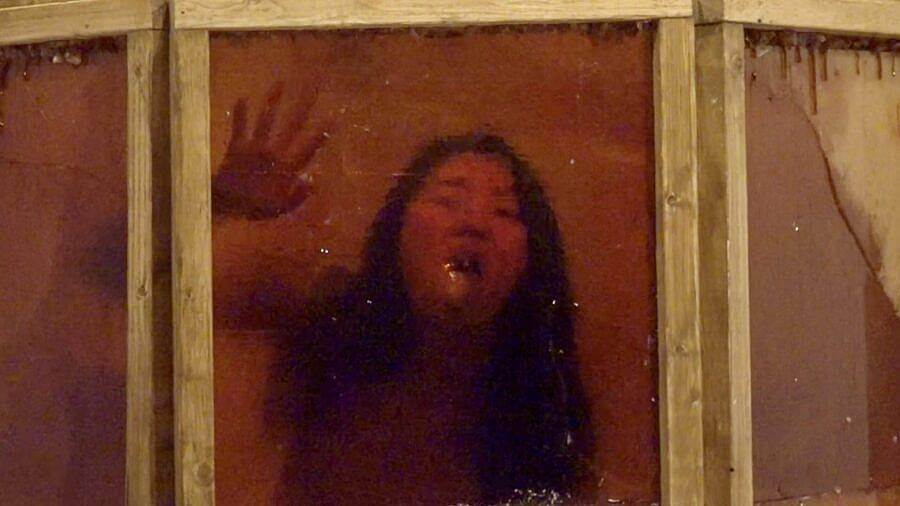
Your performance-installations, The Eighth Day (2026), consist of sugar sculptures, some of which encase you partially or completely. Can you tell us more about this body of work? It seems extremely resonant with your experience as an idol trainee in Asia, and I’m curious to learn about influences that aren’t as readily obvious.
The Eighth Day is very closely connected to my personal experience in the idol industry and my culture. Sugar usually represents reward in my childhood. If I behaved well, my parents would give me candy or ice-cream. But when I entered the idol industry, sugar became something almost completely forbidden because of the extremely strict body management. Sugar increases body weight and accelerates skin aging. I used to hide in the stairwell to eat a small piece of cake so our agents could not see me eating sugar. Eating sugar became almost guilty.
But what is interesting is that the human body does not actually need this kind of produced sugar in order to survive. Refined sugar exists largely only because of desire and pleasure. Humans have invested an unimaginable amount of labor into producing it, and now we have become equally obsessed with controlling how much of it we consume.
This contradiction became very interesting to me. Since I am free to eat sugar now, does it really make me happy? In The Eighth Day, I have to continuously lick the sugar away for fresh air and clear sound. The sugar becomes a beautiful and glossy filter: no one could clearly see who is in the sugar. It is only a female body trapped between the extreme production of pleasure and the extreme control of pleasure.
Do you begin working on a piece with a mental image, a composition plan, a mood, atmosphere, or a state of mind that you want to evoke?
Most of my works begin with feelings, something difficult to catch and hard to touch. I am the kind of person who is extremely sensitive with all five senses, and I also experience strong synesthesia, like beginning with smell or touch and suddenly connecting it to an image, a color, or another sense. Synesthesia is also a rhetorical device I use very frequently in my writing. I think it is simply one of the ways I experience and understand the world.
Interestingly, my ideas often appear when I lose my logic completely and start relying only on instinct. Sometimes when I drink a lot, I can see many new sentences and ideas in my notes when I wake up the next morning and have absolutely no memory of writing them.
What is currently haunting and driving your practice?
I think my fear of time keeps pushing my thinking. I have always been working on subjects of aging and death, and the last 2 years have been a transition of my life stages, where losing time and people in my life has started to become real. This makes me think differently: a memory might not be only fading—it may have been lying from the very beginning. This suspicion towards what is supposed to be real has changed how I look at the world and at time.
How has living and working in Chicago affected your practice?
I absolutely love Chicago. Moving to Chicago has been a completely new life. The vibe of this city matches me so well. I am quite introverted, but I enjoy living inside a quiet little room while watching something lively happening downstairs. That distance makes me feel secured and hopeful, and Lake Michigan is exactly like that for me! Chicago allows me to adjust my creative rhythm according to what I need, it makes me feel very comfortable expressing myself without needing to force my work into one particular language.
Are there any areas, techniques, or materials that you’re interested in exploring further in your work?
I urgently want to learn more about sculpture and large-scale installation, especially mechanical systems and materials.
Can you share a reaction to your work that has lingered with you?
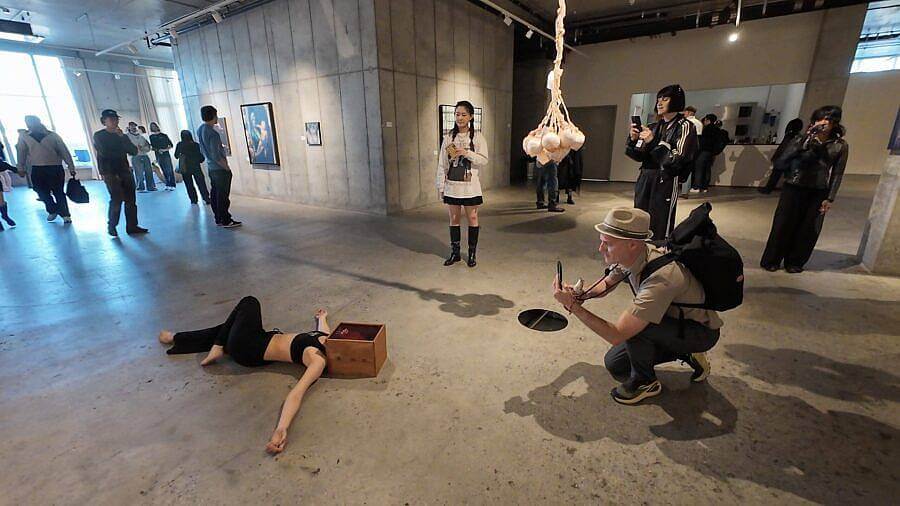
I usually do not think of my work as necessarily expecting the audience to have one particular emotional reaction. But since I do many live and interactive performances, I receive the audience’s instant reactions very directly, and I like it a lot when audiences try to talk to me. During I Do Not Have to Know Who You Are, I was not allowed to speak, but many audiences still try to talk to me. I was curious about it. Instead of simply leaving comments, some people actually stand in front of me and begin sharing their feelings. They started a whole conversation, and all I could do was blink my eyes~
What are some recent, current, or upcoming projects that you are excited about?
I just finished an installation where I was not physically performing in it, but the installation itself was performing. I managed to design and build the entire rotating and boiling mechanical system by myself. And it is big!
My next projects for the coming year are also all getting bigger—occupying entire rooms, involving long endurance over several hours, more interaction, more risks, and I am looking forward to it.
Interviewed by Seth Nguyen.