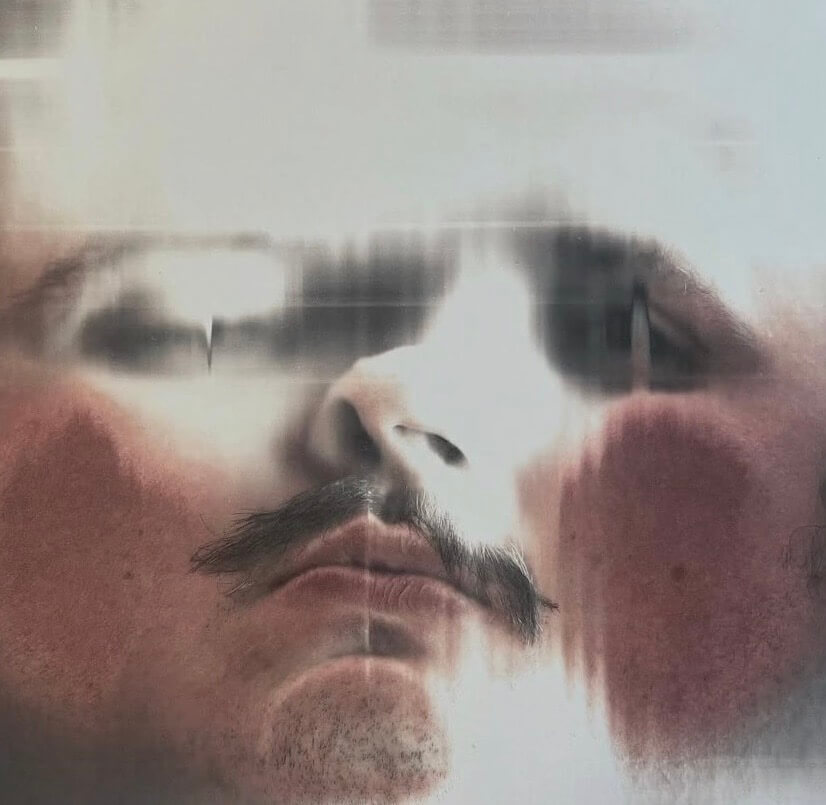
Tell us a little bit about yourself and what you do.
My name is Liam Owings. I’m an artist currently based in Chicago, Illinois, United States of America. I’m from a place called Kansas City, Missouri, which is also in the United States of America. I make things.
What kind of imagery are you drawn to?
I’m drawn to characters, icons that persist throughout culture and media. I like Mickey Mouse and Jesus Christ and Doraemon and Betty Boop and Santa Claus and Cleopatra and Felix the Cat and Ganesh and Looney Tunes and Batman and so on. It’s archaeological, it’s anthropological, it’s like one big religion. It’s violent, it’s forceful, it’s sexual. They’re my friends, and they mean a lot to me, even if they’re always trying to peer pressure everyone. There are symbols of propaganda everywhere.
Is there a phrase or idea that feels especially relevant to your practice at the moment or that resonates?
In 1994, Critical Art Ensemble presented the Anti-Work Show hosted by Dia Art Foundation and Printed Matter, writing the text, “If the traditional location for deploying power has been abandoned, where has power moved? If we assume that the flow of capital is still crucial to the present system, then there is a trail to follow. (Un)common sense tells us that we can follow the money to find power; however, since money has no point of origin but is part of a circular or spiraling flow, the best we can expect to find is the flow itself. Capital rarely takes a hard form; like power, it exists as an abstraction. An abstract form will probably be found in an abstract place…” It reminds me of that Bruce Lee quote, “Empty your mind. Be formless, shapeless, like water. You put water into a cup; it becomes the cup. You put water into a bottle; it becomes the bottle. You put it into a teapot; it becomes the teapot. Now water can flow or it can crash. Be water, my friend.” It’s an interesting way to consider how structures of power formulate throughout history.
Does your work as an art handler have a significant influence on your approach to sculpture?
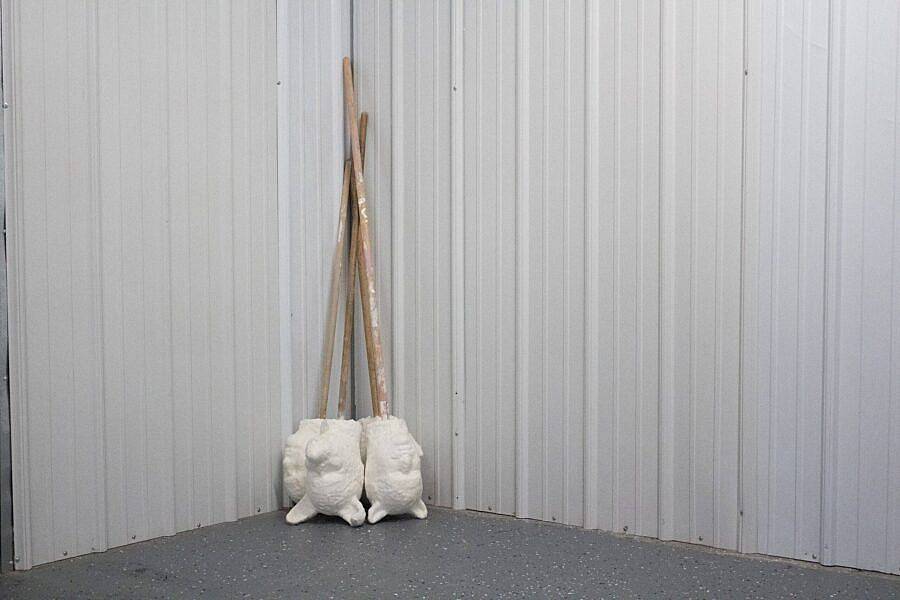
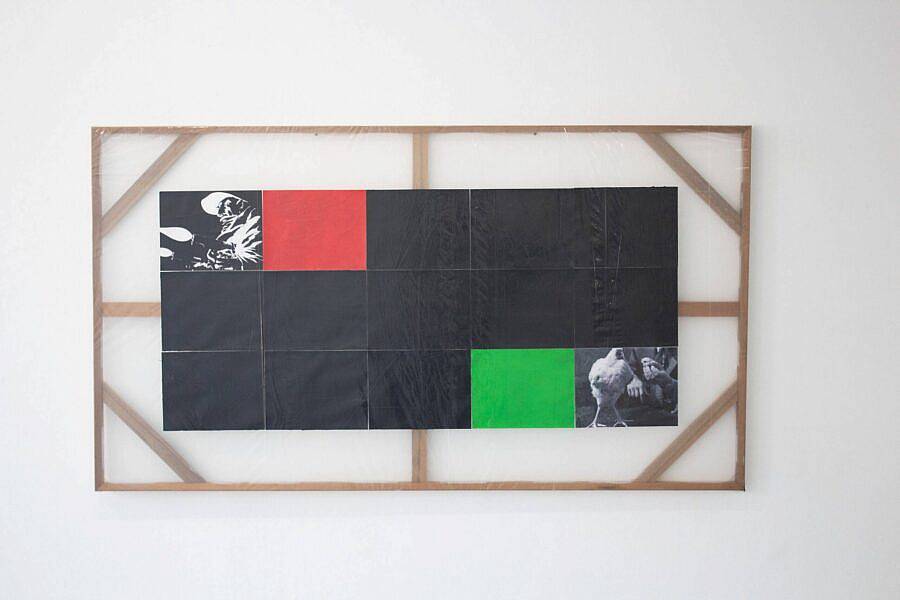
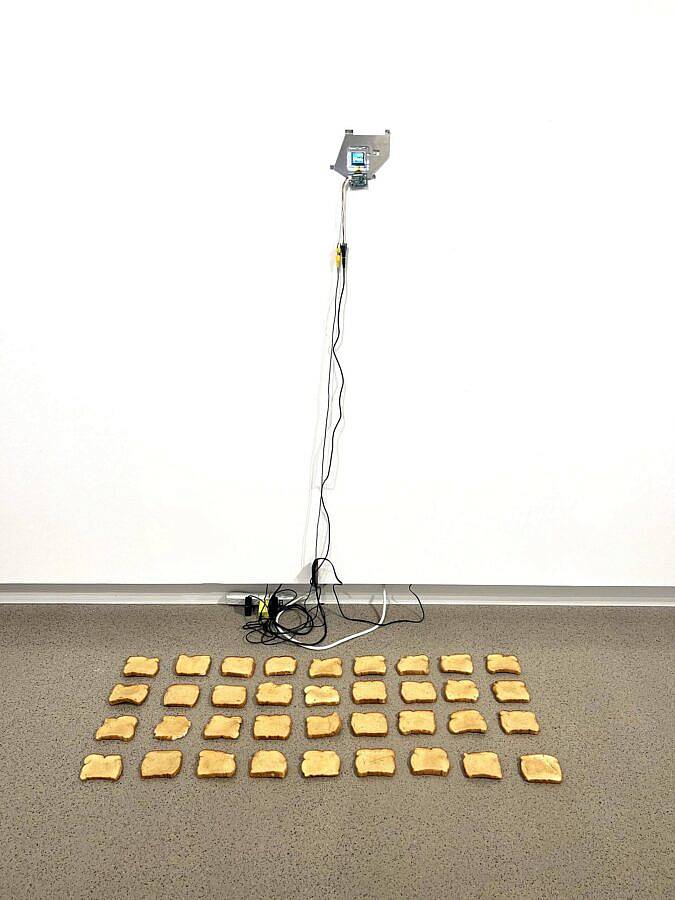
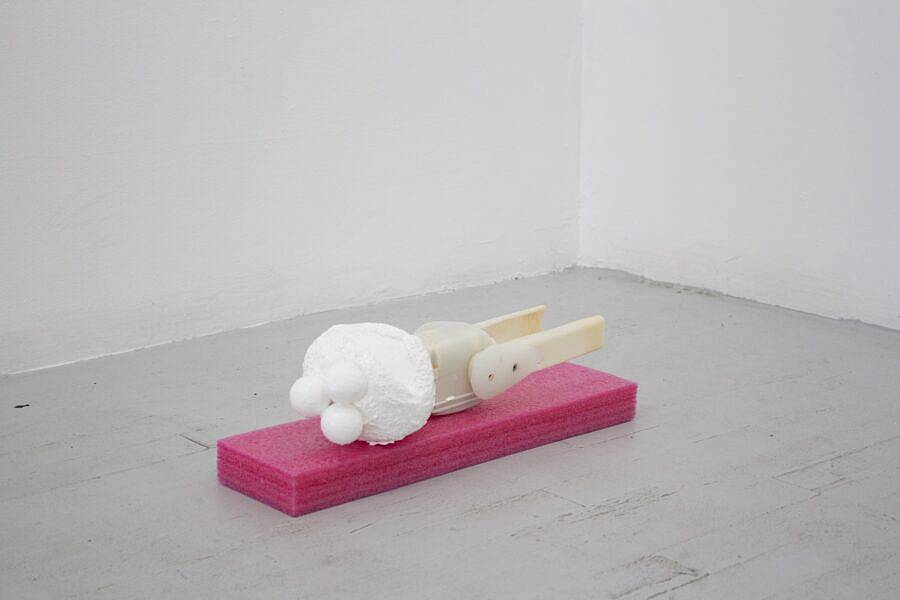
Every day I witness artworks circulate through environments where the labor and infrastructure are largely invisible. I use a lot of discarded exhibition materials in my work to trace institutional histories as broader structures of power. All the wood I use is from broken down crates transporting artwork across the world. I constantly collect vitrines and armatures when they’re surrendered. Everyone I work with knows that I take any trash that’s discarded. Art fairs are the best for this. My studio is always filled with sheets of acrylic.
Does irony or contradiction play a role in your conceptual process?
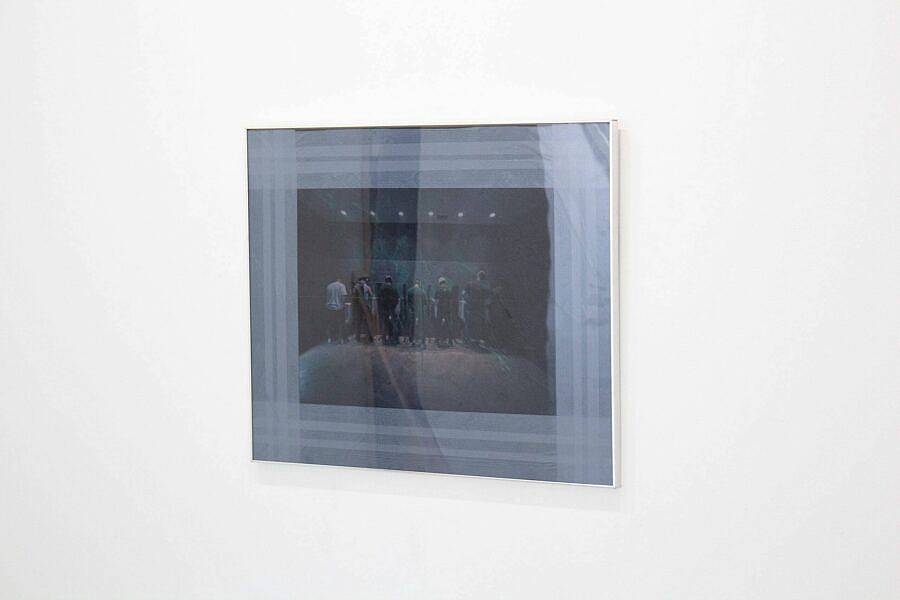
I would say it does in the same way early Internet artists engaged with corporate aesthetics in the 90s and early 2000s. A lot of this work is satirical in a way that’s been critiqued as accepting of the status quo, but as net/web art historian Michael Connor writes, “work produced in this vein can also be understood as attempts to negotiate and disidentify institutional expectations that consumers behave in quantifiable, manageable ways.”
Your titles are often evocative and full of interesting references, when does a title usually come to you?
I just take a lot of notes. When it feels like something needs to be titled, I usually reference whatever I’m reading, and if that’s not relevant, I just flip through my sketchbook which is mostly filled with words. Most of the time I leave works untitled, unless it’s truly a project that’s referencing something specific I’ve been thinking about.
What’s been inspiring you lately?
The Acme Corporation, the Red Army Faction, Eichmann’s cage, the Demon Core, objectum/objectophilia, Fröbelgaben, the alchemical symbol of a green lion eating the sun, love, how humans see through our eyes and our brains.
How has your work evolved over time?
Growing up watching cartoons and reading comics was my biggest influence. I used to only draw until I moved to Chicago seven years ago and started experimenting with sculpture and learned how to paint. I still draw and make comics mostly in secret, but my practice has evolved from illustration into fine arts. Now I make things that take up space in the world.
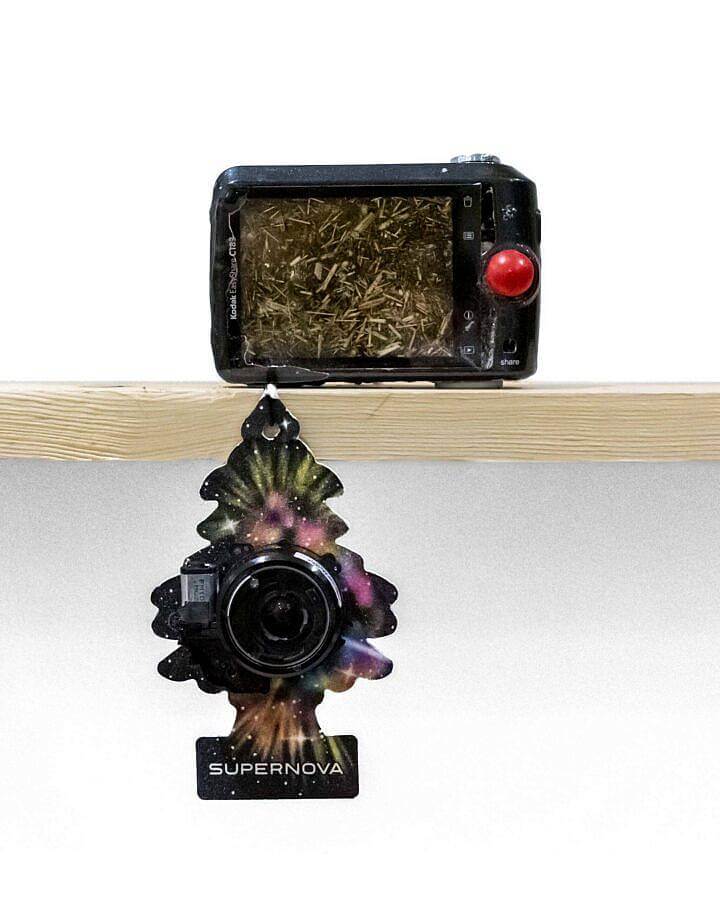
Untitled, 2026, camera, air freshener, mugwort, skittle, 8 inches by 6 inches by 2 inches.
What is your studio or workspace like?
I like to live in a small space, but it’s ideal for me to have a large studio. I have to be able to see everything I own at once. And collecting is a large part of my practice. You never know how some random piece of trash might become a part of the work. I keep my space very clean and organized for this purpose, but if I didn’t, you might think that it is just a storage space for trash.
How important is experimentation in your work?
My entire practice is experimentation. I’d argue that everyone’s is. Everything I do is trying to figure something out, and I hope that looking at it is that way too.
Tell us about a recent and meaningful experience you had with a work of art.
Lately I’ve been watching Matthew Barney’s Cremaster series. He doesn’t want you to watch it outside of a theater, which would definitely be ideal, but I found some files like ten years ago that someone ripped from VHS tapes that I finally got around to watching. I’m sorry, I know that’s wrong, but I need to see them. They’re fucking crazy. I also have this Paul Thek book I decided to flip through recently, but the whole thing is in German, so I can’t understand it. That happened to me with a Duchamp book a few weeks ago too. I don’t know why this keeps happening to me. The work is phenomenal though.
What do you collect?
I collect a lot of things, but I usually answer this question by saying that for the last five years I’ve been collecting hot chip bags. I have over three hundred hot chip bags, and they’re all different.
Interview by Paul Fitzpatrick