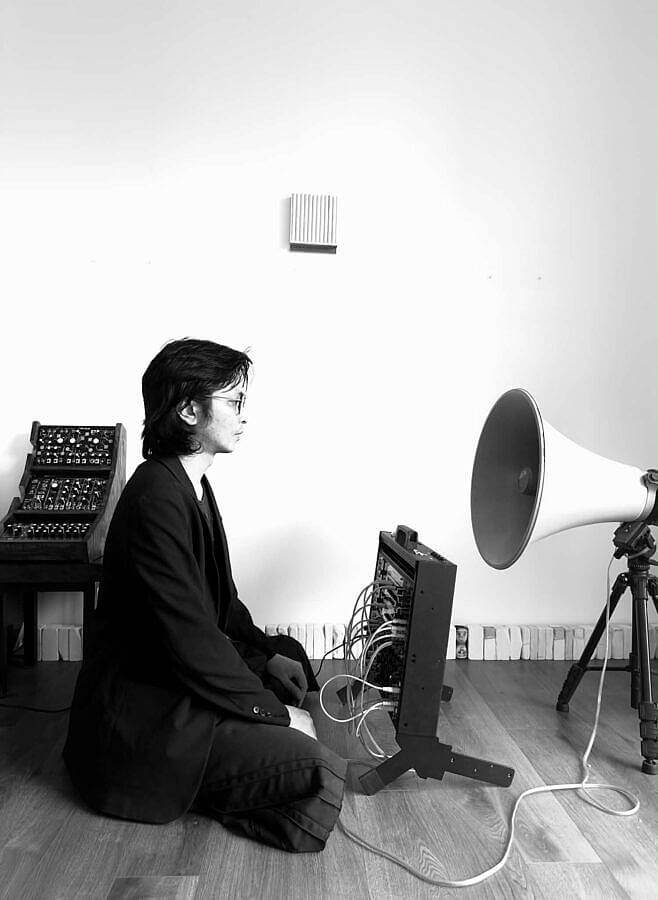
Tell us a bit about who you are and what you do.
I’m a full-time artist who conceptually works with multiple media. My main practice is to copy other artists and recontextualize them. To be able to copy as many artists as possible, I expose myself in various scenes to learn their techniques and to know why they did that. I try my best to stay away from a style which could make me an Instagram artist.
Is there a moment you look back upon as being foundational to your practice as an artist?
When I was about 10, my friend lent me a VHS of the Titanic movie. That was the first time I saw a naked Western woman and she was so beautiful that I then told my mom that I wanted to be Jack in the movie. My mom told me the first step is to take a drawing class. That has followed me till now.
How would you describe your engagement with formalism?
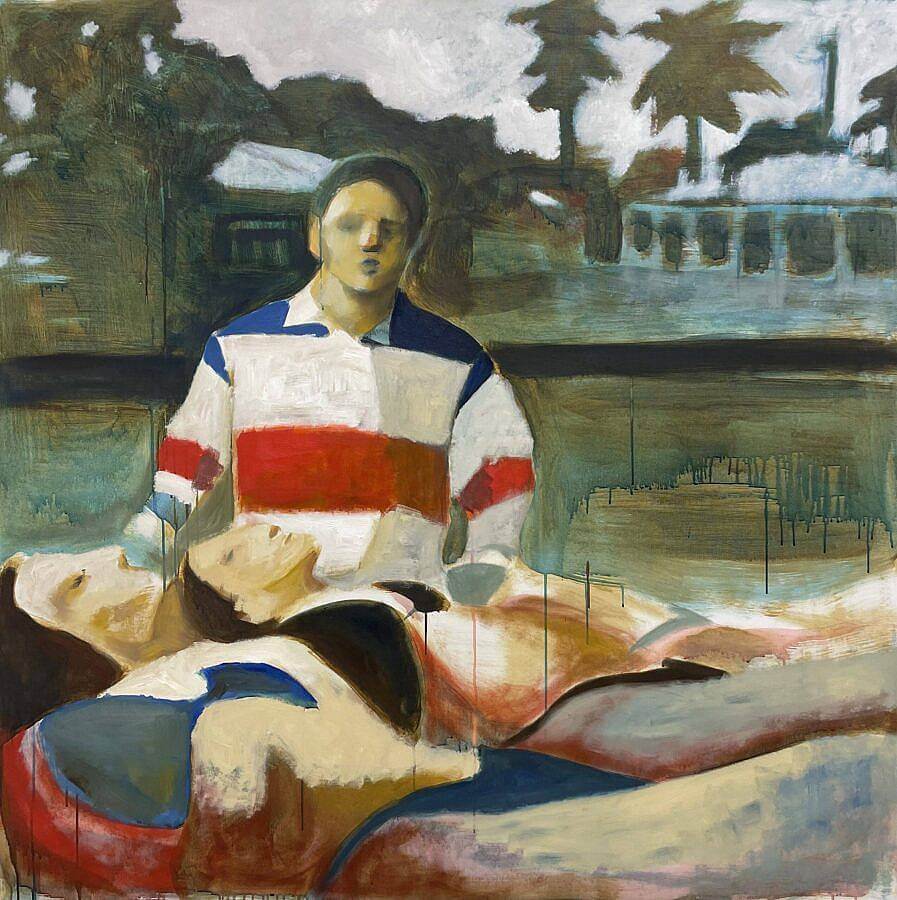
I saw the form in a serious way when I started collecting Rick Owens clothing 5 years ago. When you wear something on your body, it is not that you show people that you are cool but instead you feel the material and the pattern of it and you get into a conversation with the designer. I then walked around Chicago and searched for brutalist architecture to feel the vibration to the clothes that I’m wearing. But the moment that sparked me was when I sat for an hour at Agnes Martin’s work in the AIC museum wondering why it is so great. I then realize that the work is so humble that it makes people who walk by it more beautiful instead of screaming out loud. It feels like a household object instead of a piece of art. With that influence I went back to my studio and got rid of all my narrative painting which caused me trouble mentally for a long time and instead made more “household” objects.
What prompted your shift from painting to live audiovisual performance?
To continue my previous answer, at the time when I’m making those household objects, I worked as a TA for a painting class and all I got to do each day of work is to repeatedly clean brushes, stretch and gesso canvasses, and clean palettes….Those boring work resonated very well with my process of making objects. I wasn’t interested in my ego anymore but instead was curious about other students around the school, and I wanted to see and learn about what they do. I met Ian Kang from the Film and Video department and we started to jam together on my 100$ Korg sampler I bought on Black Friday. We then created a group of students named WNTSAD (now changed to Veryveryvery.online) with 5 fixed members including me, Ian Kang, Syd Ross, Owen Lee and Yi Yi to do live A/V around that school year. At the same time, I started to learn electronic music with Nic Collins and got some ideas of making and using sound for different purposes, not just about making music.
What have you been reading or listening to lately?
I read manual books from those modules that I bought and listen to the sounds they make.
Describe your current studio or workspace. (Please provide a photo of it if you have one!)
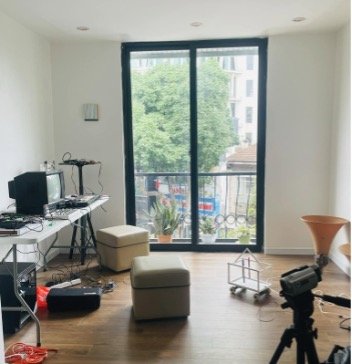
My current working space is quite tiny but it is located in the city center where I can find anything just by walking. I try my best to make it close enough to my studio in McLean Center with a wooden wall that I can flexibly nail and stack stuff on and easy to repaint. Also this studio can be transformed to a residency space. I’ve made an announcement on my Instagram that it will be free for any SAIC student who comes to Hanoi, Vietnam. So far since the announcement, I’ve hosted 4 SAIC students and my best roommate friend Pedro Trueba will come at the end of this year.
What was the last thing that you changed your mind about?
The last thing that makes me think about it is the conversation with a Vietnamese movie director about the use of Vietnamese images and symbols in art. My idea is that young Vietnamese artists use their culture to satisfy the Western demand and I am super disgusted by that, but the director said that I should stay out of my art circle for a while and go out to another city and live with the people and hear their story, maybe I’ll change my mind. I don’t know.
Tell us about your latest solo show, Cộng hưởng hài âm (Harmonic Resonance), which opened in May at Mơ Art Space in Hanoi.
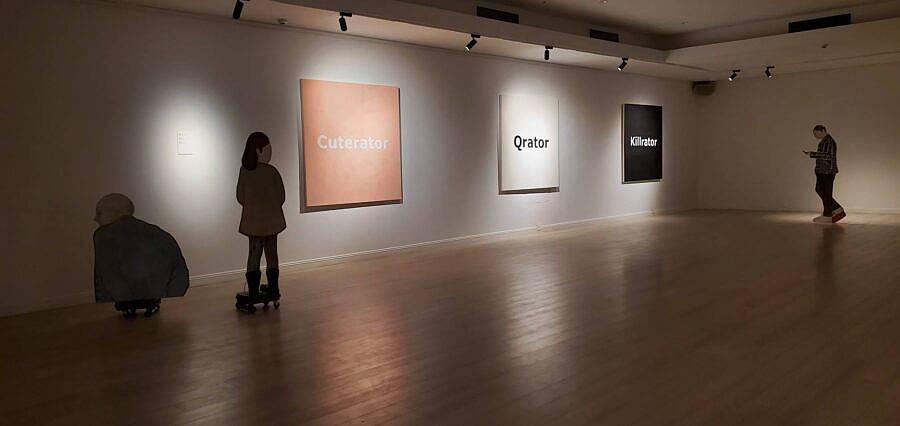
I’ve worked with Duc, the owner of Mơ Art Space 5 years ago for my first solo painting show. It’s very easy talking with him since we’re the same age (both of us are dogs in Vietnamese sign calendar and dogs represent loyalty). After I came back to Vietnam, he asked me to do another solo show at his place knowing that it would be a risk to make a conceptual show. So I came up with an idea I’ve thought about for a long time but have no space to do. I have been attracted to the way the institution photograph their art space with a serious looking figure walking by a painting leaving behind a trait by long exposure of the camera shutter. I wonder why it became a trend? What is the position of that figure in the picture? Are they there to measure the painting scale or measure the value of that painting by the dress they wear? What if there are no paintings to see and all you see are people moving inside the space in a random direction.
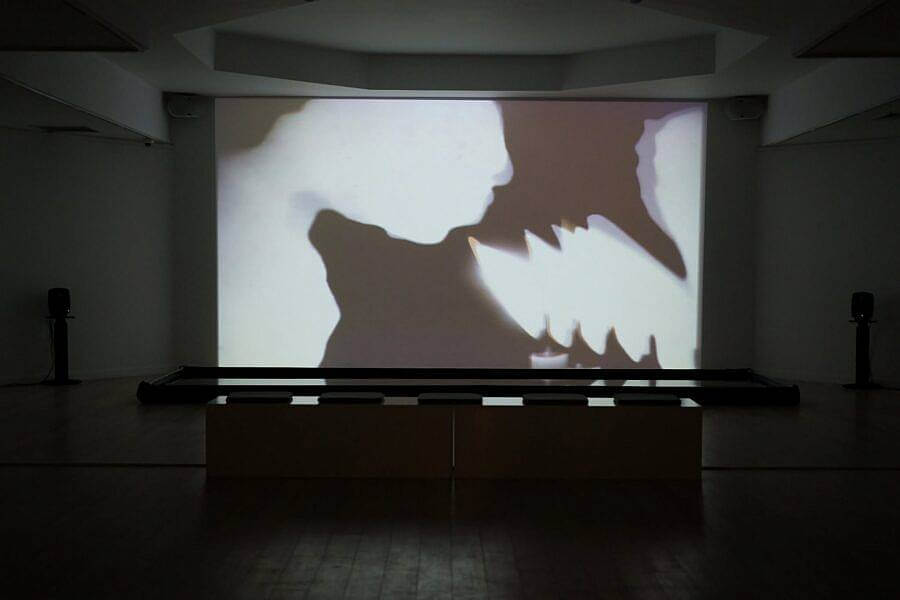
I also made a sound installation named The transition between blue and white. It includes a 48 minute video about a candle that burns from the start till the end and 5 tracks of sound that I made using my throat singing voice resonated with other oscillator drones scaled in different harmonics. To activate one track you have to take a seat so that you have to invite more people to sit with you. I want people to watch something slowly dying and find the beauty of something more important in their life rather than art. I love to see when they do it together. I think these two works are the most important in the show. It would be too long if I list them all. The result came out great as I expected and not expected. The manager of the space told me that she saw a group of people go to the sound installation room and do meditation for a couple of hours, then they started to talk about life and death when they got out of the room.
Are there any areas, techniques, or materials that you’re interested in exploring further in your work?
I want to study psychology and anthropology in the future, but right now I want to focus on building a full analog video system so I could do dancing painting using control voltage signals.
Do you have a typical process for conceptualizing a new work?
Normally, I will start with the history of the space where I’ll put my work in. For example, Mo Art Space used to be an art auction house. I then transform it into a meditation room.
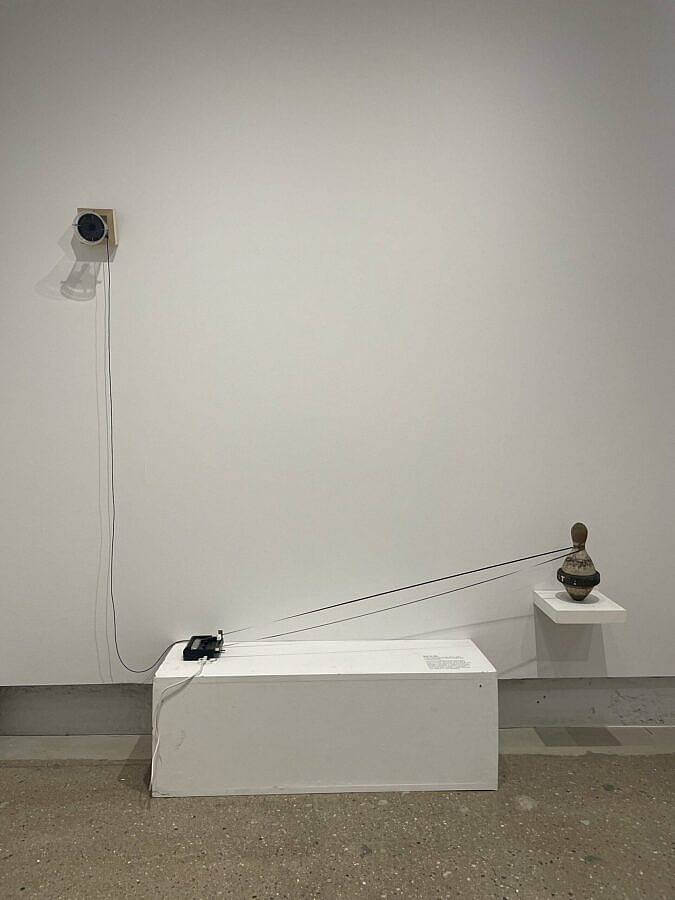
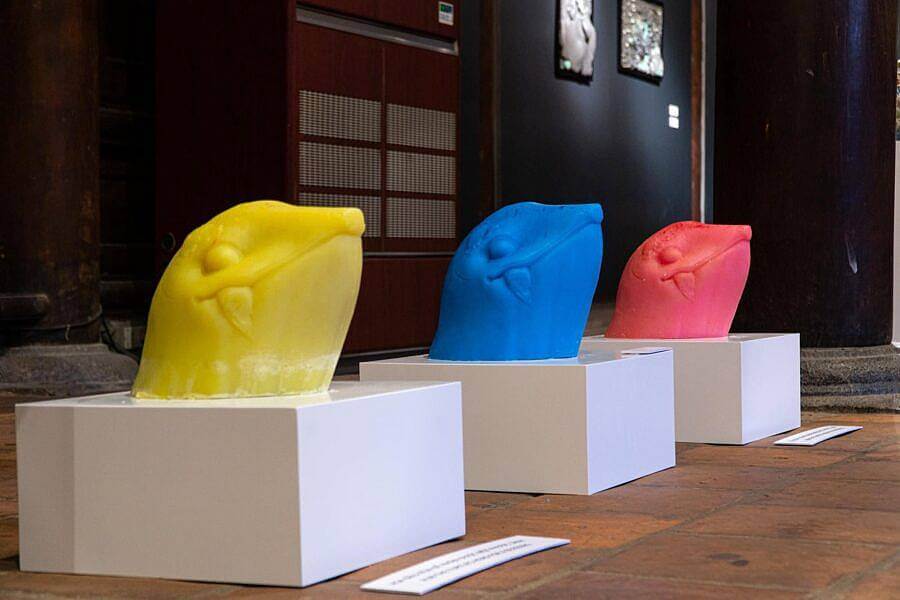
In 2023, I had a work shown in Văn Miếu Quốc Tử Giám, which is the first university in Vietnam; people often go there and touch the stone turtles inside for a blessing in their studies. During the Covid-19, they started to ban that practice since it is not safe and the turtle heads are losing their original shapes. I made 3 colorful bootleg turtle heads for people to touch, they’re made out of soap so people can get their hands clean and a blessing if they still believe. I have the honour to watch those heads corrosive in the fastest way, so it was a win-win.
Can you tell us a memory of someone interacting with your work that lingers with you?
Normally when I get feedback from people when they see my paintings, they use it to talk about their own problems. I only trust it and love it when I see them dance and scream, that’s when you know you are doing well and their bodies are moving out of control.
Are there any recent, current, or upcoming projects that you are excited about?
There will be a sound festival in October in Hanoi. I have been invited to be a guest artist and note taker for a conference that will be held for not just performing but also a start for a serious achievement website including news, critics, locations, and future independent record label maybe. This will be a good start for the community for future research, workshops and other opportunities. I’ll be happy to witness all that.
What do you collect?
I collect toys of all kinds from hotwheels to Japanese gacha eggs. Rick Owens not anymore since I make no paintings. Cassette tape for the sample and sound modules for work. Memories I try but sometimes I lose a bit of them.
Interviewed by Seth Nguyen.