Tell us a little bit about yourself and what you do.
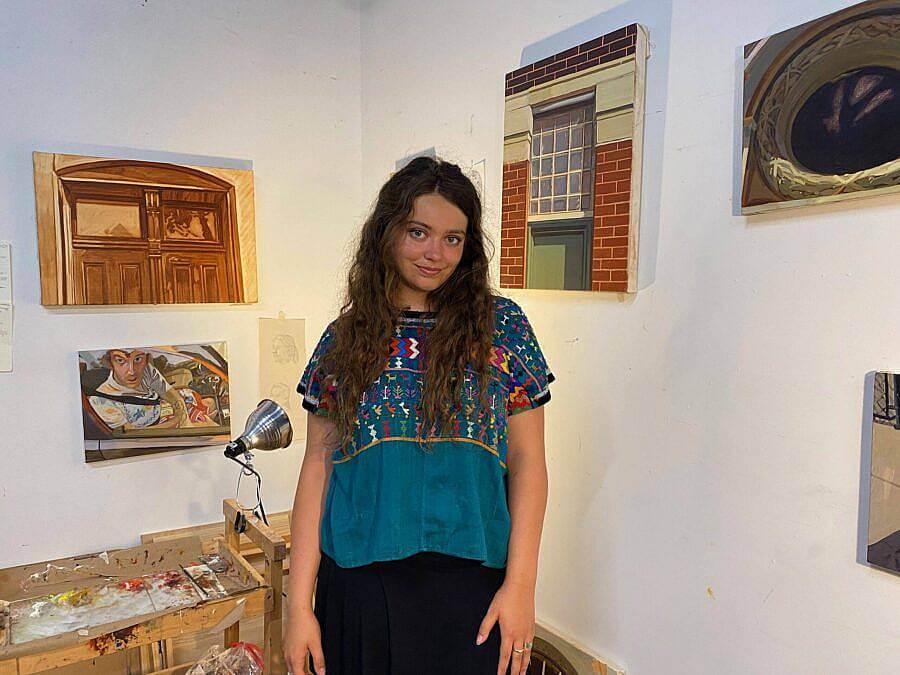
I’m Isabel, I’m 24 years old, and I am a painter living in Chicago. I also spend quite a bit of my time visiting my hometown of Louisville, Kentucky. In addition to painting I love to write, get into sociological discussions about reality TV with my best friend Ina, swim in whatever body of water is available and do/teach yoga. I believe in the transfer of energy and karma and God in a broad sense. Painting is a way that I experience spiritual meaning in everyday life and also a formal discipline that I painstakingly apply myself to. It’s hard to describe yourself!
Could you describe your practice? What materials do you use in your work and what is your process like?
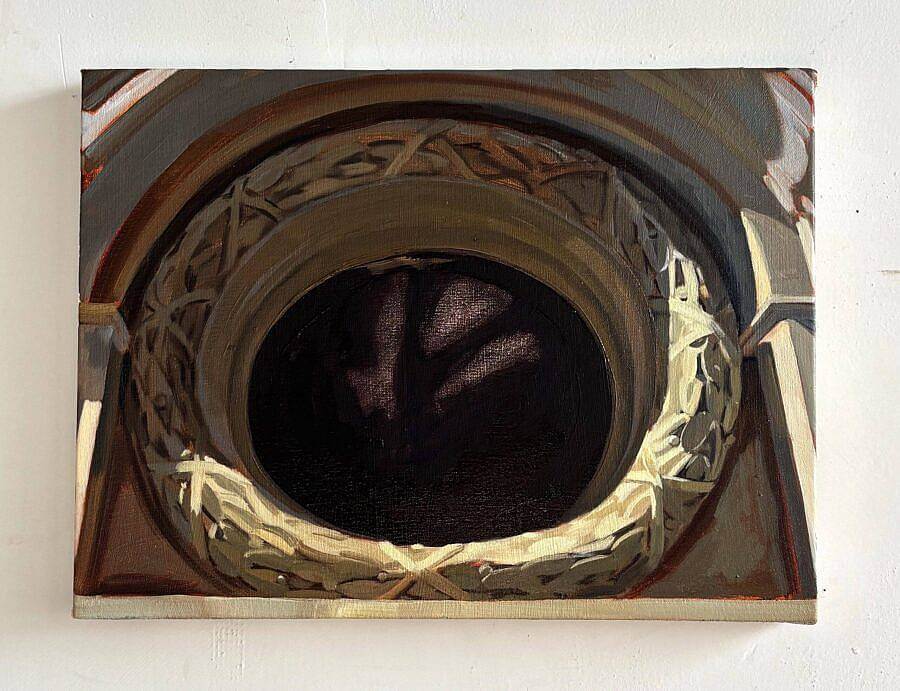
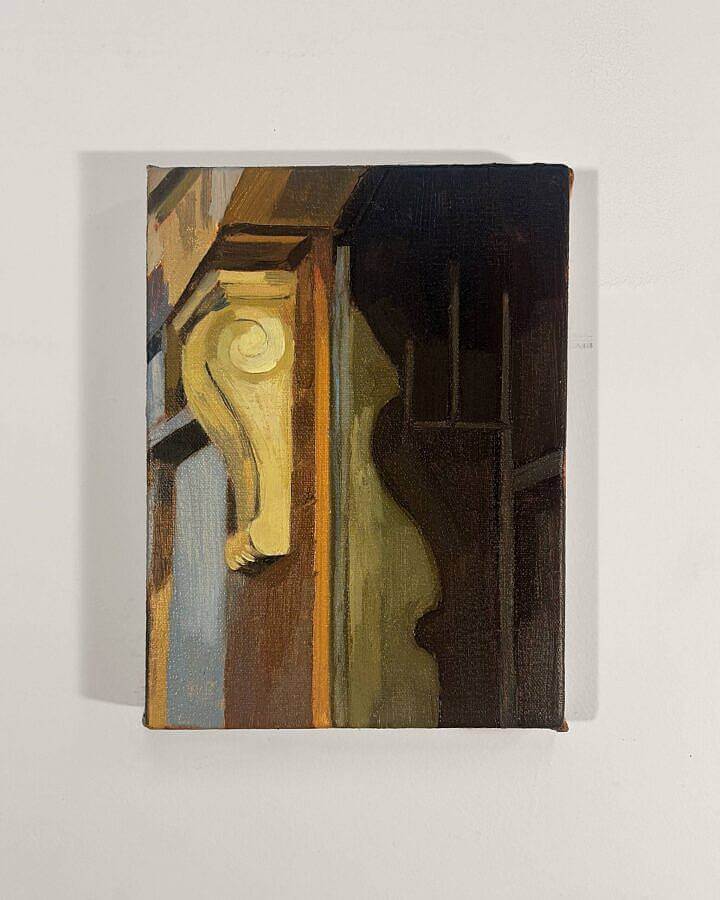
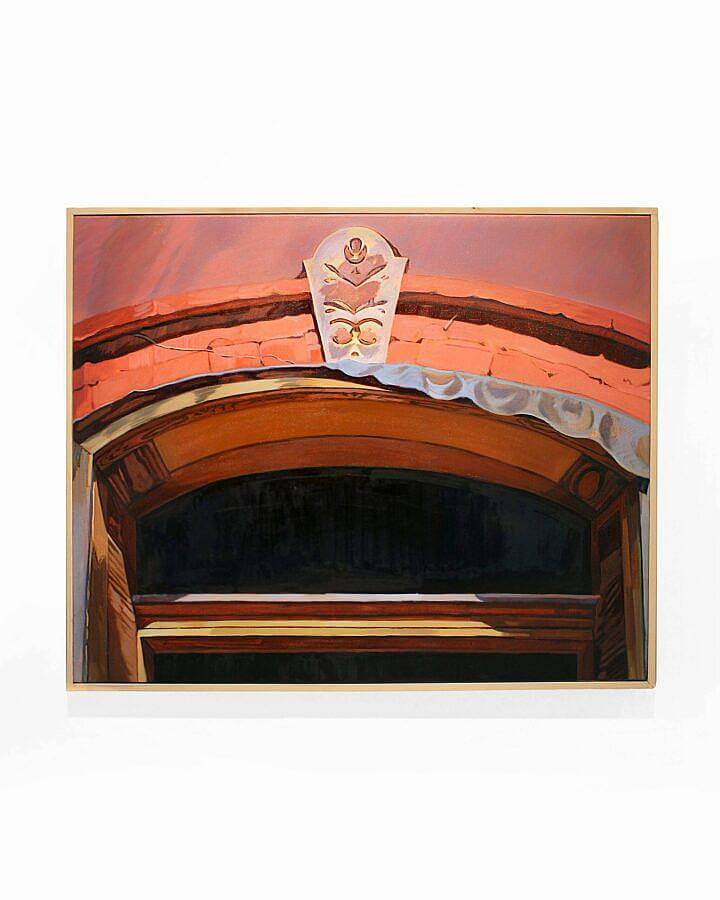
I make oil paintings of people and lately, architecture. My recent work is dealing with the form motifs like doors and windows can take as both barriers and portals. I think of them as images that initiate a viewer’s desire to pass through, to an unseen other side. In this way they address the clash and balance of desire and boundaries, and raise questions about access and possibility. But, I think meaning shifts, and I don’t expect or want every person to see those exact problems in my work. People will find what is relevant and beautiful to them.
I use a traditional method of oil painting called imprimatura, which always seems to strike people as a distinctive attribute of my work, but for me has just been the process that makes the most sense. It allows me to “fix” the structure and light scheme of the painting. I do have a lot of respect for the history and age of oil painting, I find that interesting and important to know, but I think that getting too obsessed with emulating old methods can also kill a painting. I went to a residency at the New York Academy of Art two years ago (a classical school), which helped me hone my technical skills and showed me a world of painting very polar from SAIC. That was good for me, it helped clarify what I do and don’t align with in each ideology. The method I use is more of a vehicle than a subject itself for me, and that distinction matters. I think the paradox of a trusted formula and one’s own mark is a generative line to tow in painting.
My process begins with a sometimes fruitless search for a reference image. I take them myself, and can spend hours driving around searching for something, something I believe I’ll know when I see (lately a door or window or architectural facet), and those are the times I am least successful in finding what will actually become an electric painting. I seem to find the best references haphazardly, when I am on my way somewhere and really don’t have time to stop (but do, anyway) or walking aimlessly. It does mean always having some degree of a roving, searching eye. I think we all have that as artists, and I think all people are psychologically primed to recognize repeating symbols. We are narrative based, and when we get preoccupied with a story or question we do start to see it reflected repeatedly in the world around us. That’s a bit of what my work is about.
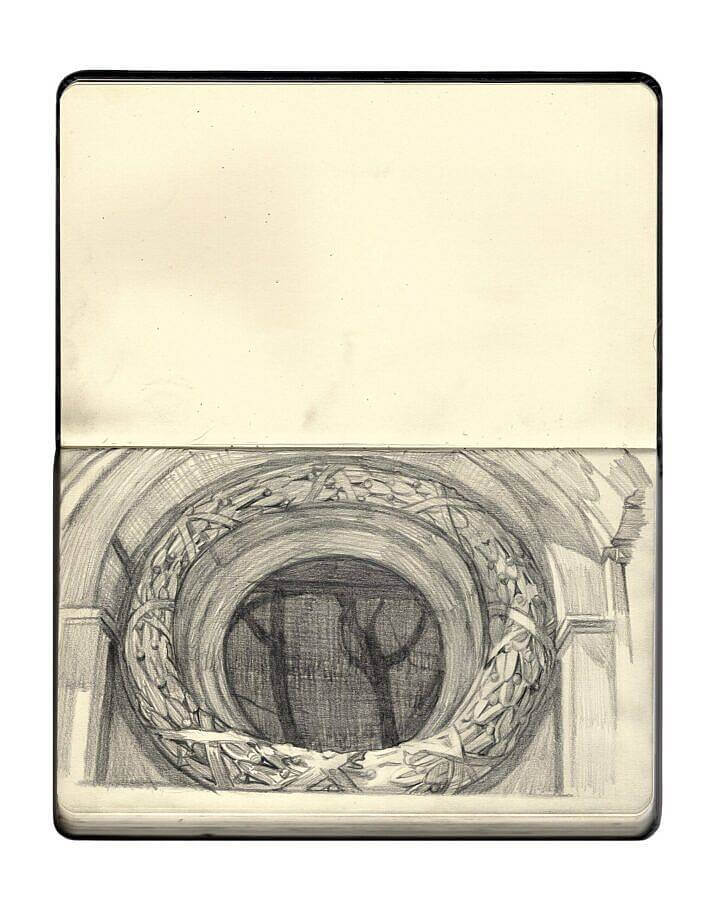
From there, I always begin with a drawing, and then move onto the painting. What/who is influencing your work right now?
I just finished working a job at the Kentucky Governor’s School for the Arts, a program I attended when I was 17. This was my second summer working there, and working with teenagers has really inspired me. In art school we learn to slot our work into categories — I think a byproduct of being warned we must know how to speak about and define our work (kind of like I’m doing here, lol.) But working with kids that age who are just finding their voices and are welcomed into an extremely vibrant and supportive community reminded me to keep that corridor wide. It’s one thing to have an exact vision, but everyday I try to question and remove boundaries and limits only I have imposed on myself as an artist and person.
Who are some of your favorite artists?
Morandi, Fairfield Porter, Cindy Sherman, Alfred Hitchcock, Colleen Barry, Carrie Mae Weems, and yes.. Edward Hopper! I respond well to mood and excellence.
What were you like in high school?
I was both disobedient and very concerned with justice. I skipped school too much!
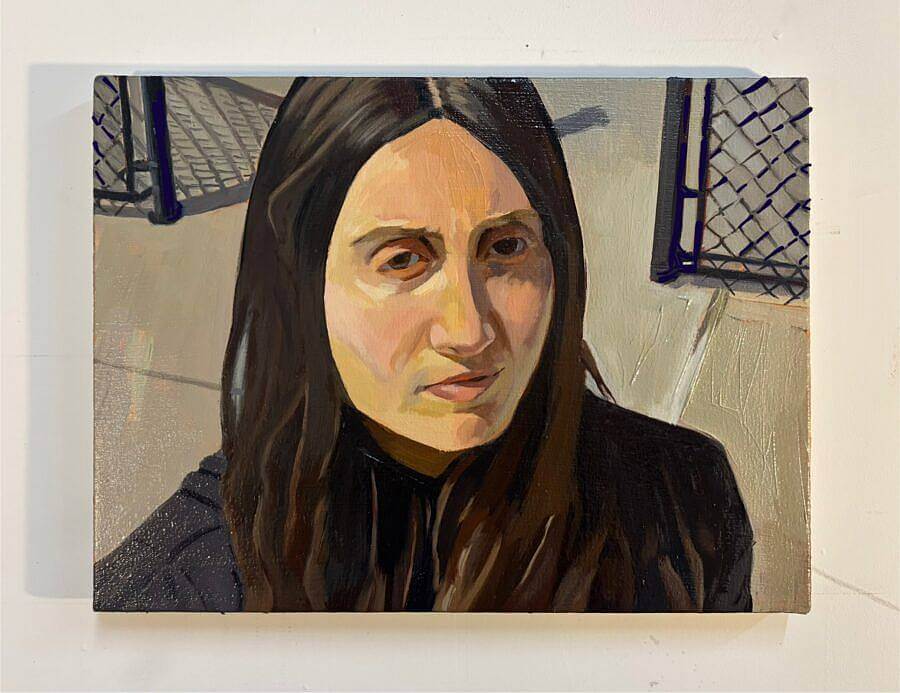
Nicola, looking up | oil on canvas, 12″x16″, 2026
Have you seen any good movies lately?
This is not the most recent film I’ve seen, but one that has stayed with me since viewing it last December is Black Christmas. It’s a 70s horror movie directed by Bob Clark, apparently the first official, or immediate precursor to, slasher film. One of my obsessions is the depiction of female terror in film and television. I’ve been wanting to write an essay tracing the evolution of women in mystery/thriller/horror from Hitchcock to Pretty Little Liars for like two years. It is yet to be. I think Black Christmas has stayed fresh in my mind because it is legitimately the most terrified I have been in a theater, ever.
And, I just saw Picnic at Hanging Rock at Vidiots in LA, which was an exquisite experience!!
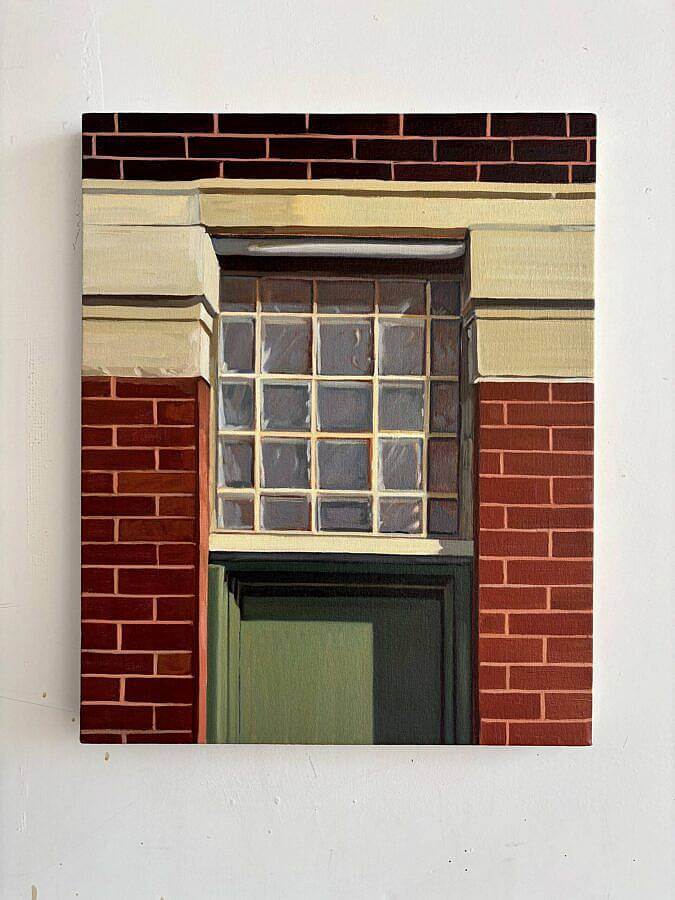
Within the context of growing up in Kentucky, your work seems post-impressionist and focused on architectural details, are you drawn to depicting specific objects based on their familiarity? Post-impressionism or something else?
Yes, post-impressionist painting has always been an era I gravitate to. In high school I loved Toulouse-Lautrec and I continue to adore Gauguin and Vuillard. I’m not sure what else to say about it but that it is an influential time, where I think the emotional frenzy of impressionism was momentous, kind of like a dam breaking, and then settled and tightened into paintings that had both a liberated brushstroke and really masterful structure. Structure and composition are extremely central for me. I need those things to be intact before I can start intuitively painting.
In terms of Kentucky and architectural subject matter, I was remarking to someone a couple months ago that the architectural details I paint are ones that trigger an emotional familiarity. I don’t totally know if that is because they look like architecture I grew up around in Louisville, but I suspect that is part of it. I have often felt untethered in Chicago, and have bouts of homesickness, so I think sometimes I genuinely am wandering around looking for my environment to reflect a feeling of “home.” But obviously, Chicago is incredibly unique architecturally… maybe I’ve singled out that man-made beauty as something to love here, that is only this way here.
What is something you’ve always wanted to do and are working towards achieving?
I really want to find a home for my writing. I write a lot, I have written short fiction, poetry, and recently some kind of sardonic personal essays. I would love to publish a series of those, or even just publish one work locally. I believe it can come to be, but it will require me to part with total privacy around the nitty gritty of my life and personal opinions, because of course that shows up in what is written. That would be easy to do if the opinions I was writing about were like, we should all have access to free healthcare, or, spending time in nature everyday can dramatically improve mental health. But that’s not what I’m writing about.
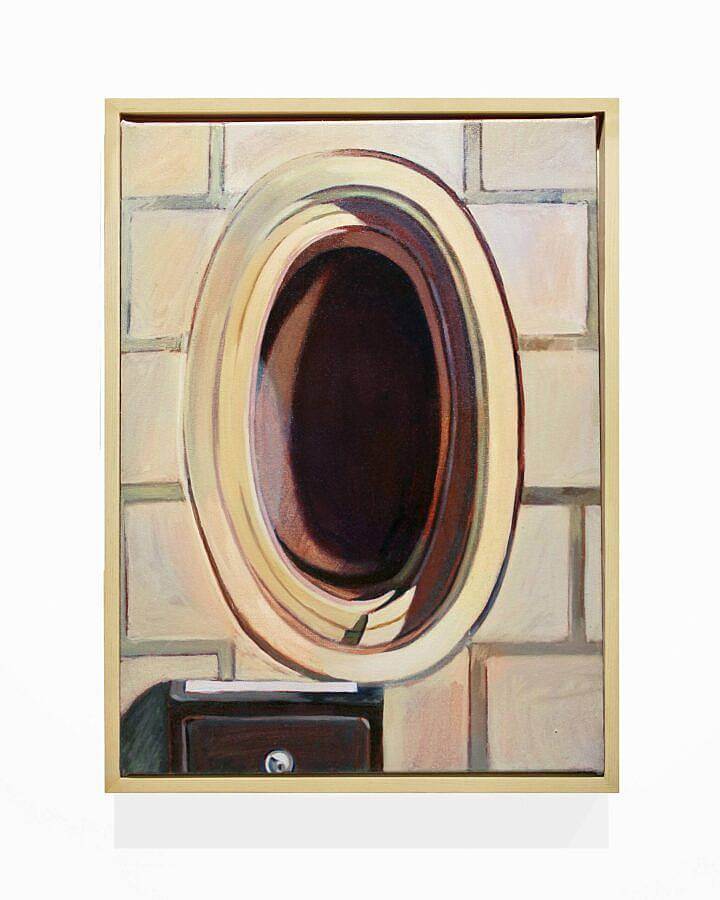
Your use of light is significant to your work. How do you construct light technically and conceptually between portraits and architecture?
Yeah, light is huge for me. I think my first favorite painter was Georges de La Tour, I remember seeing his paintings in the Louvre when I was nine. Luckily my mom, who is a fantastic painter, was with me and helped me see how he was using light so dramatically.
My underpaintings do a lot of heavy lifting for light construction, of course… that is congruent with their original purpose. But making sure that a dramatic light scheme is present in the reference material is the first step– either finding it outside in how sunlight is cast over a building, or setting it up personally for portraits that I paint from life. I am pretty handy with a clamp light! I think the main way I deal with light is as a formal issue, and the conceptual element just unfolds by itself. I really appreciate that exchange, almost as though.. I ignite the flame and watch it burn? Light metaphor?
What gives you hope?
Hmmm. Fantasy– having time within my day to imagine the world I want to live in and the many paths there are to walk. And, being proven wrong about someone I judged too quickly or harshly.
Interviewed by Amira Diaw.