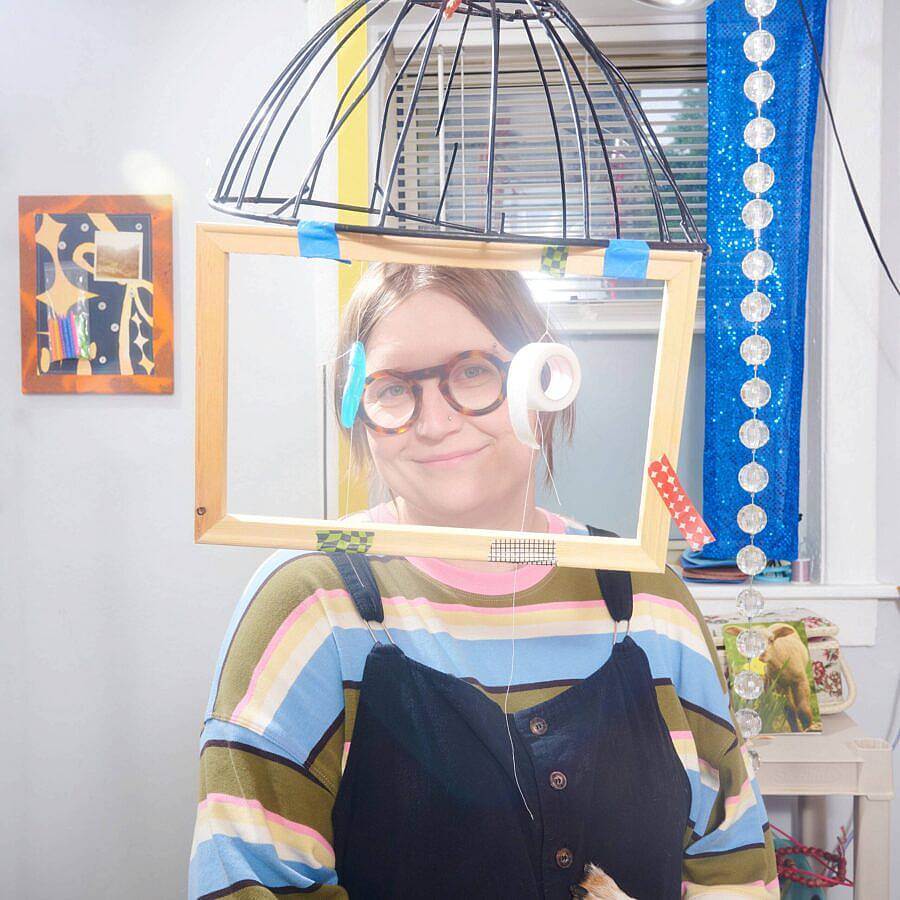
Tell us a little about yourself and what you do.
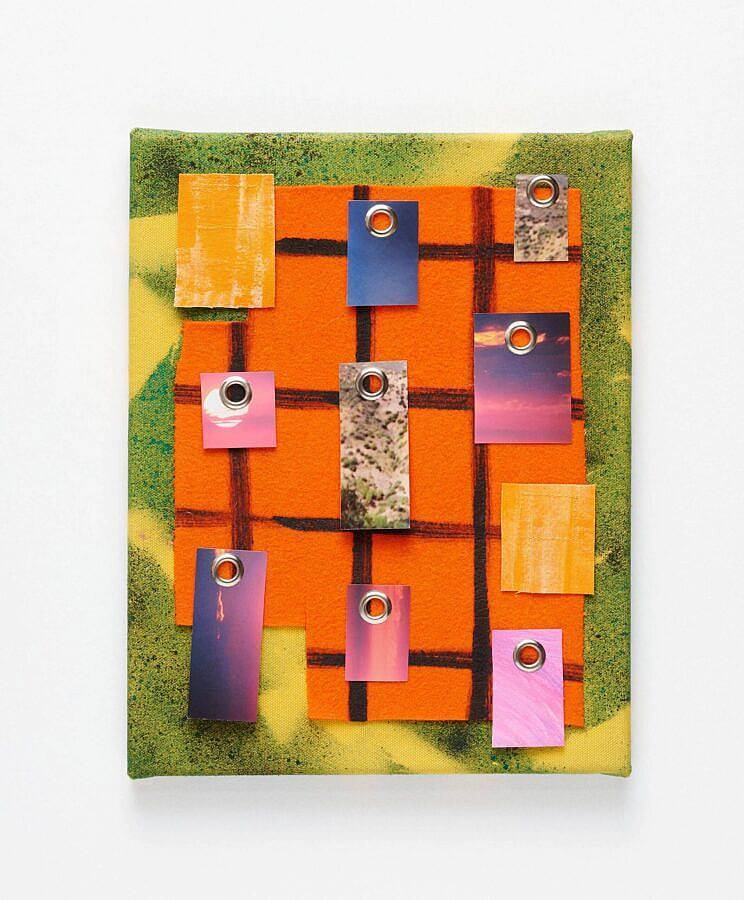
My name is Vic Barquin and I currently live and work in Kilbourn Park. I grew up in Cranbury, NJ and have lived in Chicago on and off for about 10 years. In my studio, I use textiles, found objects, and my own studio archive as material. I get to know my supplies through a variety of actions, including (but not limited to) ripping, wrapping, drilling, cutting, mounting, stapling, painting, and tying. With each act of transformation, my materials become increasingly self-referential and the work becomes more and more about its own history and the sensation of its making. My body has no preconceived notions as to what the materials are or how they should act, creating a liberatory practice of working intuitively, embracing play, and challenging my own conceptions of what’s possible.
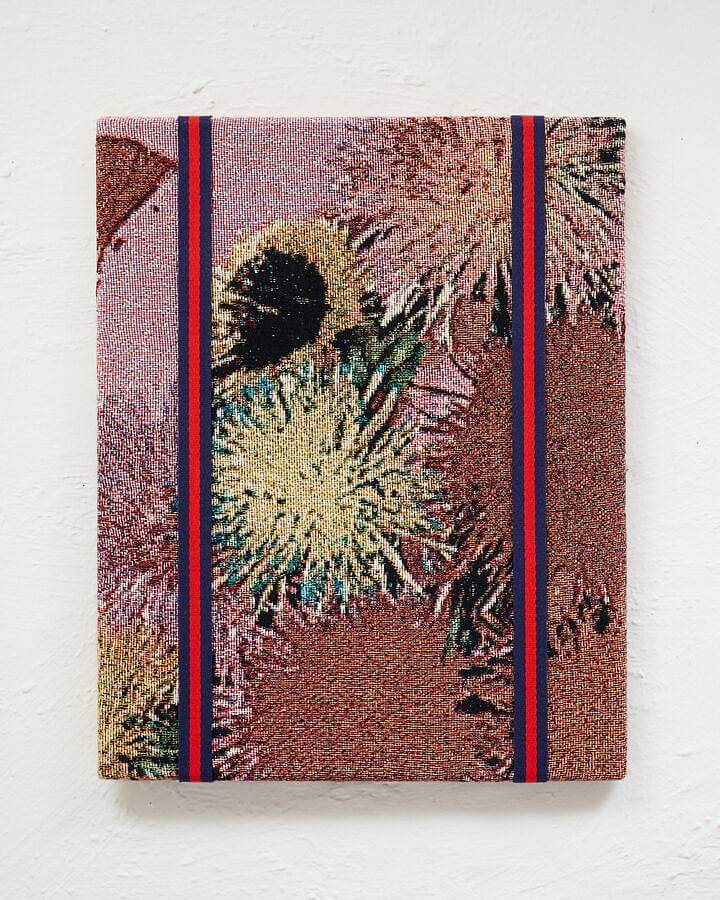
How were you introduced to the mediums that you work with?
My mom taught me how to sew at a young age, which definitely jumpstarted my love of textiles. So many of the fabrics that surrounded me growing up—curtains, cushions, canopies—were made by her. She even made her own wedding dress. My dad is also a maker, crafting skateboards, cups and other vessels out of wood.
My studio methodology of using what already exists definitely comes from seeing how resourceful each of my parents have been throughout my life. My mom and I would collect electrical wire on the sidewalk to make flower rings while my dad and I would save push-up pop packaging to make toy cars. Their ability to see potential in all of the objects around us, especially the discarded ones, gave me an affinity for found objects and, ultimately, for using my own archive as material.
What is it like living and working in Chicago?
I first moved to Chicago in 2016 and was pretty quickly blown away by its charm. I really felt like folks were open to meeting new people like myself and it became easy to develop a sense of home and belonging. Even when I moved away for three years, I kept feeling pulled back in. There’s just something in the air.
Who are some of your biggest influences?
Susan Metrican, Mickalene Thomas, Laura Owens, Wendy White, Sam Gilliam, Elizabeth Corkery, Julie Mehretu, Andy Warhol, David Hockney, Sonnenzimmer, Brianne Garcia, Rob Brant.
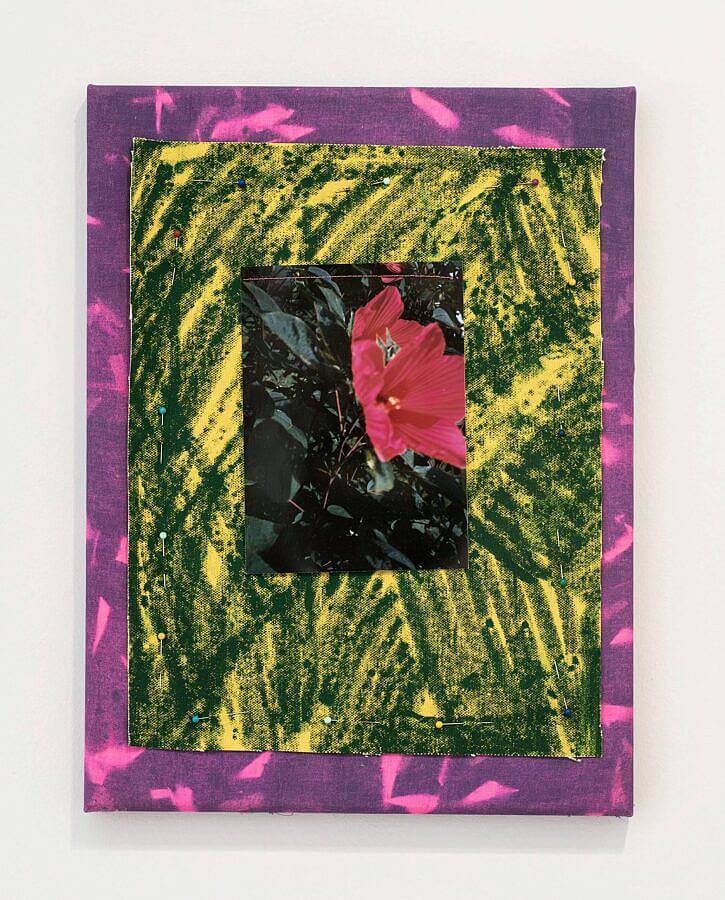
Describe your current studio or workspace. (Please provide a photo of it if you have one). Do you have any rituals to settle into the space?
I currently work out of the second bedroom in my apartment and my studio is always a mess. Surfaces are constantly covered and as much as I wish I could function in a neat studio environment, I just can’t. Many times, these piles of material randomly placed on top of one another illuminate new compositions that I wouldn’t have seen otherwise. I’m constantly learning to embrace the mess and to submit to my own process.
I’ve never thought about it as a ritual, but I almost never make work without music. I can actually get quite nervous before entering the studio; sometimes I worry that I won’t make enough progress or that I’ll have an off day that leaves me questioning why I even make art. There is something about music that eases this tension and allows me to be more vulnerable with myself in the studio.
When needed, where do you look for inspiration? Has this changed over time?
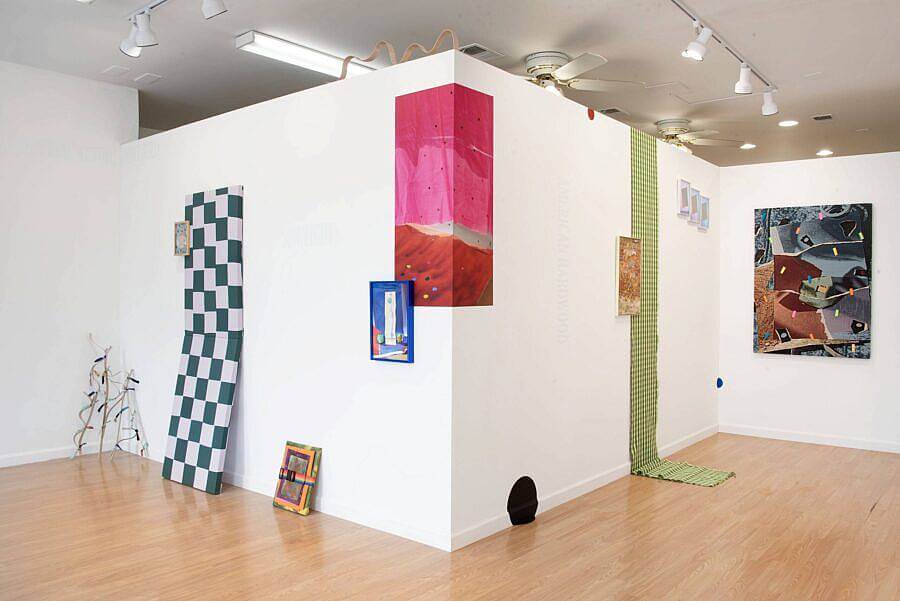
The place I’ve been going to find inspiration lately is Chicago Creative Reuse Exchange. They’re a non-profit organization in Auburn Gresham with aisles upon aisles of material spared from the landfill, ready to be reimagined by artists and educators. As my practice has evolved to focus more and more on using found materials, places like this have become especially important.
Have you been reading or watching anything recently that you can’t stop thinking about?
Well, I’m a huge reality TV fan so tbh I can’t stop thinking about the current season of Love Island USA. But I also recently finished reading No Straight Road Takes You There by Rebecca Solnit after a friend lent it to me and I’ve been holding onto her thoughts on hope and optimism—two things that can be quick to slip out of grip these days.
What was the last thing you changed your mind about?
That drinking four cups of coffee everyday was a good idea!
Your work often incorporates found objects. When you are sourcing material for your work, is there something in particular that you’re drawn to? At what point does the object itself influence the composition of the work?
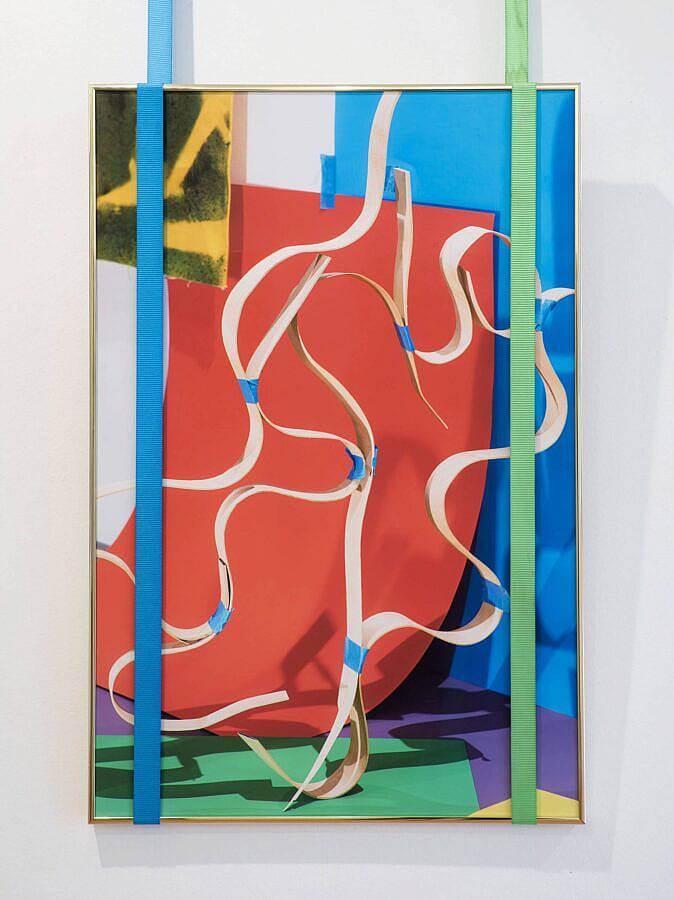
I’ve tried to answer the first part of this question for a while and I’m still not sure if I’ve found the right words. The other day I saw this quote from Caroline Polachek and it gets pretty close: “I keep learning over and over and over again in different ways to just obey my intuition, and if I like the results, I don’t need to answer any other questions.” In some ways, I’m hesitant to find the “answer” because I think it’s magical not to know—to simply follow a gut instinct.
As for composition, this is immediately influenced by the objects themselves. For example, I typically identify one object or material that I want to work with and then the line of inquiry becomes determining which other items in my studio are meant to be in conversation with that first thing. It’s all about building relationships between color, image, pattern, texture, and dimension.
What do you collect?
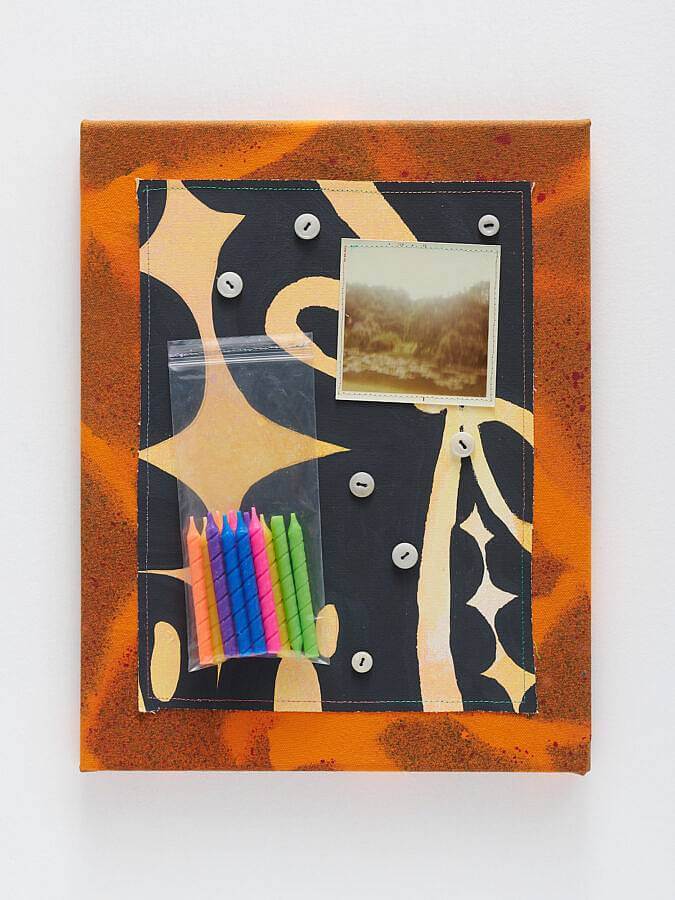
Shells, rocks, other people’s pictures, candlestick holders, weird little objects.
Interviewed by Seth Nguyen. Artist portrait by Forrest Frederick.