Tell us a little bit about yourself and what you do.
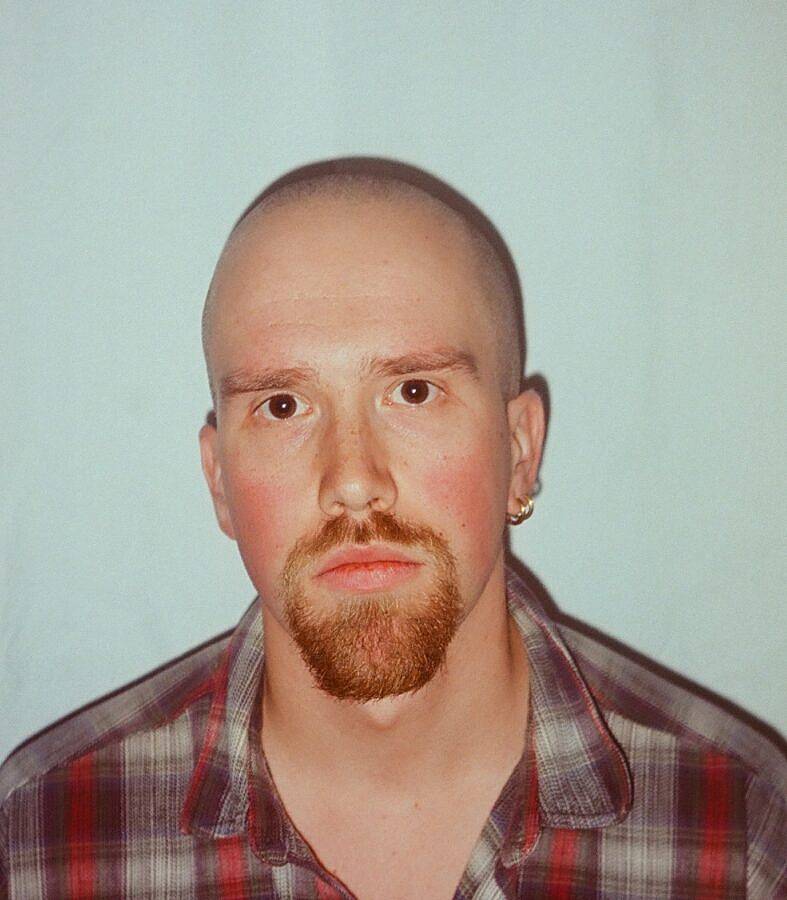
My name is Nick Chiado. I’m 27. I grew up in Washington on an island in the Puget Sound. I moved to Chicago in 2017 to go to SAIC. I make sculpture and I cook food. If you’ve come in to eat at Lula Cafe for brunch in the past two years there’s a good chance I’ve cooked food for you. I can make a pretty mean French omelette. I ride my bike a lot. I make lights sometimes. I also take photos sometimes.
How did your interest in art begin?
My grandma is a painter and in my family’s house we have a lot of her more abstract work that has been there for my entire life, so I grew up looking at her paintings on a daily basis. I feel like that constant presence had a big effect on me. Walking down the stairs every day to go to school and moving past these large surfaces of color and texture hanging on the wall really confused me for a long time and I liked that a lot. I think the biggest part for me was that I was never given any kind of answers to what they were paintings of. They were just there. My grandma just made them and I found that kinda crazy as a kid. There’s one that I knew was a table still life. And another that was just swathes of color. But then there was another that looks like a lawnmower.
I also got brainwashed in the best of ways by my high school photography teacher. And the rest was inevitable.
What kind of imagery are you drawn to?
I’m not interested in imagery. In relation to sculpture I try to stay far far away from imagery. I’m more interested in materials and what they do. Imagery dilutes that. It’s referential. Allusionary. To be honest I feel the same way about content. It’s a challenge to lean into an approach to sculpture where it is doing nothing other than what it is doing. It leaves things open but things can also be very very direct. Although you have to be really intentional. And make really specific moves that relate directly to the viewing experience. I like that way of thinking. Sculpture about sculpture. The sculptural experience being a physical material. And material being the sculptural experience. Something that is there in front of you that you walk around with your feet. Something thick. That’s where I want to get to at some point with my sculpture. Some might think it’s self-referential but I think it’s important to step back and see what you’re actually doing. And why you chose sculpture over any of the other mediums. I’m not sure why you would want to have this sorta misnomer attached haphazardly to that all? I’m already attaching real things and I like things the way they are.
Is there a phrase or idea you can think of that feels especially relevant to your practice or that resonates?
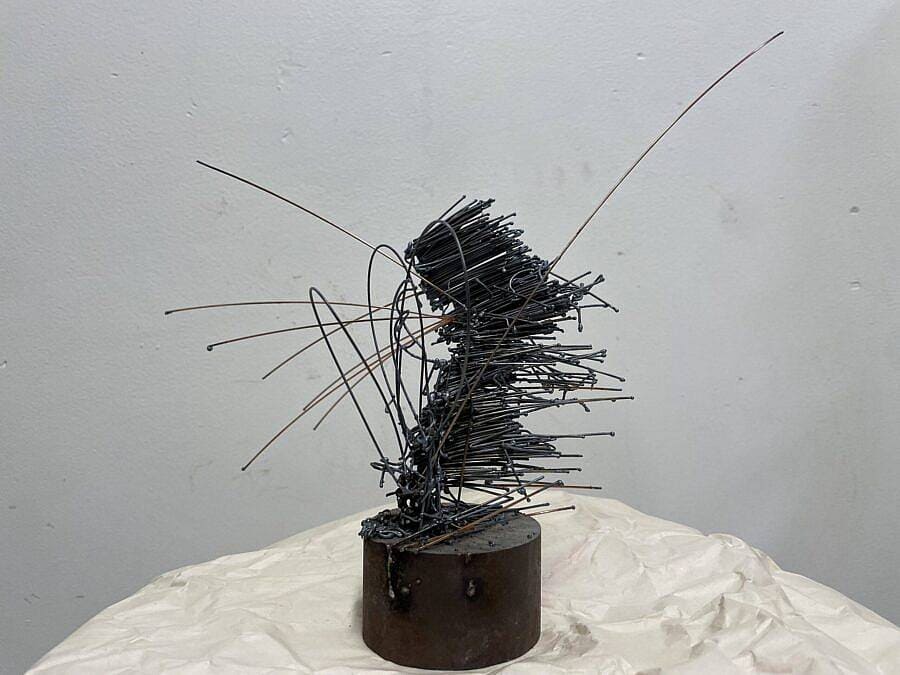
Something that I always come back to is the medium of sculpture existing as this sublime inconvenience. At its most productive sculpture is pretty stubborn. It’s unruly. It’s bulky. It’s relentless, physically and psychologically. It’s this presence and if done properly it becomes embedded even further. But that inconvenience has a lot of leverage and it’s something that I feel and want others to feel too. It gives you something to really push up against as an artist and as someone viewing sculpture. I see it as a form of friction in an extremely frictionless world. A lot of mediums don’t have that built into their very core. A lot of mediums aren’t truly really disturbing in the way sculpture is.
I was at a museum in Europe and they had a Brancusi seal sculpture with this giant stone circular base and usually with sculptures like that they put silly kick plinths around it but this one had nothing. And it was right in the middle of this large thoroughfare. And I couldn’t stop watching people try to navigate around this thing. It almost turned into a roundabout. It had that dizzying effect. I saw someone take their backpack off and try to sit on it. Sculpture is this physical litmus test for us that I really enjoy.
I like things that are slippery. I like to keep things flexible. As an artist I think you’re obligated to be a bit of a trickster. I feel like artists are the few people that shouldn’t be trusted. Sculpture is perfect for this because of its viewing experience and the partial views that make up its whole. But I don’t really like making sculptures that work other than being irresponsible. If they are effective they just are. At least right now that’s how I feel.
When did you start working with metal?
At SAIC I spent most of my time in the sculpture department. I never really took a specific metal class but I naturally gravitated towards that shop. The scrap bin was much more exciting than the wood shop’s. It was also too quiet in the wood shop. I liked the people a little more. So I hung out there a lot and got my footing. But it wasn’t until I started working at Ox-Bow in Michigan that I really started to understand the material itself. And really started to learn a lot from the medium itself especially through welding. The liquidity of it all. How it puddles. Running two pieces of metal together is a crazy feeling. It’s a tool that I’m still trying to figure out. That shop unlocked something in me though that I’ve held onto tightly. Something about working with metal in the open air, in the woods, at any point in the day. With the bugs. Exposed to the elements. It was really special.
What is something that continues to influence your work?
There’s a lot. It’s all over the place for me. I feel like I just try to take in as much as I can. To name a few.
There’s a lot of work that I have had the pleasure of experiencing in person with my own two eyes that will always stick out to me as being these turning points in the way that I think sculpture. Lee Bontecou’s reliefs. Isa Genzken’s Hyperbolas and Ellipsoids, those are perfect sculptures. Everything in Marfa. Rodin’s Balzac, what a silly sculpture. Roni Horn’s glass sculptures. Andre Cadere’s wood bars. Yuji Agematsu’s Zips. All take up a lot of space in my head.
The traveling I’ve done. Wandering. Walking 40,000 steps a day. And then going out to dance alone.
The mountains. That type of open space.
Light. Specifically John Rossi’s lights.
Central Iron and Steel in Grand Rapids. A beautiful place where I buy metal.
Specific Objects. I think about that essay a lot. That essay opened things up for me. What can I say I’m a big Judd supporter, shoot me. He knew how to write and made a lot of things that are really really there. Really there.
I enjoy Charles Olson’s Projective Verse. I like that sense of speed.
Alex Potts’s Sculptural Imagination. That book messed with my head.
I really like things that are unphotogenic. That just die on the page or in the image.
I think a lot about black holes. They have this omnipresent relationship to how I see sculpture and physical stuff. This ability to crudely and mercilessly prove that space is this pourable, moveable, bendable, stretchable material is just crazy to me. Everything starts to feel like this kind of soup. Atomizing and impartial. Topology is also interesting and another thing that I don’t have enough knowledge to really talk about but love thinking about. There’s a topological joke about a coffee mug and a donut being the same thing. It’s hard to explain without actually holding a coffee mug and using your hands. But if it were made of this clay that you could expand and inflate. You could move the bottom of the mug up and squeeze it around the handle and it would be a donut. That kind of dimensional thinking just activates a super plastic part of my brain that is really lovely to wield in everyday situations. It all feels a little dangerous.
I like listening to what I’m getting irritated by in the moment. I’m pretty stubborn. I like to think I know what I don’t like. I’m not sure if people are aware enough of what they really hate. I really hate where sculpture on the wall has gone. For the most part it’s gotten really boring. It’s really easy to make a mediocre sculpture and put it on the wall. And have it look nice. And not really know why you put it on the wall other than to get it off the floor or the table or not have to deal with real space or just because everyone else is doing it. I personally catch myself doing it a lot but it’s something I’m trying to get away from. I hate how galleries post pictures of shows on Instagram before the show even opens. It feels rotten. And disrespectful. On all fronts. Haha. I also feel the same way about taking pictures of my own work or at least sharing them. It’s a sacrifice to the work that I’m not sure I’m willing to take right now. I think people have gotten too comfortable with images and don’t know what it feels like to be genuinely surprised anymore. I’m a big proponent for mild gatekeeping. I see these as itches to scratch at. That can get me in trouble. But are worth it in the end.
Do you begin a new work with a mental image, a plan, a mood, or a state of mind that you want to evoke?
Sometimes it starts with a raw unit of material. Working through it, breaking it down into parts and then building it back up. Sometimes it starts with a specific tool and its corresponding limitations, or maybe just using the tool completely wrong. But usually it’s just moving my hands until I meet a situation where I’m like oh ok something is going on here. Something that I need to pay attention to. Something that if I push just a little further may turn into something productive. If it’s more abstract it can start with a set of sentences acting as instructions. Recipe like. You do this then this then this maybe this definitely don’t do this. With order of operations playing an important role. Sometimes it’s just an action. I don’t really draw anything. I enjoy figuring a lot out while I go. In my head. With my hands.
But the best situation to get yourself in is when you make something and it’s perfect and you try doing something similar and it just will not work. And that singular one-off exists in its own untouchable space. That’s frustrating. And wonderful.
Tell us about the importance of oneness, or cohesion in your work.
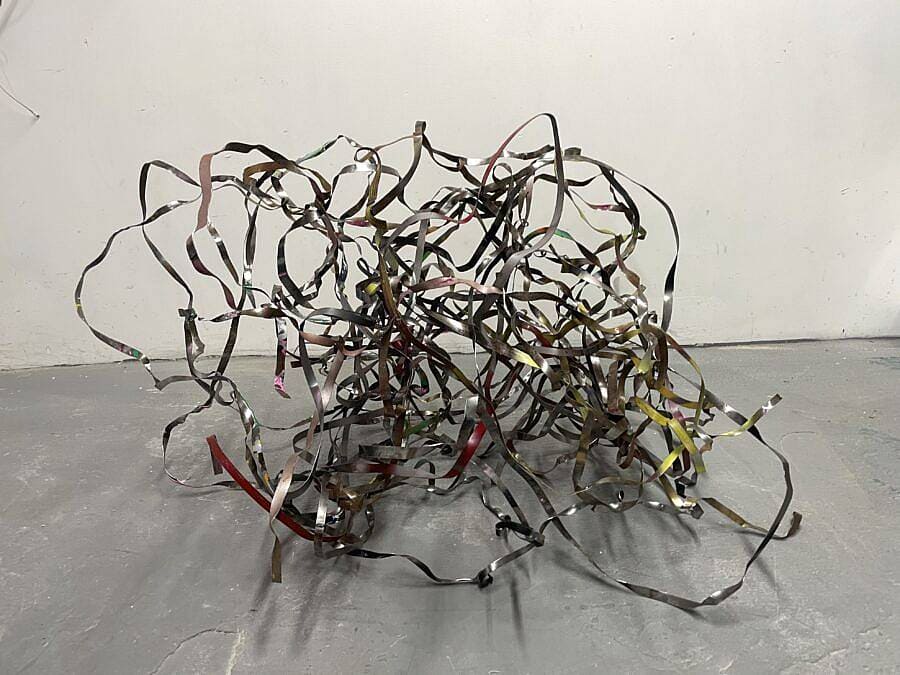
Joining parts is very difficult in sculpture. Making things stick together. Bringing stuff to form one. Is hard. How you do that is very important and relates directly to how the work is experienced. I work a lot with this stupid aluminum tape. It’s used for duct work and comes in these long rolls in a bunch of different sizes. You unfurl it and peel the backing off and it goes all crazy and does what it wants. It also sticks to itself or anything that it comes in contact with. I wouldn’t necessarily say I enjoy working with a lot of different parts but with this tape it all just makes sense. It’s a material that relates directly to the process of collage. Because of its stickiness. It’s a material that is doing what it is doing for a reason. And I like that. It attracts the contemporary. And is very immediate in how it reacts. It’s one of those materials that doesn’t want to be sculpture. They fall apart if they aren’t bound correctly. I think I like things to be really really really one or really really really not one. I think the middle ground is where it all gets fuzzy and not as effective.
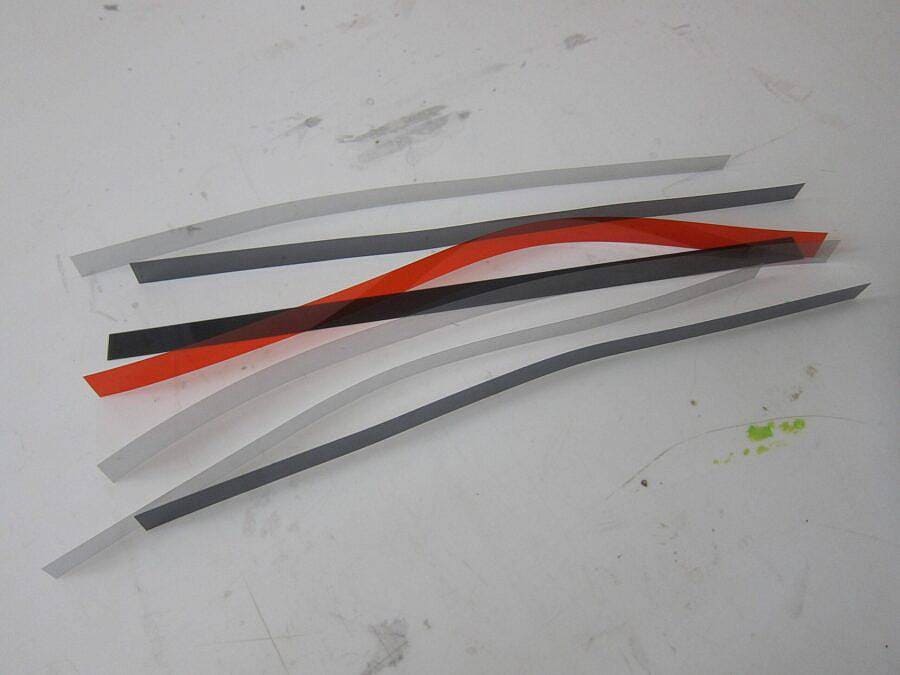
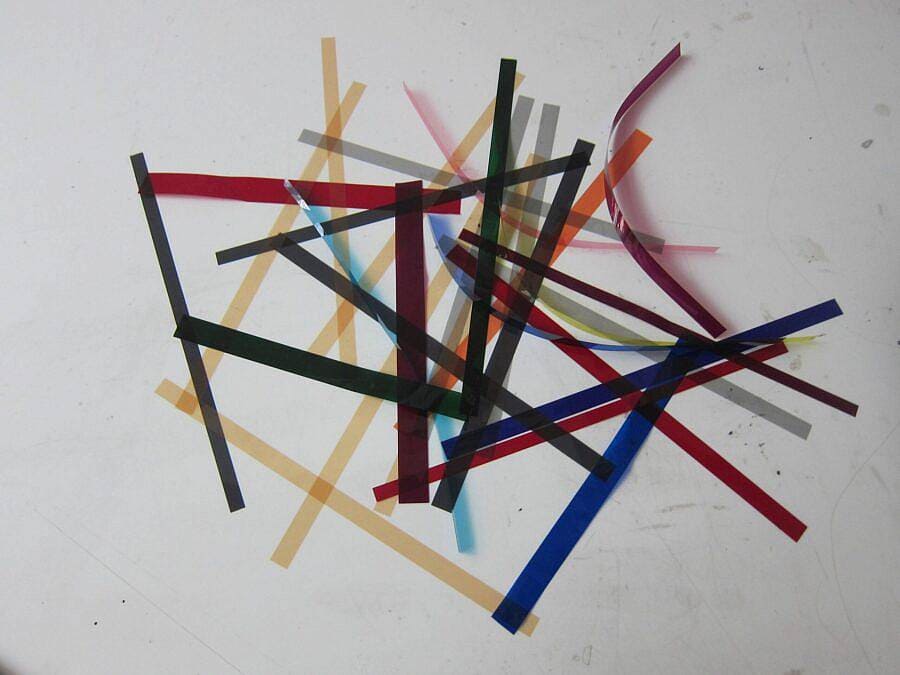
Several of your works are made of industrial materials that are prized for their durability and are therefore resistant to manipulation, is there something to the difficulty in reorienting these objects and materials that attracts you?
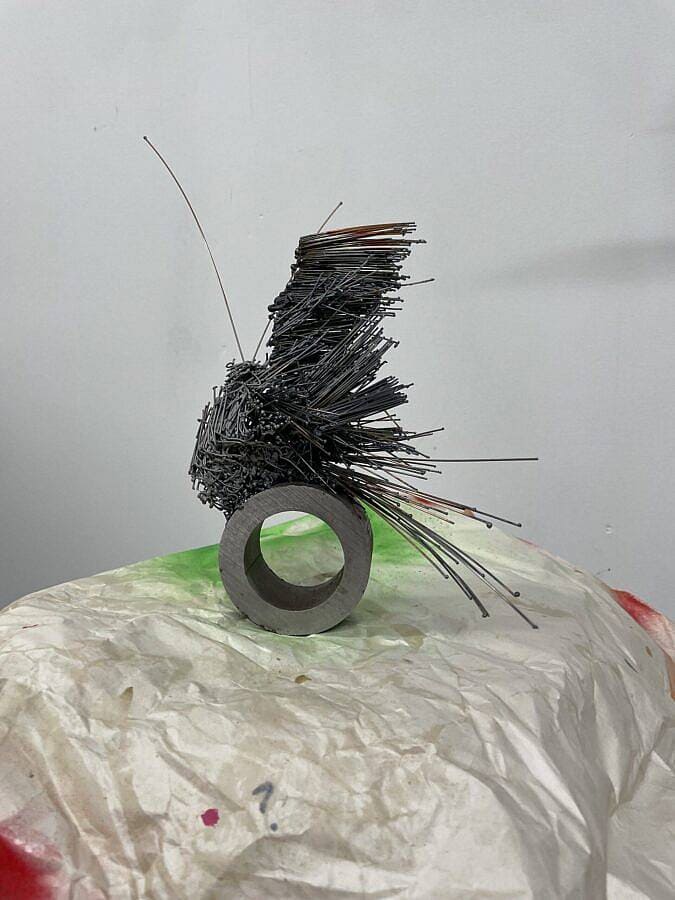
I don’t really see it as being difficult. Once metal is warm it’s all quite supple. But I think it comes down to teasing out how the material wants to perform. And the only way to do that is to really work with it with no clear end goal. I also reuse a lot of the metal and try to give it as many opportunities to be something as possible.
I don’t think it’s about reorienting. Sculpture has a lot to do with what’s going on from the shoulder down. And what you can do with the combination of all that is going on there. Picking, peeling, squishing, poking, balling, sandwiching, bending, twisting. All these actions are really important to me. I feel like a lot of this comes from the amount of time I spend cooking and in the kitchen and the kind of dexterity and speed that is required in a lot of that work. Mixing stuff. Squishing stuff. Dealing with fruits and vegetables. Touching hot stuff that I probably shouldn’t be able to touch. Filleting a fish. Opening doors with your hands full. That constant movement is a crazy feeling. Especially with the hands. This is a very proprioceptive experience haha. It’s all pretty intimate. It’s all just this really tactile means of knowing what something is like. Through a variety of touches. By taking it in the hand. Eating with a knife in one hand is a good example of this. You fumble around with this dangerous thing and this other thing to engage in an activity that involves nourishment. I like that. I don’t know how that relates to metal but I think about it a lot when I get my hands on stuff.
How important is experimentation in your work?
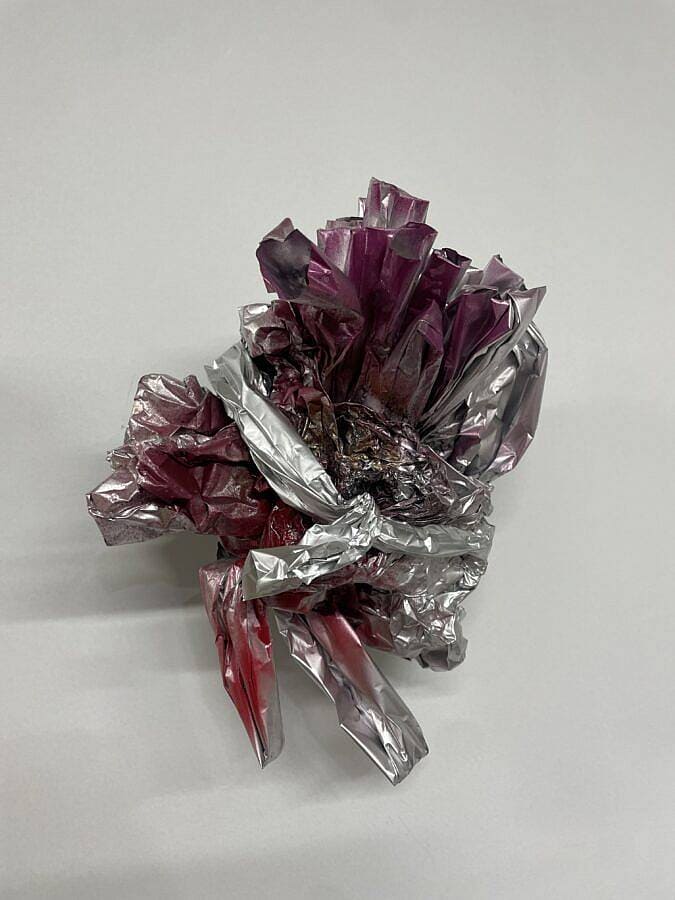
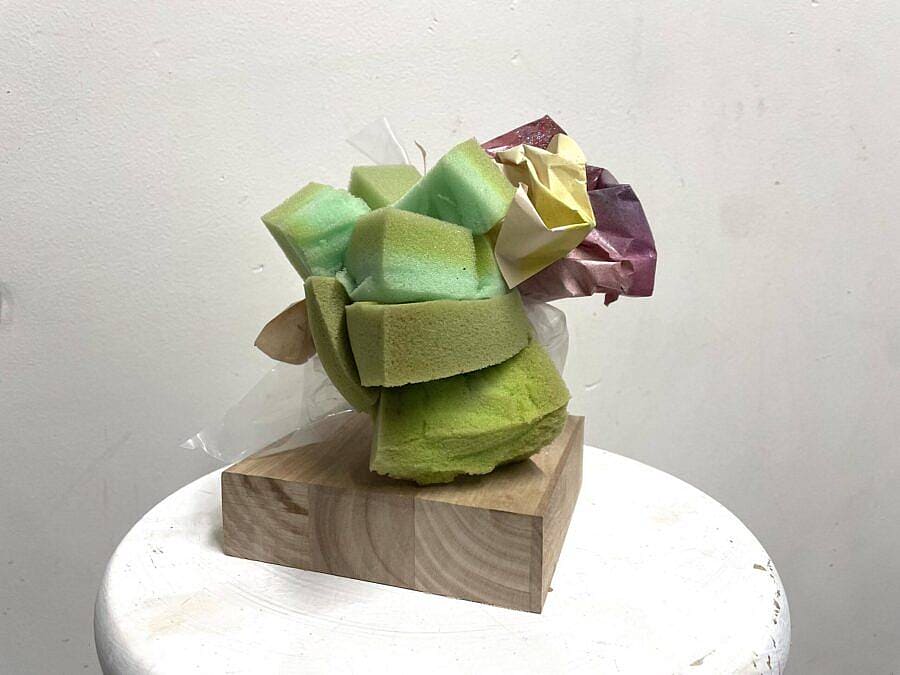
It’s kind of everything. It takes up a majority of my time in the studio. Like I said before I don’t really plan things. Wallowing is what I do best. And fiddling. And tinkering. I’m not very good at planning. It’s more of this call and response with the material that I try to surround myself with. Making do with what is within arm’s reach. Asking questions and expecting absolutely nothing in return. At times I can be a pretty hardcore formalist. It’s a fun thing to lean into. Especially right now. When things can feel really convoluted. Experimentation enables that. I like thinking about how materials interact. In the same way that colors interact. Albers did a lot of teaching around material studies that I really get a lot out of. One texture next to another texture will react uniquely compared to being next to another texture or material. It’s exciting to pay attention to those types of interactions. And I feel like it really pushed me to embrace this tendency where you don’t really know where the experimentation ends and the real finalized solid stuff begins. Another tricky situation to make sense of and it makes things a lot harder but I think it’s a lot more rewarding mindset to find yourself in. It’s just about creating situations where you’re constantly reacting. Being a material opportunist helps with this.
There is this kind of all over the place mindset that I really like to embrace. I don’t want to have a thing that I do. What’s effective is what’s effective. And I will follow whatever I find that is effective. I rely a lot on not knowing what I’m doing. I really want to be surprised. When you don’t know what you’re doing it’s quieting. And you can be foolish. And crazy. And insane.
Tell us about a recent and meaningful experience you had with a work of art.
I saw the show Wolfgang Tillmans put on at the Pompidou in Paris this past year. And that show was something. The museum is now closed for the next five years so they basically just gave him the entire library level to install in. It was huge. But it was interesting to see someone try and wrap their head around a space like that. That holds so much weight. His sense of materiality is also just unbearable in the best way possible. It required this deep looking that I love. The way that he approaches looking with the eye is all-encompassing. Panoramic and crazy. To put a portrait of Jodie Foster next to liquid concrete being poured next to an abstract work made without a camera next to an image of Venus crossing in front of the sun. Is wild and very fun to move through. Overwhelmingly visual at times. The type of show where you are truly exhausted. It makes you very very very aware that you have eyeballs. His paper drop images are also some of my favorite images ever. There was also this one still life of bagged water and plastic water bottles that were cut in half at different levels and set on the ground so the caps looked like they were levitating at different heights in space. It was really hard to look at. Which I liked.
Interview by Paul Fitzpatrick