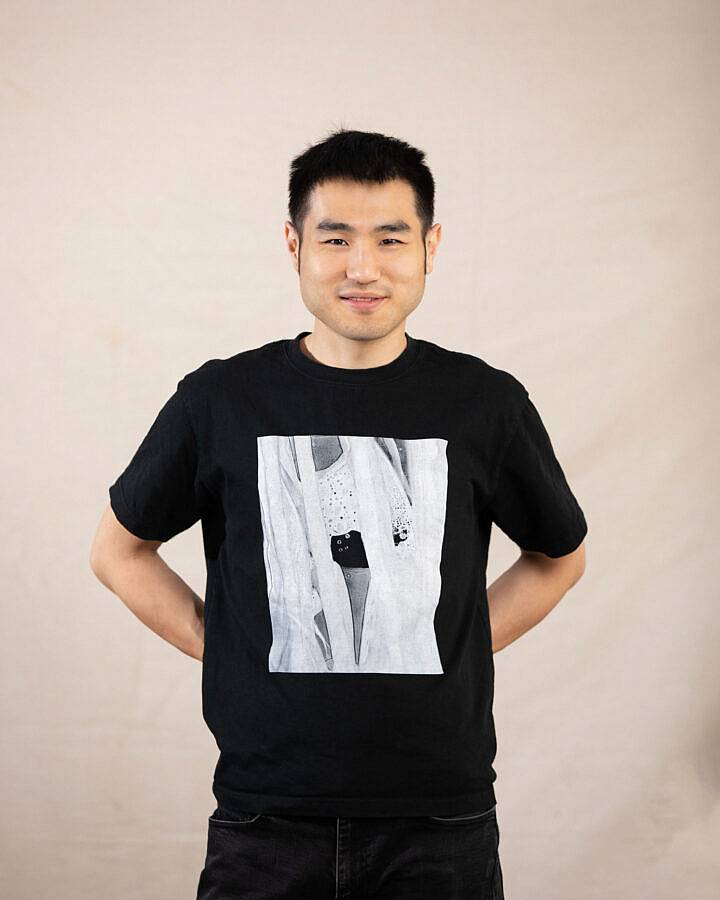
Tell us about who you are and what you do.
I am from Taiyuan, Shanxi, China, a historical area known for its noodles, mature vinegar, and landscape. I am an interdisciplinary visual artist who makes tintype photographs, an Art Director at Big House Studio, and an arts and culture worker working with public and sacred spaces.
I also like cooking and swimming. Swimming in Lake Michigan feels magical.
How were you introduced to the mediums that you work with?
It has been quite intuitive,. My life has been filled with different cultural thresholds and uncertainties—I arrived as an international high schooler, through different host families and the need to embrace differences, and then to become more aware of the exchanges and challenges that come with them.
I take pride in having an interdisciplinary practice. There is a lot more to say about it, but when I look back, there is a fairly clear memory train of how my creative mediums developed from a young age: learning English, appreciating music, then literature and creative writing, photography and portraitures, darkroom photography, tintype, building a business, and eventually community and cultural programming.
Recently, I have been thinking about how much I wanted to become a filmmaker as a teenager. Ironically, I ended up doing almost everything but that, and now the circle seems to be looping back toward cinema—not necessarily filmmaking itself, but toward making spaces, making images that move or remain still, and creating conditions for encounters and interactions.
So I guess the principle elements of the medium have remained surprisingly consistent while almost everything else keeps changing. I’m increasingly interested in the difference between a medium and a material, and in what happens when art moves from being a profession toward becoming a set of principles for how you organize things.
What do tintypes offer you compared to other photographic methods?
I started this practice in 2016, so it will be ten years this October. It is quite amazing to think about how much time has passed. I was taking a photography history class when my teacher brought in some old examples, and around the same time I stumbled upon a YouTube video of a photographer making tintypes at a film festival. The combination of the large-format camera, chemistry, and the way the image appeared fascinated me.
I started teaching myself. I checked out equipment from the art department at the University of California, Irvine, where I was getting my BA in Studio Art, and did studio visits with practitioners around Los Angeles and San Diego. There was also this old projection room on campus that nobody was using, so I basically squatted there and spent much of my junior and senior years making plates of people, the campus, and whatever else I could get to.
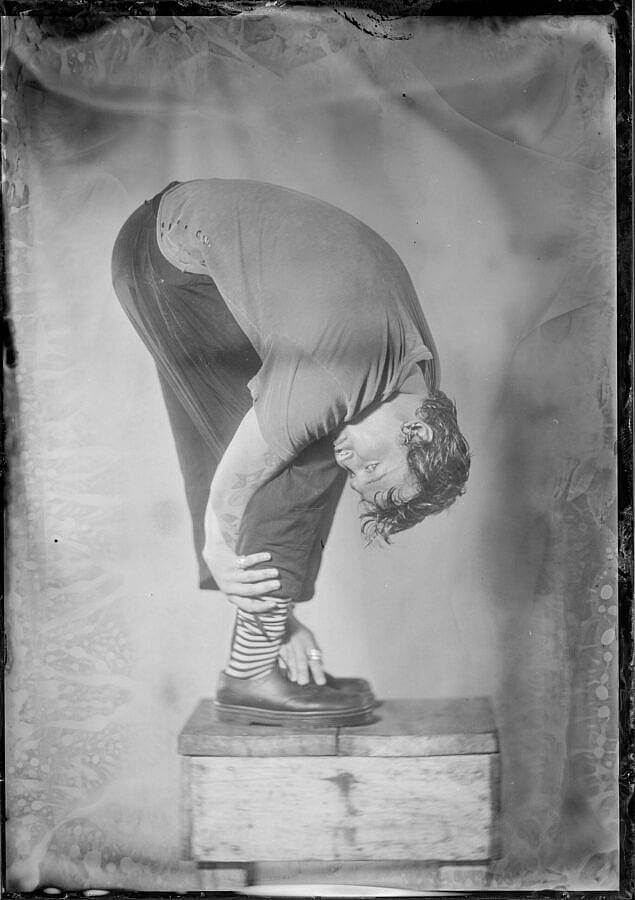
Tintype is truly ritualistic. It carries this historical novelty, but also something haunted, supernatural, and superstitious. Historically, these photographs became intimate objects connected to very particular moments in people’s lives: family, mourning, farewell for war, honor, achievement, land, society. Wet-plate photography also emerged at a moment when photographic portraits were becoming dramatically more accessible, so ordinary people could increasingly possess images of themselves. That was only about 170 years ago—not very long within the span of human civilization.
Now, thinking about AI, generative models, and the highly technological world we live in, tintype feels incredibly slow, tangible, and ultra-“real.” I often tell people that a tintype is a handmade silver image exposed directly to light and then sealed beneath a layer of tree-sap varnish. The whole process behaves according to very basic physics: silver responds to light, and the camera controls how that light spills and burns onto its surface. It is almost like eating a potato. There is very little abstraction between you and the material.
Then the image emerges in the fixer, almost out of the blue. We stand there looking at it, but cannot quite see what the photograph is until this moment when it almost seems to disappear—and then suddenly, there it is. Whoever or whatever was captured is sitting directly on this incredibly fine silver surface.
The ritual of pouring collodion onto the plate, seating and positioning my subject, interacting with them to find the energy of the image, developing, washing, fixing, drying, scanning, and varnishing can sound like a lot, but honestly it becomes very quick. It is like clockwork. At the end we have this extraordinarily stable physical image—a tiny slice of the world that can be held across time.
That is what continues to strike me. Time has been touched, manipulated, and embodied. Every imperfection—the black dust comet caught in an image, the trace of developer poured by my hand, dust caught in the varnish, every signature I put on the back of a plate—becomes part of an independent image-object that stands against time, the fading of memory, and the changing weight of meaning.
I say this all the time: being a tintypist isn’t really about being a chemist, at least not to me. It is maybe 30% chef’s work—building relationships with hosting, temperature, freshness of ingredients, proportions, and cleanliness; 30% the photographer’s eye, and how provocative I want to be with a composition; and 30% logistics manager—getting the darkroom, camera, chemistry, and equipment to the right location, then managing a small crew to produce tintypes as an event or as part of a much larger event. The remaining 10% might be luck.
It is a kind of alchemy—not entirely wizardcraft, but deeply immersive, tangible, and truthful. In 2016, it took me two weeks to make a decent tintype and about a month and a half to do my first tintype pop-up. It has taken me ten years to refine my understanding of what it means to make the whole thing happen—not merely to produce a good photograph, but to build a clear operational standard for deploying tintype as a complete unit: knowing my costs, my crew, my chemistry, my equipment, my timing, my environment and where I WANT TO BE.
At that point, the process becomes alive again, almost as it might have been in the 1800s—but it is operated by Max Li, a living artist in 2026.
What was the last thing that you changed your mind about?
This is a great question. When I was a young boy, many people around me thought I had ADHD. I was very eager to express myself, and I couldn’t stand anything that seemed oppressive. Of course, my relationship to stillness and composure has changed since then, and I’ve learned to channel my energy and attention through a more anchored set of principles. Still, I sometimes joke that being interdisciplinary is a little like having ADHD—or maybe it’s not ADHD, but HDAD: High Definition Art Director.
The last thing I’ve changed my mind about is the relationship and proportion of my work to the world. I’ve always had a tendency to dive very deeply into things. I can bond with and immerse myself completely in a situation, but the challenge is that I haven’t always known how to pull myself back out, or how to think clearly about an exit or a landing. I could stay swirling in midair for a long time. Sometimes that produces interesting views, but I no longer think depth alone is enough.
I’m becoming much more aware of what my core is, how far I want to enter something, and how that experience relates back to the larger direction of my work. Rather than letting the world constantly pull me into its orbit, I’m learning to understand my own center and build my relationship to the world from there. That is probably the most recent thing I’ve changed my mind about.
Your creative output includes a variety of media. How do you decide what medium to employ when approaching a subject? Is there an idea that guides your choice of the medium, or do you find that the process of making a work generates its own meaning?
Circling back to the HDAD part, there tends to be so much—literally so much—going on. This was never really intentional. It has just been a series of happenings and information afloat and even growing up to be a ‘mature or professional or adult” person, it takes a lot of skills. And I think that is actually a condition everyone shares: reality is so damn full of details, constantly shifting, and there is almost no way to pin anything down. The moment you grab onto one thing, you inevitably lose some sense of everything else around it.
So for me, different mediums and principles become ways of hinging myself to an operation. They help me understand what the next thing to do is, and what particular window I am operating within. In that sense, I think of it as a kind of vessel-making.
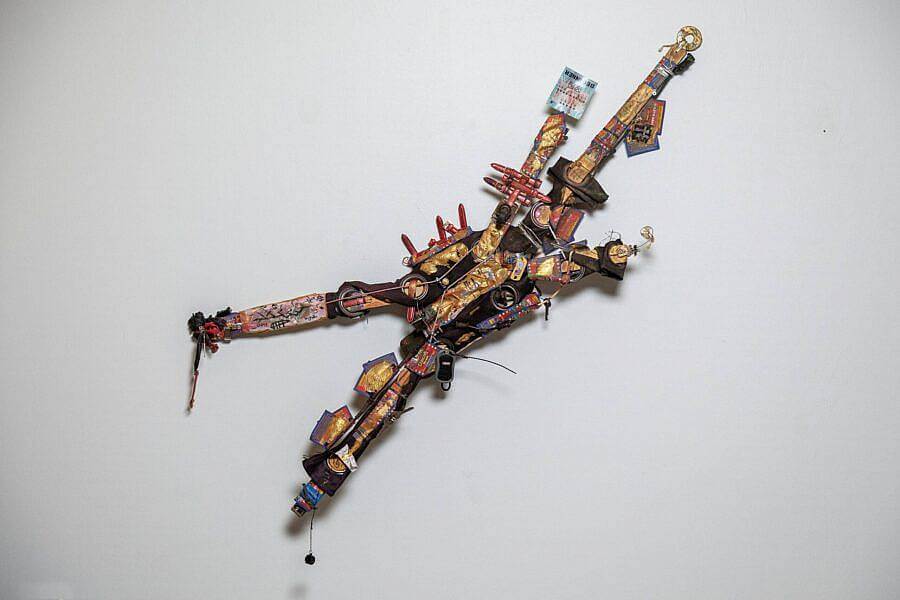
The ultimate medium is myself. That feels true and real to me. I have to put myself there first—whether I’m on the street, in a sacred space, in a gallery, at an MFA critique, on a flight to China, or on the trail to Everest Base Camp. It has to begin with me getting somewhere and my perception of what it really is about. Then I work with whatever is available: a pen and a piece of receipt paper, a large-format camera, a business plan, an arts and cultural ecosystem field plan, or a smartphone borrowed from a stranger. I think I can figure out something for that particular moment.
I’ve also given up on wanting to have everything. The medium, the subject, the situation, and the record of the encounter are all part of a chain of actions and circumstances. I was never particularly intentional about predetermined outcomes. The balancing act nowadays is to have a little more sense of direction while remaining open to what actually happens.
It is a constant analysis, but I don’t experience that as a burden. It feels more like a puzzle game. Sometimes I solve it, sometimes I don’t, and sometimes it takes years to remember a half finished puzzle and then suddenly finish it. It all feels really differently.
Tell us about your work at First Presbyterian Church, as well as the events and programming that you host there.
I come from China, where spirituality, religion, and personhood are constructed quite differently from much of the world I later encountered. I came to the U.S. for high school in East County San Diego, and I attended a Christian high school, so that was my initial encounter with churches and with a more structured sense of spirituality. After high school I began doing documentary photography, and through that I encountered thousands more people reaching toward their own spiritual definitions and processes. Over time, these experiences started to become unified for me. I found myself drawn toward spaces that were not necessarily religious, but sanctuary-like—spaces that could provoke reflection, peace, and a different pacing of one’s mind, will, and faith.
I kept using different work to explore the relationship between the spaces and situations people call spiritual or sacred and the everydayness of living.
In fall 2019, I came to Chicago for my MFA at the Department of Visual Arts at the University of Chicago. Then COVID-19 seemed almost perfectly designed for my class—about 65% of my graduate school experience was spent dealing with the pandemic. I remember writing about temples, peripheral zones of perception, and sacred spaces in my thesis, so I was already alluding to settings like these before I really understood where that thinking would take me.
Then I encountered First Presbyterian Church of Chicago. It is one of Chicago’s oldest institutions, founded in 1833, and its current neo-Gothic building was constructed in the 1920s. There are bullet holes in the stained-glass windows, and then there is Woodlawn itself and all of its histories. None of this was particularly familiar to me in the beginning.
The process that followed has honestly been a saga that I never anticipated. It was another situation I encountered where I needed to identify a medium to frame myself, the subject, and everything around it. I was intrigued, I was willing, and I needed somewhere to try things out.
One day in October 2021, I encountered Pastor David Black in the Garth, the courtyard of First Church. It began with a tour, a proposal, then a review by the church’s governing Session, and then things started rolling forward. Nobody really knew what to expect. I started with my tintype studio, then studio visits, then small programs, exhibitions, performances, and increasingly complex events. It grew and sustained itself in a way that was very DIY, very Chicago, very family-style, and sometimes very dramatic.
It has been a life-changing process because the building, congregation, neighborhood, history, and all the different mediums I deployed and negotiated for became parts of the same symphony. I started learning how an ecosystem actually functions. I also learned that administrative work is foundational and almost always invisible: bookkeeping, scheduling, insurance, cleaning, contracts, relationships, MOU, unlocking doors, figuring out where people are going to eat, and making sure everything can happen again tomorrow. There was just so much.
I’m not from Chicago, and I’m not from the South Side. But seven years here has given me enough time to begin understanding what has been here before me, what is happening now, and where things might be going. Maybe it was serendipity or chance-based gravitation that brought me here, but arrival was only the initiation. Spending years learning histories, building relationships, and contributing my own culture to the landscape is something I think I would try to do anywhere in the world.
There is already a lot out there about the arts and events program at First Church, but it is incomplete, and perhaps it should remain that way for a while. The relationships between art, culture, community, sacredness, sustainability, history, prejudice, stereotypes, capacity, and safe space are all real and constantly changing.
That is why, even when things feel slightly unhinged, a group exhibition can emerge. A social justice conference can happen. Hundreds of people can witness a hardcore rock show and a mosh pit inside a church. There can be a community town hall, a quilting bee, a dinner, a wedding, and a funeral. These are incredibly real touchpoints of a community.
And then you think about churches themselves: community anchors containing massive architecture, history, beauty, and increasingly difficult questions about what they are for. We are living after COVID, in a fully fledged digital world, amid generational gaps, aging institutions, AI, political cynicism, postcolonial reckonings, and all kinds of struggles around institutional trust and sustainability. Churches are not exempt from any of that.
I encountered a historical institution during one of its most vulnerable periods, and I saw the spaces. I knew art and some operational basics, and the church was open enough to try something with me. We absorbed the operational burden required to make each thing happen. We negotiated, burned out, thrived, stepped back, and eventually began reverse-engineering what we had built. We will likely continue doing that, because the next exhibition or event will always be another new situation, with its own people, needs, complications, and takeaways.
I’ve always appreciated a phrase First Church uses: “Long live the troublemakers, misfits, and mystics.” Intergenerational, interracial, intercultural. I cannot really preach religion, but I can say about arts and culture. My world has no dogma. I intend to remain open, like a host who knows the space of operation and its bottom lines.
Every time people gather, I think there is a small collective upgrade. Everyone changes a little bit. More connections are made, more evidence is left behind that we were here together, and then we continue.
I’m forever thankful that I got to train, experiment, fail, organize, and witness things with the community of The First Presbyterian Church and Woodlawn and Chicago and everyone else. Being able to work inside this massive, nearly century-old neo-Gothic building is very special.
Has there been an event or exhibition hosted at First Church that is a favourite of yours, and what is it?
There are a few. Earlier in 2026, I made a list summarizing our 2025 events and programs, and there were around 70 different things—screenings, listening events, exhibitions, performances, mini-residencies, concerts, and many others.
But a few of the early ones remain especially memorable to me.
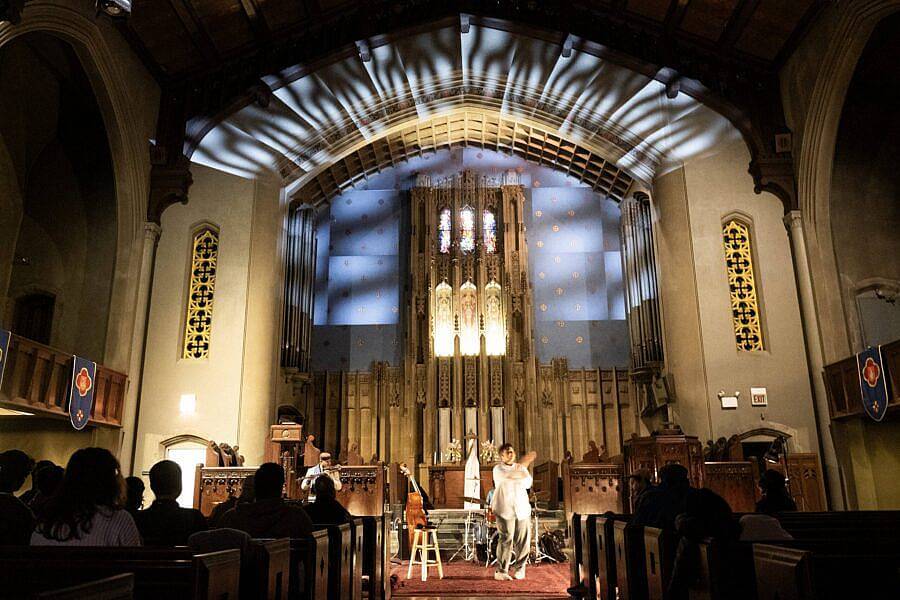
Life Springs Eternal was officially the first program I did at First Church. It was a classical vocal concert in the Sanctuary in spring 2022, performed by Jianing Li, who happened to be my elementary school classmate from my hometown of Taiyuan, China. It began simply as an inquiry about using the Sanctuary for a rehearsal. I proposed turning it into a concert with projection mapping, and eventually many people from the congregation, community, and our friends came out.
Like a tintype touches time, that concert touched time at a completely different scale. Someone I spent six years of elementary school with in central China somehow circled back into my world, and we collaborated on a concert in Woodlawn, for Woodlawn. That felt unbelievable, but also incredibly beautiful.
Another was Three American Painters Pt. 1 by Qichen Wu, known as Q. The exhibition took place in 2024 and was one of the first shows happened in the bell tower. I’ve always appreciated Q’s meticulousness in exhibition-making and curation, and I’ve really enjoyed the exhibitions he has hosted at Shanghai Seminary in Bridgeport.
The bell tower has been in not best shape, debris and dust from the past, broken bricks. But that was also part of the charm of the space: Gothic, timeless, and imperfect. I remember Q spent almost an entire week just cleaning. So much cleaning. He swept the floors, mopped, removed debris—the same kind of work I had done to establish my own studio and other spaces throughout the church.
Then the exhibition appeared inside all of that. There was a plasma TV playing vintage Doraemon animation, drawings in the basement toilet room, and a painting beside the massive metal ladder leading toward the bells, which no longer ring because the mechanisms have rusted. The show was genuine, particular, philosophical, and minimal. But I think what I remember most was the transformation that happened through Q’s presence. He cleaned the space and then stayed there for the full duration of the gallery hours. For that period of time, he inhabited and tended it.
In winter 2022, we also had an event called A Weekend of Hyper Practice, organized by a group of Chicago artists. It was a four-day open practice: food came out of the church kitchen, art supplies were provided, there were sound and light activations in the Sanctuary, and after Sunday service the artists met members of the congregation and spent time together.
I still have a pile of art that was made during those four days—good art. More importantly, some of the artists and people I first encountered during that weekend are still coming back years later, whether to arts programming, church services, or other community events.
I remember one evening after dinner, about twenty of us went on a after-hour tour through the building. We eventually walked into the Sanctuary, where a projection-mapping sound active installation by Maddie Ma was running. We sang songs, read poems, talked, and walked around together. It felt incredibly vivid, but also somehow sacred.
There have been many programs since then that were larger, maybe more culturally significant, more complicated, or more polished. But these remain precious to me because they were the very early work. There were almost no expectations and no particular metrics for success, I was nervous because I have not idea how to govern an event or spaces.
Can you tell us about something that continues to influence your work (as a curator and artist)?
Sacredness versus the everyday continues to influence me—not worship in a strictly religious sense, but personal ritual, and the ways we assign attention and meaning to ordinary things. I’m always thinking about landscapes and organizational principles that can be deployed at different scales: my living room, my studio, an exhibition space, an event, a family dinner. How do you arrange a situation so that something feels different, even if only temporarily?
Jazz and music influence me a lot. Groove, movement, pacing, the score, and especially the space to be slightly ahead or behind while still moving together. I think about synchronized movements and sonic resonance, and how physical spaces absorb, reflect, and echo that energy. There is something incredible about multiple people improvising while remaining aware of a shared structure. I actually co-produce an annual retreat called “Sonic Resonance”, a four day retreat with 40+ DJs on a Wisconsin farm. We have done 2 editions so far and made some amazing connections and work.
Cinema, definitely. Scenes, stages, camera movements, editing, sound, lighting, and the entire film crew required to construct what eventually appears as a single sequence. Cinema is still one of the most complex forms of expression to me. I sometimes think of it as a bigger car: it can carry much more capital, attention, labor, technology, mediums, and human coordination inside it, while still moving toward one experience and be accessed privately or collectively on different scales.
Food and kitchen work have also become increasingly influential. I work with Laura Letinsky on a porcelain artware project called Molosco, inspired by mollusks from the sea, and that collaboration encouraged me to enter more deeply into food and the culinary world. I’ve become fascinated by how heat works, moisture, flavor, timing, depth of cooked-ness, the manipulation of ingredients, rhythm, drinks and pairings, and the daring required to put something together and serve it to other people. Cooking is always a little bit like producing an event.
And spaces and architecture. I want to understand how things stand up, how people move through them, and how a space itself can become part of what is happening.
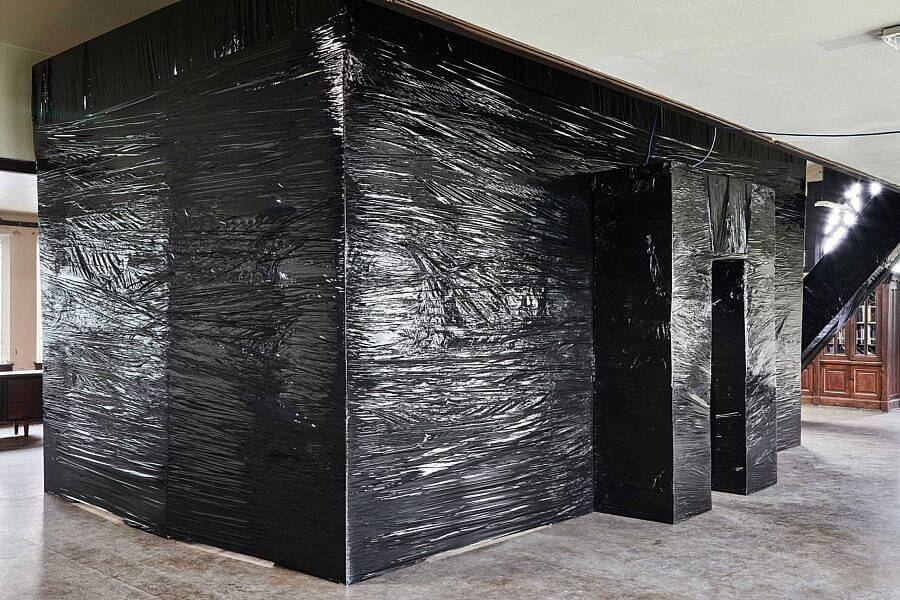
What is a challenge that you and other cultural workers are facing, and how do you see it developing?
I think one of the biggest challenges for cultural workers is clarifying the boundary between the personal and the professional, and becoming much more precise about scope, expectations, and sustainability.
Cultural work is inherently relational. We organize people, build trust, introduce artists to institutions, bring communities together, create programs, host conversations, and often respond to opportunities as they emerge. Because of that, the work can feel very personal—and sometimes it should. But the danger is that friendship becomes labor, generosity becomes expectation, and something that began as an experiment suddenly becomes an ongoing responsibility without anyone clearly defining who is responsible for what.
I’ve become increasingly interested in operations because of this. If an artist is talented at making creative work, I think a cultural worker has a particular talent for recognizing relationships: understanding what work belongs together, how introductions and invitations are created, what a space can hold, what a community might need, and how to construct the conditions for something meaningful to happen. That is a real creative ability.
But having the idea and bringing the right people together is only part of the work. Someone still has to make the schedule, define the scope, negotiate the contract, keep the books, raise or allocate the money, communicate expectations, manage the space, and understand what happens after the event is over. If those things remain invisible or informal, even very meaningful cultural work can become exhausting and unsustainable.
I think the field is developing toward a greater need for cultural workers who can do both: maintain sensitivity, curiosity, and genuine human relationships while also understanding systems, money, administration, and organizational structure. Being operational does not have to make cultural work more corporate or less human. I actually think good operations can protect the human part of the work.
That is something I am trying to learn myself: to become clearer about the core of an operation, what I am actually responsible for, what belongs to somebody else, what something costs, and what conditions are necessary for the work to continue.
To me, sustainability does not necessarily mean making everything bigger. Sometimes it means knowing the right proportion—how much time, money, attention, space, and responsibility something should actually occupy—and being able to keep that proportion healthy over time.
Who is an artist/photographer/creative whose work should be talked about more often?
There are honestly too many, and I think that is part of the problem. I’ve become less interested in identifying the one artist who deserves more attention and more interested in asking how attention itself is organized.
There are extraordinary artists everywhere who are making work, organizing exhibitions, cooking for people, maintaining spaces, teaching, documenting communities, and sustaining practices without necessarily entering the channels through which cultural attention gets concentrated. Working in Chicago, and especially through artist-run and community spaces, has made that very visible to me.
So maybe my answer is: pay more attention to the person who is already doing something interesting around you. Go to the small show. Visit someone’s studio. Ask who made the flyer. Talk to the person running the strange little space. Stay after the performance. There is probably somebody within a few miles of you whose work could completely rearrange how you see something.
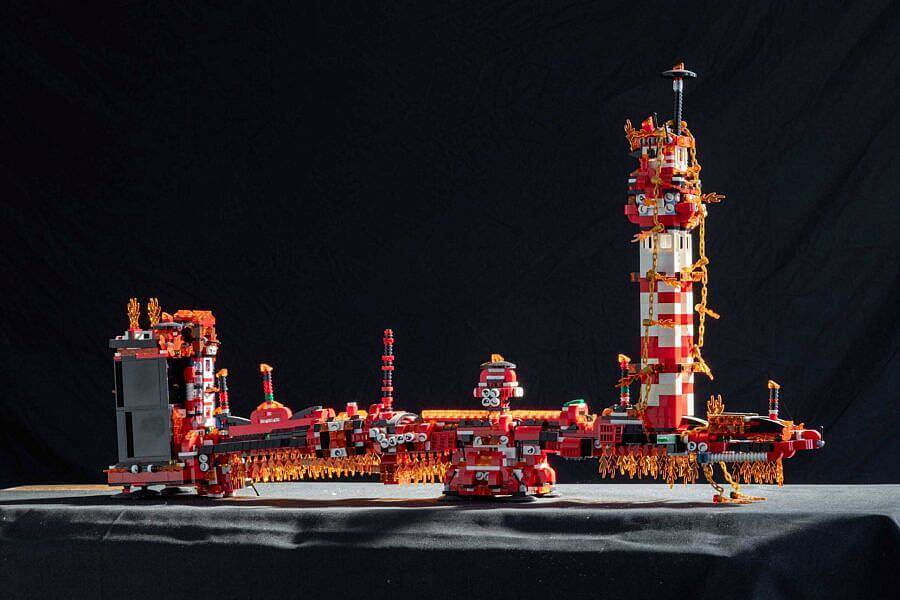
What do you want to see more of in contemporary art?
I want to see more art that enters everyday life—community-based activations, public art, performances, and work happening in unlikely spaces.
I’m interested in art that you don’t necessarily have to decide to go see. You might encounter it on the street, in a church, a storefront, a park, a restaurant, or somewhere that was never intended to be an art space. I like the possibility that someone can simply be going about their day and suddenly encounter something strange, beautiful, provocative, or totally “shocking” that temporarily changes their relationship to that place.
And by shocking, I don’t necessarily mean loud or offensive. I mean something that interrupts the familiarity of everyday life enough to make you look again.
I’d also like to see more work that is genuinely collaborative, where the artist isn’t simply placing an object into a community but allowing the people, histories, architecture, accidents, and existing rhythms of a place to actually affect what the work becomes.
There is already so much infrastructure around us that can hold culture. I’m interested in what happens when art becomes less dependent on designated art spaces and more capable of appearing wherever life is already happening.
Any upcoming projects?
Quite a few.
I’m wrapping up a portable darkroom—almost like a piece of functional furniture—that will let me roll my entire tintype operation onto the street and engage more directly with strangers and transient situations. I’ve been stalling on this idea for almost ten years, so it feels amazing to finally have the clarity to build it and see what kind of world it allows me to enter. Special thanks to Isaac Couch, Tony & Sara, and Austin Frisby for helping me bring this thing to life.
At First Church, we’re working with the Chicago Architecture Center on Built on Belief, with site-responsive activations across First Church, Narrow Bridge Art Club, and Oak Woods Cemetery for Open House Chicago 2026. At First Church, The Common Ground: Community and Sacred Futures will unveil three new projects spanning sound, modular furniture, domestic archives, landscape, and gathering. They’ll open publicly during Open House Chicago, October 17–18, and continue living with the space afterward.
I’ve also been working with the City of Evanston to develop a small cohort of houses of worship, adapting some of what I learned at First Church to help artists, cultural workers, and sacred spaces work together more confidently. More on that as it develops.
And of course, there is much more going on. We’ll see what happens. That seems to be how all the good projects begin anyway.
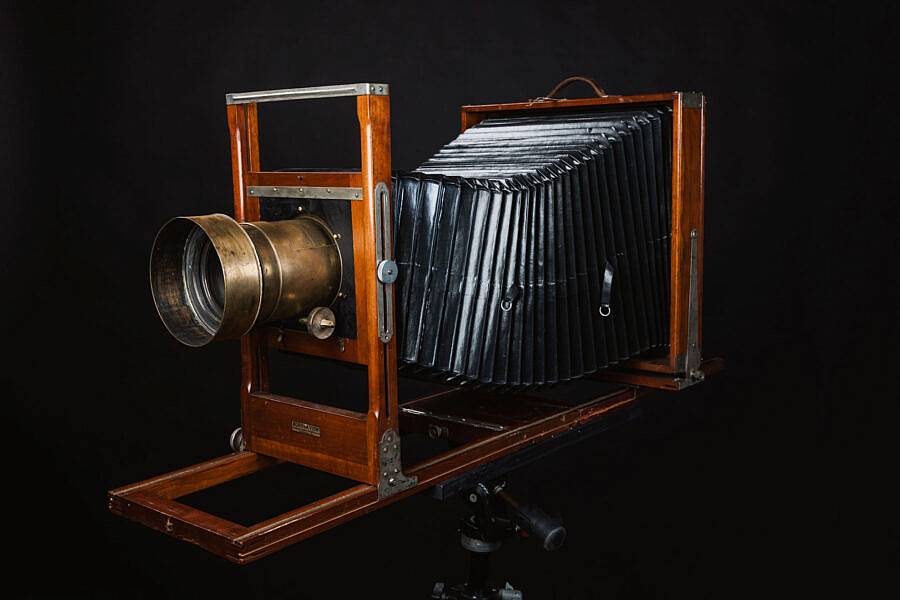
What do you collect?
I don’t really collect much. I actually believe in not owning too many things, and I am in a process of owning less, so I’m fairly minimal.
I do have a collection of found objects—tiny stones, rocks, pieces of plastic or metal debris, and other little things I encounter through projects and journeys. They become small physical records of where I’ve been.
For my tintype practice, I’ve also always offered a trade option. People have brought me their own artwork, artifacts, objects, and sometimes even bread and pickled onions in exchange for a tintype. I keep track of these things, and over time they’ve become their own strange little collection that travels alongside my work.
And a side note, House on the Rock in Wisconsin really struck me as a site of maximum collection—the complete opposite of how I live. It is accumulation pushed almost beyond comprehension. I honor America for allowing such a creature to exist independently.
So maybe I collect very little, but I really appreciate when someone else collects absolutely everything—and who knows how I might evolve in the next phases of my life. Collections live in different spaces, cared for by different people and infrastructures. They mark different entryways into the world. Almost anything can become part of a collection; sometimes we just need to name it as one.
Interviewed by Seth Nguyen.