How did your interest in art begin?
Art entered my life through being surrounded by materials from an early age, but also through storytelling and learning to see beyond what is immediately visible. My family owns haberdashery stores in Jerusalem and the West Bank, and I spent summers exploring small drawers, painting on pottery jars, and helping pack tatreez (embroidery) kits for art classes. I also accompanied my father on trips across Palestine to collect goods, where he would point out and name sites destroyed in 1948 and concealed by Israeli-planted forests. This was my first introduction to seeing land as something carrying traces and absences.
Architecture gave me the tools to read the colonial structures and systems that seek to erase these histories through abstraction and detachment from the land. Retrospectively, I think art became a way for me to work in the opposite direction: through walking, materials, and writing, I could begin with the land itself and the forms of knowledge embedded in it.
How do you consider materiality in your process?
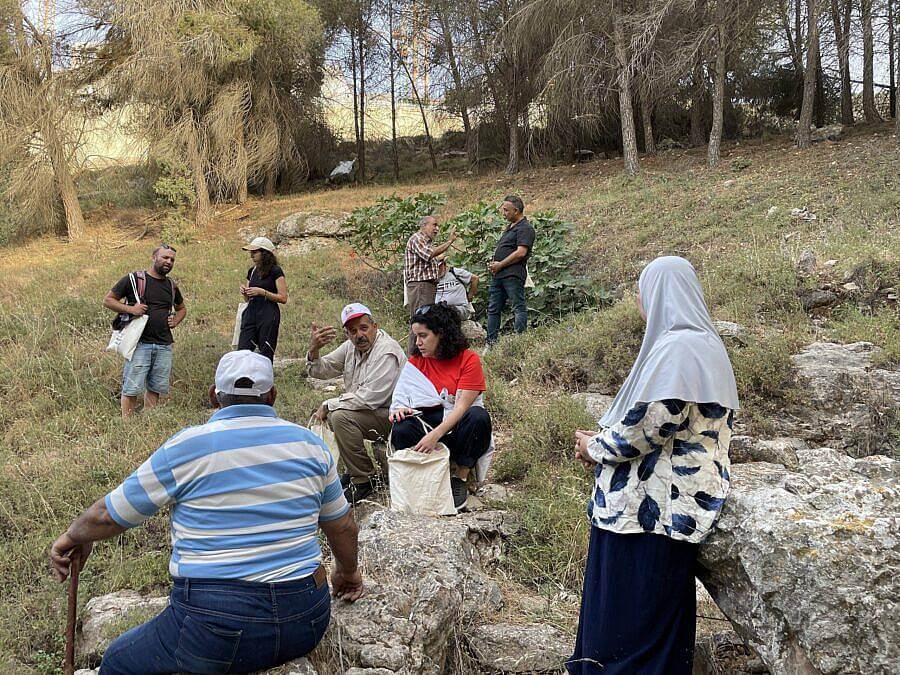
Materials for me are a way of entering into conversation with the land, especially at a time when intergenerational channels for passing on knowledge are becoming less and less available in Palestine. Working collectively with materials and following a material’s own rhythm—how it changes and responds to time—has opened access to lost practices and reimagined connections. A piece of limestone carries millions of years of sedimentation, but it also carries marks of labor, extraction, and destruction. Thinking through the different material temporalities has felt quite liberating, as they exceed the spatial and temporal boundaries that settler colonialism draws between us and the land.
What have you read recently that has influenced what you’ve explored in your practice?
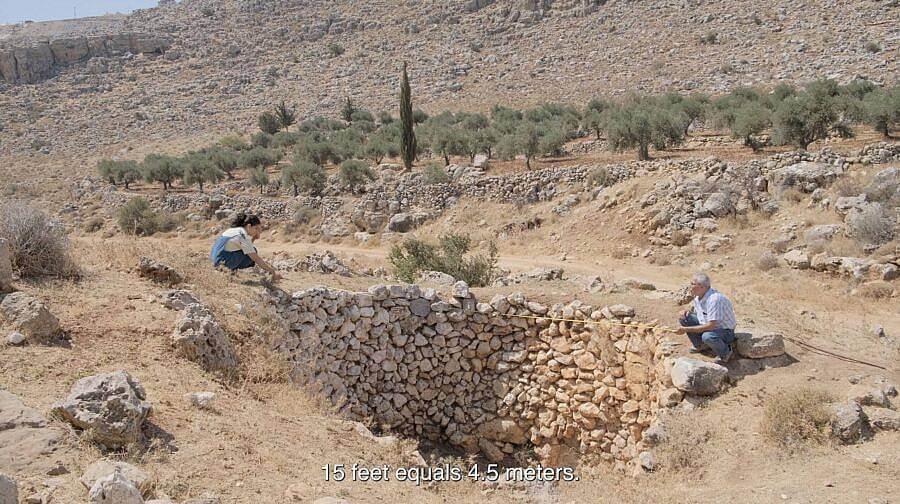
While developing The Ground Keeps What It Holds, I became interested in how archaeology determines what is uncovered, what remains buried, and which histories are displaced from sight. My own experience of accessing an Israeli-led archaeological site led me to Bassem Khandakji’s A Mask, the Color of the Sky. The novel follows Nur, a Palestinian refugee who assumes the identity of an Israeli man in order to cross boundaries and participate in an archaeological excavation. I was particularly moved by the fact that Khandakji wrote the novel while imprisoned. The parallel between the character’s movement through physical and political boundaries and Khandakji’s own conditions of writing made me think about literature as another kind of passage. It doesn’t erase the physical boundaries, but it creates a space where they become visible, and where other ways of moving through history and identity can be imagined.
In addition to your studio practice, you also teach, lecture, research, and write. Do these areas of your work intersect with one another or do they live independently of each other?
They feel like different rhythms of the same practice. Much of my work happens at the desk—reading, meeting and organizing—but it often only materializes while I’m on the move, through workshops, meals, walks, and conversations. These moments may seem incidental to the work, but they are often where ideas become tangible.
Lately, I’ve been appreciating the role writing plays in this process. It helps me understand my work retrospectively, but also creates an intimate connection with people I may have never met. Some of the most meaningful collaborations have come from people encountering my writing first, where our minds began speaking to each other before we could physically meet.
What was the last thing that you changed your mind about?
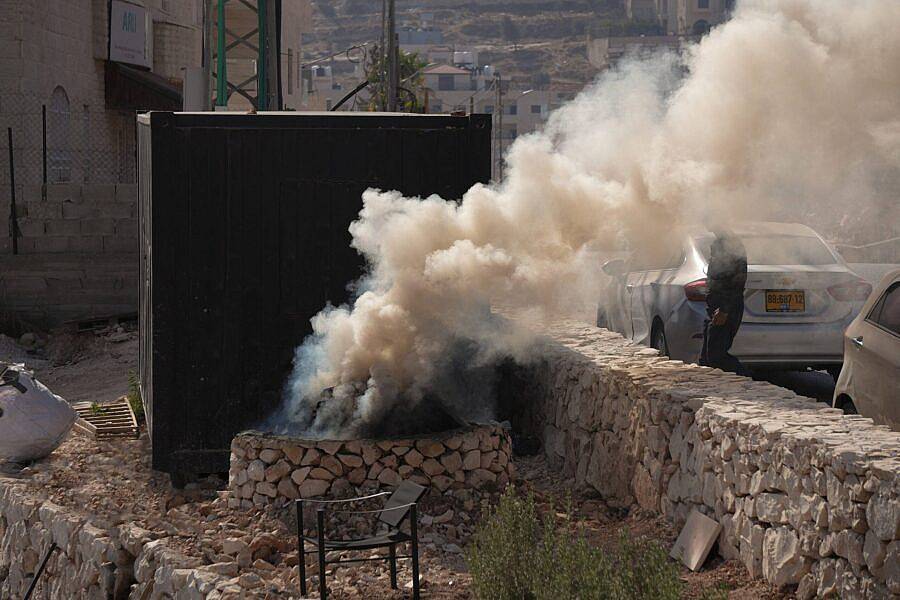
One experience that changed how I think about my practice was building and firing a traditional lime kiln in Bethlehem. I initially approached it as a way of learning a disappearing technique through historical documentation and the knowledge of builders and scientists. But firing the kiln continuously for three days required a level of collective labor that was difficult to reproduce today. This embodied research, however, allowed something beyond reproduction. Through building the kiln and tending the fire, I began to access forms of knowledge embedded in the documented workers’ chants that I could not have encountered through reading alone. It changed how I understand what my practice can do, and how it might engage with questions of preservation—not only through documentation, but through repetition, gesture, song, and making.
How do you think about closure in your work? Do you embrace it or resist it?
It depends on how we understand closure. Living through the ongoing genocide of my people, I’ve become increasingly aware of how quickly the world wants to bypass pain, and how few spaces there are to process collective loss. This rush toward closure is in itself a form of erasure, and it has felt quite troubling for me.
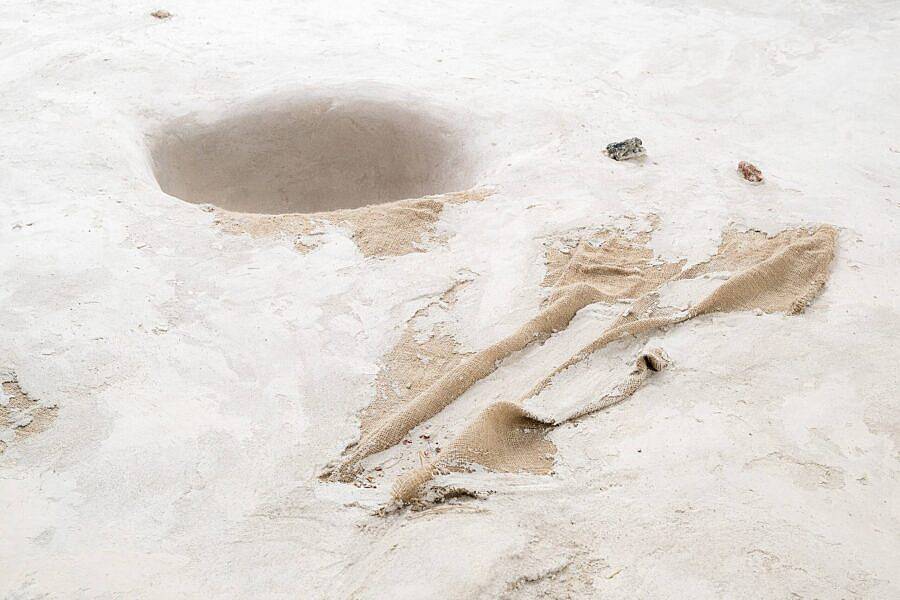
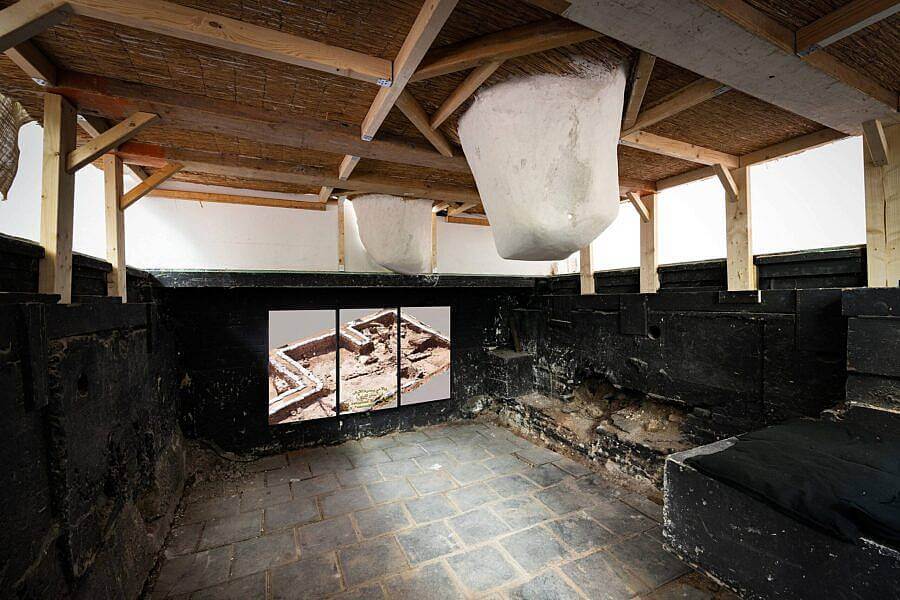
My work deals with questions of continuity, and the way I came to understand it is not simply as moving on, but as an ongoing process of return—of the dead, of materials, of stories. While researching The Ground Keeps What It Holds, I encountered Neolithic practices of burying the dead beneath domestic lime-plastered floors that were continuously replastered. Studying these practices, I found myself reflecting on the present moment; how maintaining a connection to loss can itself be a form of continuity. In that sense, I resist closure when it means severing that connection.
What is something that you have always wanted to do and are always working towards achieving?
I think I’ve always been drawn to what remains. Perhaps it’s nostalgia, but I have a strong belief that erasure is never complete; something always remains, and my work is interested in engaging with its new forms of existence. For me, this feels like a continuous negotiation between loss and potential. Recently, the idea of dormancy has given me a lot of solace because it contains both of these possibilities: a seed can be dormant, a song can be dormant, and a form of knowledge can disappear from everyday use while still being embedded in an object. I’m interested in creating places and moments to become collectively attuned to those forms of existence, even when they are not immediately visible.
How does your creative community now compare to your creative community when you were younger?
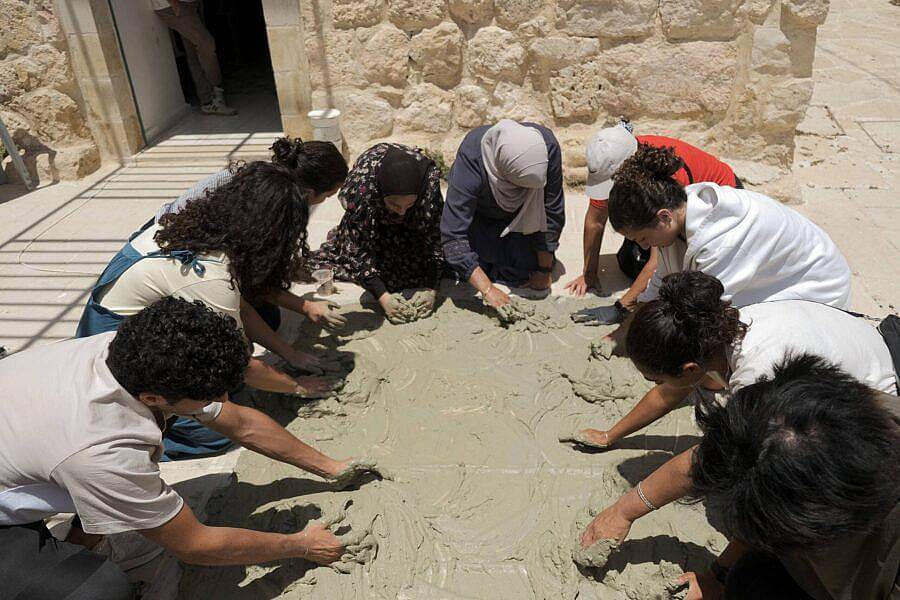
Early on, my creative community was made up mainly of architects and artists. In recent years, being with what is immediate—with the land, its vegetation, and traces of destruction—has pushed me beyond my own ways of knowing and led me to people who cultivate soil, graze the land, and study its geology. As my practice became more concerned with how knowledge can survive intergenerational ruptures, these relationships grew out of necessity, but they also revealed a challenge. Working alongside scientists, builders, farmers, and musicians made visible boundaries that are created not only by settler colonialism, but also by systems of knowledge that keep us within separate disciplines and rarely allow them to come into contact. I’m grateful that my work has created opportunities to bring these different forms of knowledge into conversation.
Any upcoming projects that you want to share?
I’m currently developing Tal with artist Raghad Saqfalhait and material scientist Dr. Hamdallah Bearat in collaboration with RIWAQ. Launching in 2027, the project explores how a living archive could address a collective concern with the disappearance of Palestinian material knowledge under settler colonialism—both through the destruction of materials and sites, and through the interruption of the networks that carry this knowledge. It is currently taking shape through fieldwork and ongoing conversations with artisans, land-based practitioners, and designers in Palestine.
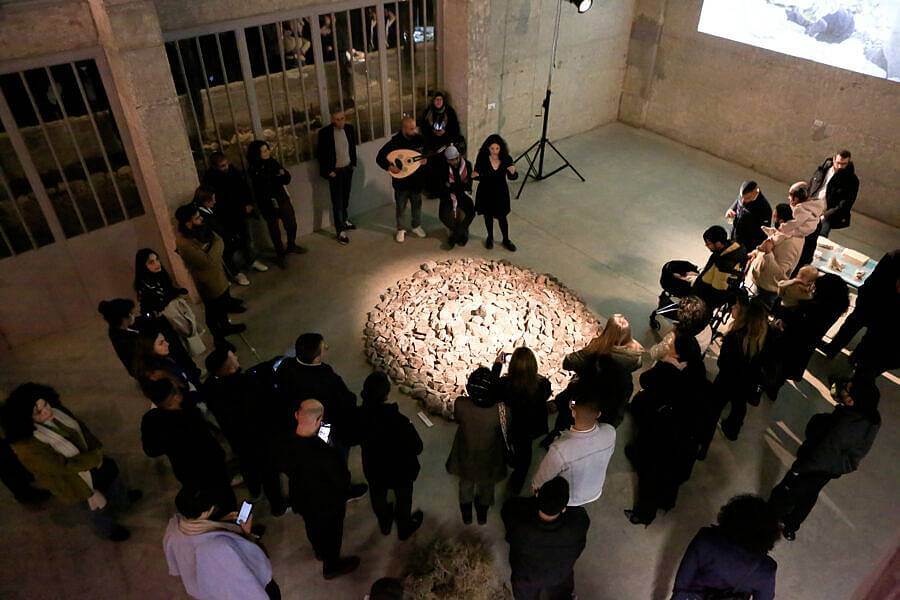
Another project I’m developing engages with historical labor chants. During A Hand of Fire and Stone, I worked with musicians Mohammad and Ibrahim Abu Laban to recompose chants associated with Palestinian lime burners, originally documented by historian Omar Hamdan in the 1970s and ’80s. We’re now working toward recording these reinterpreted melodies and exploring how performance can bring together the material and immaterial forms of knowledge carried by these chants, both lyrically and rhythmically.
What do you collect?
Honestly, mostly receipts, invoices, and official papers—the things institutions insist on keeping track of. It sounds a little ironic for someone as sentimental as I am, but it also holds a lot of truth. I used to collect rocks from my walks, and I still find it difficult not to pick them up. But moving between places and having to get rid of them is sad; I often end up thinking I should have left them where I found them.
Collecting comes with its challenges, and it’s something I’m aware of as I develop Tal with Raghad and Dr. Hamdallah. It implies storage, ownership, access, and maintenance—relationships to material shaped by control and capable of reinforcing it. We’re interested in exploring how the materials and narratives we collect can remain in circulation.
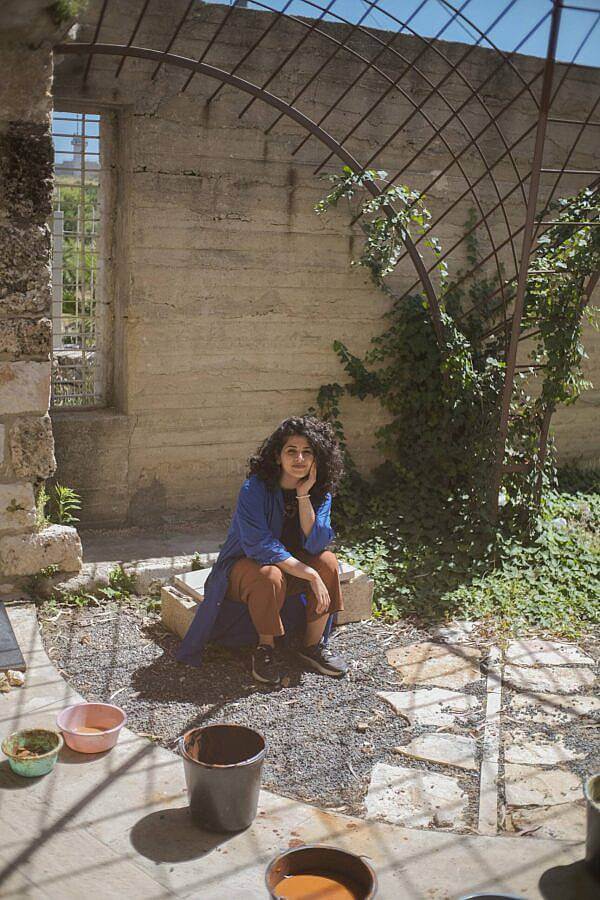
Interviewed by Seth Nguyen. Artist portrait by Raghad Saqfalhait.