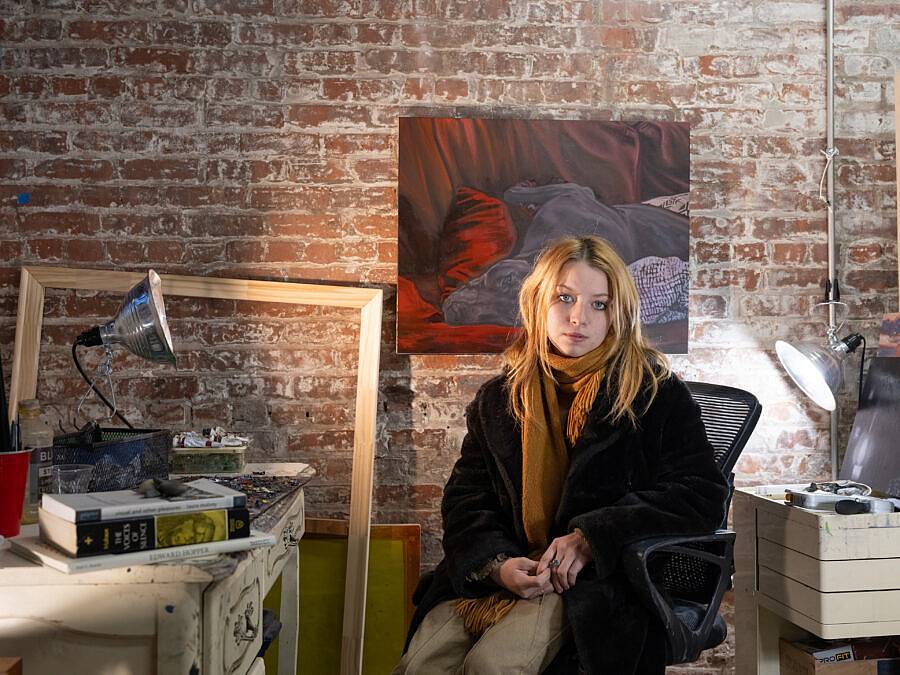
Tell us a little bit about yourself and what you do.
My name is Lily Jane Rand, and I’m a painter based in Brooklyn, NY. I mainly work in oils, and occasionally encaustic when I get the chance. My subject matter usually includes digital ephemera, historical intrigues, and other such material that ends up in my collection. I try to apply a conspiratorial eye to seemingly incongruous imagery, tying events and individuals where it may not seem appropriate at first glance.
How were you introduced to the mediums that you work with?
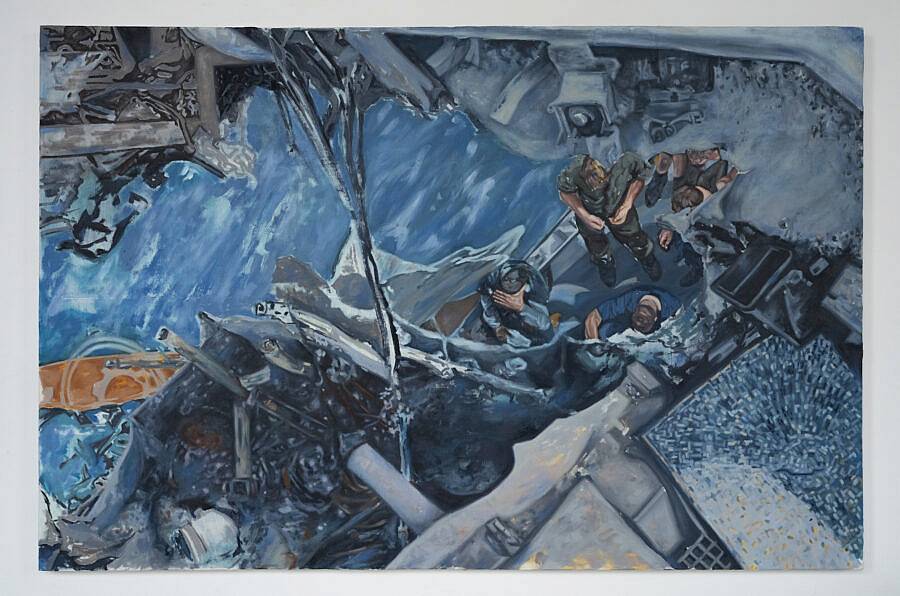
I studied painting in college, where I first encountered oil paints in a serious way. A lot of my education took place during COVID, so much of what I learned was through independent exploration of the medium. I had a really great professor and mentor, Elise Richman, who instilled in me a real sense of discipline and rigor. Learning still feels very personal to me; my practice relies on a ritual of solitary experiments.
Is there a moment you look back on as being formative to the work you do?
At a party several years ago, I met my friend Theo Meranze, who is now an art writer. We were both young and hadn’t yet figured out what we were doing with ourselves. We got to grow up together, and the respect and encouragement he showed me have been instrumental to my career. He introduced a seriousness to the ideas I was drawn to, which have continued to flourish through our correspondence.
What kind of imagery are you drawn to?
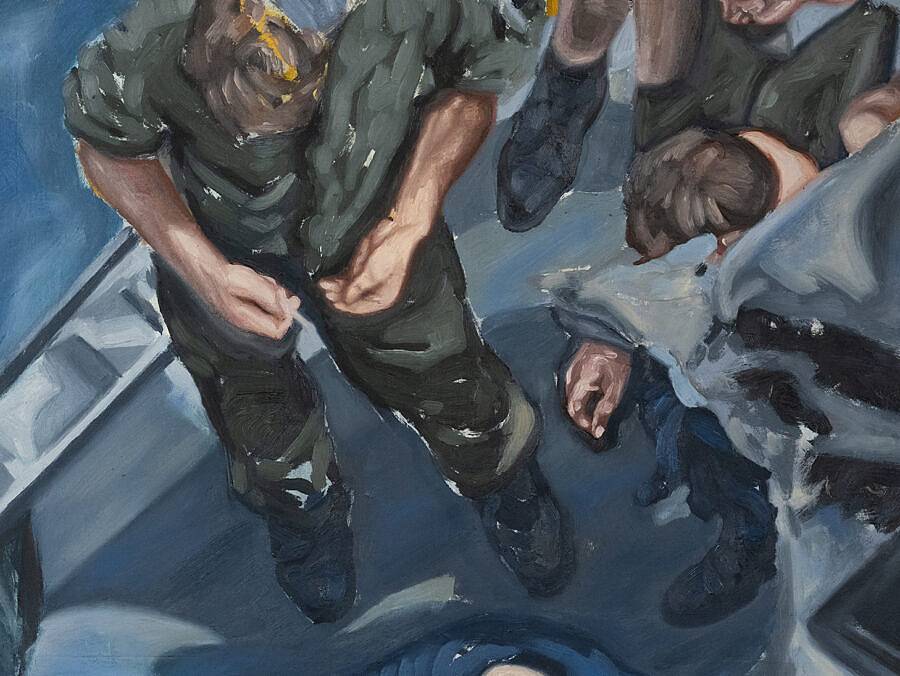
I like to conduct very passionate, methodologically flawed research projects. Flawed in that I have no accreditations, and that the narratives I construct have little regard for chronological order, academic standards, or clear results. Probably just from the way I have described them tells you enough. I’m drawn to stories, or images that suggest them, that are salacious, damaging, and vulnerable to erasure. That erasure might take place through the passage of time, or through dubious efforts. I love painting interiors, as I feel they are good for depicting “chamber stories” or something along those lines.
When needed, where do you look for inspiration?
Reading and watching are my favorite sources of inspiration. Over time, I’ve put less emphasis on looking for ideas in paintings themselves. I like to fill my free time with essays, novels, films, and plays to encourage new ideas. A lot of inspiration erupts at home, too, as I live with two of the best writers I know. Right now, my household is obsessed with Derrida, and I’ve been reading his book Archive Fever: A Freudian Impression. God only knows I wouldn’t have a grasp on a single word of it without my housemates’ help. My friends are ultimately my biggest source of inspiration, and also foster my understanding of it.
What have you been reading or watching recently?
I most recently watched McCabe & Mrs. Miller, directed by Robert Altman. It is a reimagining of the classic Western, set in Washington state. It was a very nostalgic watch, having grown up in that area. I used to do historical reenactment at Fort Nisqually, a fur trading post that definitely resembled the scenery and drama of the film. History of a certain sort has always fascinated me. The film managed to evoke it in colors, textures, and details I found enchanting. And it’s hard to go wrong with a soundtrack that includes some of Leonard Cohen’s best songs.
What draws your interest to realizing digital ephemera materially?
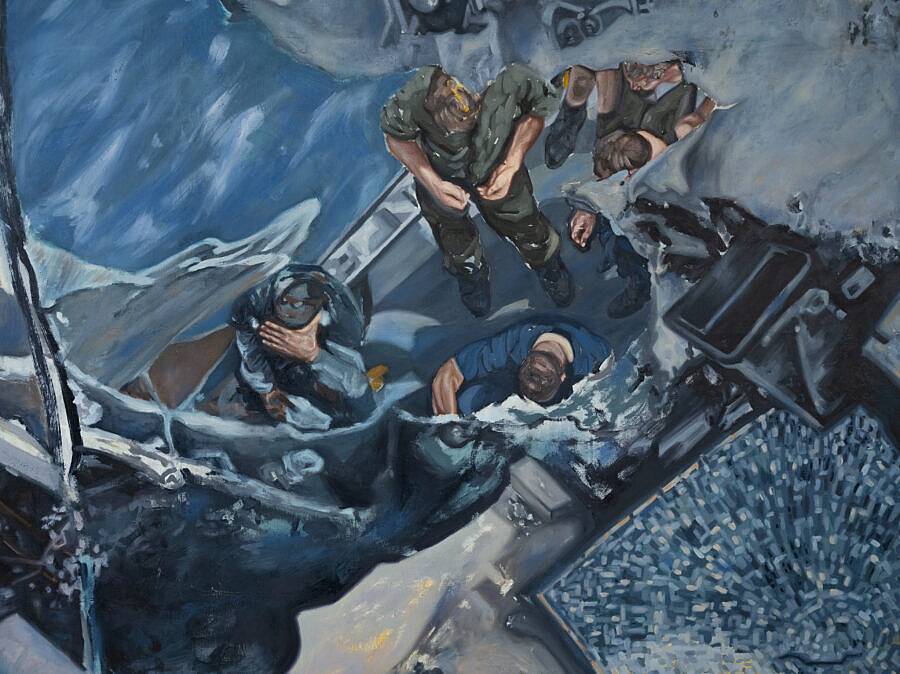
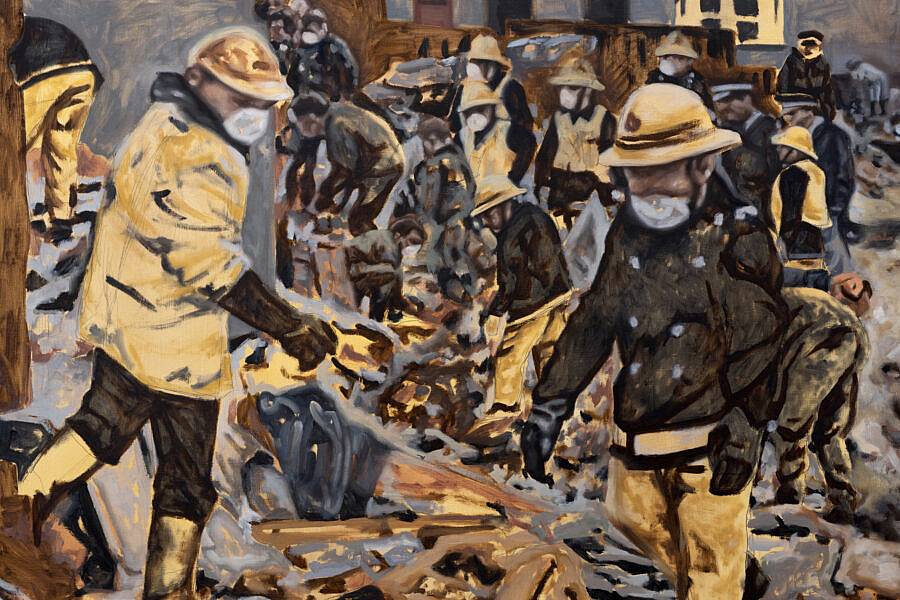
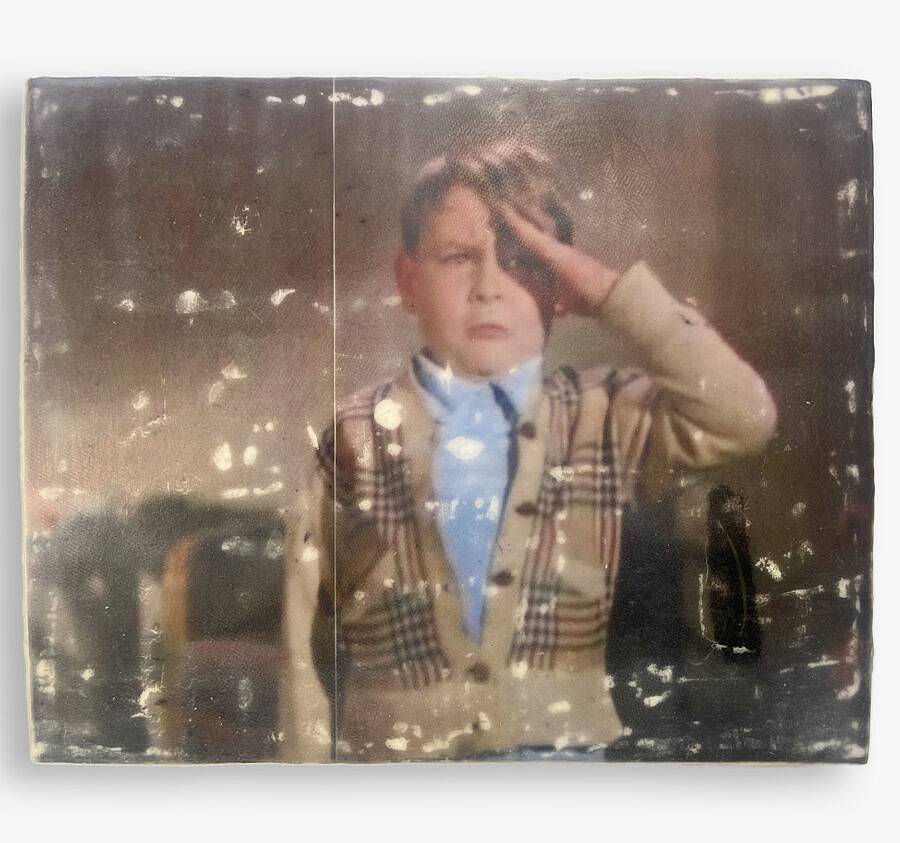
In school, working from life is emphasized as the best way to learn how to paint. However, screens so often mitigate our gaze, and I wanted to develop a method of painting that was precise in capturing all the idiosyncrasies of digital images. There is a certain kind of abstraction that occurs in degraded images, which I’m fond of depicting. It mystifies the subject matter and the tone of its composition. I usually put together a sort of tranche that I mull over before I’m sure what material I’ll work with.
What are some common motifs in your work, and what do they speak to?
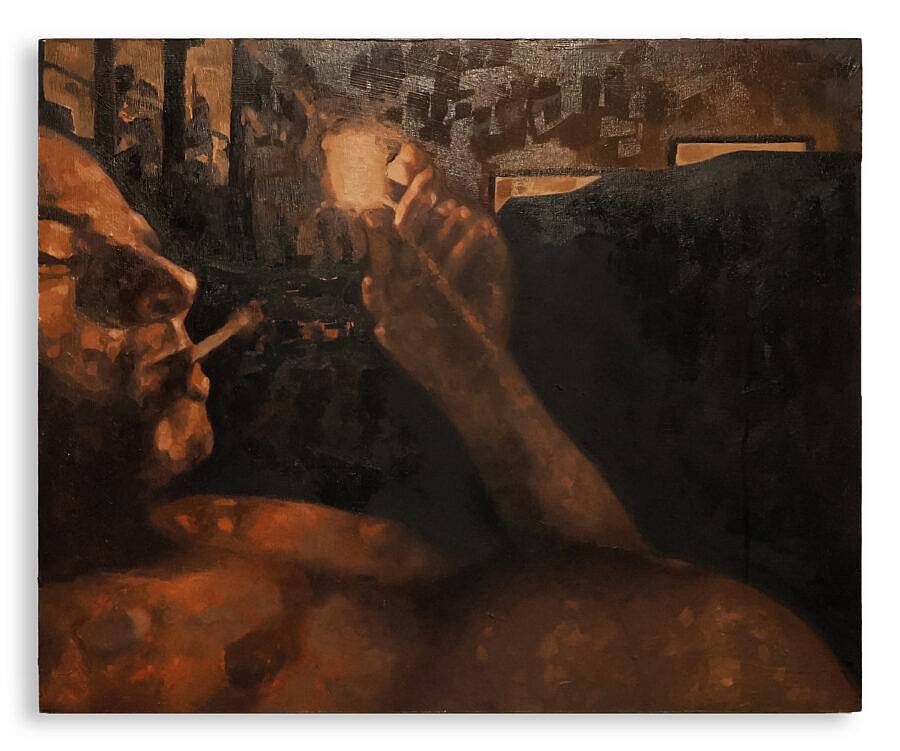
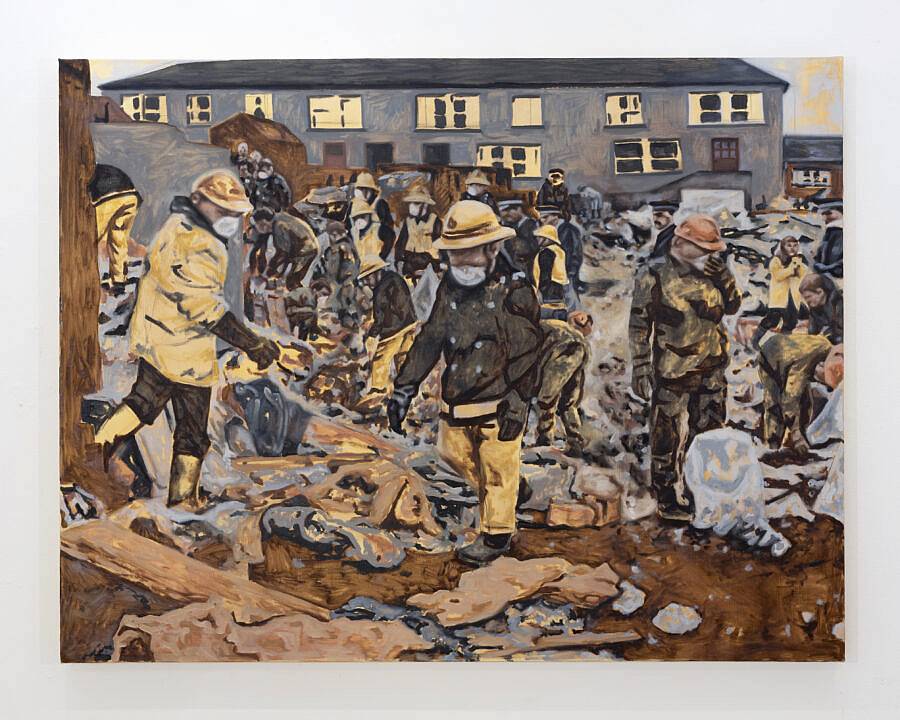
I’m often drawn to interiors, or interiors made exterior. This usually manifests as images of catastrophe, wreckage, or decay. The subjects in these interiors are often men, or exhibit some trace of masculinity, and not a positive one. I think there’s an equation there, with an emotional valence that women especially pick up on.
Can you share a memory of someone interacting with your work that lingers with you?
Recently, a friend’s relative was introduced to my work. She felt an immediate kinship with it, as the subject matter evoked her own experiences. Despite the overt masculinity of the subject matter, it had wordlessly made her feel less alone. She felt seen by the work, which to me is the greatest honor. To know that a work of art can return the viewer’s gaze is the ultimate goal.
Are there any areas that you’re interested in exploring further in your work?
I would really like to work more with landscapes. When they are empty of figures or characters, I’m drawn to them in a similar way as interiors. I’m interested in their textures and how they might evoke some of my previous ideas through organic, environmental subject matter. Oskar Kokoschka’s landscapes have been on my mind lately, especially since I learned of his playwriting endeavors. The solubility between his writing and painting is still mysterious to me, especially as I do not write much myself. I also recently found out that in 1918, he commissioned a life-sized doll version of his lover, Alma Mahler, who had left him. It was constructed from swanskin, horse hair, and a papier-mache skeleton. He later “murdered” the doll brutally. What a freak!
What’s your studio like?
I share a beautiful studio in a converted water tower control center. My space is terminally cluttered, and I battle it in an endless cycle of my projects encroaching on my ability to be productive. But it’s ultimately a very fruitful process, full of affection. The studio is very rarely empty, so I get to start my work days amongst my friends before we all settle into our independent practice. Our studio also holds an exhibition space that our collective runs. I had the opportunity to present a duo-show of my work there with my friend Ruby Beenhouwer, and I think we’re all excited to continue programming the space.
Have there been any mentor figures for your practice?
My boyfriend is a native New Yorker who has inherited a really precious cast of mentors and idols. He has introduced me to many of them, which has been such a gift. Growing up, there weren’t enough people like that I could look up to, but they have come into my life at the right time. It gives me a lot of optimism to be around people farther along in life who have made being a painter into a good life.
How does your creative community now compare to your creative community when you were younger?
A few years back, a new friend I had met at a party offered me space in the studio he shared with one other friend. The space continued to grow, and I am lucky enough to work amongst people I would consider my peers and closest friends. When I was younger, my creative community mostly consisted of friends I had met through the arts high school I attended. College was somewhat unfulfilling in terms of community, but I think COVID is to blame for that. Another one of the best parts of my creative community in New York is the responsibility I’ve developed towards my peers. Working in the space I do, I’m able to help others with their exhibitions, practices, etc. Sometimes this might just mean mopping the floors or answering questions, but it makes me feel tethered.
How do you manage tending to the variety of responsibilities in the work you do? How do you mitigate burnout or exhaustion?
I’m pretty disciplined about my work hours, and I paint from morning to evening. After this, I allow myself to indulge in craft projects as I wind down. This usually leads to movies or television eventually. I save my reading for the mornings and moments in transit, like long train rides. Research is a huge part of my practice, but it also feels decadent and comfortable. So I also save that for my downtime, outside of the studio. I’m rigorous about my schedule, and I have to be selfish about it sometimes. Knowing when to say no, either to my own work or to fun social outings, keeps me balanced and staves off exhaustion.
What do you collect?
My biggest collection is probably my digital archive of reference photos. I do kind of resent them not being physical prints, but I’ll get around to making some big photo books for them eventually. Right now, I’m really into collecting images of abandoned industrial equipment from users on Reddit. I think most people at this point spend a good amount of time on Reddit, but this is a big plus to me, as it means there are way more people posting, participating in conversations, sharing their thoughts, and asking questions. I spend a lot of time collecting images from subreddits where the image constitutes, or conjures, the user’s question. I look through my collection almost daily, with a fondness that definitely fosters some transference; the very alien photographs become personal. In the physical realm, beach combing has always yielded me many treasures. Stones, especially those with naturally formed holes. A friend told me they are good luck, which only confirmed my feelings toward them. Also, religious paraphernalia definitely populates a lot of my treasure boxes and trinket shelves. It probably has to do with the way I grew up.
Portrait photographed by Walker White.
Interviewed by Luca Lotruglio.