Tell us a little bit about yourself and what you do.
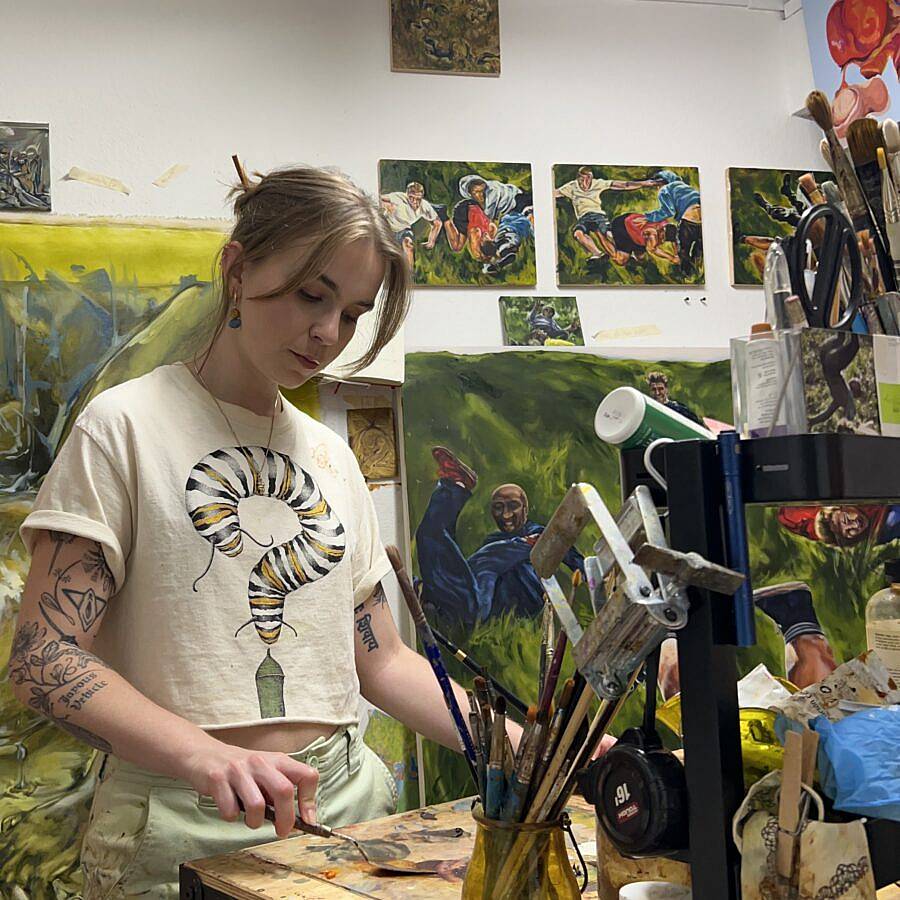
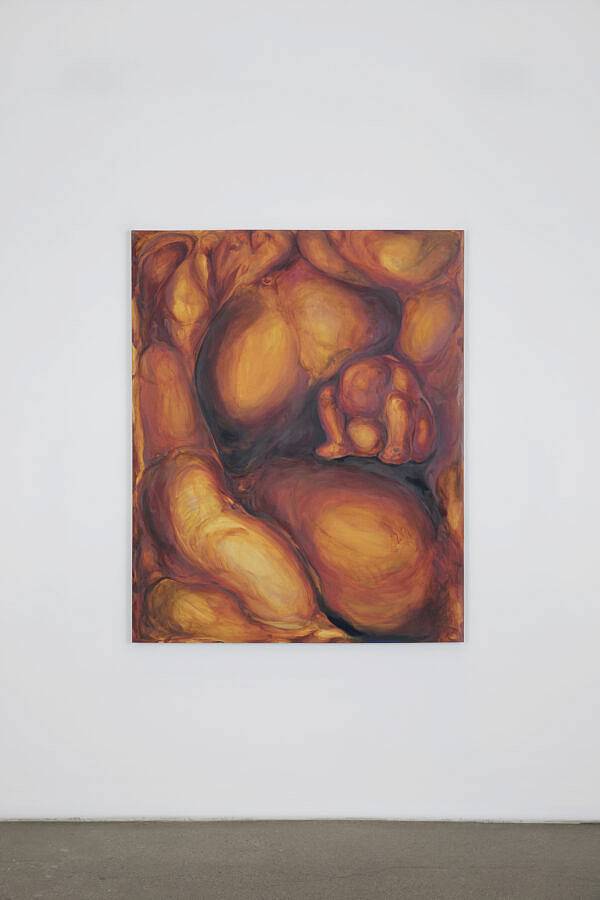
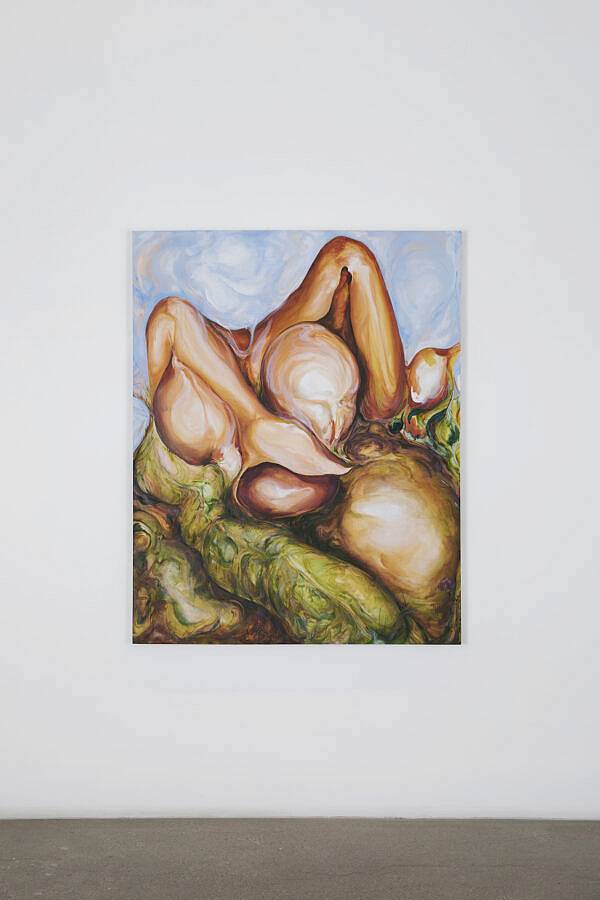
I am a visual artist based in Los Angeles. I go by HP, which stands for my birth name Hayley Paige. I started painting as a kid, and that led me to study Fine Arts at Ringling College. After graduating, I left my native Florida for the other coast and I’ve been in California since. I make my artwork mostly through oil painting, and I also find guidance through drawing and writing. Over the past few years, my practice has focused on themes of earth-body contact, driven by a notion that humanity is a simple unit of the planet. What excites me into making my work is this drive to insist, both to myself and all, that we are inextricably linked to earth and one another.
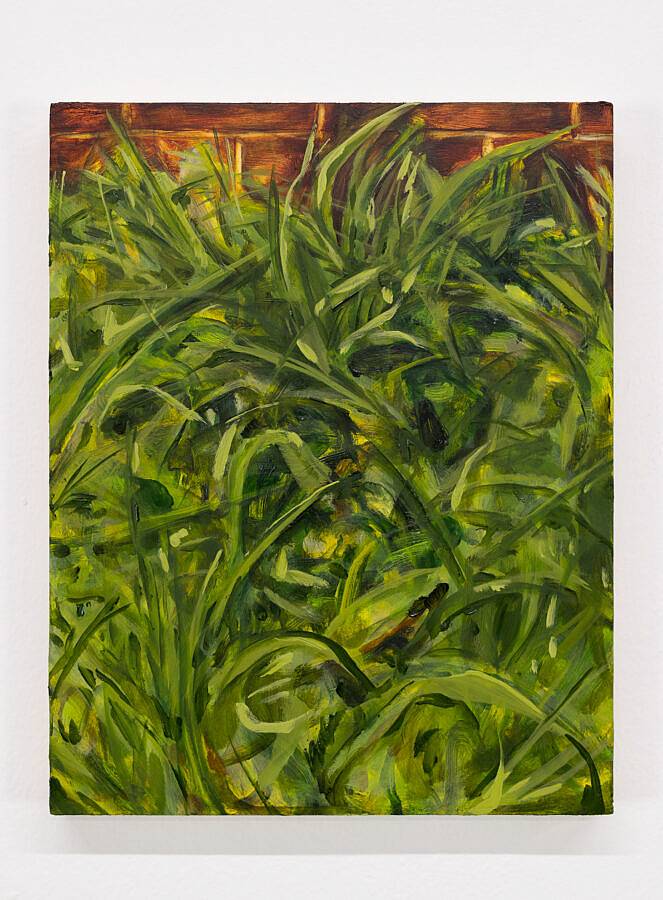
I tend to construct my compositions by synthesizing my observations of the human body, flora, insects and geological forms, allowing these to circulate and inform each other. I also think I have a nonlinear approach to painting that nods to techniques of the Old Masters while going off the tracks a bit. As in, I know I could and should do this layer this way, but what would happen if I did it wrong on purpose? What would it take for me to get out of that mess, and will it be fascinating along the way? I like taking the scenic route because it introduces obstacles that create nuance and opens space for chance. Writing this I’m remembering a beloved friend of the LA art community, Ben Barcelona, who in every gallery chat we had when I used to work at LACMA, would always recount the vitality of chance and uncertainty in artmaking. Because of him, I lean towards the scenic route even more these days.
How did your interest in art begin?
I grew up around people who cherish and cultivate creativity. I was always encouraged to use my hands, especially by my grandmother who was a master of needlepoint. As a kid, I saw she had an art practice that followed her through her days, and I think this empowered me to find my own.
I also credit my nearness to the John & Mable Ringling Museum as a haven throughout my upbringing. I went to college down the street and I would frequent the museum, regularly sketching the collection and loitering in the gallery of looming Peter Paul Rubens, massive paintings from his Triumph of the Eucharist series. Having access to the Ringling, basically in my backyard, was a huge part of developing and fostering my relationship with art. That whole collection is a gem and I hope it remains a resource for all. If you’re ever in Sarasota, go give yourself a little kiss by seeing James Turrell’s piece, Joseph’s Coat one evening there. Promise it doesn’t disappoint.
Are there any influences that are foundational to your practice?
Growing up on the Gulf Coast of Florida feels like a massive part of my creative development. It’s a place that I can never ignore the earth – its forces always pushing up between the sidewalk cracks, invading your front porch, or orchestrating your evacuations via hurricane season. Despite boundless acres of strip malls, assisted living facilities and whatever else is urgent to tame and manicure the land, a sense of wildness never leaves you in Florida. As a kid, I was yielding to alligators in neighborhood canals and lulled to sleep by endless mixtures of frog and cicada song. I think being raised in a place that’s ripe with the expressions of an animate planet encouraged me to develop my own sense of expression.
What is your studio or workspace like? Do you have any rituals when you begin working?
Typically I’ll hang my paintings on the walls and work directly from there. Lately I’ve been rolling out a blanket or yoga mat to work on while I paint so I can break off into stretching or rest, which I’ve learned is necessary hygiene for a painter’s shoulder. Adjacent to my workspace is a pinned collection of images that I switch out depending on what I’m working on. Right now there’s a handful of pictures of mutated oranges, printouts of Ana Mendieta’s work, and some images of fairy fingers, or horse eponychium. Good company in my periphery as I paint.
A ritual essential to me is adorning my studio in amulets. A studio needs specially charged objects: trinkets, that one rock, a note from a loved one, a piece of an insect, whatever treasure you’ve been gifted. I think all artists have something like this in one form or another, some sort of ephemera dear to them that instigates and tickles at the creative well. Paul Klee had an amulet collection too, though maybe he’d call it by a different name: archives show that he had a rather extensive collection of rocks and other naturalia he gathered throughout his life, even making artworks out of some specimens.
Your compositions often evoke the body and the bodily in a way that feels recognizable and anatomically faithful, yet uncanny and untenable. Is this a tension that feels relevant to you?
Yes, definitely.
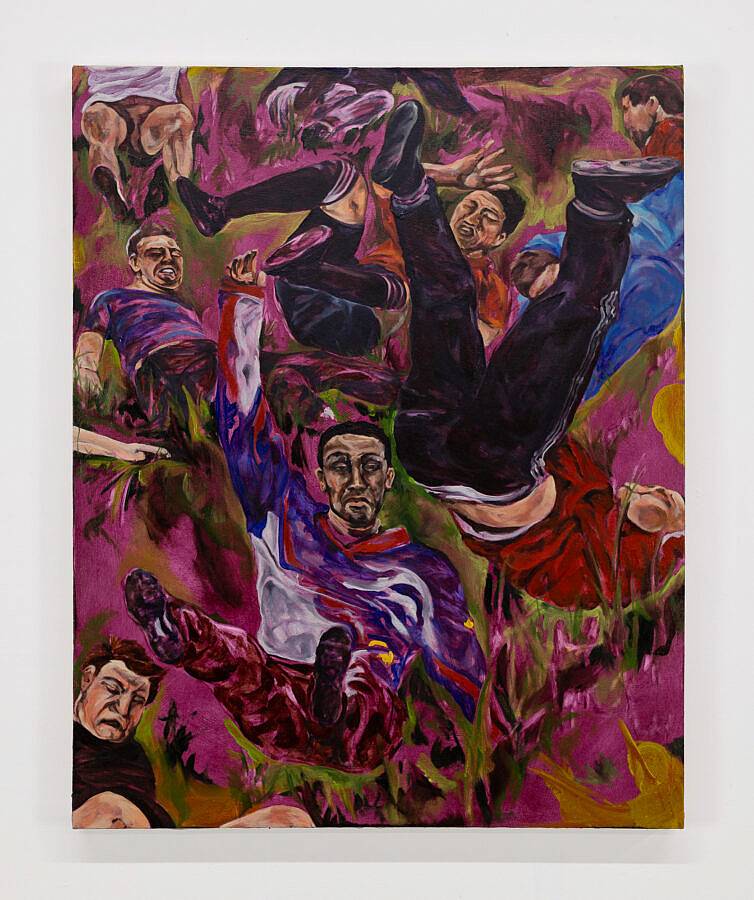
Your color choices and rendering styles often feel reminiscent of historical or religious modes of painting, evoking figures like Pieter Bruegel or El Greco, yet your works are formally elusive, sitting uneasily between representation and abstraction. There is both a familiarity and an unknowability to them. Is this something you cultivate?
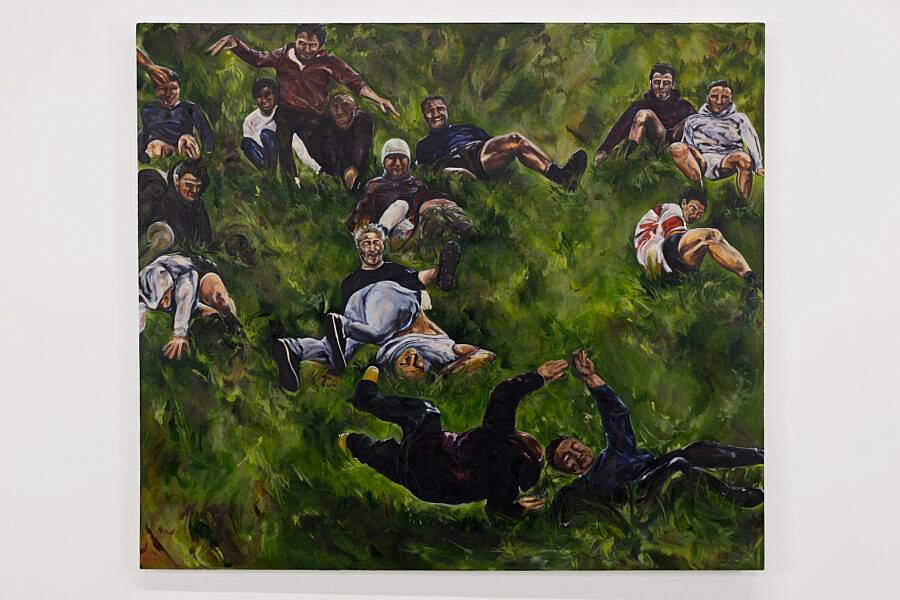
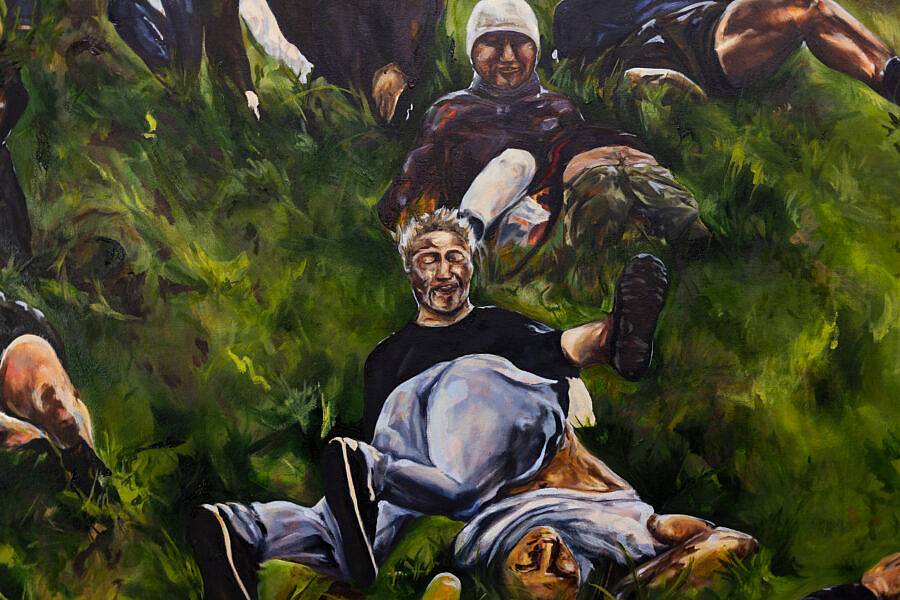
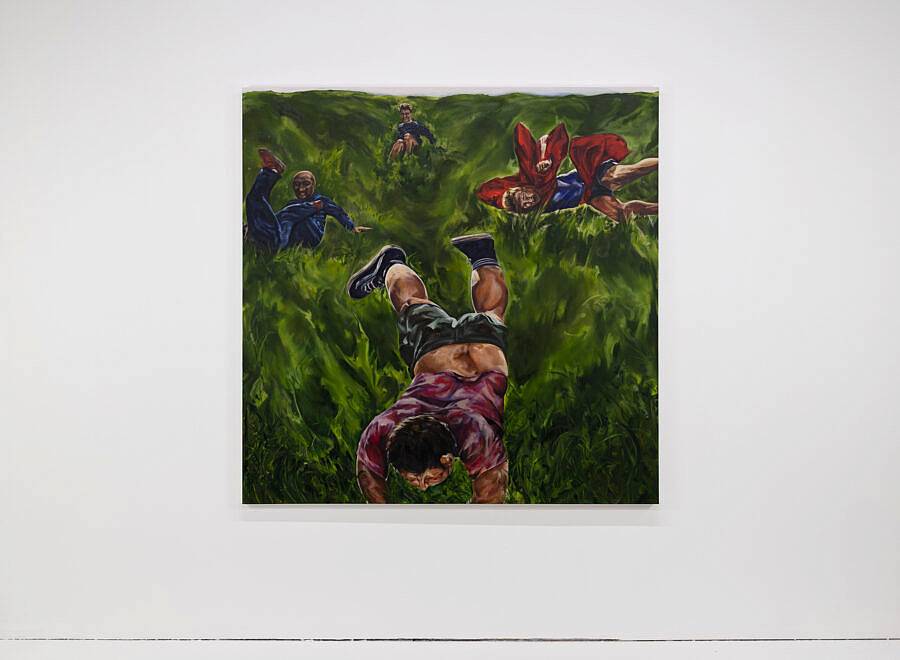
Yes, and I think I was especially aware of this with my most recent body of work. It felt important to me to let there be at least one passage of abstraction or confusion in each of these paintings, to upset the eye and fool it into thinking of figures like cloud recognition, yet the form evades. There are passages in each painting that have the assuming parts to suggest figuration, but you see limbs go awry: incomplete bodies, men with extra globs or legs attached to them, gestures interlinking figures to the grass, ground and each other. For me, walking that knife edge between the two is an energetic place to work within.
What is your relationship to internet culture?
At risk of sounding something like a Luddite, I have been fantasizing about going back to a flip phone. Lately our relationship feels like a sick addictive fever dream. This unrestrained inundation of images – regularly seeing footage of genocide and war crimes, followed by your next dinner recipe, followed by footage of Americans being killed by their own government, followed by the latest self-care trend, and so on – it’s sick whiplash. I know I’m not alone, in the middle of grappling with what boundaries ought to be in a reality where it’s impossible to avoid the screens. I don’t know what this looks like.
Have you read or watched something recently that felt generative for your practice?
Fiona Benson’s book of poetry Ephemeron has been at my bedside for months. I treasure her Insect Love Songs because she has this way of illuminating non-human perspectives and getting eye level to creatures we tend to disdain.
What gives you hope?
Love
Could you share some recent, current, or upcoming projects you’re working on?
Lately I’ve been focused on a body of work entitled Stumbling Down Elysian Hills. As research for the paintings, I went to Gloucester, England last May to witness the Cooper’s Hill Cheeseroll, which is a series of races where people chase a wheel of cheese down a 200-yard hill that might better be described as a cliff. Long story short – this is not about cheese – I saw footage of this silly dangerous ritual and I obsessed over the figures and how they interacted with the ground.
Luck got me to Gloucester at the right time last spring, and I went to witness people actively succumb to gravity, the earth and each other. And I went because I wanted to feel the hill myself as a way of gathering somatic information. Putting my own body in that landscape helped me better understand how to make this work and I spent the rest of 2025 working on the series, which is a collection of about two dozen paintings and works on paper. I’m tying things off with that and turning towards a new body of work I hope to share soon.
Interview by Paul Fitzpatrick