Tell us a little bit about yourself and what you do.
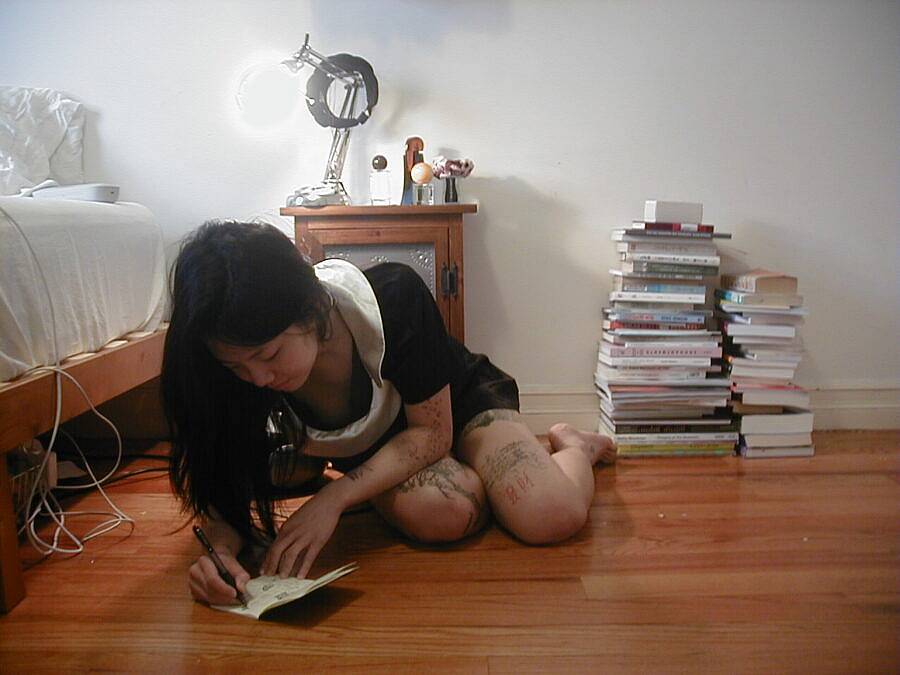
I’m Sharon. I was born in July. I have always lived by bodies of water. I went to Chinese public schools and then a boarding school in a rural village close to Suzhou. I chose to come to Chicago because I imagined a very different type of cold when I was 17.
Can you tell us about something that continues to influence your work as a painter?
Negation and Translation.
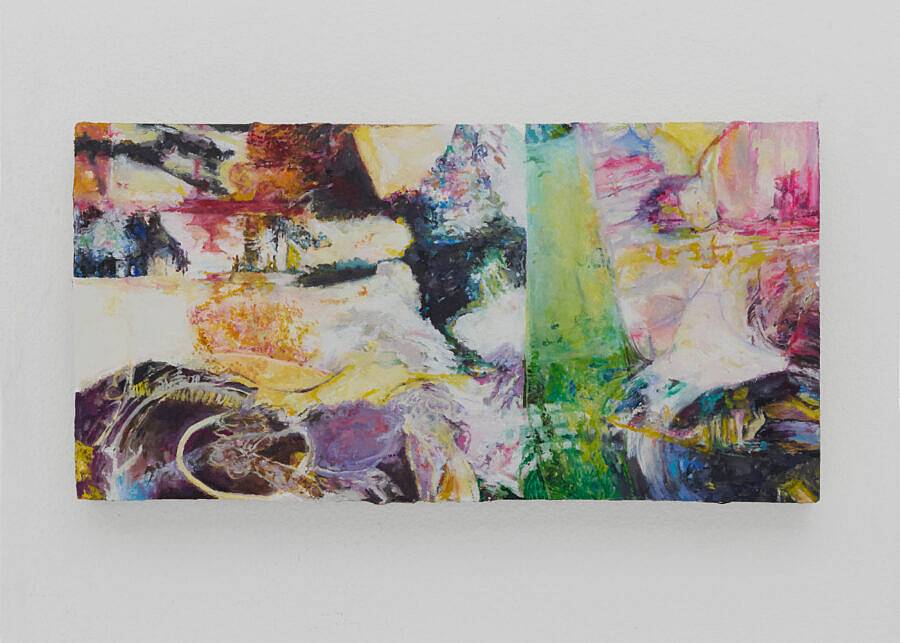
Being lost is the best state to learn about a city. Being confused in a painting leads to myriad ends. I don’t know if I think as a painter, but I think of painting more like writing, defined by what it is not.
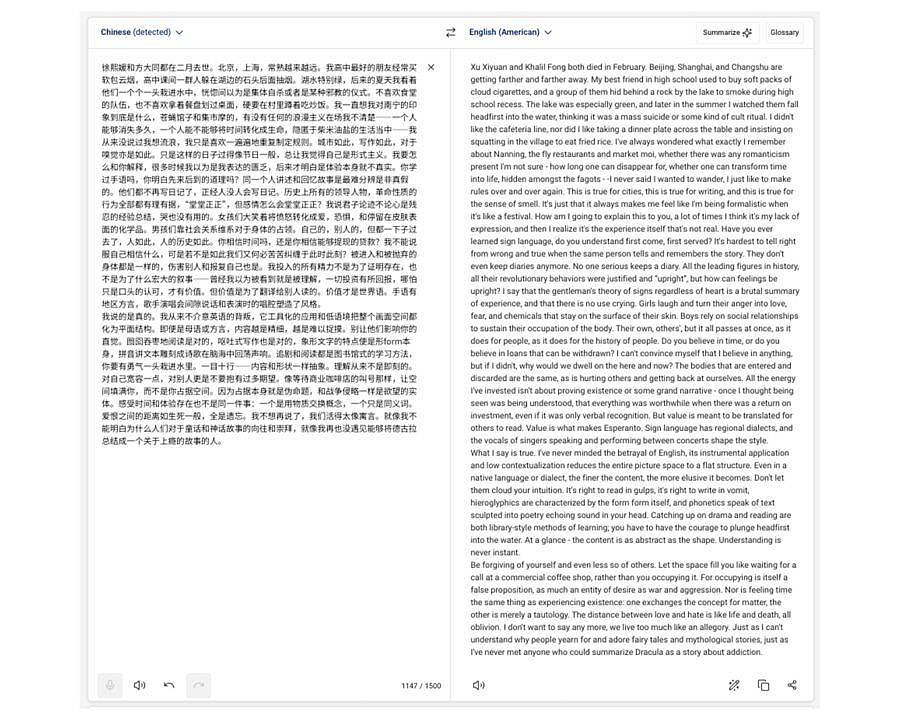
I think of my practice as translation, a process of constant failures within given parameters, misinterpretations, disorientation, and omission of information. People translate their feelings into things all the time: receipts from a trip, grocery lists, perfume scents. Painting tries to assert its difference from other media through skill or gesture, but I want to approach them (their specific qualities and context). Even when they contradict, the sensations assimilate.
I started making these resin sculptures some years ago to reveal the inner workings of a quilt because I’m more interested in what was transpiring in the process. The materials were either reflective or transparent knick-knacks that (somewhat) disappear in resin, and I left holes for the fiber to stick out to provoke a tactile experience. Even though I have departed from that project, I’m still making them in a different language. Media are highly porous and absorbent. Paintings can produce similar three-dimensional feelings to sculptures. This also has to do with my experience of moving around alone and a perpetual feeling of being foreign; it led to a reluctance towards a timeless, fixed narrative or system and a curiosity about what’s beyond the frame. It is hard to tell people whether I am painting something or I’m not painting anything at all.
Do you tend to work in batches, seeing an idea through a series of paintings?
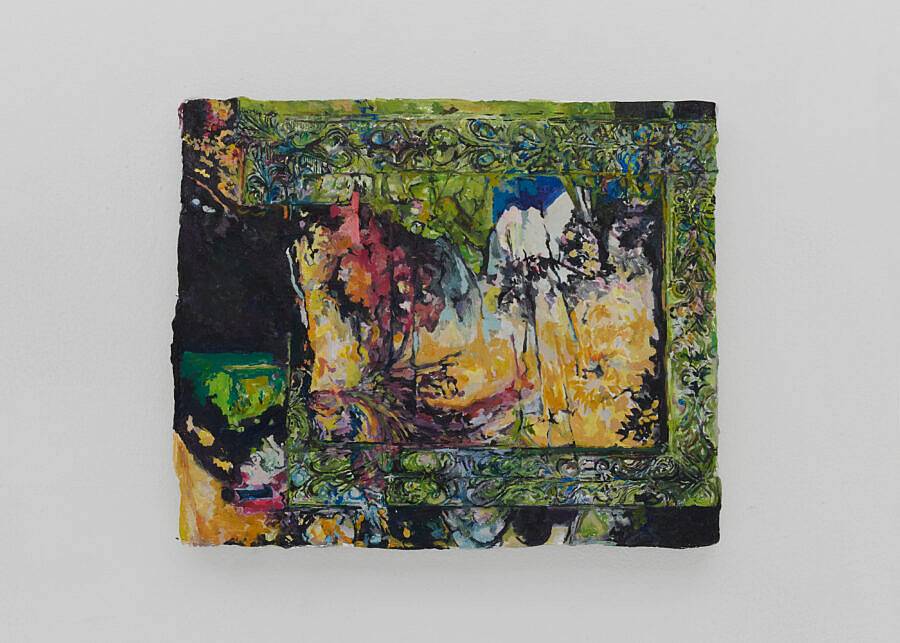
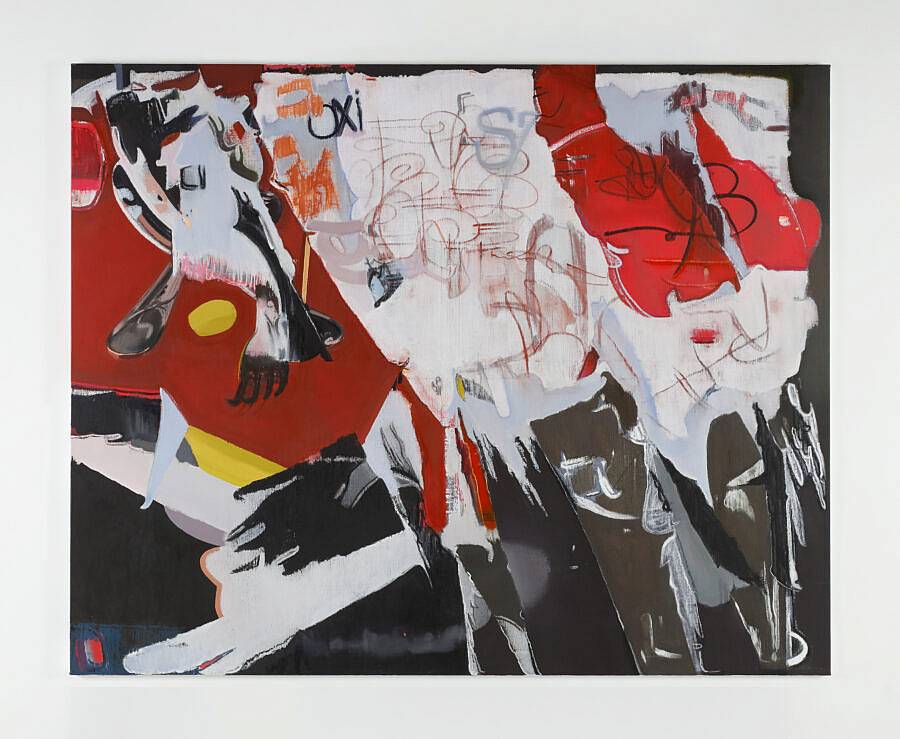
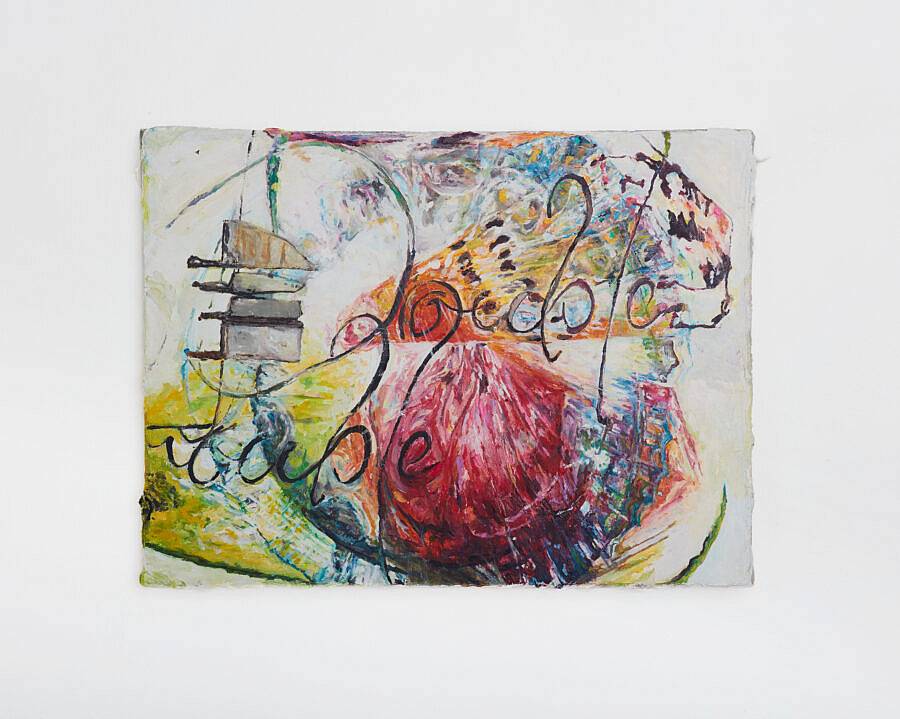
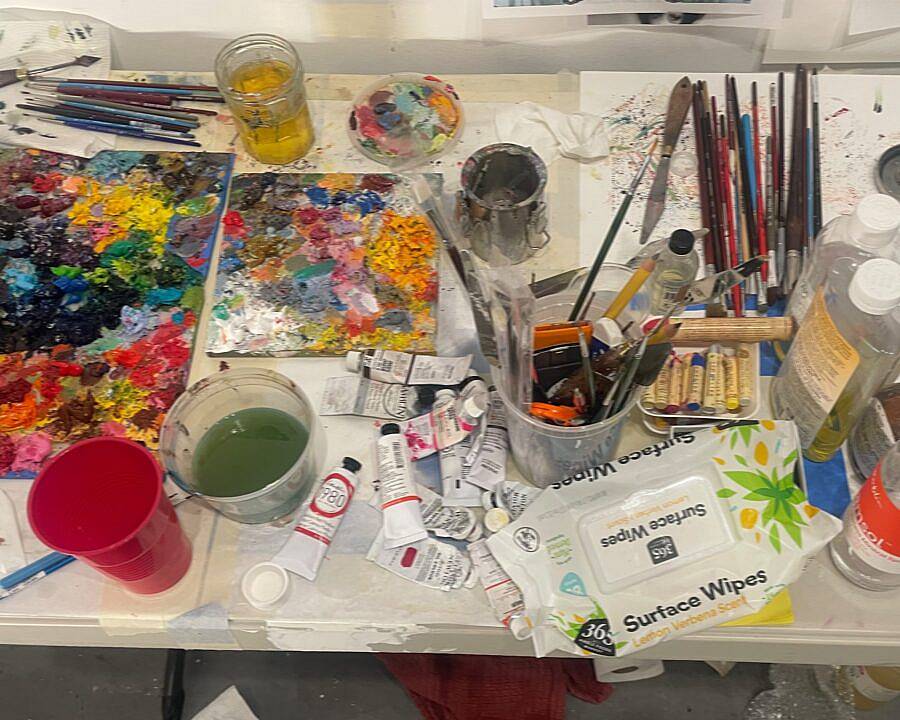
I paint very slowly and am easily bored; working in batches is out of efficiency rather than a conceptual consideration. If we are talking about seriality and logic that avoids egoistic expression, then there are certainly some themes and symbols that I take joy in repetition. This mechanism is quite addictive; everything that you see and read – titles, colors, forms, brushworks – indicates that there’s continuity in every painting and is always non-linear.
The different elements of your pictures seem to occupy the same plane or moment in time or that the forms have been refracted to come into our view. Does the relationship between imagery and time inform your practice?
Yes, all the time. The imagery is space, and time/space together construct environments for memory (past, present, future) that do not necessarily belong to oneself. Have you ever been repelled or attracted by a room? I’ve always had an anxiety of running out of time and missing the moment in life, so much so that shoving/compiling everything into one plane seems more legitimate than letting each thread of thought be drawn out into its own. A good example is recalling an image/text you saw on screen while scrolling, something that happened before the naked eye can even register, to someone else. It is already a refracted, highly transient event. The more you attempt to represent and interpret it, the more you find yourself lost. The complete picture is never revealed. I just want to catch up to that time through all the other intersections, a synchronicity which was never realized or was out of sight.
How do you think about closure? Do you aim to resolve or sustain tension?
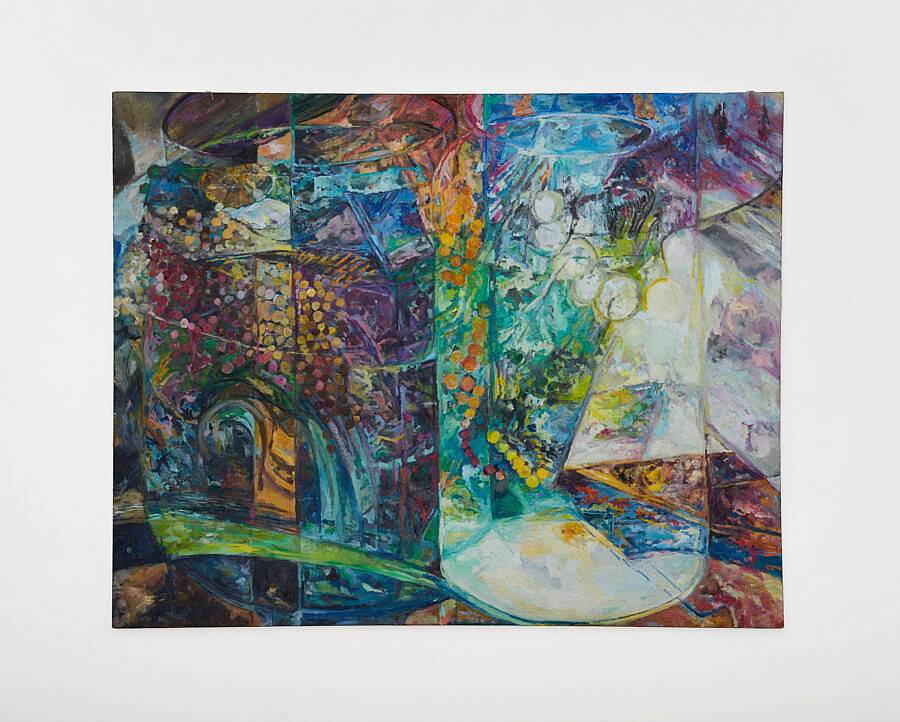
I don’t think of closure; I rarely do closure with people in real life. I do think some paintings are time-sensitive; they wear out or exhaust themselves quite easily. Like stories and fortune, paintings passed but never concluded.
I think of intensity a lot (D&G); the tension in painting is a skill-related problem. Maybe if I speak better English, learn another language, or articulate better, then it won’t haunt me.
How does contradiction function in your work?
Contradictions build intensity and deny finite resolutions. I use contradictions more than I’d like to admit because I am very inconsistent in my own terms. Certainly, there are moments of control. But that’s all reason before sensation. There’s a fear of unspoken desires, and the paintings are propositions capable of bringing that desire into a unique speech act that introduces its own temporality and language.
What do you think is art’s role in society today? Can it still function as an effective means of critique?
Art attracts opinions even when they’re left unsaid, and it is still an active means of discussion and understanding. It feels paralyzing right now because every structure/system we’ve relied on and meant to be productive is evidently wearing itself out. We’re operating on fear and hatred, but it has always been like this; history repeats itself. The stakes and situations we are facing are very different than what we learned, and I don’t learn things right away. I’m almost always a negative thinker, but every other year, I see someone writing about how art is dead, or art criticism is dead; the redundancy clearly did not stop people from making more works and curating more shows.
We are seeing more form > content works that are closer to a visual experience, but the concerns are still prominent.
Can you think of a work or a show you recently saw that made a lasting impression on you?
Recently, Jessi Reaves at Arts & Letters. But all the time, Han Bing’s Pre Shangri-La from her show Crust at Night Gallery in 2023.
Do you have a book recommendation for us?
Not a book but a short story. Westward the Course of Empire Takes Its Way by DFW.
Or The Fall of the Pagoda by Eileen Chang. It is the first of the two semi-autobiographical novels written in English by Chang. She’s prominent in Chinese literature, but I always thought it was more honest and complicated compared to her previous fictional works.
Could you share any recent or upcoming projects you’re excited about?
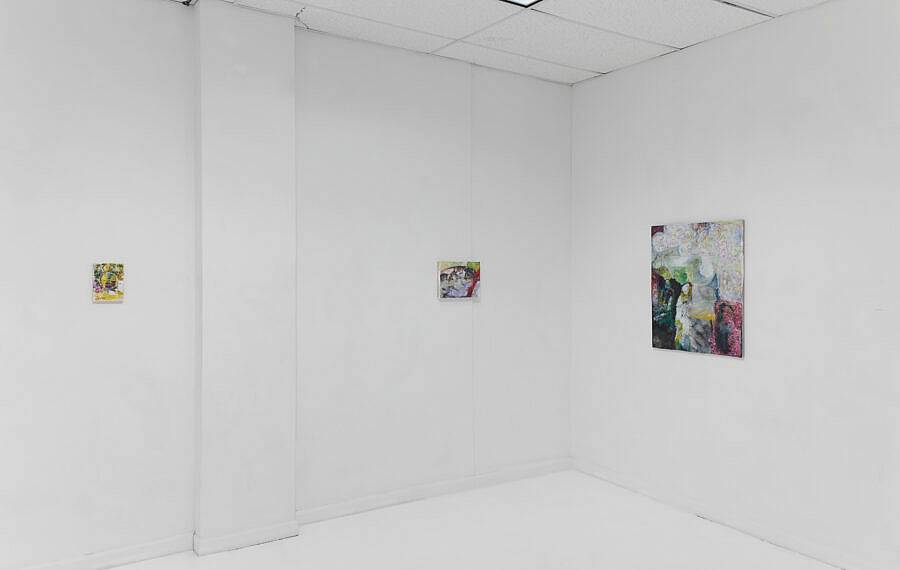
My recent solo show at Lubov, Enabler and Vanilla Conjuring. (纵容者与寻常戏法) There’s wordplay here in Chinese; vanilla was translated as Ordinary. It is my first show in New York. In the context of a solo show, I curated a group show with six other artists I had long admired and imagined before I knew them personally. I was very grateful to indulge in my curatorial practice with my paintings in the same arena. The press release written by Lucia Kan-Sperling was almost an autobiographical account of my devotion to being a fan.
What do you collect?
Titles. If you’re reading here, then you’d probably understand my conscientious efforts to articulate include a disdain for leaving things unnamed. I have a total of 2239 notes in my note’s app, and 354 of them are titles that I collect, reserved for things to come.
Interview by Paul Fitzpatrick