Tell us a little bit about yourself and what you do.
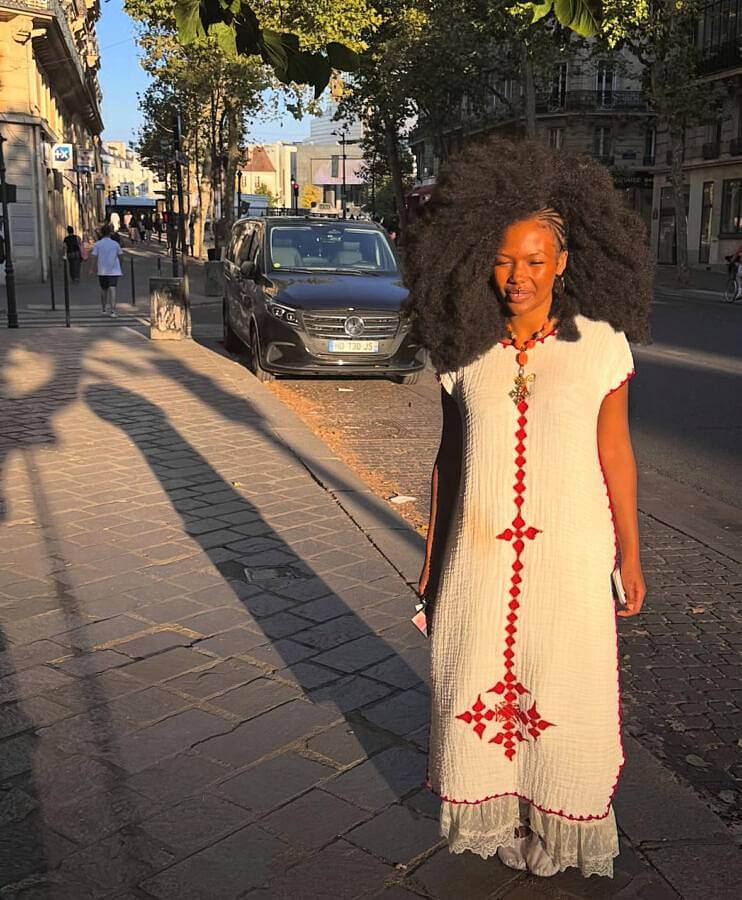
My name is Bereket Adamu. I am a visual artist from Southern Ethiopia, and I am currently living and working in New York City. I like to think my work depicts the familiar and the unfamiliar with equal conviction.
Could you describe your practice?
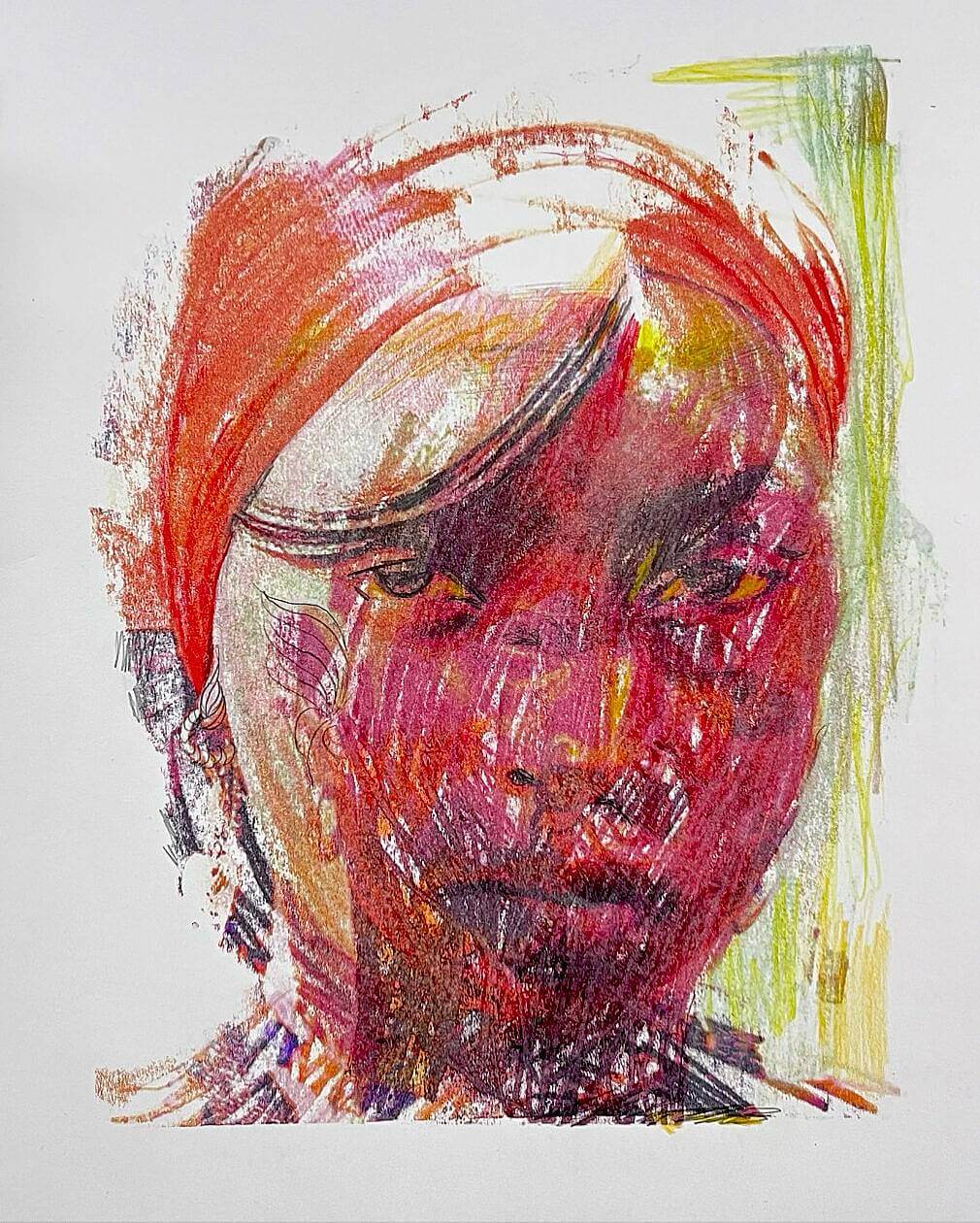
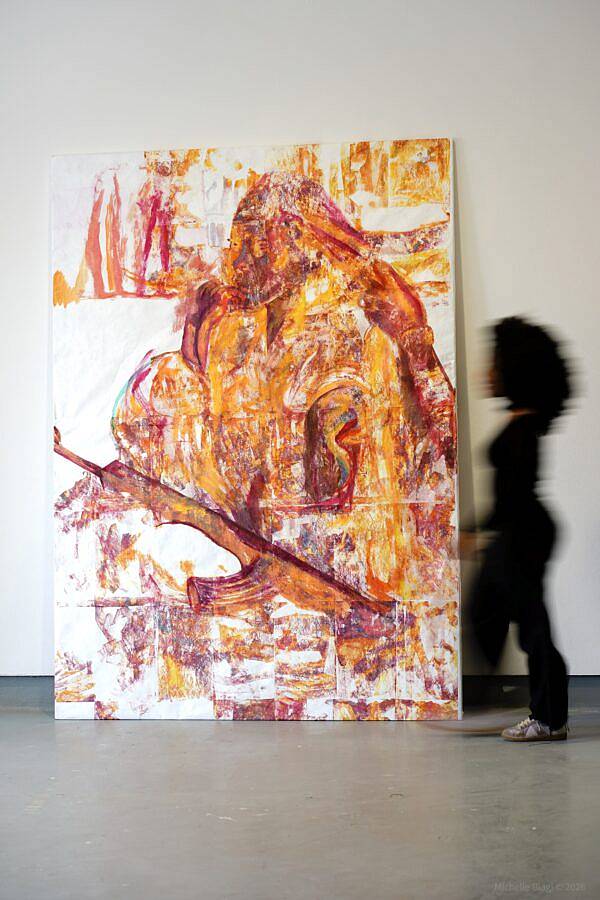
My practice moves between a lot of things, drawing, sculpture, printmaking, and installation. I spend a lot of time collecting and then bringing my collection into conversation with one another. I like to work large, that is very important to me and a huge part of my practice. I’m interested in how people, places, and events are remembered, transformed, and sometimes mythologized. I’m super into myth. There’s a quote I once encountered that suggested the same capacity that allows us to believe in myth is also what allows us to pursue enlightenment. Whether or not I’m remembering it correctly, the idea has stayed with me. It shapes how I think about our relationship to history, belief, memory, and one another. I’m interested in the stories, symbols, and images that help people make sense of the world and their place within it.
Most of my drawings begin from writing and fragments of other people’s writing. I like to work in multiple timelines at once. Alongside mark making. I work with materials such as stone, bronze, copper, wax, paper, and light. I’m increasingly interested in creating environments rather than isolated objects.
What/who is influencing your work right now?
That’s always a difficult question for me because my influences tend to shift depending on what I’m looking at, reading, or thinking through at a given moment. Rather than having a fixed list of favorite artists, I often think about the exhibitions, films, and conversations that continue to stay with me long after I’ve left them.
Recently, I was deeply impressed by Decisions at a Desk, Christian Hincapié’s exhibition at Mishkin Gallery. I keep thinking of Tsedaye Makonnens work at the MET that I saw last year in the Byzantine exhibit. I also spent a lot of time thinking about the work of Jesse Reeves and Josi Ponzi after seeing their current exhibitions at The American Academy of Arts and Letters. Lynette Yiadom-Boakye’s recent exhibition at Jack Shainman Gallery was another standout, as was Toyin Ojih Odutola’s work, which I return to often. Kara Walker’s Monumental project in Los Angeles has also lingered in my mind, particularly for the way the exhibition showed the process that the artist took, I live for shows that include that.
The Studio Museum’s FADE exhibition and its permanent collection displays have been especially important to me. Artists such as Tunji Adeniyi-Jones, Chris Ofili, Wangechi Mutu, Aimé Mpane, and Tom Lloyd are all figures whose work I continue to revisit. I was also moved by Ladji Diaby’s Paris exhibition Who’s Gonna Save the World?
I am super invested in all of the work by Sandra Poulson.
Some of the other artists who inspire me most are actually my peers. I was fortunate to study alongside artists such as Muneeb Alam and Yves Neckel at Cooper Union.
I spend a lot of time watching African cinema (both historical and contemporary films) thinking about hard things, stories of grief, and how images circulate across generations. One of my longest-standing influences is The Otolith Group. I make an effort to attend their screenings, lectures, and discussions whenever I can. Their approach to history, speculation, memory, and political imagination has profoundly shaped how I think about art’s relationship to everything.
Your work seems very personal. Are you drawn to depicting specific objects based on their familiarity or something else?
I am definitely drawn to things that feel familiar to me, but not necessarily because I know them completely. Often I am interested in objects, stories, and symbols that sit in tension somewhere between familiarity and distance. They might come from my own life, family histories, religious traditions, or things I encounter repeatedly or come across randomly, but I am usually drawn to them because they still contain something unresolved for me.
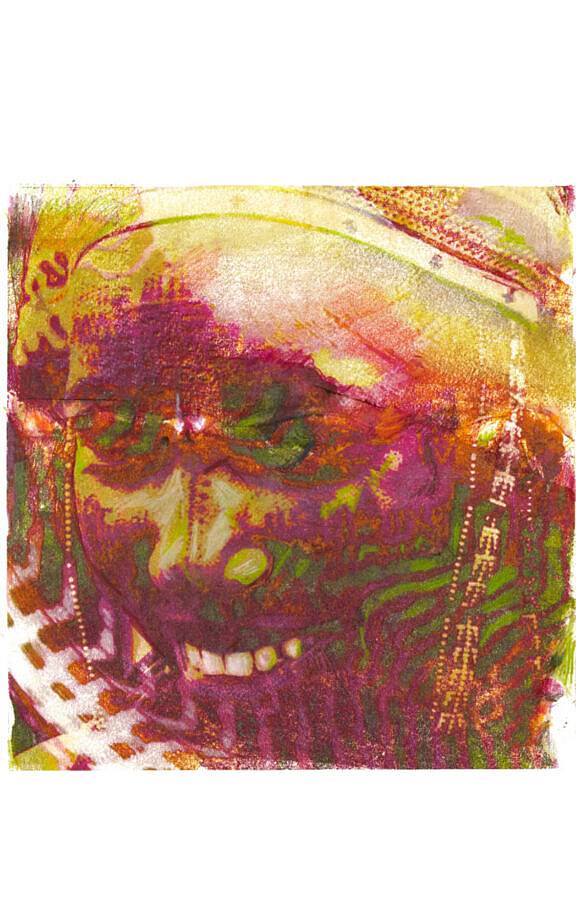
I like the idea that making art with recognizable marks is akin to DJing. I collect fragments from many places and bring them together to see what happens when they share the same space. Sometimes the work begins from recognition, and sometimes from curiosity.
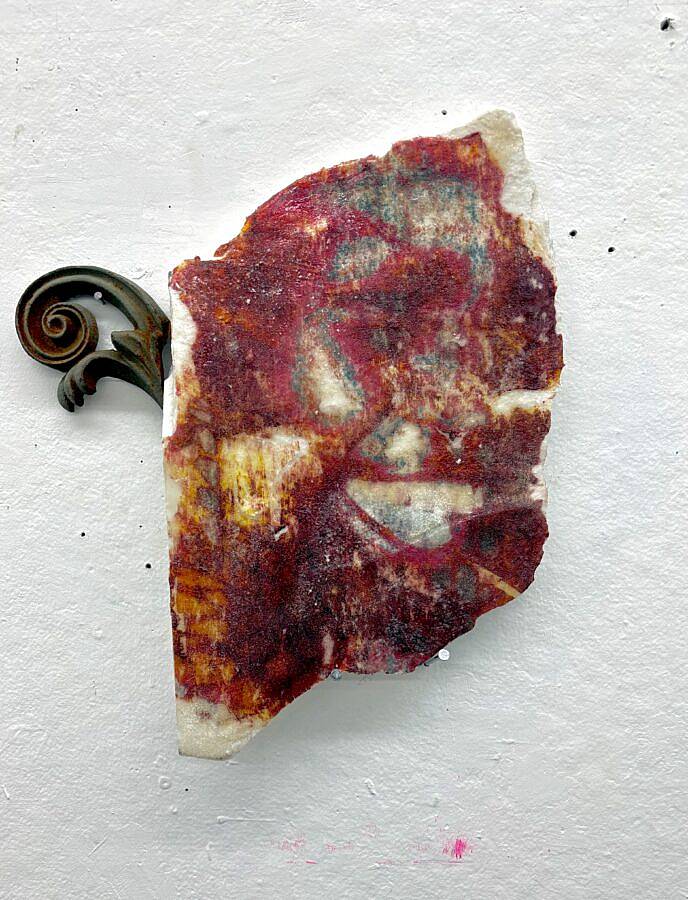
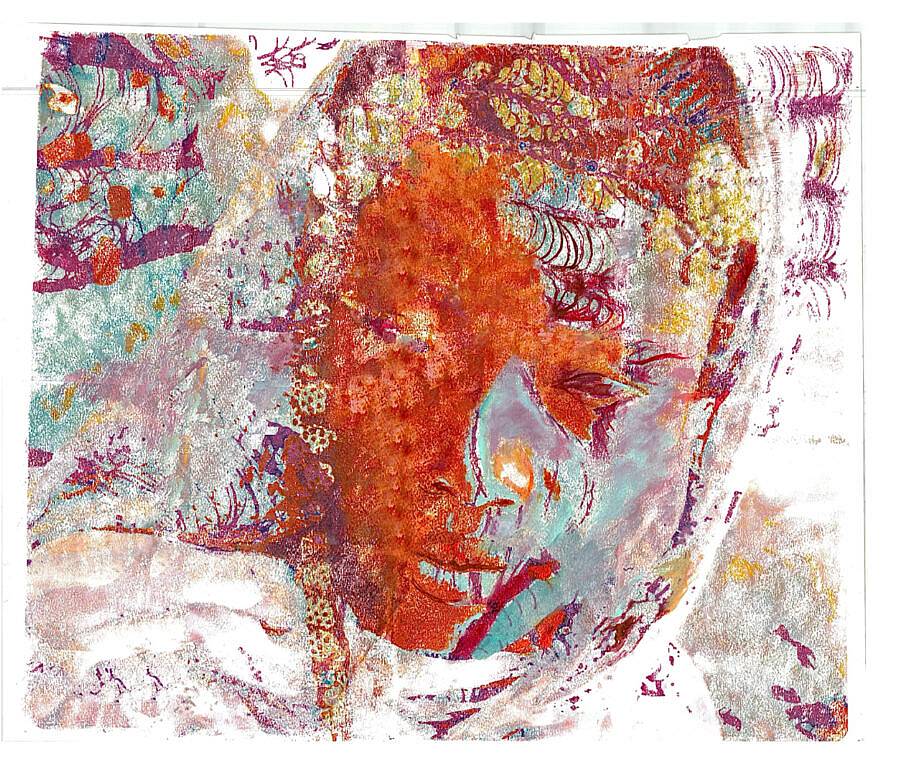
I am particularly interested in depicting the unfamiliar through the familiar. Much of my work I think operates within a believable register. The figures, objects, and environments often feel recognizable and weathered by time, as though they have endured or existed long before the work itself. Within that framework, things are allowed to shift. A figure may become something other than itself. An object may drift between uses or identities. Separate histories, places, and narratives may occupy the same space. I enjoy working in a way where something can feel simultaneously certain and uncertain, improbable and regular, factual and imagined. You may recognize a woman, a weapon, an animal, or a landscape, but remain unsure of exactly what you are looking at, where it comes from, or how it should be understood.
I am coming to understand that part of this interest comes from a broader fascination with the construction of icons. Whether religious, political, historical, or personal, iconic forms often derive their power from a sense of credibility. They feel familiar, authoritative, and inevitable even when the histories behind them are fragmented, contested, or constantly changing. I am interested in how symbols acquire that authority, how they endure, and how they continue to shift over time.
Some of the works I return to most as a viewer create exactly this sensation. They provide enough certainty for me to enter them while leaving enough unresolved that I continue to look. In my own work, I try to maintain that balance for my own work.
What are some of the best or worst reactions you have gotten to your work?
I don’t know if I’ve received the best reaction yet. I think part of being an artist is continuing to search for the moment when the work lands in exactly the way you hoped it might.
What challenges do you or other artists face?
One challenge I think many artists are facing today is the broader economic reality we live within. The cost of housing, healthcare, education, materials, and simply existing continues to rise, while stability feels increasingly out of reach for many people. I don’t think this is unique to artists. More broadly, we are living through a moment where wealth is becoming increasingly concentrated, while many people feel less certain about their future than previous generations did.
The ability to make work depends on having enough time, space, and security to experiment, fail, and continue. While adversity can produce meaningful and amazing work, it suckssss!!
At the same time, I think artists are navigating a complicated relationship with institutions. We are often taught to critique museums, galleries, and universities, and many of those critiques are necessary. Yet I sometimes wonder what comes after critique. If these structures disappear, what replaces them? How do we preserve knowledge, share work, build archives, and support artists across generations?
I also think a great deal about museum collections. While working at a major museum in New York City, I remember learning that only a small fraction (1-10%) of the collection was visible at any given time. Preservation in perpetuity is important, but there is also something melancholic about so much art spending its existence in storage, carefully protected yet rarely encountered. As collections continue to expand, questions of visibility, stewardship, and access will only become more and more urgent.
Finally, I think institutions are facing an important challenge in how they approach global art histories, but many of the methods we use to study art still rely on Western assumptions about authorship, chronology, attribution, and documentation. Many artistic traditions do not fit neatly into those frameworks. Expanding art history requires more than adding new names to an existing list. It definitely requires rethinking the frameworks themselves, which sounds very hard but also necessary.
What influence has living and studying in NYC had on your work?
Living in New York has exposed me to an incredible density of people, ideas, and artistic practices. The city constantly reminds me that there are countless ways of making art and understanding the world.
What I appreciate most about New York is the sheer abundance of things to engage with. On any given day there are exhibitions, screenings, lectures, performances, readings, workshops, symposiums, studio visits, and conversations happening across the city. There is always something new to encounter, and some of the most meaningful experiences I’ve had here have come from simply showing up and listening.
Ironically, I don’t always find the city’s physical landscape particularly inspiring. In many ways I find it dense, industrial, and at times visually overwhelming. It compensates for that through the incredible effort people put into creating spaces for exchange, learning, and community. The city’s greatest resource is its people and their willingness to share knowledge.
Studying here has also made me more aware of where I come from. Being far from many of the places, histories, and landscapes that shaped me has made me think more carefully about memory, distance, and belonging. In that sense, New York has not only expanded my perspective outward, but has also sharpened my understanding of my own experiences and origins.
Describe your current studio or workspace. Do you have any rituals when you begin working?
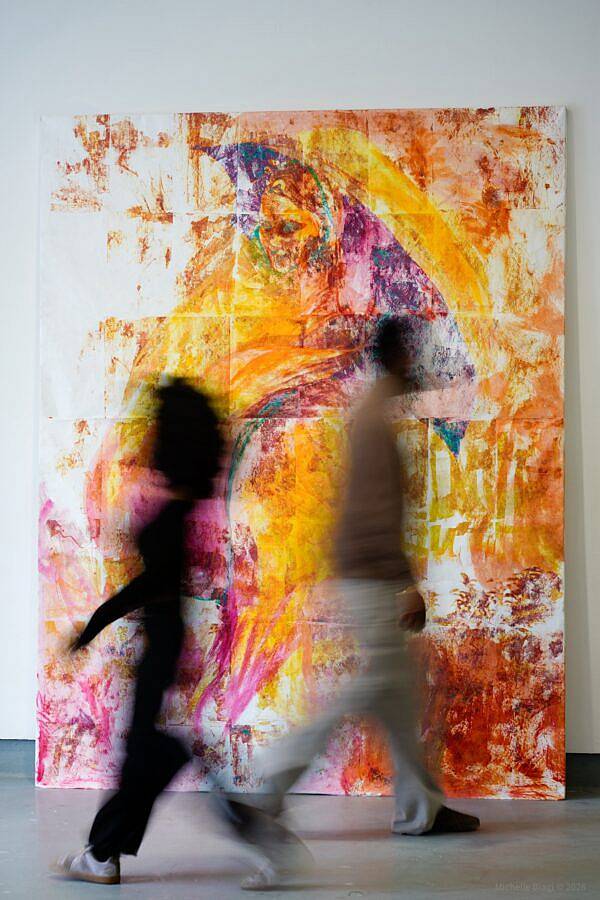
I tend to work on the floor as much as possible in my studio, so I’m not someone who has many tables in the studio, except for a small rolling cart with my brushes, pigments. Most projects begin on the ground, whether I’m working on large sheets and rolls of paper or on sculptural and stone-based works, i tend to keep those on rolling dollies. I like being able to move around the work physically and engage with it from different angles.
I don’t treat the work very preciously, at least not during its early stages. (I’d like to grow past this though and be more precious.) I often walk across drawings, kneel on them, rotate them, and move around them as they’re developing. I’m also interested in the surfaces underneath the work and will be intentional to use those textures, imperfections, and impressions as part of the final. Because of that, the process involves a lot of shifting, layering, and physical movement.
Once a work reaches a certain stage, I’ll usually pin it to the wall, stretch it, or mount it so I can continue working on it vertically. Many of my drawings are constructed from grids of joined sheets or contain grid structures that remain visible throughout the process. I often move back and forth between the floor and the wall as a piece develops.
I spend a lot of time stepping away from the work and looking at it from a distance. I’ll frequently photograph it, print images of it, draw over those photographs, and imagine possible directions before returning to the original piece. Usually I have several works developing at once, perhaps one on the floor and two or three pinned to the walls.
I don’t have many formal rituals, honestly. Most of them are practical. I keep studio journals nearby to write down ideas, sketches, and notes, and recently I’ve been trying to return to a more regular sketchbook practice. One rule I try to follow is not to turn the studio into a shrine of all of my old work, it can be depressing and limiting I feel. I think it’s important to let things leave, store them, or let friends house them, and make room for new ideas.
One thing that surprises people is that I often work in silence. It’s one of the few times I can really observe my own thoughts instead of consuming someone else’s. If I’m struggling with a problem or working toward a deadline, I’ll listen to music, watch artist interviews, lectures, or documentaries, but most of the time I prefer quiet. I also strongly prefer working alone. Solitude is an important part of how I think and make decisions in the studio.
Are there any areas, techniques, or materials that you’re interested in exploring further in your work?
I’ve increasingly felt an urge to create more installation-based work, whether through rock, sculptural, or architectural elements. For a long time, I’ve wanted the work to function not only as an object, but as an environment that a viewer enters and experiences. I find myself drawn to materials that can help create that sense of immersion, I also feel most impacted by my own work when im able to work at scale or larger than life scale, i feel as if thats when my figures feel the most convincing, and I hope to continue expanding the scale of my work as I gain access to larger spaces and deepen my research.
I’m also interested in engaging more senses beyond the visual. Sound, smell, light, and other sensory elements have the potential to shape how a work is experienced and remembered, and I would love to explore those possibilities further.
Collaboration is another area I hope to pursue more seriously. I’m interested in working with artists and makers from different disciplines, as well as researchers whose knowledge might challenge my own thinking. I’ve also always wanted to create a public artwork, something durable enough to exist in the world and be transformed by weather, time, and the people who encounter it. I hope that in the future I have the opportunity to realize a project at that scale.
What are some recent, upcoming projects you are working on?
One project I’m currently preparing for is an upcoming residency in Lamu, Kenya. The residency will provide an opportunity to conduct research, spend time in the environment, Much of my preparation right now involves reading, gathering materials, and thinking through how the research might take form once I’m there.
sIf you could live anywhere in the world, where would it be?
Sounds kind of silly, but I still kind of want to live everywhere. One of my favorite things about being an artist is that it gives me opportunities to travel and experience new places.
What gives you hope?
To be completely honest in this moment, I’m running a little low on hope. But I think feeling gives me hope, the ability to still be moved, surprised, affected, or connected to something. I’m always hoping to stumble into one of these feelings lol. I also find hope in the fact that things are always happening. The world never fully settles; there is always movement, change, and the possibility of something, with the right mindset that can be exciting!
And if anyone reading this has any wisdom on hope, feel free to share it with me.
Interviewed by Amira Diaw.