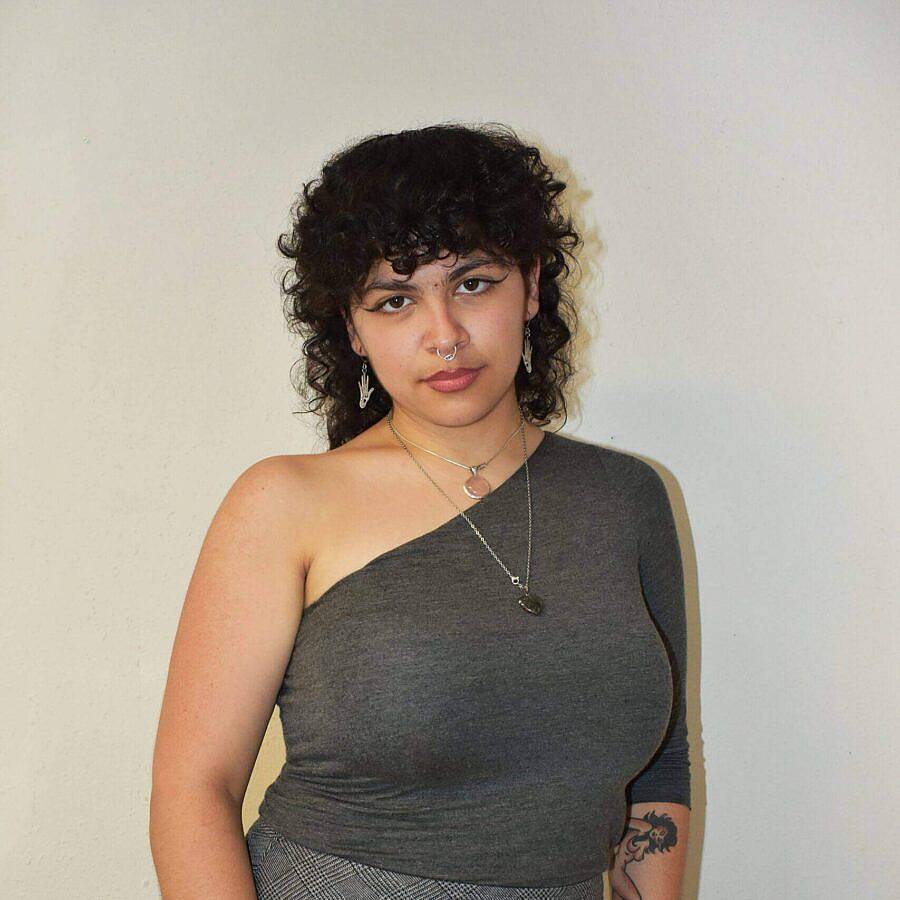
Tell us a bit about yourself and what you do.
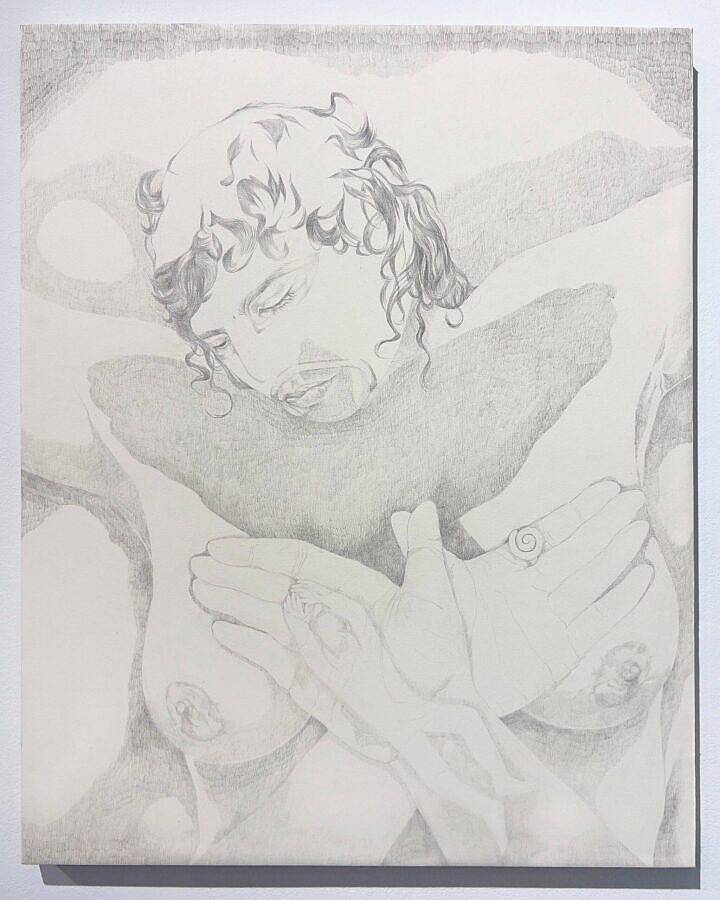
I love to make images. Maybe this is supposed to be unspoken, but I also love to consume them. I’ve noticed a wave of painters making work that contains multiple images in one piece, paintings within paintings; I believe I’ve nestled myself in this direction.
In my 2D work, I like to complicate the process for myself. Superimposing images onto each other lets me get lost in the visual language and nurture interruptions, something that’s always been a big part of my life. I do this to make people stay with the work longer.
I come from a family of self-starters. My ancestry begins in Sabinas Hidalgo, Nuevo León, México. My grandparents met at a dance party when they were 16 and 17 and they essentially ran away together, got married and landed in Wisconsin, which is where I was eventually born. The Midwest will always be my home.
How were you introduced to the mediums that you work with?
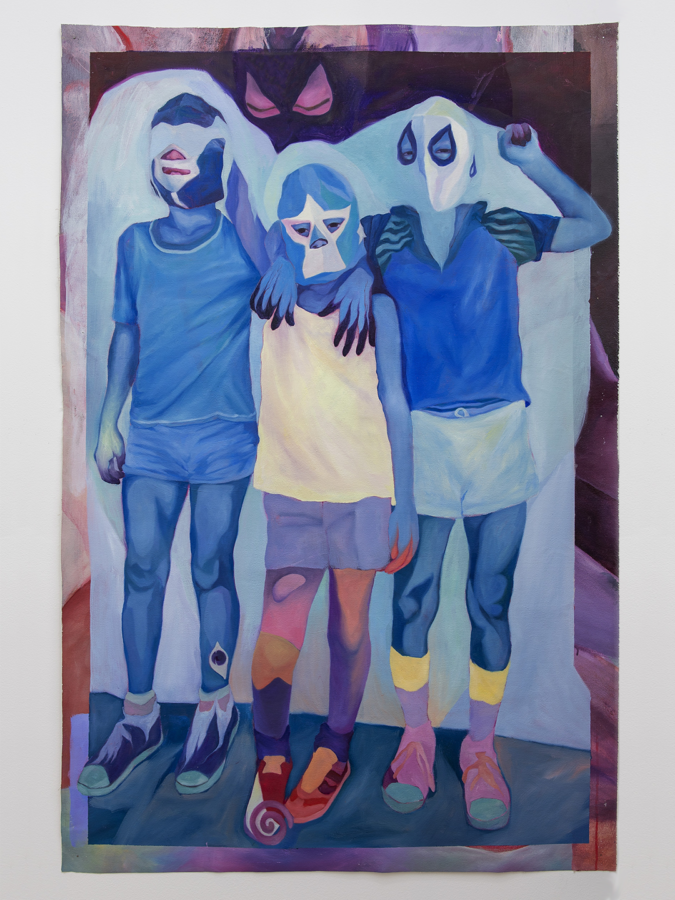
I was first introduced to oil painting in college which feels a bit late but leading up to that I was only familiar with using acrylic. I transferred into SAIC as a third-year and within those two years my work completely pivoted. This shift happened after taking a winter drawing course with Alex Bradley Cohen. Here, I was reminded of my love for drawing and that it can exist beyond the preliminary stage of making. Following this, I began making large scale figurative paintings.
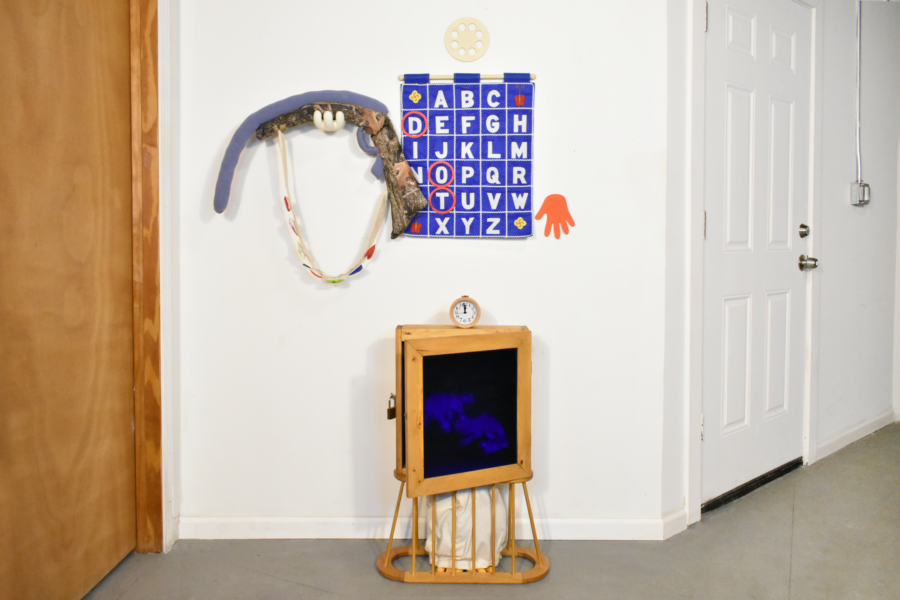
Post-undergrad in 2022, I decided to experiment with assemblage to see what would happen if I made work outside of painting and it felt like flexing a new muscle. My problem solving skills had to get more inventive when I needed a resolution. It was fun and I plan on going back to this way of making soon.
What role does humour play in your work?
I like to involve wit into my sculpture work. Since I lean on assemblage and using found objects, I let them direct the narrative. Child-like objects have a way of being funny! A similar effect happens when I depict children in my 2D work. Kids are wonky and embody an absurdity simply through not caring about how they look or act.
Is there a moment that you look back on as being formative to the work that you do?
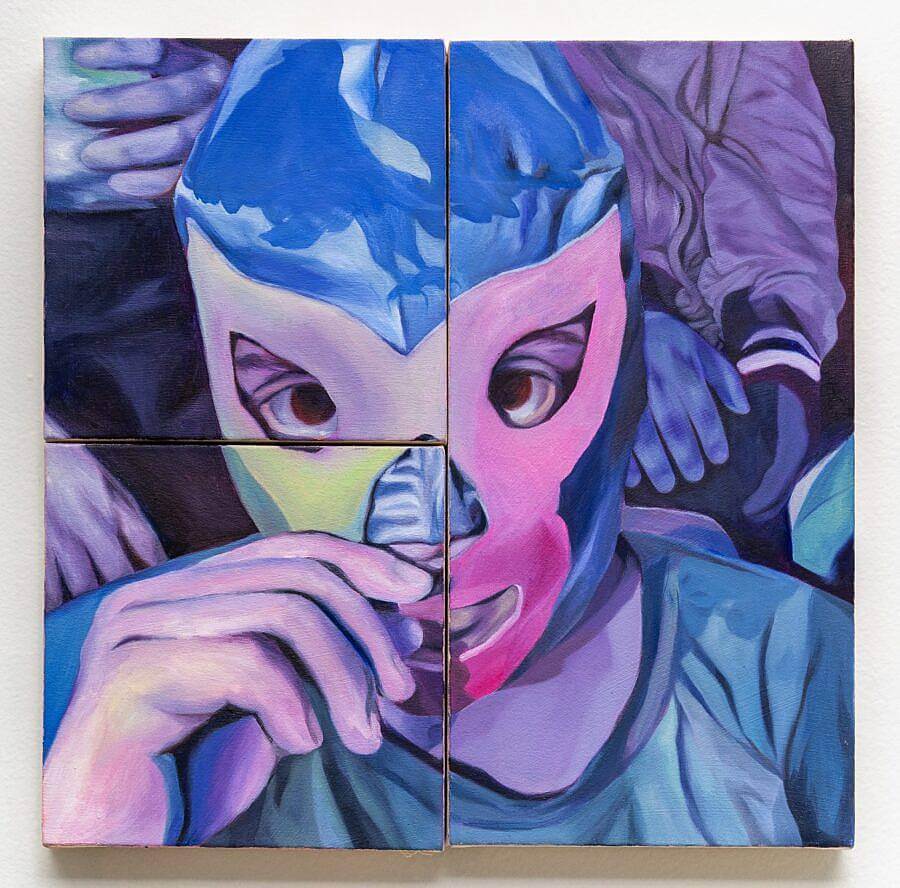
There was a month in 2022 when I was running low on money and utilities were coming up so I put out a call for commission work of hand drawn images of famous luchadores from the 80s and 90s, the golden era of lucha libre. I ended up making around 20 drawings and from there I was captivated by the forms of these hyper-masculine wrestlers with larger-than-life identities. I clung onto the vitality of lucha libre during a hard time as they represented a token of immortality.
The luchadores in your paintings often seem vexed and uncertain, unlike the self-assured, macho performer that usually comes to mind when their imagery is invoked. What aspects of lucha libre has continued to be generative for you? Is there a conversation you want to foster through this coupling of imagery and mood?
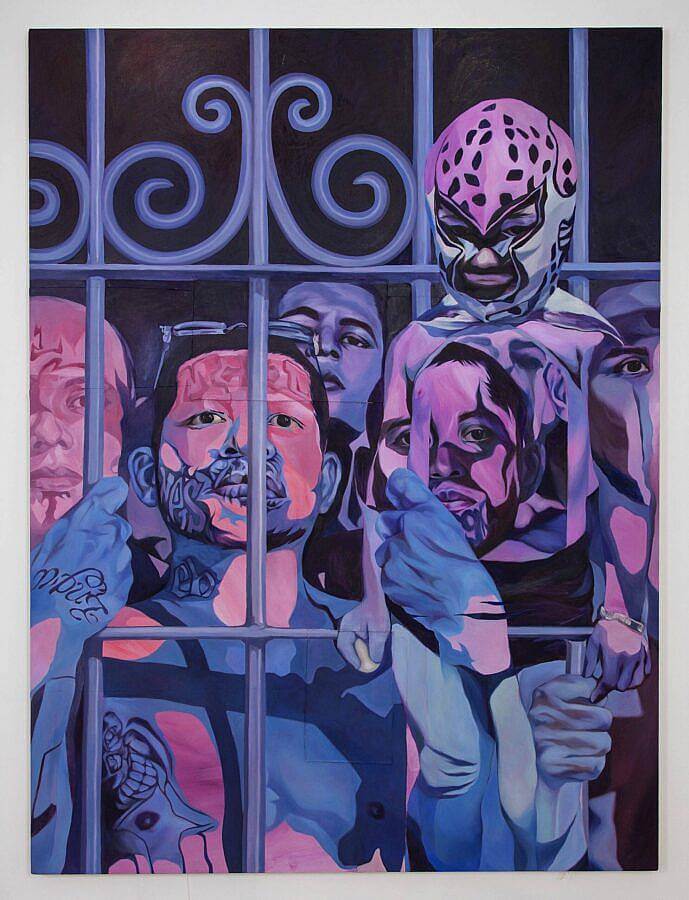
I initially used lucha libre at face value, admiring its qualities of strength and common tropes of the good guy versus the bad guy in tandem with eagle imagery. As I’ve grown with the subject matter, I noticed how performance and spectacle shine a light on the underbelly of national culture and patriotism. The real world feels harsh and I try to point to those themes while still holding my faith for the future, as surreal as it seems. I’m also secretly a moody person, so that tends to ooze onto my work through color and gaze.
Your practice spans painting, drawing, and sculpture. Do you approach a work with a notion in mind that determines the medium, or does the work’s meaning develop in the process of its making?
In my experience, the processes of painting, drawing and sculpture feel very different from each other. In drawing, I feel relaxed. Painting has higher stakes in my mind, I become very serious in this process. Sculpture is where I release control and let the materials tell me what to do.
Circling back to what I’ve changed my mind about, this is where my desire to know dissipates. I can appreciate a formula, but I’m also a fan of surprises.
Another facet of my practice is its pace. I like to say half, if not more, of what I do is stare at the work and watch it change based on my attitude. I’m starting to consider time as a hidden material because final decisions have extra weight to me.
What is it like to be an artist living and working in Chicago?
I love Chicago. It was my dream to live here and I made it happen. The seed was planted in 2019. That year, as a celebration for finishing a fellowship in Milwaukee, I went on a trip to the city with artist and friend Aisha Valentín. We drove through Pilsen and I had a flash of a thought that told me I would live here. I’m glad I followed through.
I appreciate the way artists here take initiative in making space for themselves. I remember having doubts if I could find a place for myself after graduating, but if anything, that slow build made it all the more interesting and worth it. I always aim to be critical and conscious of living in Chicago and to nurture the people and artists I am surrounded by.
Something I’d like to also bring up is my background in gallery work that started post-undergrad at FLXST Contemporary in Motor Row. It was then I discovered how much I love arts administration. Now, I help run Parlour and Ramp as well as Chicago Art Department, both artist-run gallery spaces that prioritize uplifting artists from the city. Being a part of this work is invigorating to my own practice as I am situated with socially engaged artists that challenges conventionality.
Can you share a memory of someone interacting with your work that lingers with you?
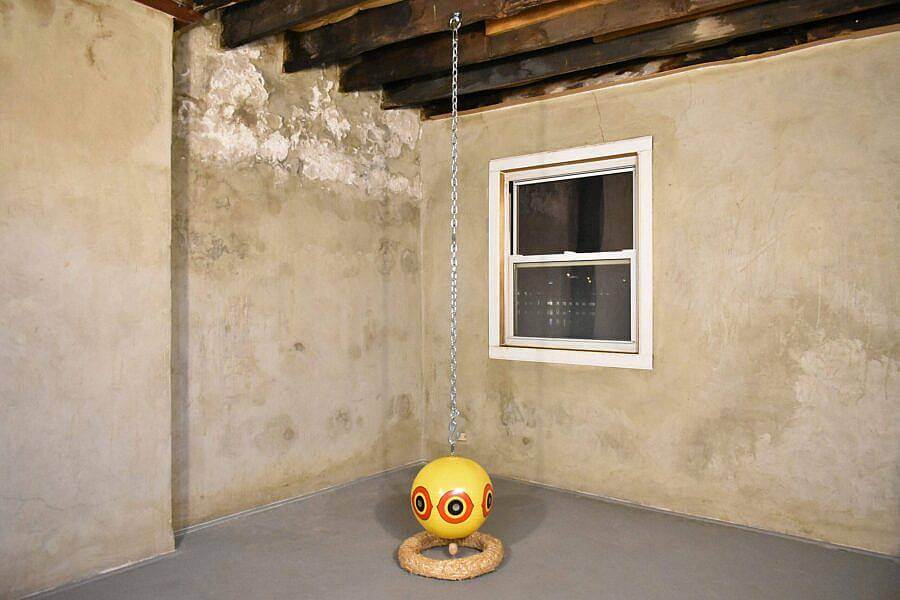
Recently, I had work shown at the Chicago Art Department while I was an artist in residence. During opening night I had a friend ask if he could slightly swing the ball from my piece titled Homestead and I gave him the go ahead. It was fun to see the piece move out of stillness and act as a pendulum. It inspired me to possibly experiment with work that explores movement.
What was a show you saw recently that made a lasting impression on you?
It’s not a recent show but I had seen Rosebuds and Sidewalk Ends at Real Tinsel in Milwaukee, Wisconsin co-curated by Evil Twins gallery and I was completely in awe of the work shown. Particularly the sculptural work of Mark Newport. When play and ambiguity come together they create a bit of uneasiness that I gravitate towards in my own practice. I feel excited by a piece when I get apprehensive about it.
What’s your studio or workspace like? (Feel free to include images!) Do you have any rituals to settle in?
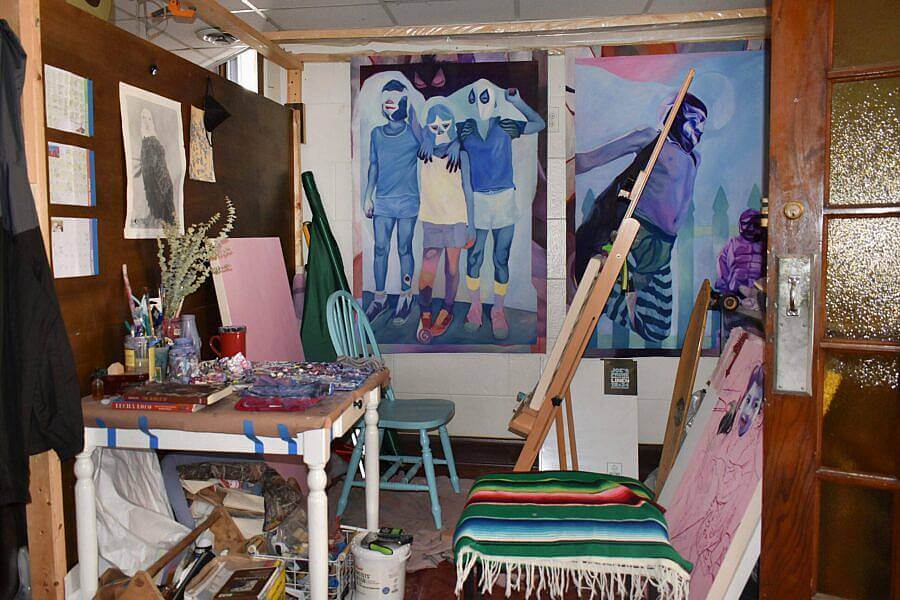
My current studio is cozy. I love to surround myself with knick knacks, literature and mementos from home to ground my spirit. It can get crowded but if my space is too clean it starts to feel sterile. I like a little bit of messiness.
How has your work evolved over time?
I keep coming back to childhood and its connection to agency and power. I am nostalgic for this time of my life and continue to use child-like imagery as a foundation for expressing grief and optimism. Both ideas need each other, shadow and light kind of thing.
For a long time I didn’t want to make work with myself in it. I used to think I see enough of myself, I wanted to respond to my environment, whether politically or in some abstract form. Now I’m toying with self imagery. It’s cool.
Are there any areas that you’re interested in exploring further in your work? Whether that be new mediums, processes, materials, etc.
I’m currently exploring ways of making the surface of my paintings have personalities through simple gestures. One day I realized I had enough scrap canvas to stretch a big piece, so I sewed them together and the response I got from that decision was engaging. The seams throughout the surface persuade people to look closer.
Are there any recent, current, or upcoming projects that you are excited about?
I have a show coming up at Epiphany Center for the Arts in late September that I’m very excited for. I am also a part of the Arts of Life Benefit Auction happening that month. I like to use these opportunities to make new work that expands on my previous body of work. There’s more to come, but for now I will keep that a surprise.
What do you collect?
Soda tabs! My great grandmother used to crochet purses and belts with them and for the past couple years I have been saving any tabs I find to eventually make a tapestry to honor her life and creativity. She was a Gemini just like me.
Interviewed by Seth Nguyen.