Tell us about who you are and what you do.
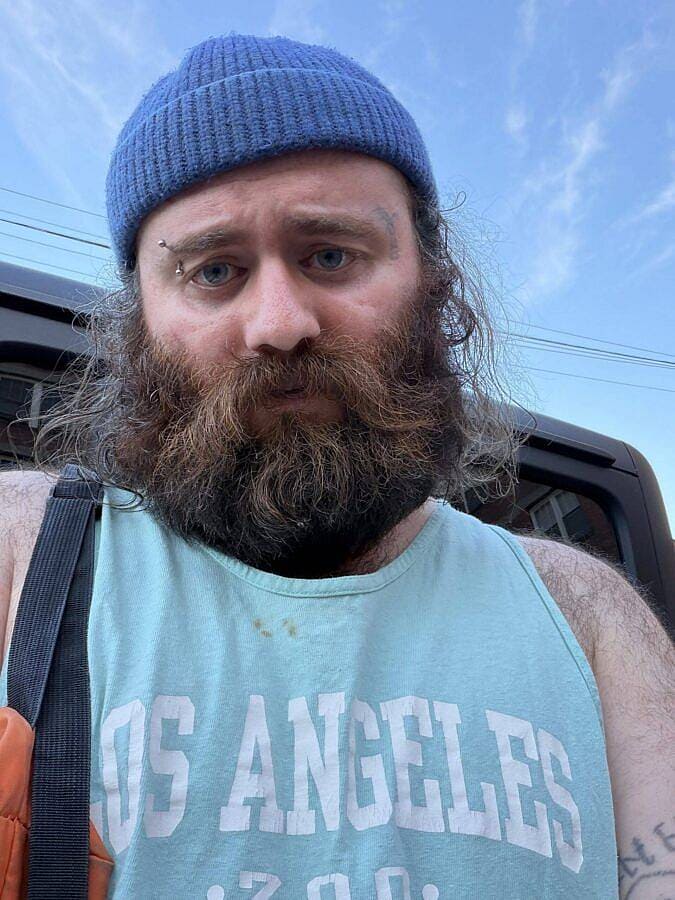
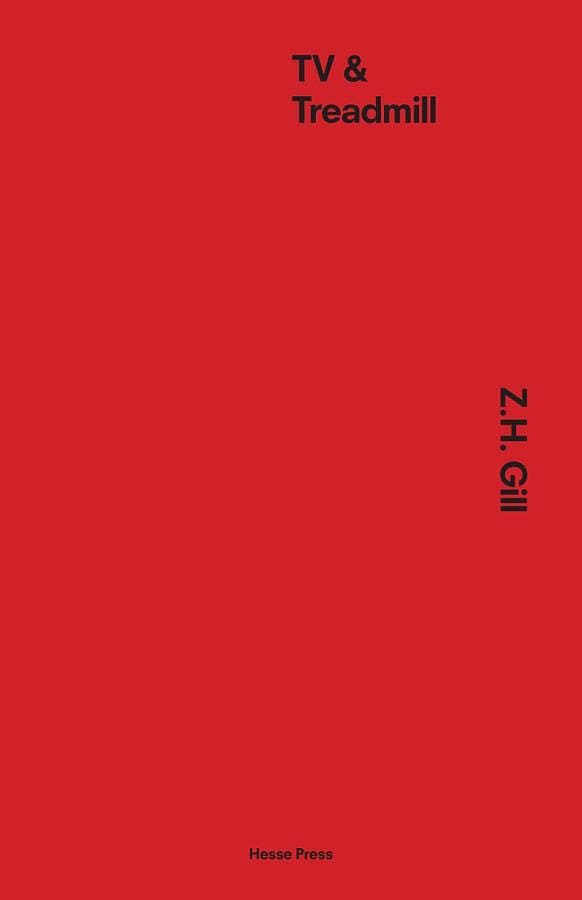
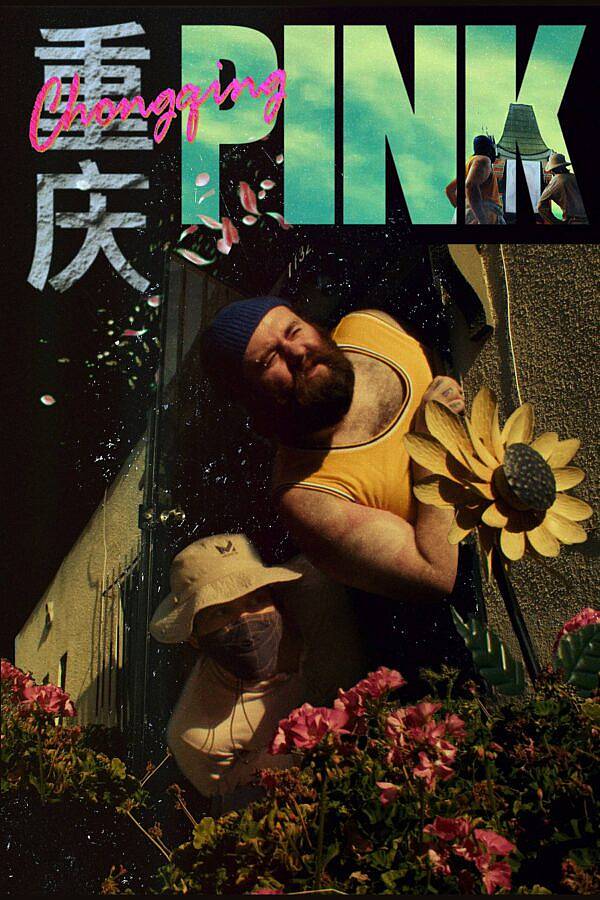
My name is Z.H., I’m 32 years young, and these days I do a lot of stuff, it seems to me: I’m a writer and a filmmaker and I run a magazine and I feel like I do other stuff too that I’m forgetting as I weave these answers together in the train station. Yes, I live in Los Angeles and I take the train. Which reminds me: I live in Los Angeles, on the eastern edge of East Hollywood, on Vermont Ave. near LA City College. I’m the author of a book of poems, my first, coming out very soon (probably it will be out by the time this ‘drops’) from LA legends Hesse Press. The book is called TV & Treadmill because the bulk of it was written on a treadmill in front of the television in my apartment. I also founded and continue to run an online magazine called Burial, a literary magazine, so stories and poems—some people seem to enjoy it quite a bit. And I’ve started making films with my friends. The first one is a long short film, or condensed feature, as we’ve christened it, called Chongqing Pink—I co-wrote it/co-directed it/co-produced it/co-star in it/contributed one ‘cut’ to the score as part of the production entity Heroic Trio Film Group with my buddies Devin Morgan and Chris Freedman. People seem to enjoy the film, too, other than film festival programmers. Now we’ve got about 80-90 percent of a feature film shot and we’re starting to put that together. It’s called Anomalous Phenomena and I play a horny, possibly meth-addicted ghost hunter and ‘hauntology’ professor. I’m looking forward to getting that one out there. I’ve also been in a band for many years called Carths Vibroblade, for sure one of the best bands ever made.
How did your interest in the written word come about?
It came about because I have always loved to read, more than basically anything else, and because I had no talent at painting.
Tell us more about your work with film. Do you see your filmmaking as separate from your writing practice?
I love movies and have worked in corporate movie marketing and awards marketing, too, although they definitely made me like them less. I had a video production teacher in high school who everyone thought was a creep. I found him to be intensely unpleasant and bailed on my school’s pretty well-appointed video production program to work on the newspaper instead after two years of dealing with that man. I know a bit about movies, probably more compared to most, I suppose, but I never really pursued making them with any seriousness after I turned 16. I guess that’s changed. I see my film work more in line with Burial than I do with my own writing – rooted in DIY, whatever that is nowadays. I guess I mean it’s rooted in spending no money. I met Devin on Twitter and Chris was one of my best buds, he went to high school with one of my other best buds in college and hit it off. Chongqing Pink happened because I offered to hole Devin up so he could work on an indie film here in LA, and I introduced him to Chris during that stay. Chris is in a cool, heavy band here called Holy Dose, and Steven Meara, their singer / electronics man, ended up flying Devin out to LA again with credit card miles so he could make them a music video. Devin, Chris, and I decided to make a film on the side while Devin was here in LA, just to see if we could – this was August of 2025. We wanted to see if we could get good footage for nearly no money, with no permits, with no crew, with no money, with a cast of our friends – a lot of CalArts folks, that’s where Chris went – and we got some wonderful, hilarious performances out of them, we felt that our friends just all went above and beyond in their performances, they all cracked us up. The movie happened mostly because Chris and I loved all these gorgeous, occasionally decrepit corners of Chinatown here in LA and knew we could get away filming in them. We built the film around locations (there’s a key sequence in a Koreatown karaoke booth, filmed in one where I knew we’d be left completely alone) and then basically rewrote it in post, as we did ADR and decided to barely sync the voiceover work with the footage.
Anyway, we were so pleased working with our little gang that we ended up expanding basically everyone’s roles from CQP for our next/current production, Anomalous Phenomena, which is a feature film. The new movie has a massive cast compared to CQP – more than 30 actors, this time a lot of Los Angeles literary types along with our typical stable of artworld genius-freaks. But the CQP crew all did even more this time: Joel Spielberger, who plays the delivery driver Tyler in CQP, has another key part but also is one of the producers of the movie. Alan Tofighi, who plays Alan Vega, is basically the second lead of AP and gets a writing credit too. Christy He, who plays Chi Chi, was going to have a huge part in the new one, too, but because we live in a shitfuck hellhole country, she was detained by ICE for a large duration of the shoot. She’s still in the movie but we had to scramble and basically write her kidnapping into the film. She is out now and is doing well, thank God (who I don’t believe in).
Is there a moment that you look back onto as being formative to what you do?
My tenth grade English teacher, Miss S., punished me for writing a somewhat provocative story about a Carrie-like maleteen who is abused by his extremely religious family, but it was written for laughs, sort of in a funny-stilted Saunders-y voice, I worshipped that guy back then. But Miss S. contacted my mom about it and my mom, to her immense credit, stood up for me and seemed to love the story. And somehow it went mini-viral within my school, the seniors on the newspaper printed it out in the newspaper room and a lot of people read it, even the AP English teacher read it and called my teacher an ass. (Shoutout Mrs. Chen.) It was a whole little thing. I was already up to this sort of mischief well before the episode but this was the moment which made me want to seriously and truly keep at it, let’s say.
Poem for Mia Hansen-Løve
I’m here. Tarmac and trees.
Delightful road. There were
two of them but we cut it
down to one. Stay to the right.
We live in a mist. Hey. Yellow
boat and beryl sea. In 100
meters you will reach your
destination. No one here
would have helped you. I
take care of the houses. You
are free to use the bicycles
and his fourth wife’s piano.
I can’t tell one type of tree
from another but I think
those there are juniper
trees. Separate beds. Water
like blue paint. Enjoy. I
believe in ghosts more
than anything.(Z.H. Gill, “Poem for Mia Hansen-Løve” in HOBART)
When needed, where do you look for inspiration? Has it been the same place throughout?
I’m deeply mentally ill, bipolar 1. It has given me all I’ve ever needed since I was a teenager. And so much more.
Tell us about Burial Magazine. What precipitated its founding?
Burial is an online magazine for unusual writing, named for the musician, whom I adore to this day. I’d had some idea of running a magazine of my own for a long time. I owned the domain name for years before I actually started the magazine—I let it lapse and only bought it again after maybe nineish months into the endeavor, when Neocities (which hosts Burial) had a major outage. I wanted the magazine to be economically sustainable, in the sense that I wanted to spend almost nothing on it, aside from time (lots and lots of time)—I’m doing well enough these days with a decent day job, but my mental health is pretty fucked and I do constantly feel I’m one bad day from my relative comfort completely evaporating—basically, I wanted for me to be able to work on it forever, more or less, with only a shitty laptop, a free email account, and wifi. Originally I wanted to run it with my ex, but she proved unwilling. I worked on BRUISER, the wonderful Baltimore webzine and publisher, met so many amazing artists, and finally realized I could really make it work striking out on my own. As much as I love other people—I’m not really a misanthrope, even though I often present as such—I’m not exactly a team player. And I came up with the ‘five year rule’ (that is, writers published in Burial can’t submit new work for a half decade) because I thought it would sort of subtly infect every aspect of the endeavor in the grandest ways, and I’m been born out here; people seem to be quite deliberate in what they send my way, for one thing, and I do believe there to he a strong correlation to the five year rule. For the first year it was all me—reading the submissions (more than 2000 of them at this point…), editing stories, formatting them. I learned just enough HTML to make it work, which it does just barely (a right-wing troll called the site vibe-coded but this is not the case—there is no AI involved whatsoever anywhere in the ‘Burial workflow’).
I wanted to make something a bit more personal than a lot of lit mags, where I would be very accessible to contributors and the readership. I consciously tried to emulate older online lit mags I liked, like elimae, which no longer exists but you can find an archived version of its 7 year run. Mostly I had a lot of friends, brilliant artists, who struggled with more traditional publishing but also didn’t want to fully immerse themselves in the muck of, let’s say, ‘outsider’ circles. And a lot of them were having particular trouble placing longer stories, which annoyed me a lot. I knew if I published these pieces they were especially passionate about that people would enjoy them and I was right. And I figured I’d try to harken back to some of the cool older online lit mags at the same time, while also aiming to platform more maximalist writings. The new and the old. And I know nothing about poetry, so I figured I’d try going the other way there: short poems, long stories. Doesn’t always work out that way, but it seemed a good enough framework to start with.
Have there been any lessons or surprises as Burial has grown?
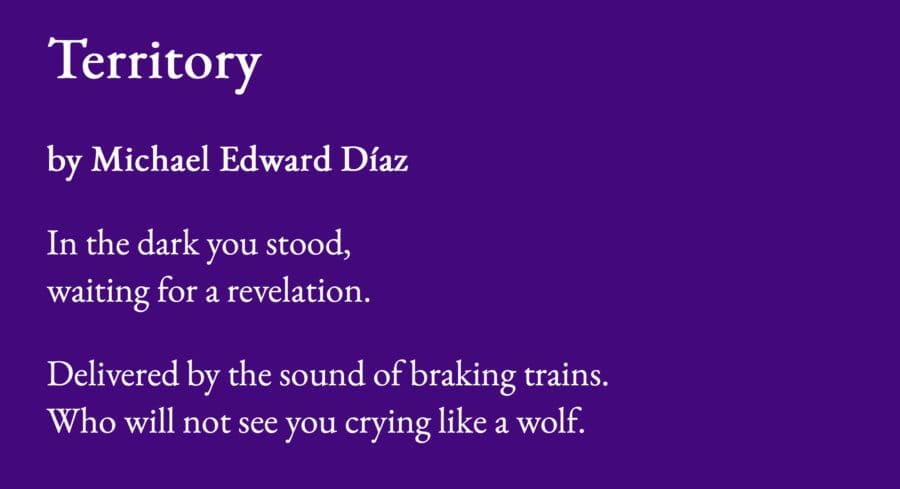
I don’t know how to escape cliche here. You get back what you give. If you’re patient with people they’ll be patient with you, at least most of the time. When we open back up for submissions, I think we’re going to have to change models and only stay open to new work for a few weeks at a time, I’ve lost great work because of how long it takes me to do things. That being said, there is a converse to this lesson: some people are just not worth your time. As for surprises: it’s all a constant surprise. I’ve published new work from some of my favorite living writers, Grant Maierhofer most recently. I’ve published younger writers people will remember forever (or at least until we all die), even if they’re not yet well known. I’ve published writings from close personal friends (the most read story on the site to this day, and the one people most often tell me is their favorite, is “I’m Bringing the Class War to Nantucket” by Owen Harrington, one of my best friends at Oberlin College and my Carths Vibroblade bandmate), from former lovers, from total strangers. I published the fiction debut of a bonafide genius, Kate Wagner. It’s all been a surprise. It’s all been a blessing. The endeavor has changed my life irrevocably.
Golf is counterrevolutionary. I stopped playing in high school after I read The Communist Manifesto for the first time and started smoking weed. I had also developed a persistent slice in my swing which made it hard to keep my drives on the fairway.
(Owen Harrington, “I’m Bringing the Class War to Nantucket” in Burial Magazine)
How often do you write? Do you have a typical process for conceptualizing and developing your work?
I write every day. I write what I’m interested in writing. Sometimes this results in frustration. But I’m still at it. My goal was to have a draft of a novel finished this year. That’s not going to happen. I’ve restarted writing the same novel about 40 times now (it’s about a roller coaster shaman and an Israeli roller coaster conspiracy, more or less). I instead ended up with a poetry manuscript and now that’s being brought into the world as a book of these poems by an amazing press right here in the city I was born in (Los Angeles). So I’m not too sore about all that. Next year I’d like to have the novel draft done, though, but based on what I’ve been writing lately, it doesn’t appear to be the 40x aborted novel. I think it’s something else. You’ll know when I know, I suppose.
What kind of imagery are you drawn to?
I like that which is grotesque and exquisite at once. I appreciate a certain delicacy and lightness in writing, even in the most extreme material. I think reading the London Review of Books every other week as a 14 year old idiot permanently warped my sensibility after this fashion. But I really do believe that a writer should write about all the heaviness in the world with forceful lightness. Like Walser did.
…When my grandmother first got sick, I moved in with her. Only she didn’t realize it. I lived in her oven. She hardly cooked so that was not much of a concern.
Through the proscenium or reverse-proscenium of the oven’s window, I spied my grandmother spending more and more time with Seymour Cassel…
(Z. H. Gill, “Seymour Cassel” in minor literature[s])
Are there any influences that are core to your work?
Probably. Should I just make a list? Of course I love a list. Off the top of my head: Queneau, Perec, and Calvino. Clint Eastwood. Thomas Bernhard. Ted Berrigan. Claire Denis. John Singleton. Out 1. Toute une nuit. Heaven’s Gate. Markson’s novels from Wittgenstein’s Mistress on. Pialat and Fassbinder. Charles Burnett. Ivy Compton-Burnett. Tsui Hark. Lætitia Sadier. Henry Green, at least his novels Concluding and Nothing (especially Concluding). The Crying Game. The first 100 pages of V. Slowdive’s Pygmalion record. The filmmaking team Lev Kalman and Whitney Horne. Peep Show. Love Streams. Ann Hui. Robert Walser. Plenty more.
What do you want a reader to feel or walk away with after reading your writing?
Anything, anything is better than indifference. Some Oxford economist-guy on Twitter called a recent piece of mine, a fiction drawn from my experiences working in awards marketing (which is to say, Hollywood awards season stuff for movies and TV) “one of the least interesting things [he had] ever read.” Seems like my writing did something to him, so I’ll take it. Call it cope, but more than anything, I just don’t want indifference.
Between your work being published in HOMINTERN and Lou A. Leere’s in Burial, I’m very curious about the literary circuit between Chicago, Los Angeles, and elsewhere. How would you describe this creative community?
I love her. To be honest, I get really excited when people bring up HOMINTERN, all the people who worked on it (Lou and Mara and Jessi) are very dear to me, and I think it rules that the site has become a sort of cult e-object.1 They ran two stories of mine under my own name, plus some insane comics I made under the name “Hunter Chainlift.” I went to school with Jessi Gaston (one of the most brilliant writers I have ever known) and Henry Hanson, whose films will live forever, and that’s how I got to know some of these tremendous artists and humans originally. There is a wonderful freak axis or freak ley line running from Michigan and Illinois toward California. It runs through Arizona, where Daphne Dhalgren works on Organ Bank, which is among the very best publishing entities in this godforsaken country. Daphne and Lou, of course, are also friends. All of these artists are finding each other, or have already found each other, and mostly outside of, let’s say, traditional systems of power and prestige. Jessi recently expressed a bemusement that so many mutual friends of ours are up to such interesting things. Who knows what will happen in the future – perhaps we will all be killed in a third world war – but these interlocking groups of artists, this “new underground,” it all gives me a bit of hope.
Interviewed by Seth Nguyen.
1 HOMINTERN was a Marxist literary magazine upon which the interviewer imprinted like a duckling at their first encounter.