Tell us a little bit about yourself and what you do.
My name is Marie Ségolène. I am an artist and curator based in Montreal. I write and from the writing I create performances, in which I playfully embody the text through a collage of installation, music, food, drinks, dance etc. My approach to making is very interdisciplinary, I love experimenting between the boundaries of different mediums or practices.
I also put together exhibitions. I take immense pleasure in placing artworks in unexpected relationships either with characters in literature, poetics or film, or an archival image or object. I love fragmenting a narrative and seeing what new meanings emerge. I spend a lot of time thinking about the chance encounter.
I also spend a lot of time thinking about hospitality, the hosting body, and its limits. I spend a lot of time thinking about dissolution, infusions, martinis.
Perhaps my creative process is a little bit like a cut-up. Or what a cut-up would be if it were to be sewed back together, a little disjointed. I cannot sew but my mother sews a lot of my performance outfits.
How did your interest in art begin?
At 5 or 6 years old, going to see the Douanier Rousseau painting at the Musée des beaux-arts with my uncle Maurice.
Then walking back to his apartment, where he would set a beautiful small table for lunch on his balcony. And between all the flower pots, checkered tablecloth, silverware, and matching napkins; after the meal, he would lay out materials for me to draw. I remember playing with a large ostrich egg in his living room. And his letter writing tools – a stamp, wax, special fountain pens. Every single object in his small apartment was deliberate and beautiful.
Then, when I was a little older I would spend afternoons at his art therapy studio. The way he could simultaneously have such an openness to creativity and a rigor in his aesthetics has always captivated me.
When I was a child I thought I wanted to become a singer, but I was terrified of singing on a stage. I wanted to write but I was terrible at spelling, and I wanted to draw but wasn’t particularly good at it. My uncle always encouraged my creative spirit, regardless. I think I get my love of hosting from him, my appreciation for certain traditions too. He was an artist, a jewelry designer. He drew and he painted wonderfully.
I think when I am older I too might try to paint.
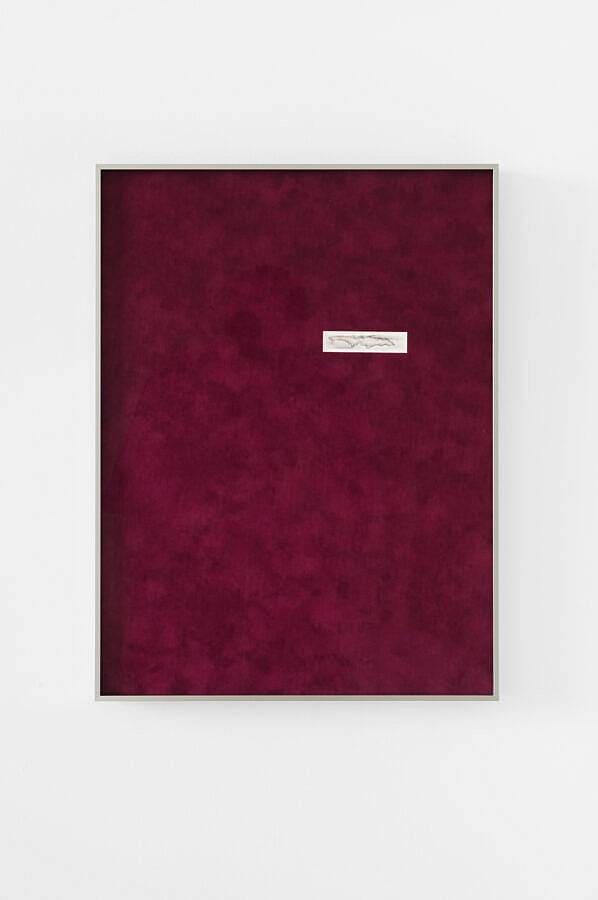
Charcoal and watercolor on paper, suede matboard. 16 × 22 in.
From The Thorn Stigmata and the Faded Branch of the Crown, presented with Christopher Gambino at Pangée, Montreal, QC.
What kind of imagery are you drawn to?
The woman who drinks alone. The woman who is difficult, and excessive.
Have you seen Marilyn Monroe’s drawings? They are so delicate and wonderful!
What is your workspace like?
I seem to always work out of my home. I write in bed, or on the floor. Never at a desk.
Small stacks of books and papers. When I am working on a performance I get my ideas from going on long drives, and seeking out old objects that speak to me.
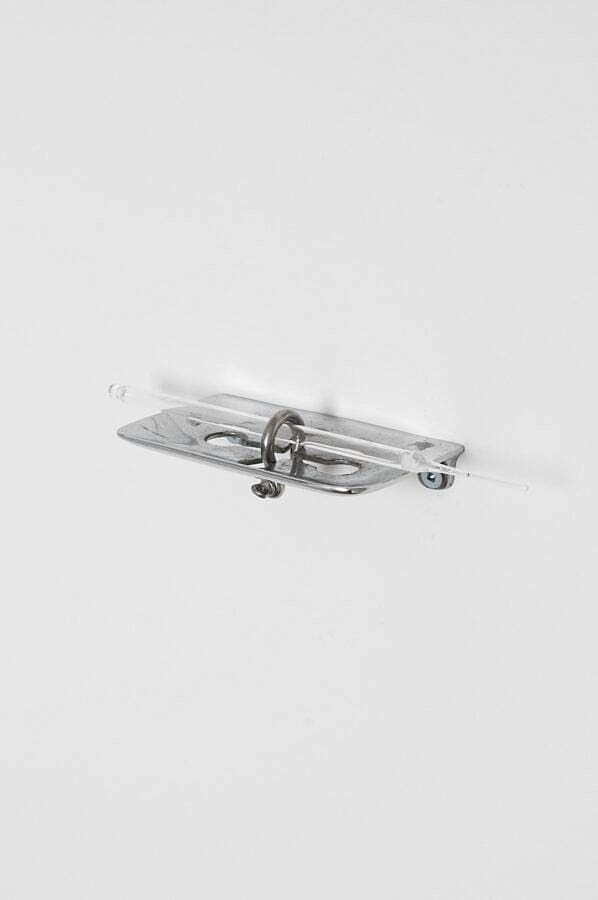
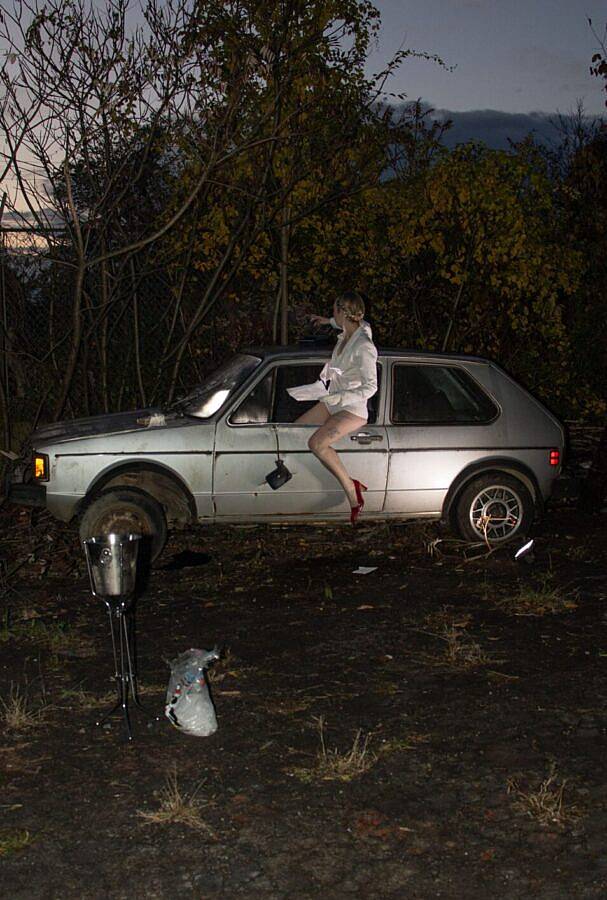
From The Thorn Stigmata and the Faded Branch of the Crown, presented with Christopher Gambino at Pangée, Montreal, QC.
Is there a phrase or quote you’ve come across recently that’s stuck with you?
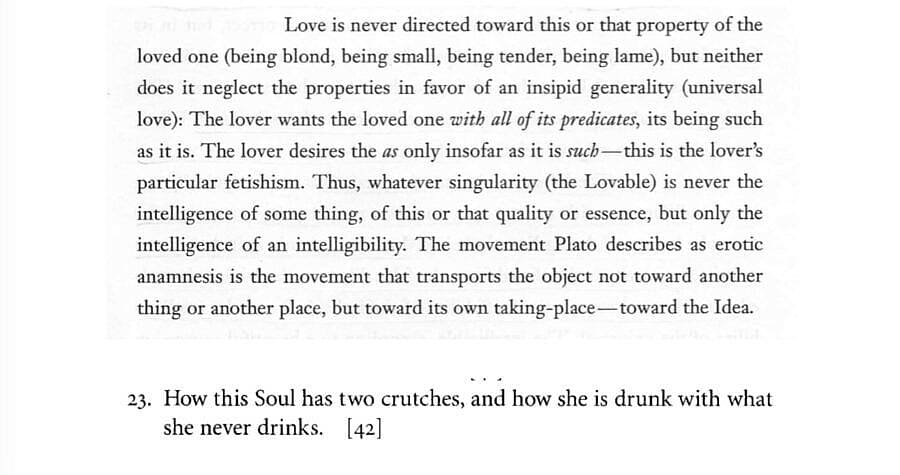
Here are two quotes I had saved on my desktop for the last few months: The first is by Giorgio Agamben from the first part of his book The Coming Community, which I have been meaning to read past the introduction. The second is by Marguerite Porete, from The Mirror of Simple Souls.
As someone with such an expansive artistic practice, how do you determine where or in what medium to pursue a creative impulse?
I suppose it depends on which itch I want to scratch.
What is working in Montreal like for you?
Most of the time, the grass seems greener elsewhere.
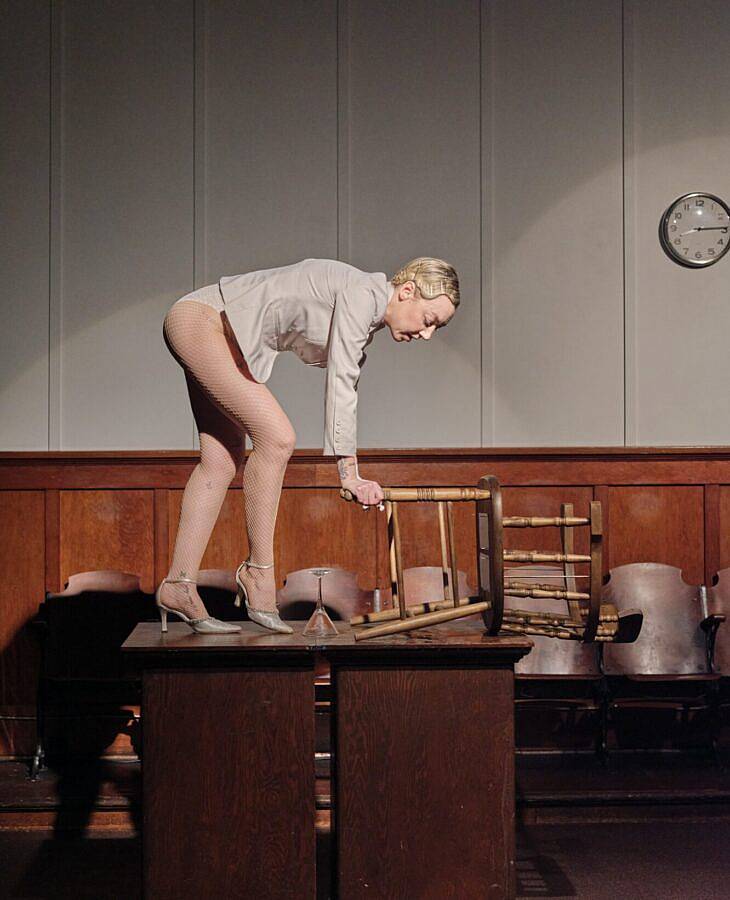
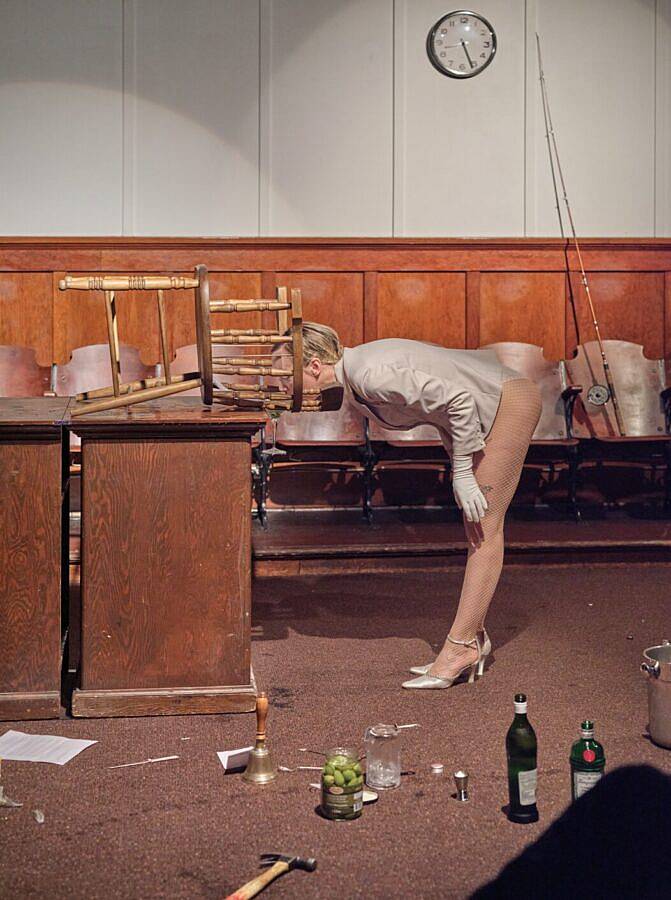
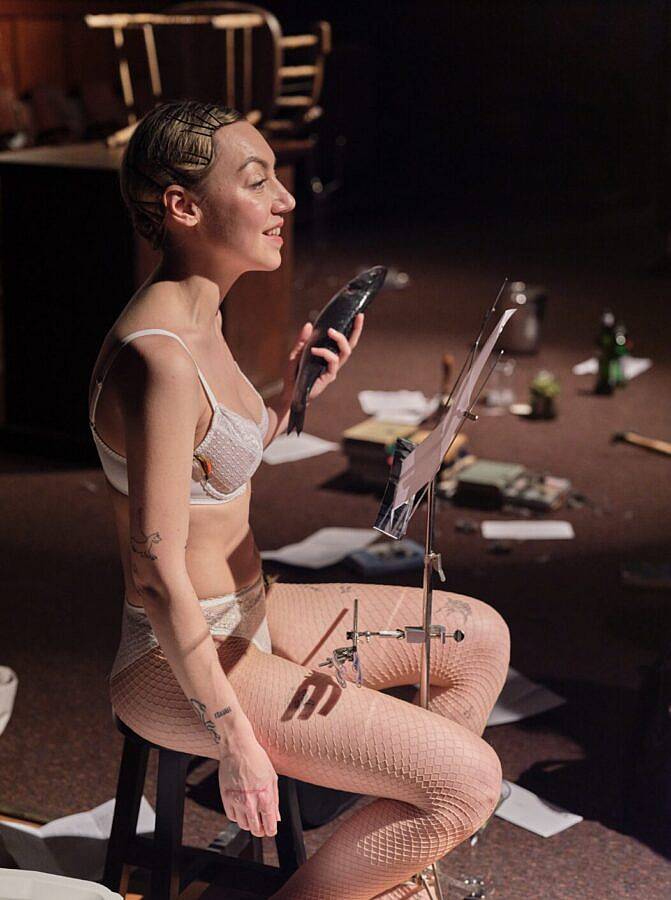
Tell us about Espace Maurice and your ongoing curatorial practice.
Espace Maurice was an experiment in hospitality, an apartment gallery, which I ran in my loft from 2021-2024. During that time, I hosted exhibitions by local and international artists, often wrote texts to accompany the works and hosted very festive openings where I would typically serve cocktails, trays of amusing shots and food. Espace Maurice was a space where people could come sit and read on Saturday afternoons, have conversations about the artworks, etc. But also I think it served as a space for artists to congregate, make new friends and have a good time.
Eventually I collaborated with other gallerists and organizers to curate projects in unconventional spaces, such as a 10-day residency in Youngstown with artists from Montreal, New York, Ohio and the Yukon, or a large group exhibition in a squatted industrial space, or a collaboration with Sara’s at Dunkensthalle which was in an old Dunkin Donuts.
It is an incomparable feeling than to collaborate with artists and curators you admire and pool resources to show work. I find it difficult to summarize the experience or explain what it meant. I spent four years of my life opening my home to strangers and giving all the resources I could and in turn I got to peek into the process and minds of incredibly passionate and intuitive artists. I also got to witness profound long-lasting friendships form in my living room.
My last curatorial project was a duo-exhibition in which I held a hybrid role between artist and curator. But I suppose that was always part of my approach. Which is probably why it was so hard for me to keep at it. I don’t know when I will curate a show again. I keep thinking there might be a continuation to Espace Maurice, a different iteration. In a closet, in a kitchen… But it might take a while before it finds me.
What do you want to see more of in contemporary art?
I have been on a detox lately, I couldn’t tell you. I certainly think it is time we retire the painted room dividers.
What is something that feels certain or true for you right now?
That there is a God. That all shall be well.
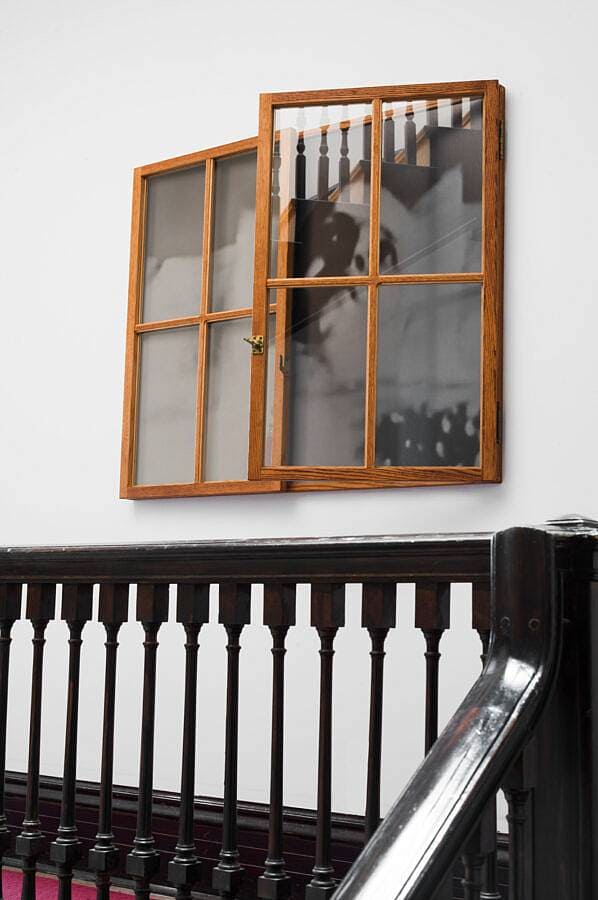
Still from Eugene N. Szynkowski, An American Rose (1984), 18:51, video documentary, Woonsocket, RI. From The Thorn Stigmata and the Faded Branch of the Crown, presented with Christopher Gambino at Pangée, Montreal, QC.
Tell us about a book that opened up a new way of thinking for you.
I have been trying to think back on a book that might have changed me as an adolescent. I feel like I have been moved by all the books you would expect to have been moved by. I remember reading A Lover’s Discourse and what that ignited in terms of possibilities of form. I return to Kathy Acker’s correspondence with Mackenzie Wark every time I fall for someone, and to Acker’s essay on body building when I need to think of process. I love Bukowski, and how his poems make me thirsty. In the winter when the sadness takes over I read John Berryman. But right now I am re-reading Ginsberg’s Collected poems and I want to learn how to write a long long long poem, an incantation. I have been reading texts by Christian mystics as well, in search for that rhythm.
The last two books that have made me cry are Annie Dillard’s Holy the Firm and Robert A. Orsi’s Between Heaven and Earth.
Who’s making work right now that more people should know about?
These days I have been thinking a lot about Casimir Ernest Gasser’s paintings and Jeffrey Grunthaner’s writing. I have also been really attached to the work of Dylan Weaver, a painter based in Youngstown (OH).
But an artist that I have been completely changed by is Scott Perguande, a self-taught ceramicist who lived in Youngstown and passed away in the mid-2000s, and whose work never really left Ohio. It is one of my dreams to write and shape a project around his life and work.
What was the last thing you changed your mind about?
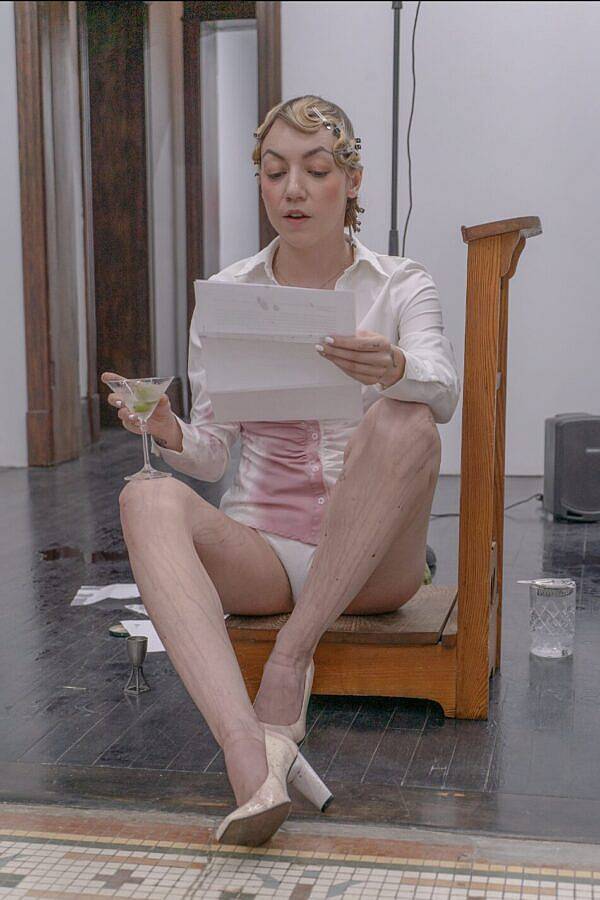
Which shoes I should pack in my suitcase. Which poem I should read in Chicago.
What have you been listening to lately?
Alanis Morissette.
What is something you’ve always wanted to do and are working towards achieving?
I am currently applying to a PhD program, and learning cranio-sacral therapy. There are more dreams in my vault but those will do for now.
Is there an upcoming project of yours that you can tell us about?
I have been really wanting to continue on the thread of my last exhibition and respond to the idea of the Victim Souls via performance. I am not sure how that may translate but I must figure it out before the Spring.
What do you collect?
Cocktail paraphernalia, shoes, vases, glassware. Books. Love letters.
Interview by Paul Fitzpatrick