Tell us a little bit about who you are and what you do.
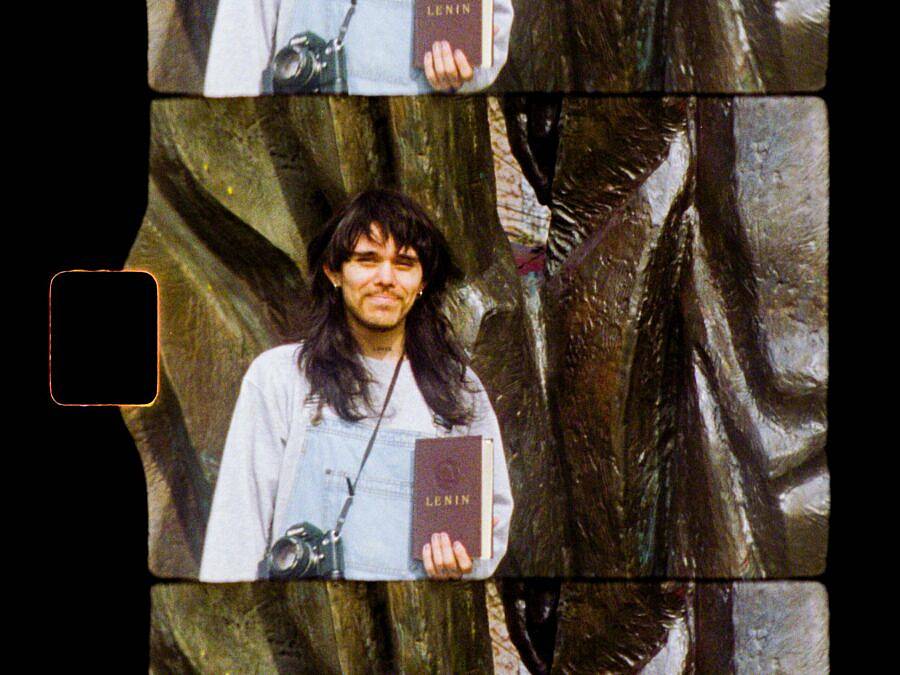
My name is Duncan Analco, and I’m a 25-year-old Latino filmmaker, photographer, writer, and musician originally from Durham, North Carolina. I shoot exclusively on film, and I gravitate toward the avant-garde in every medium I find myself exploring. I direct, produce, write, edit, and design the sound for each film I make, and I love to shoot, develop, scan, and print my own photography whenever possible. Oh, and I’m an identical twin, too!
Are there any influences that are core to your work?
For my photography, I would say Diane Arbus, Graciela Iturbide, Bruce Davidson, Gordon Parks, and Sally Mann are my greatest influences. As for cinema, there are far too many to count, so I always say my biggest influences can be told in an absolute list of three: Andrei Tarkovsky, Chantal Akerman, and Abbas Kiarostami, respectively.
What is a moment that you look back on as being formative to your practice as an image-maker?
The single most formative moment of my cinematic life occurred when I was shown Chris Marker’s La Jetée in my first semester of film school at Columbia College Chicago. To an undeveloped cinephile at the time—someone whose scope of cinematic enlightenment reached that of only Kubrick and Tarantino—this film was unlike anything I had ever seen. La Jetée was one of my first initiations into a radical, deeply affectionate, and free-form mode of cinema that I would eventually claim as my own. The film’s original technique—the sheer, unconventional genius of synthesizing disembodied sound, static photographic frames, and the fluid elasticity of subjective time—completely enveloped me, and even led me to make my own La Jetée-inspired photo-roman titled Me Gustas Cuando Callas, which had just screened at the Music Box Theatre this past September for their Chicago, Alli, y Mas program.
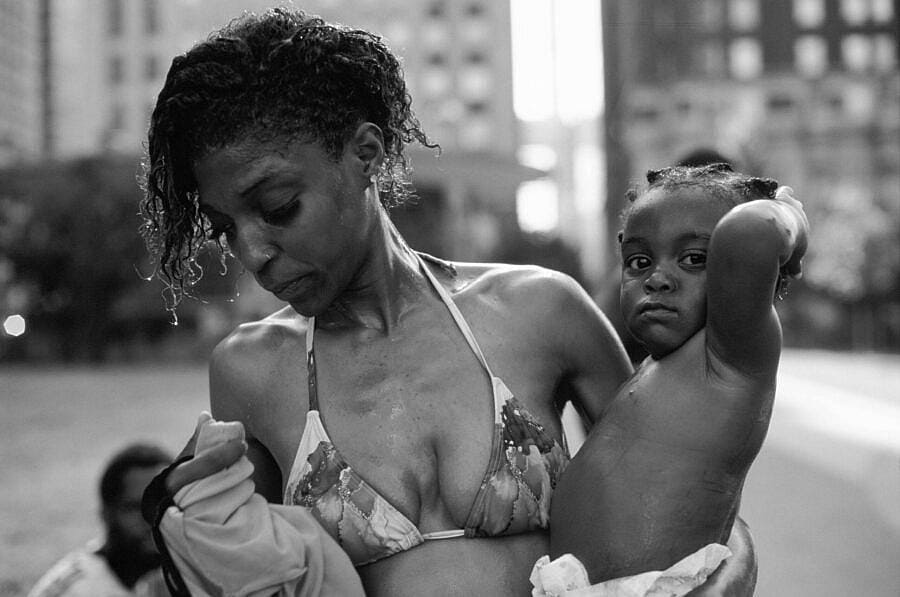
In the realm of photography, I’d say the primary lightning-strike moment came for me when I discovered Diane Arbus and her photobook, Revelations, in the gift shop of the MoMA while on my first trip to New York City. When I stumbled upon her book and looked inside, I was so thoroughly arrested by the volume and visual mastery that I literally sat down on the bare wooden floor of the gift shop and dissected every page and every image for three hours straight. I had never before witnessed documentary portraiture this unflinching, this nakedly vulnerable, or this mesmerizingly self-involving, and all I wanted to do was emulate that in any and every way I could. She moved street photography from the cold, uninvited, and frankly ubiquitous voyeurism of the male gaze I’d grown so accustomed to into a space of intense mutual recognition and humility. After familiarizing myself with her and her work, all I wanted to do was directly, ritualistically emulate Diane Arbus herself. This fixation burned with enough passion that, while in Philadelphia a year later, I took a Greyhound bus to New York City for a 10-hour-long day trip solely to see her Constellation exhibition at the Park Avenue Armory, which was the largest and most complete showing of her oeuvre to date. That exhibition, much like our introduction at the MoMA, entirely altered my internal chemistry, and I use my ticket from the showing as my primary bookmark to this day.
Tell us more about why you choose to shoot exclusively on celluloid.
Choosing film over digital for me is a bit like a painter choosing a real canvas over a tablet. There’s just a tangible, physical reality to celluloid that is impossible to replicate through a digital process. The grain, the texture, the slight unpredictability—it all mirrors the imperfect yet natural way we experience real life. Digital looks clean, sure, but it offers a form of almost sterile perfection that fails to accurately capture the atmosphere of a room, the richness of one’s skin, or the surface of a memory in a way that looks or feels as ethereal as I remember them. Art shouldn’t be flawless technical reproduction; it should be about exploring authenticity—exploring what is uniquely human. For me, the depth and even the fragility of film are essential if you want to capture the genuine essence of being alive.
Another reason I shoot exclusively on celluloid is for the heightened technical approach and risk that inherently comes with shooting it. When you’re told to capture a subject, but only have a finite amount of film to use to do so, every potential image has to be shot with the utmost precision and intention. When digital video allows you to vacuum up terabytes of data onto a relatively affordable SD card the size of a postage stamp, it’s easy to fall into a habit of shooting with passive impunity, almost without thinking. With film, every single frame is burned right before your eyes, 24 times per second. When you know you can only afford one or two takes, every single person on the set is dialed into their role with a technical precision that isn’t required of them on digital shoots. Your actors give more dedicated performances; your AC has to pull focus through an archaic monitor that only shows a grainy, black-and-white image; your loader has to make sure they properly change, clean, and reload mags to be used within a minute’s notice; the list goes on and on. In my opinion, the price of digital convenience is a final product with far less passion, less dedication, less collective commitment to an artistic vision than an analog process.
Your work is often concerned with the interplay between absence and presence. What do you find generative about this dyad, and (how) does it structure your films?
For as long as I can reasonably verify, I have navigated the terrain of my own consciousness through a kind of internal, highly sensitive optical apparatus—a lens that not only registers, but actively retains and bounces back every localized joy and specific, agonizing micro-trauma I have ever experienced or regrettably inflicted. Every person, major affective state, or fleeting epoch that has ever cross-faded in and out of my life serves only to compound my hyperawareness of profound love and loss.
For me, absence and presence are not intangible abstractions; they are, rather, the absolute conditions of my existence and, by extension, my cinematic language. By extending a shot far past the limits of standard narrative pacing, I try to amplify both the tangibility of an object or person and the spiritual intangible presence of a deep emotion or thought that binds them together. In that prolonged, unblinking gaze, the immediate reality begins to dissolve, and what is absent or simply unnoticed—the deeper, poetic truth of the moment—begins to fill the viewer and the character on screen alike. When you are forced to sit through a long, entirely unbroken take of, say, a face, or a brief physical touch, or a totally empty space, you are compelled into looking at something you might normally ignore. In these specific intimacies, you become aware of your own body and its relationship with what you’re seeing. You become conscious of your own patience, or lack thereof. You become conscious of your own stray thoughts. You are, in effect, no longer being manipulated by frantic, hyper-kinetic editing or an overly dramatic score that tells you exactly what and when to feel.
To build off this, I tend to use static, highly disciplined framing combined with delicate pans and in-camera movement, often centered around intimate domestic spaces, nature, and the industrialism of city life. These structures hold the presence of the body, but they also emphasize what is missing just outside the frame. The drama in my films occurs almost entirely between these specific, melancholic gaps of absence and presence. Diegetic, echoing voices or spoken, overlaid text against contrasting environments speak to a profound distance and absence all in the same breath. Someone is there—I am here—and the film exists within the distance between those two worlds.
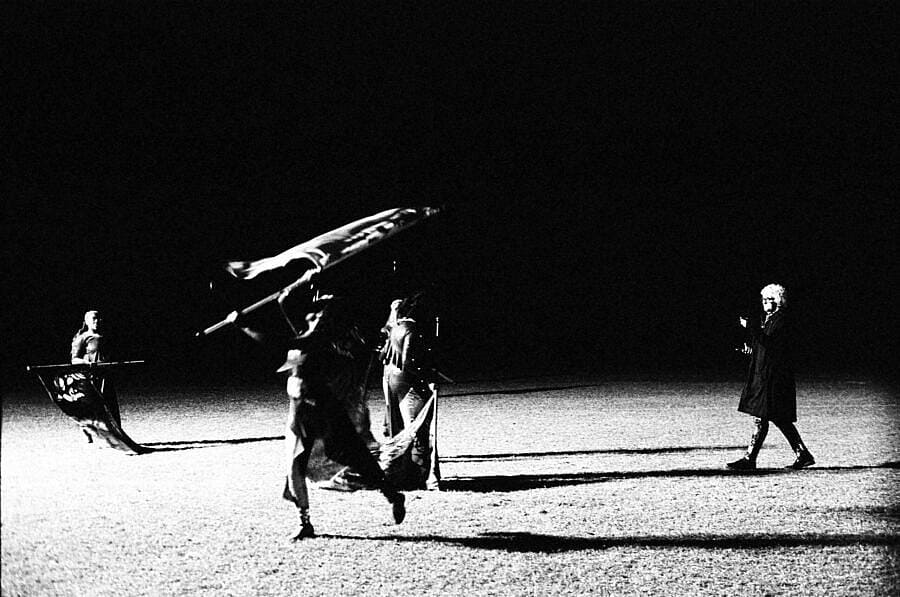
For your latest film, Three Days in Tlaquepaque (2026), you served as the sole writer, director, producer, editor, sound designer, and cinematographer. How did you navigate that workload? Were there any surprises (delightful or otherwise) that you encountered during the production process?
About three years ago, my family and I found out that my mom was unexpectedly diagnosed with a near-deadly autoimmune disease. Because of this, I decided to move back home from Chicago, in order to be with my family in North Carolina. To be perfectly candid, I was also recently diagnosed with a deeply ingrained behavioral addiction, and right around this time is when it reached its breaking point. I lost many of the most important people in my life as a consequence of that. My closest friends, collaborators, people I loved and admired more than anything—completely gone because of my own actions that had spiraled out of control.
I’ve spent the time since reflecting on everything I lost and the changes I’m committed to making, but in that time spent alone, isolation and severe depression prevented me from feeling any of the creative spark I had before. I knew I had to try to make something, though, so in late 2025 I forced myself to join the 100ft of Film Project, a short film competition hosted by Kodak and the Atlanta Film Society that enlisted 30 teams with the task of creating a film with just a single 100ft roll of 16mm film. Under the pressure of strict rules and a deadline, I created this melancholic vérité about a lonely woman in the midst of a harsh Chicago winter, whose letters to her distant lover have gone unanswered. While everybody else participating in the project was local to Atlanta and had full casts and crews, my circumstances forced me to fly solo to Chicago in the middle of winter to create this film with only myself; my actress, Verónica Casado Hernández; and my assistant camera and loader, Jason Ronan, who graciously offered his camera and labor to help get this project made. I had a vague image in my mind of the film I wanted to make, but nothing written. I shot the film all in one day, and didn’t start writing a script until I got the film developed. I had no idea what the letter was going to say, and came up with a script based solely on the images I’d captured and my own feelings of attenuated hope, severe isolation, and unrequited correspondence I saw reflected in them. By the time I had a script and a rough edit of the film, I still needed an actress to record the voiceover of the recited letter in its entirety. I ended up reaching out to my tía in Mexico, who was kind enough to send me a recording of her voice without hesitation. She sent it about an hour before the final project submission deadline, and I had to edit the recording, mix the audio, and create the subtitles entirely from scratch.
Because I prefer to take on multiple responsibilities when I make my films with others, navigating that workload—that level of auteurship—is actually where I feel the most comfortable. It wasn’t without its challenges, though; there’s a scene where a train arrives at the station to pick up our nameless character, and timing that was tricky when I knew I had no room for error with only 55 seconds’ worth of film left to shoot it. Not having any extras to work with, I also ended up in front of the camera, too, just to have another person on screen.
The biggest surprise, however, was the film getting accepted into the Chicago International Film Festival. I consider it the highest honor of my life and career thus far. It’s been a bittersweet celebration as I can’t help but think of what and who I’ve lost since moving out of Chicago, but I’d like to think of it as the start of a new journey—a new version of myself and a renewed sense of joy for the art of filmmaking.
What is a challenge that you and other filmmakers face and how do you see it developing?
I think the most urgent crisis facing the contemporary filmmaker is our subjugation by and total dependence on capital. Cinema is the most collaborative and expensive medium to produce. Because of this, it is deeply tied to the forces funding and distributing it, and unlike most other art forms, it is dependent on and determined by the dominant ideology of a given society. We live in a hegemonic, capitalist empire, and the films saturating the market reflect, participate in, and reinforce the ideological structures underlying our society.
As filmmakers, we can pour our souls into a film—only for business executives and algorithms to strip away its intellectual and artistic significance, all for the sake of turning it into a mass-market commodity. As productions get more expensive, studios get more risk-adverse; we see this in the mass production of standardized, synthetic formulas, endless sequels and prequels, and franchises dominating mainstream cinema with little room for original artistic thought or experimentation. It has created an inverted reality where the ultimate aesthetic metric is no longer beauty, truth, or human expression, but profitability. When a film makes a billion dollars, the capitalist system legitimizes that financial success by declaring it a cultural triumph. As independent filmmakers, we no longer face a free or fair market when a handful of enormous corporations control the entire production process, from initial funding to the global streaming infrastructure that decides what enters the masses’ collective consciousness. When that much cultural and financial power is held by such a concentrated few, motivated solely by profit, it completely limits the range of ideas that are allowed to circulate. Instead, audiences are exposed to a homogenized worldview backed by American hegemony—imperialist propaganda permeating the superhero and war films running rampant in our film culture, and the rapid rise of generative AI at the expense of both human expression and labor. This is, of course, an intersectional struggle; it’s no coincidence that the rejection of ideas and perspectives that do not conform to these dominant ideologies are largely the ideas and perspectives of people of color, of women, of queer people—all distinctly subjugated, commercially exploited, and purposefully alienated by the capitalist mode of production. I see this developing at a crossroads; as these malignant monopolies use automated algorithms to choke out human participation, filmmakers will be forced into making a choice between total corporate capitulation or radical, open resistance. I think the future of cinema depends on filmmakers building alternative, worker-controlled distribution networks to reclaim the medium as a tool for genuine artistic and political expression, and on the dictatorship of capital to be destroyed and transformed into a dictatorship of the artistic proletariat.
What do you want a viewer to walk away with after experiencing your work?
I want them to walk away with a heightened awareness of their own soul and a deeper capacity for spiritual, artistic, political, and emotional reflection. I want to give the viewer space and time to ask themselves, What do I think of this? What does this mean to me? How does it make me feel? Conventional cinema often robs the viewer of the opportunity to be independently introspective, vulnerable, or philosophically challenged by spoon-feeding them a cheap, manufactured gimmick that leaves no room for interpretation or discourse. Everything is all tied up for you by the end, and you leave the theater no different from how you entered it. I prefer to leave doors open for my audience, and I want my work to be a form of confrontation with reality and the viewer. How you reckon with that reality is yours alone to explore.
Any recent, current, or upcoming projects?
Right now, I’m showing my most recent film, Three Days in Tlaquepaque, at the Chicago International Film Festival and continuing its run in the festival circuit. I also recently submitted a selection of my poetry to the Poetry Foundation for their forthcoming special issue dedicated to Chicago, and I’m currently putting together two photobooks—a book of my Polaroid photography, and a book of my 35mm black-and-white photography—which I hope to see published within the next five years.
What do you collect?
I collect tattoos when my budget allows for it, sentimental knickknacks and other ephemera, books, my developed film negatives, vinyl, posters, letters and postcards from pen pals or friends, DVDs, and typewriters! I have a total of six pen pals I correspond with exclusively on typewriters, and it’s been an indescribable joy to keep up with. I even have a letter from Tom Hanks himself after I typed to him, believe it or not. There’s something really special to me about typewriting as a way to build connections to others who share the same passion. I feel a similar way about them as I do film; there’s a physicality and an intentionality to typewriters that digital devices are missing, and collecting them allows me to deepen my relationship to all things analog. Everything that I collect and accumulate stays with me, and anything gifted to me by somebody else is something I’ll keep for life.
Interview conducted by Seth Nguyen. Portrait photographed by Sarah Derie.