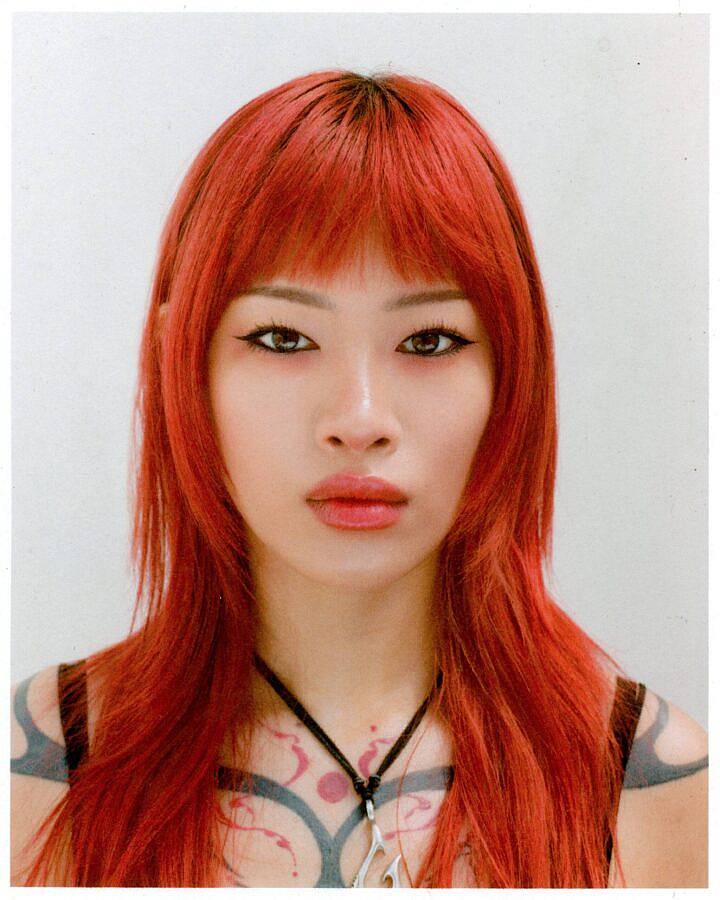
Tell us a little bit about yourself and what you do.
Much of what I make and gravitate towards aesthetically is informed by my experience as a 1st-gen Vietnamese-American growing up in the Midwest. Though I categorize my art practice as interdisciplinary, I consider sculpture my principal framework. Presently, I am most captured by the merging of material, image, tradition, and culture, joined together as method in investigating how the body re-grounds on land that is not home. I have become a collector of materials gleaned from the American landscape, and upon or with these materials, I explore ways to enmesh lens-based media and traditional materials and craft from Vietnamese culture. Through this coalescence, I want to make visible the Vietnamese-American body beyond monolith and explore beautification as a means of survival and sustenance.
Could you describe your practice? What materials do you use in your work and what is your process like?
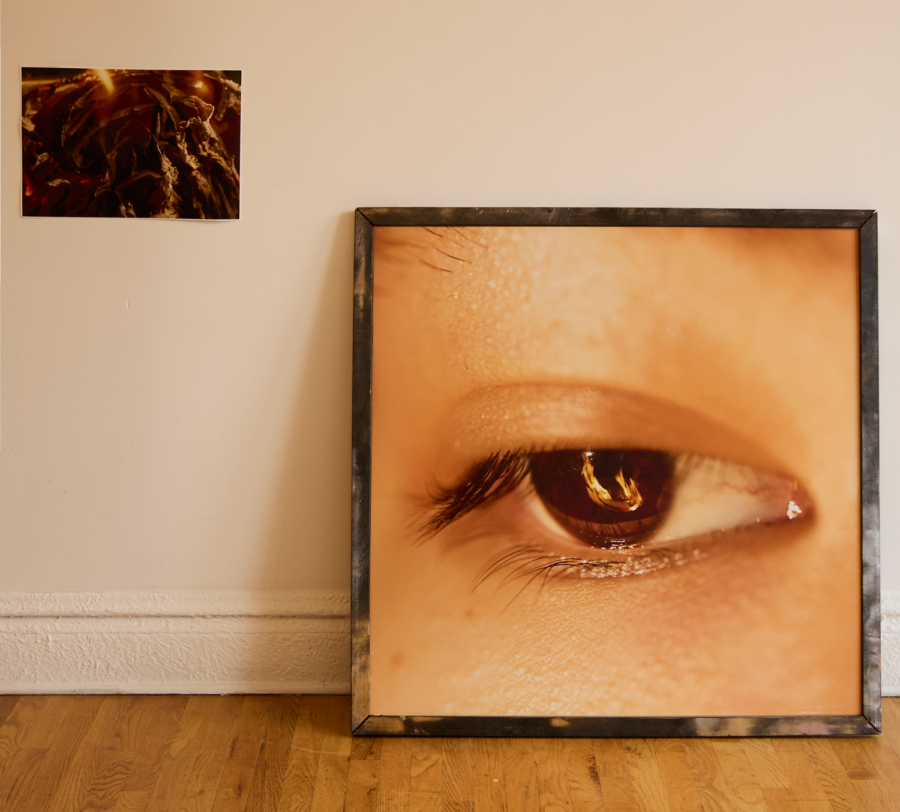
My process involves extensive experimentation, lots of failure, and some successes. I take varying pathways with my work. At times, I start with the found material and consider how it can be abstracted or pushed beyond its original usage, and what conversations arise from doing so. Other times, I begin with the concept/sketch and then consider what materials or techniques would best capture its essence. Rarely do I ever begin with what I already know. I often create in a state of flux, in learning new ways of doing and being.
What/who is influencing your work right now?
Iridescence (found in nature) as armor, mother-of-pearl lacquer panels, the scent of nail salons, varying shades of jade, fish nets, fruit sleeves, grass fibers, cracked concrete, seashells, and iron.
Who are some of your favorite artists?
Dinh Q. Lê, Arthur Ganson, Xin Liu, Sopheap Pich, Tuan Andrew Nguyen, Jumana Manna, and Eva Hesse are some of my current favorites. I am most drawn to the (in)visible systems and infrastructures of these artists’ works, how fragments fall apart and come together, and how edges lend themselves to each other in search of the bigger picture.
Your work seems very personal, are you drawn to depicting specific objects based on their familiarity? Or something else?
As drawn as I am to familiar objects, I find myself more interested in how to abstract or alter them as a means of legitimizing the diasporic body–embedding fragments of the self into the landscape and alchemizing both the fragment and landscape in doing so. My childhood interests were fossils, artifacts, and rocks, so I think I have always been interested in how objects embedded in the landscape can hold memory, even in states of deterioration and transmutation.
Describe your current studio or workspace.
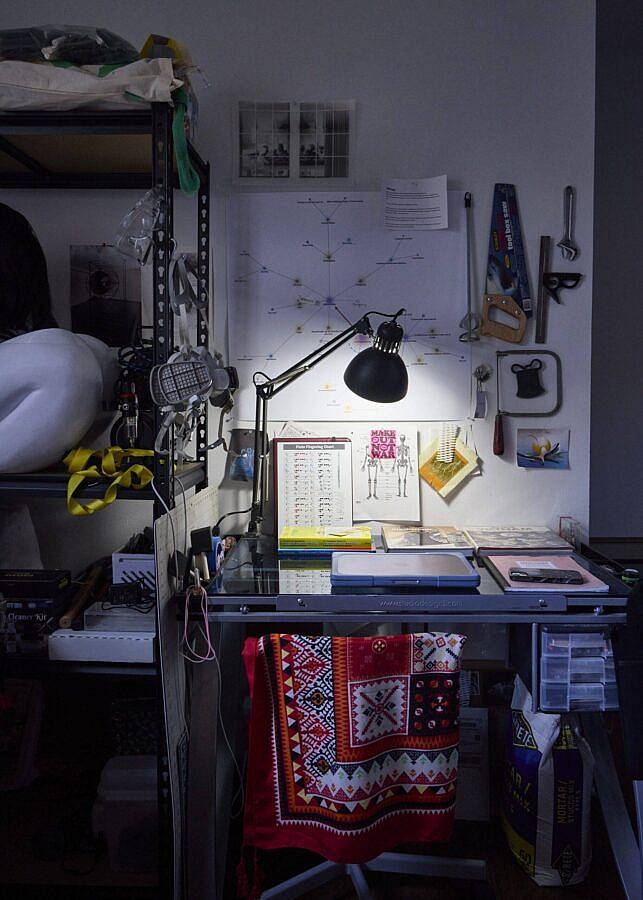
It’s a compact home studio with one main shelf, a cabinet, two desks, and a storage cart. The cabinet is so laden with various tools that the wheels are slowly collapsing outward (lol). I collect a lot of materials, so having less space actually encourages me to work with what is tangible and in view. On the main wall of my desk, an enlarged node-link diagram captures how I currently contextualize my work–core nexuses, the ideas and topics I am exploring, what points connect to others, and lots of white space to expand further as needed. My tools are held up by nails or push pins into the wall itself–placements scattered, but in conversation to each other. All my C-clamps are congregated and in function on the side of another desk. I care for many plants, so they lend more life and air to the space as well. It is quaint and incredibly sunny. My projects get messy in close quarters. Nonetheless, it makes me feel closer to what I love doing.
Are there any areas, techniques, or materials that you’re interested in exploring further in your work?
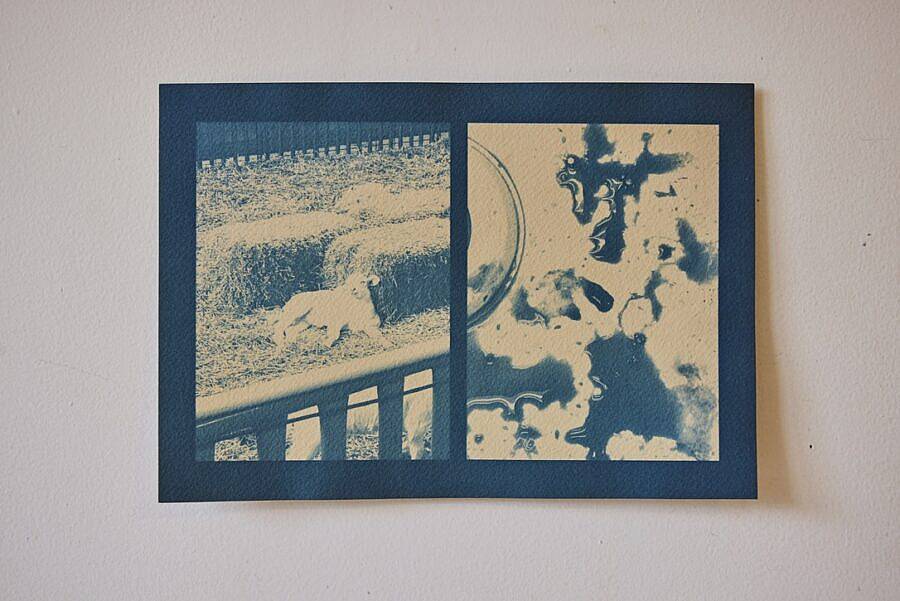
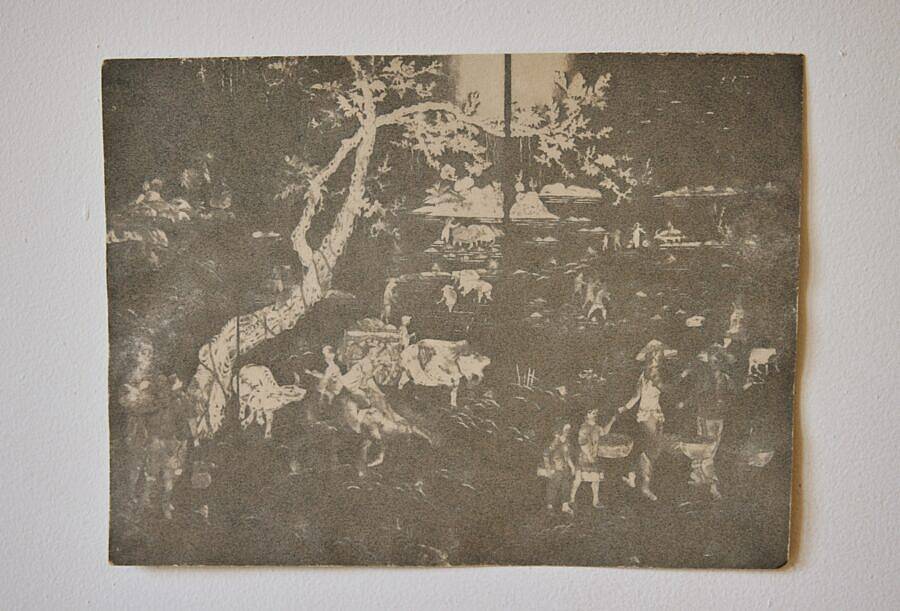
Absolutely! I’ve been really enjoying welding and joinery, as well as alternative photographic processes (like salt prints, van dyke brown, etc.). I would love to gain more experience carving into stone or wood, blacksmithing, experimenting with chemical patinas, and further variegating the image with encaustic medium.
What is something you’ve always wanted to do and are working towards achieving?
I would love to build a large wind- or motor-mechanized sculpture for the outdoors. Growing up in Indiana, red barns and silos and windpumps were always on the horizon–and frankly, the horizon line is something I find myself always returning to conceptually. So, it is a goal of mine to build something that the eye can catch from a distance. Right now, I am starting small and getting more comfortable with metalwork and mechanizing movement with motors!
How did your interest in art begin?
Because my first language was Vietnamese, I was limited to taking in the world around me with respect to sight. Naturally, I found it easier to communicate ideas through paper and pencil over dialogue. This circumstance translated into an artistically-driven childhood, throughout which I explored writing, music, painting, dance, and more. As my English improved and eventually dominated my mother tongue, I desired some way to resist erasure—a tangible way to carry out the action of remembering someone or something forever. I did not quite understand this notion then, especially at the age of ten or twelve, but it ripened with time and still guides me to this day. It is the main principle of why I make art–birthing something tangible from your hands, creating a physical “being” beyond the ephemeral, and immortalizing its existence.
What are some recent, upcoming or current projects you are working on?
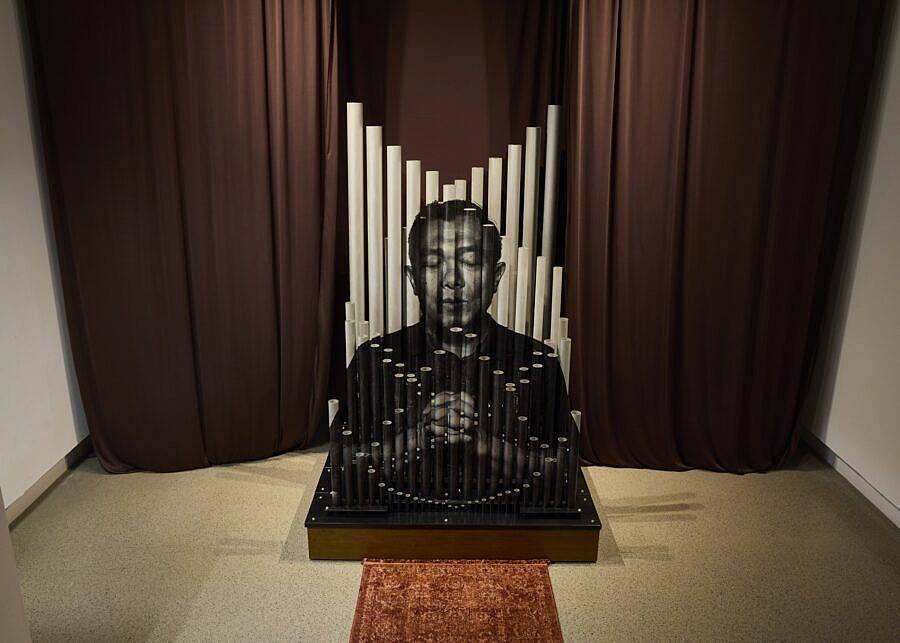
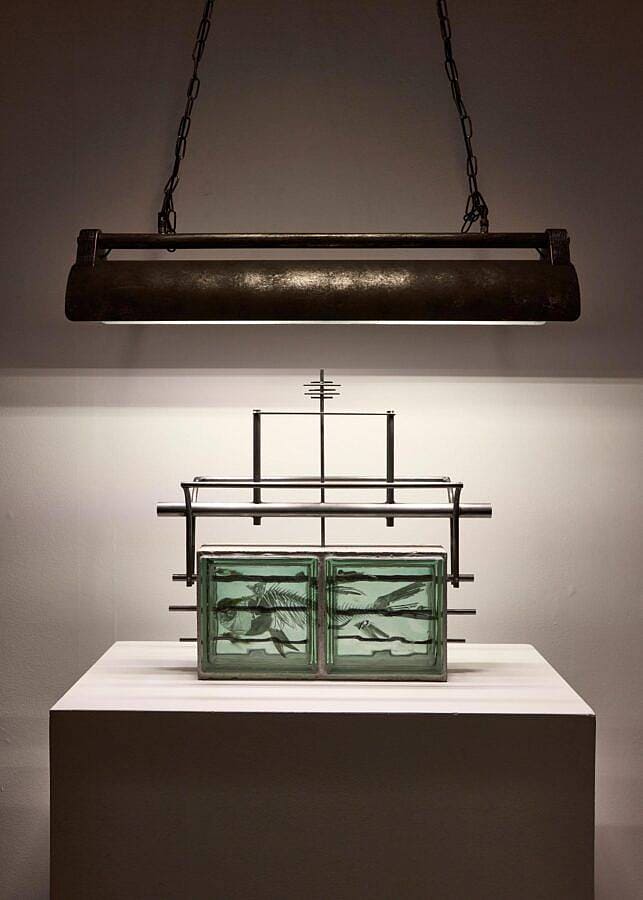
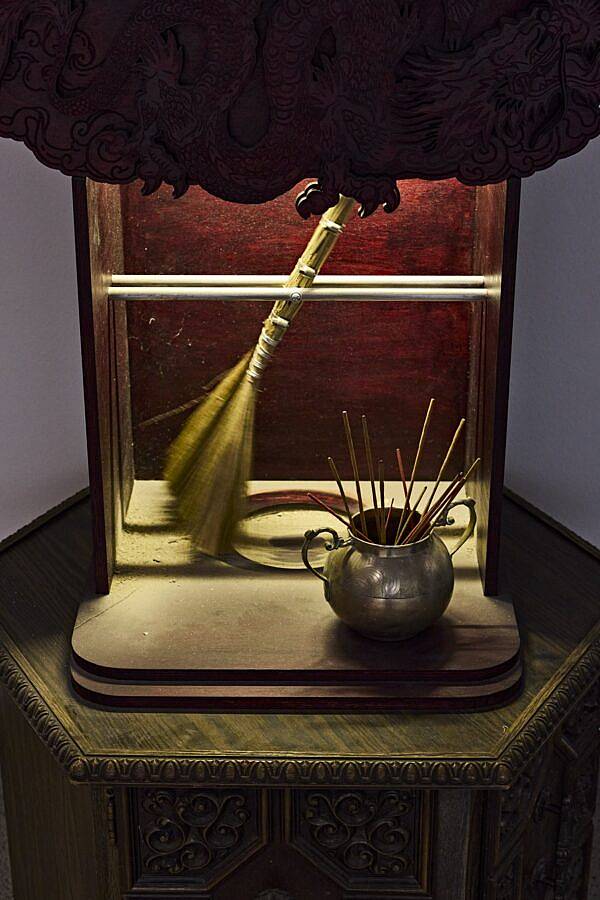
Earlier this year, I wrapped up my Bachelor of Fine Arts with my installation Sunday Morning Fossils (2026), a culmination of three different artworks at the SAIC Galleries. “Clockwork Mourning” remembered the body as ash through the performance of a malfunctioning broom or broken clockhand, unable to both clean or progress past a certain point. “Aquarium” was a window into a sea containing an inkjet print of a carp skeleton. Atop, a rudimentary “transmission tower” intercepted the glass—an ode to the sea as a historical carrier cross-distance, but also as a separator. Between these two artworks, and against the furthest wall, “The Mirror of Sunday Morning has Miraged” stood. Only through rigidity did my father’s face form when viewing this artwork. From a distance of eight feet from its center, one could encounter this mirage across 169 church organ pipes.
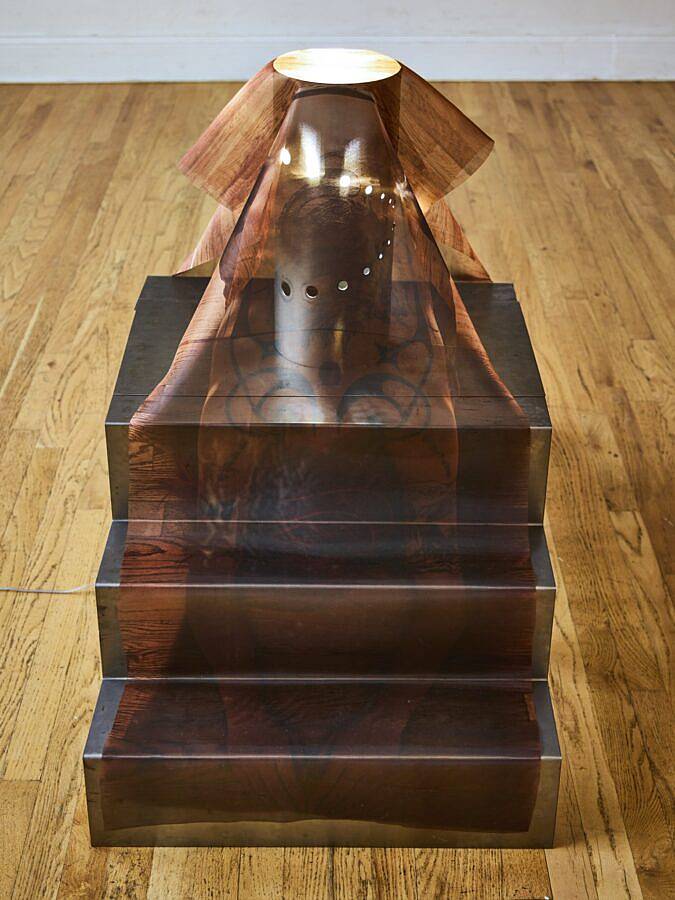
The same day my BFA show opened, I also had a one-night solo show, Offerings, which was hosted after my Artist-in-Residence at Studio 330 in the Flat Iron Arts Building. Offerings was a presentation of photographs I’ve taken over the past few years, anchored by a metal-fabric-light installation in the middle of the room.
Since then, I have been in a period of reorientation–moving, settling, and re-entering art outside of an academic setting. I have quite enjoyed slowing down and consuming media and research more intentionally. Lately, I have been studying the forms of objects such as parasols, weathervanes, temples, and shells. Some sketches are taking shape, but nothing solid yet!
What kind of imagery are you drawn to?
Familiar shapes/images that’ve undergone abstraction; patinated surfaces and industrial textures; systems and repetition; cupping marks on skin.
Do you have any tools or materials that are staples to have with you or to use when making work?
Modeling clay, inkjet transfer solution, thread and needle, pencil, and my automatism notebook. If my computer’s around, I also typically have my Obsidian network graph pulled up, which I would describe as a digital capture of my brain. I log everything into this graph–every material of interest, artists and techniques, topics to study, articles I’ve saved, etc. If there are points of connection, I link them together, and the graph expands accordingly.
Is there a moment you look back on as being formative to your identity as an artist?
As young as I can remember, I often worked and hung out at my parents’ nail salon. I did a terrible job as a receptionist; I hadn’t even been alive for a full decade yet. Rows upon rows of nail polish, the heavy smell of acetone, and callused hands beautifying the fingertips and feet of others were the background of most of my early childhood. Needless to say, my own practice is at its core: working with my hands and beautifying/creating to sustain and reground.
Has modeling work influenced your photography practice, having been on the other “side” so to speak of the camera?
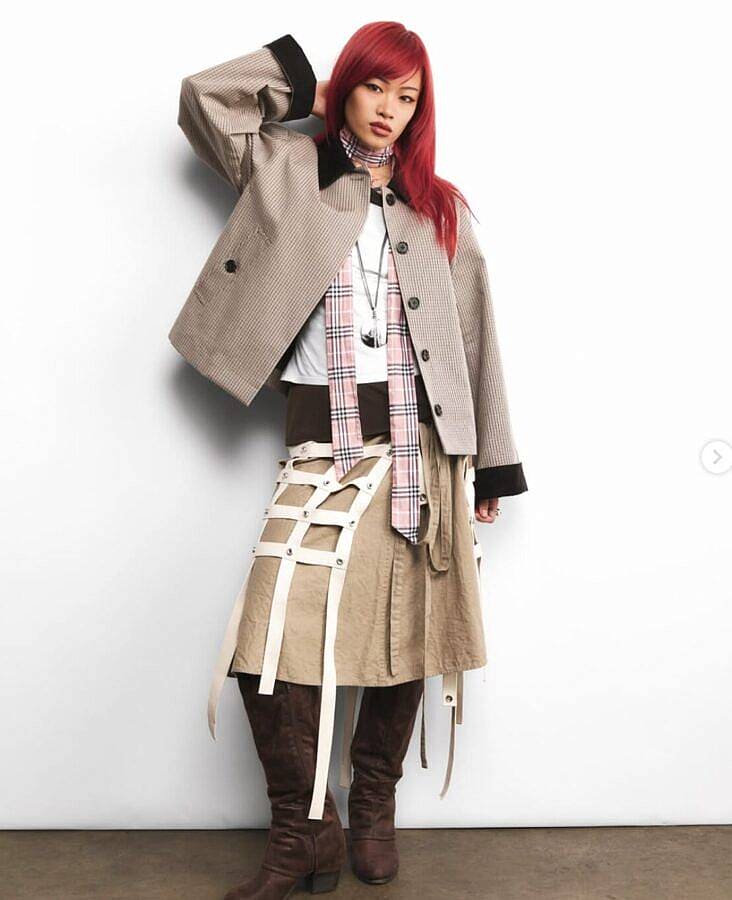
I would argue the inverse! Back when I shot more editorial work, I would demonstrate poses for my models to mimic. I knew the images I wanted to capture and moved my body accordingly. Over time, I’ve picked up modeling as a side gig/hobby to have fun and meet new people.
Do you have any desire to participate further in the fashion world (whether as a designer, or some other role entirely)?
I do, but not particularly as a designer! I quite enjoy working with textiles, creating sculptures that elicit interaction with the body, and carving out the image with shadow and light. Though these are often paralleled with fashion, my interest lies in exploring dimension, movement, and how the body reorients throughout time. The body is an incredible vessel and I want to hold space for it. Sculpture will always be the main framework; making it wearable is just another pathway, though one I will definitely explore down the line.
Interviewed by Amira Diaw. Artist portrait photographed by Steven Piper.