Tell us a little bit about yourself and what you do.
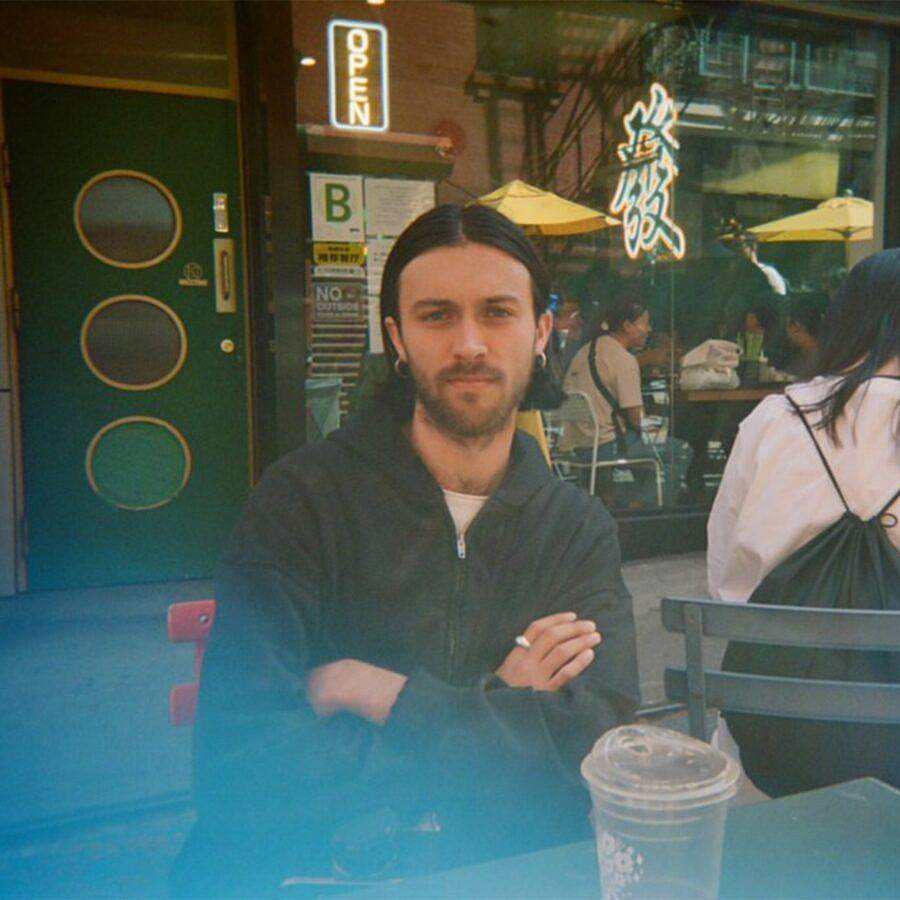
I’m an artist and educator working within photography as a knotting between writer and reader. How the touch between two in a singular instance can be focused through the camera’s ability to whet the author’s viewpoint in refraction to who is partaking in its reading, or who is included in it. This is a concise way of phrasing how things come around; How our relationship to spaces, our inner-space constructed in order for solitude to be taken up within them, and physical affect of ‘self-prompting’ are patterns of thought I follow when making pictures. I’m also a para-professional, or SECA, in the Chicago Public School district. Having certification in both Cook and Will county so prompt based learning, special needs, and education are very present portions of my life and practice.
Do you have any opinions on the amount of work being produced by artists in this current climate? How do you deal with this yourself?
I like taking large amounts of time with projects. Having a really genuine place to begin with, a prompt, or a specific place sort of acts as signifiers that could move a project forward, I feel like that’s what you’re asking more so. How do we feel we should move forward when we see everyone else walking around us? Taking time allows doubling back, maybe a photo you took but want to go back and re-take leads to an action being re-evaluated entirely. This could take years to unpack. Seeing a project of years work on a place, and then recent inclusions through next printings or editions, maybe when work is shown as an exhibition rather than a book really excites me. I also think you should show very little of what you do before it becomes something else; sometimes it’s intriguing to me to see a photo someone published before eventually finding its way into something down the line.
Stay offline, read, hang posters on your wall, make a little book…that act will probably come back to you when you’re ready anyways, but enjoy it! Usually it’s about working till something is exhausted; naturally a movement towards another present is already in motion.

What is one of the bigger challenges you and/or other artists are struggling with these days and how do you see it developing?
It’s incredibly dangerous to cling to a singular space to make work. There has to be this consistent movement of your body and the way you process yourself in the world, you simply just cannot do that in one singular place. Making work or trying to articulate yourself on the base of a space’s history, though very welcoming and conducive in terms of making community, may need a re-think. Community can be much broader and welcoming across state lines, countries, I think getting really comfortable in one place doesn’t challenge the work in a way where it can be pieced together with a full scope on the subject. Subject exists in multiplicity and I think is at a point where a singular interfacing to it is insufficient.
How do you see your work evolving in parallel to things that are going on around you right now?
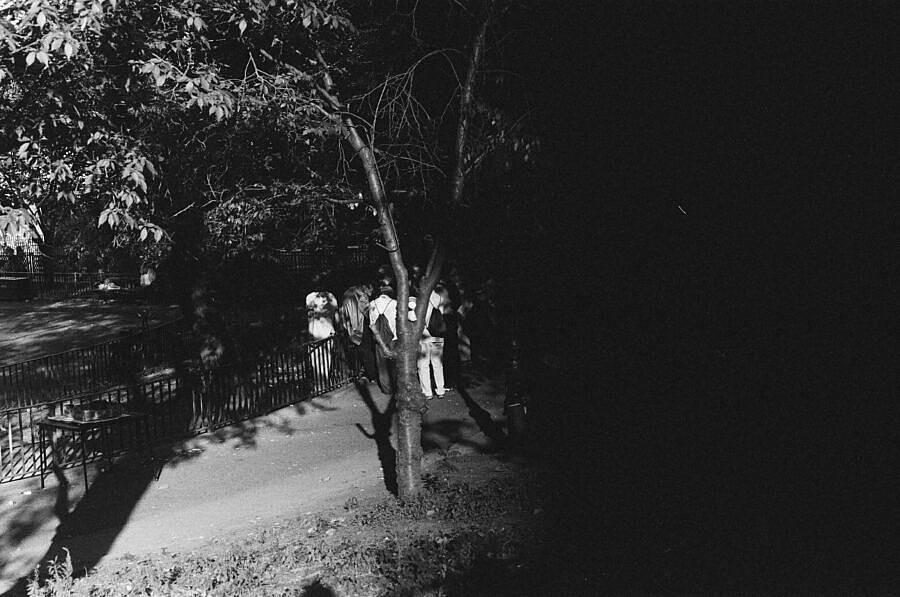
I’ve always been a wanderer, and walking through cities and spaces is a way to become physically acclimated to the present in order to set yourself into making a picture that you feel is pressing. I like trying to find a quiet street and letting myself get carried away with where I’m going and maybe I’ll end up finding a clearing next to a house with a bright blue slide in the grass. Maybe I’ll bump into someone who ends up taking interest in what I’m holding or vice versa. This is very immediately happening in front of me and very telling of what and how work is produced for me; sometimes in private and within a place I’m comfortable in and arranged, or out on location. However, the sort of dialogue that is conducted between two people or dialogue I can see happening; dialogue someone is just having with themselves in a space all serve as these moments I want to make pictures with. How the lives of people all mesh on the corners of streets and alley ways or in parks and the language I think I hear is what is unseen in each work. Whether or not the circumstances, letting yourself wander through something, you’re bound to find something you’ll have or be able to make a picture with, or not! You’ve still walked around and saw something or enjoyed some time searching and trying to figure something out. Maybe I’ll end up going home and writing about it and trying to process what I had just seen or someone I had spent time with and whether I have a few frames. The work gets developed, made into contact sheets, usually cut up, and sorted to be looked at later on. The more I do this I feel present and continue to find something or figure something out about me and what I want or like.
Tell me about your relationship with Chicago and its importance to your work.
I think the midwest is as much a culprit to the drawbacks of making work as it is an influencing force. There’s an extremely beautiful and rich history of photographic work that travels through the city by way of the lakes, highways; there’s always a camera passing through the city to find something that can surmise a period of someone’s life. It’s sort of like pointing to a spot on the map and heading there but along the way you sort of displace yourself in scenarios in order to find an image or a connection with someone that leads into a different part of that developing story – however I have definitely been here too long! Chicago has definitely taught me some things I disagree with as I get older and face the re-positioning of myself in relation to my practice, and to versions of myself I grow out of. If anything it’s currently showing me who not to be, what not to be doing.
Is there any source material you find extremely relevant to your practice right now?
Things my students say to me always ring in my ears when I try to grasp ways of putting language to pictures I feel do something I didn’t quite expect. They have such rich thoughts and ways of feeling they need to articulate themselves. Whether this is a positive and just a very up front and forward facing way of them expressing their needs is what I find extremely colorful and hope they always carry with them. Even a negative I can use to re-inforce restorative measures of communicating for them. I love being around it and hearing how they choose to say something to me. It’s very careful usually and makes me want to be careful in how I choose to speak to my colleagues and to friends, to family…not that I should ‘watch it’ per say but the choice in how something is conveyed can be very caring when intended.
How would you describe your process when it comes to writing? Is this essential to the final installation?
I think maintaining a practice I view as writing, or follows a structure similar to how poetry functions. Whether that’s an informed approach to maybe looking for the next piece to the project I’m wrapped up in, or a way of daily understanding the piles of photos I have and why and what actually works together in a way I find fitting. Fitting is a bad word but maybe what surprises me or excites me, I think I hinted at this already but moving until change is imminent is what I’m looking for. This is a function of writing but also a way of achieving forced perspective when you feel you’re making the same picture. This can serve as a touchstone to your evolution as an artist, as a person. When leaving the city to shoot, or shooting in a routine sense when I’m here, the need to write alongside having these experiences puts the pieces into a very physical place. I have all these associations attached to the images and sometimes that needs to be torn apart to construct a narrative, or when a narrative is found you have to sit and sew it together. That’s pretty universal, but I’m working on a project right now that involves down syndrome and family making; my work as a para-professional and having a brother with down syndrome makes it so it’s not so much a cut and dry project to undertake. I’ve been living it since I can remember and it’s bound to extend into various aspects of my life that I have yet to articulate or even find. I’m sure when I begin piecing it together there’s going to be periods of complete re-work to get towards something that is continuing and branching off of what I want further away from when that project is finished. Maybe it’ll also recur, or maybe it’s simple. Writing through something never always ends up in the order you begin in, but it’s a way of preceding or approaching and then collecting all the sensory input from finally finding the words, shots, people. I’m not always sure, but I know I’ve made a moment that wasn’t, into something. Whether or not it meant ‘this,’ it’s how I’ve made it.
How do you consider space and architecture when exhibiting work? Do you consider it prior as well?
Usually always post-making the work, or more so the orientation is considered the moment I walk into the space. I think ‘tempers’ was a little different because I had already been so familiar with the space while Milo & Sam at Weatherproof are very open to having critical conversations of how a gallery should conduct itself. The sequence of the photos included is more important to me but also knowing that a gallery show will only ever have a snippet of the work, there’s a process of shaving down. In the case of ‘tempers,’ that was a very conducive way of working as the photos relied on each other to produce this space within a gallery that was, whether noticed or not, physically altered to let in whatever was attracted to the ceiling lighting. The ‘eye’ pieces being makeshift moth traps only gave into another unseen hand…but I think framing architecture alongside a subject can do wonders when shown in a gallery. Often why a lot of shows I like include very few photographs. The interiority of the photo’s present alone brings the entire space in on itself, how the presence of maybe just one frame and the information within it can inadvertently produce a heavy affect. I think that’s how books operate; except they seep into you. They’re in your rooms and in warm lighting next to your beds and you can feel the photos and their pages and since it’s much more thorough, as the entire project is shown, It’ll take you days to maybe process something.
Your work tends to stand in many realms, but I know you frequently reference filmmaking. How do you connect the dots? Does it matter?
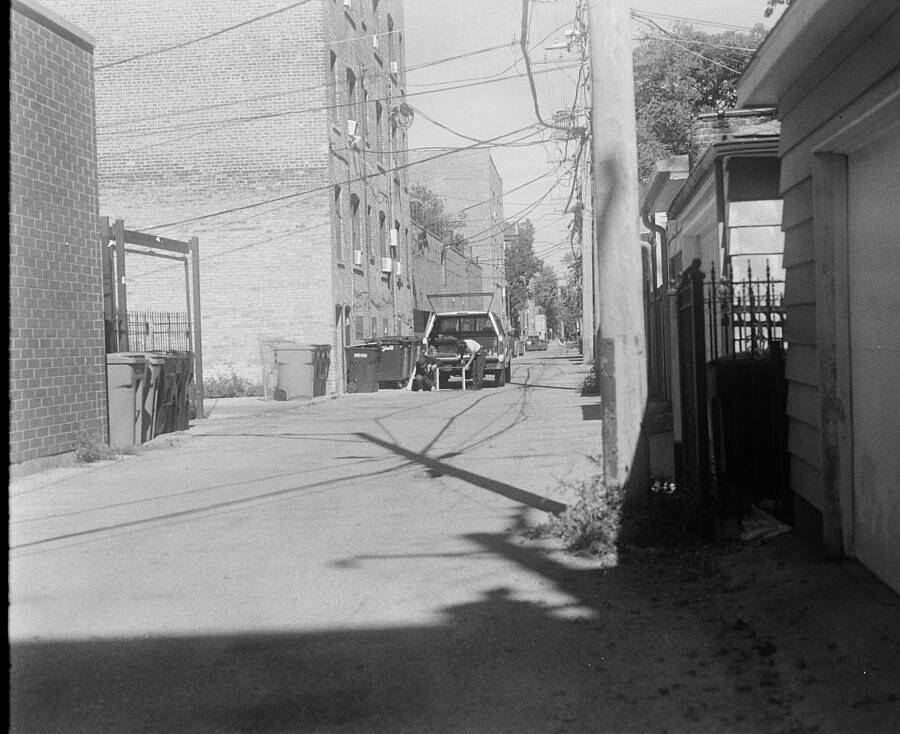
I’d rather talk away from this; I have this photo of a boy standing under football field lights playing with a toy or a firework or something and I’m still trying to wrap my head around it because it’s so many places or at least could be. Another being a photo of bright yellow curtains that were inside this house as I was walking home from school. A picture I made just recently had resulted from me waking up and smelling something very strange, not something offputting, maybe just unexpected from the usual routine of smells that enter my apartment. I got up and checked out my window and saw that there was a younger couple using the back of their truck as a sort of mobile woodshop to make…something. I’m not completely sure about it but I grabbed my rb67 and went down to take a couple frames of them. It’s such a fleeting and romantic picture but it’s never going to change and I think the culmination of photos in a body of work have to all contribute to making this space. The place is not discernible unless spoken about, or previously known, but ever present because you also have places you go to that may appear similar. It’s not what it was but has its own script I guess. I use ‘script response’ as a placeholder. Both at school when evaluating behaviors and working with students in how to actively engage in refusals. Maybe playing as a way to re-engage with the subject is another one to use, but it’s about looseness and adaptability. Scripting pre-learned language and its modification as it becomes something entirely personalized.
What was the last show you saw that stuck out to you?
Bart Julius Peters’ book ‘Hunt’ has been floating around my head for weeks. I recently just picked it up, but its sequence continues to baffle me in ways I am constantly figuring out, or maybe just finding words to describe what the pictures do. The work is very poignant at times and disarming but distant at others. It continues to make you always feel far away. I think Peters’ approach to making fiction is as tactile and as hard hitting as a lingering dream that follows you for days on end. Its glimpses of this and then all of a sudden we’re thrown to a frame of what we assume would be the artists friend, sometimes there’s a full focus frame, a series of portraits of an older woman you never met in repetition of maybe 6 exposures, a photo of a foal nursing, the next page the foal is looking at the lens.
I also want to add that a book that has baffled me and leaves me with a pile of questions I never want answered is Madison Carroll’s book Fair Catch. Each spread and picture is absurdly stunning and puts me so present in the room I’m standing in when holding it.

Do you think collaboration is important and/or inherent to being an artist?
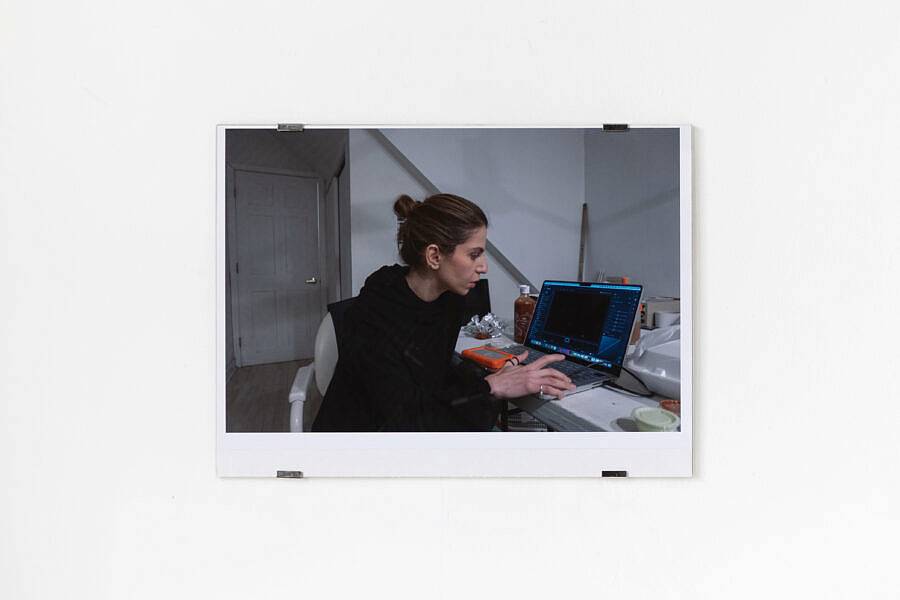
I think someone always needs to be there next to you to read over what you have, in a way that is so intrinsically genuine and understanding of who you are and why you’re doing this in order to not get so wrapped up in a little detail maybe. I think sharing is something we’re taught right at the beginning and all the very minute ways sharing can occur. I also think by doing so someone can adjust your phrasing of something or if you feel strange about a picture and may go ‘oh that’s just over exposed,’ or ‘you need that over exposed,’ you might hear someone laugh and say they love it! That feeling is great and is just as important to me in the project once it’s out as the narrative of the work is. That’s more so for me but it all is. In the end of it I think it’s about being present in other peoples lives though, working with people I choose and setting up time to make a portrait with them requires personal attention in order to figure out how I situate their own self, mine, and the picture. A few frames requires a genuine curiosity in this thing we’re both doing and why we find ourselves here. It’s why my consistent project of making pictures with other educators is extremely rewarding to me, as the time dedicated to unpacking this sort of portable subject I bring to them leads to a plethora of outcomes and personal engagements. It all sounds very vague maybe but it’s all just going back to the spaces we have for ourselves. There’s an intangibility in the words we choose to use for each other and when we let someone in, the unsaid, the feeling that is made, is usually a result of that collaboration.
Can you tell us a memory of someone interacting with your work that frequently crosses your mind?
My brother came to my last show and stepped into the gallery and walked very structured around the perimeter. He did it extremely fast though and stopped at I think, two of the photographs and ended up sitting under a diptych but before he did; “Where am I?” were his only words he said. I laughed! It’s silly to think about but I think that’s a really great question to ask, maybe as a guide to where things are situated. Spaces that are guided by the personal mannerisms I take up find their way in as a method in pulling stories together from what I like to notice or draw attention to; being asked ‘where am I’ is a sort of prompt I take quite heavily. For me and for who the photo is being taken of.
Interview conducted and edited by Liam Owings