Tell us a little bit about yourself and what you do.
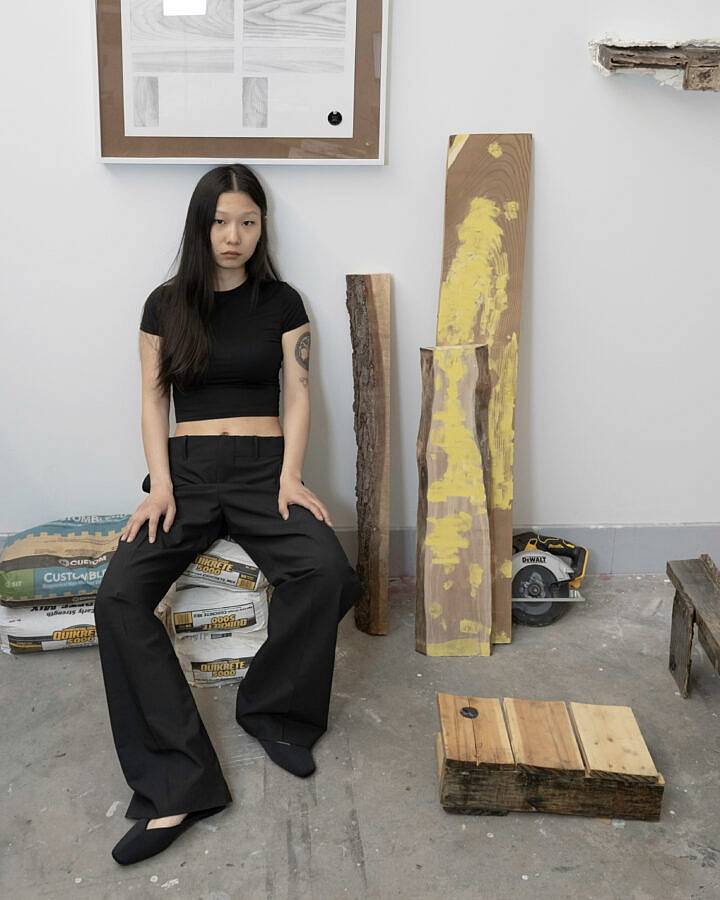
I am Hyeseul Song; I also go by Hazel. I moved to Chicago about 4 years ago from Seoul, South Korea. I make sculptures, and am currently doing my MFA at the University of Chicago.
What are some recent, upcoming or current projects you are working on?
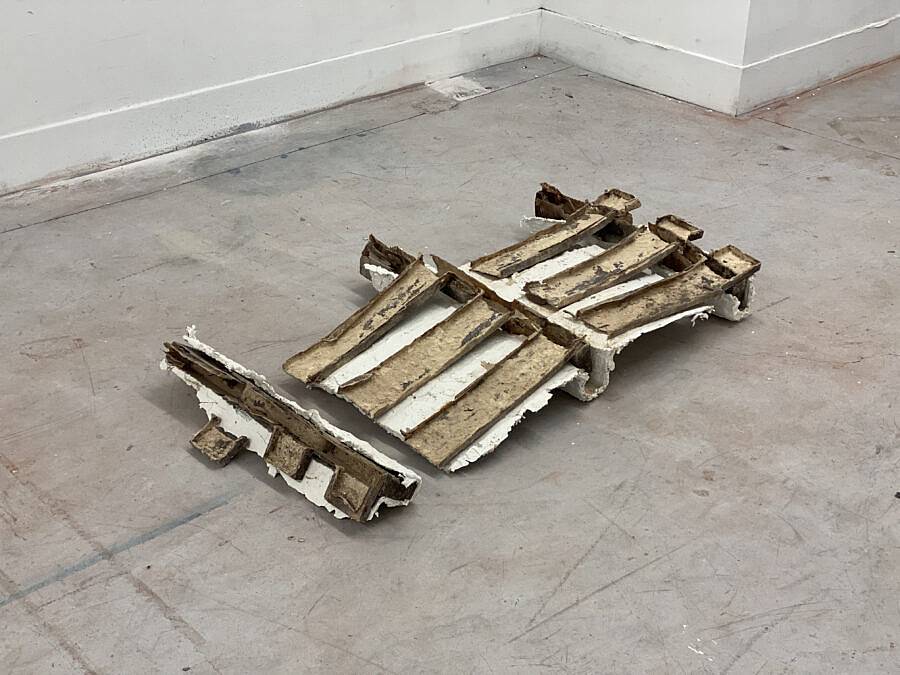
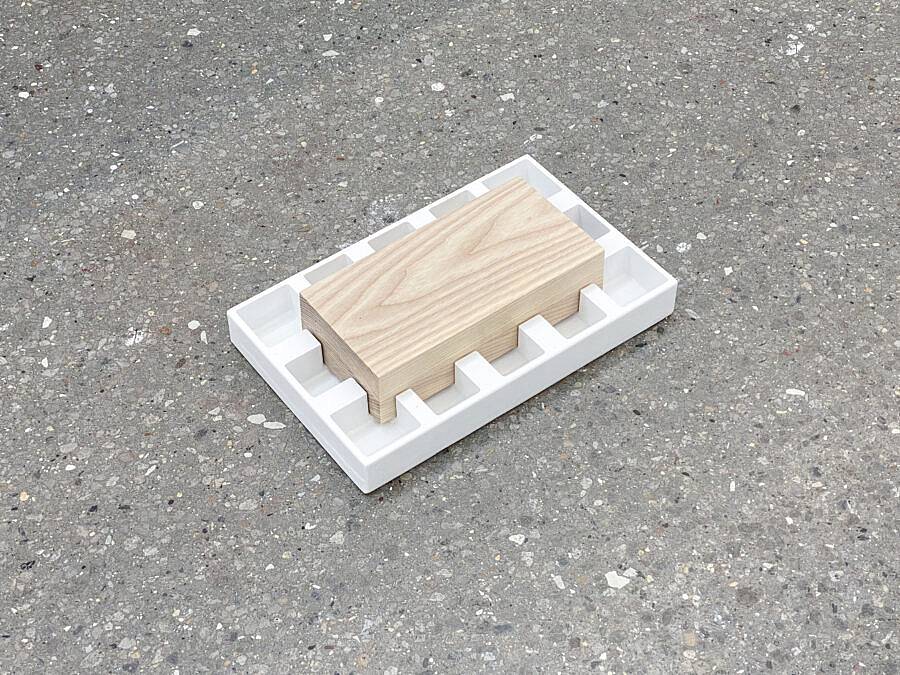
I just have purchased materials for this idea that I’ve been developing. I’ve been interested in support materials—those objects specifically designed to cradle other objects, holding them in place whether in transit or on display. I was thinking about crate-building: how expanding foam could fill the space around an object, taking shape from its contours and the constraints of the box, how the form is determined by the tension between the object’s imprint and the structure that contains it. I do not yet know what the object inside will be, or what shape the crate will ultimately take—but I’m excited by the possibilities.
How do you see your work evolving in parallel to things that are going on around you right now?
I find materials from the environment that I am surrounded by, and look for the connections between objects. Also I collect intimate moments of those objects and translate them to make work. So it is more or so depending on my attention and sensibility through observation.
Is there any source material you find extremely important?
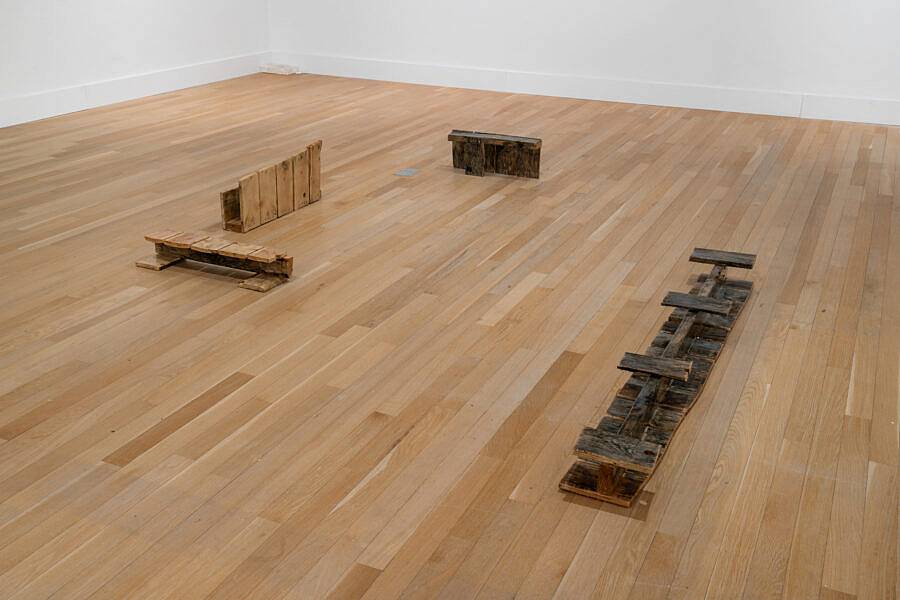
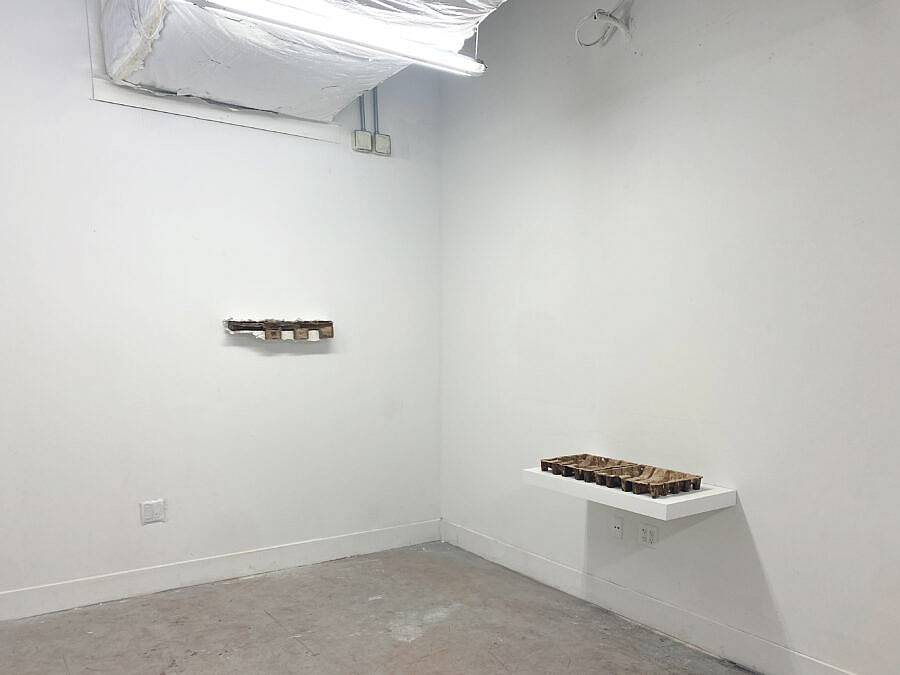
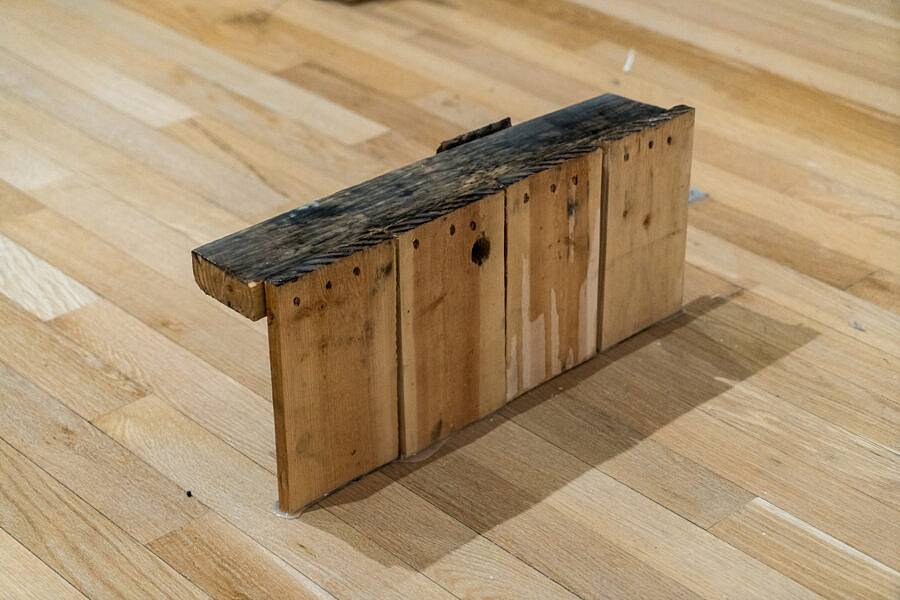
Right now, I am fixated on shipping pallets, box inserts, offcuts of lumber, and sawdust.
Have you been reading or watching anything recently that you can’t stop thinking about?
I’ve been reading Correspondences by Tim Ingold that visualizes his theory as a network of tangled, string-like forms in which every object is interconnected. Each one is not static, but active—like a verb—linked through movement, relation, and unfolding meaning.
How do you source the materials you incorporate as primary subject matter?
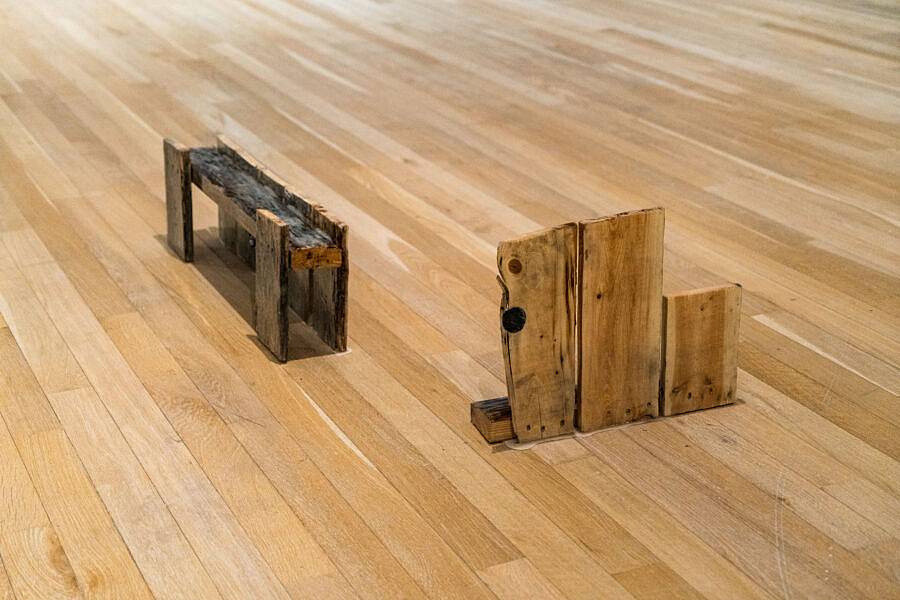
Whatever material I use it speaks directly for itself and how it relates to other materials that I’m using—the materiality, how it’s made, where they come from, its conventional uses, and its potential to become something else entirely.
Do you come across things in the wild or do you source things more specifically? What about in terms of concepts?
I take photos of the things that feels important in the wild, and spend time with them for some time. Sometimes they become a collection of similar moments that turns out to be a prominent phenomenon of urban infrastructure. Then it becomes even more important to me so that I go out and look for more of those—they stand out with their vibrancy. Also sometimes I just happen to meet new objects in the dumpster in studio buildings.
How do you consider space and architecture when exhibiting work?
I aim to space out my works so they can breathe, while still allowing them to speak to one another. I think of a space as a finished work—so I try to understand how my objects might belong within it. Sometimes, they draw attention to unseen systems in the architecture, or they extend the space beyond its walls.
Do you think your relationship with the city of Chicago has influenced your work at all?
A lot. Faded signs on brick walls, exposed pipes, DIY spaces in industrial buildings, trees growing through fences have changed my view on urban landscapes and helped me understand how human activities and intentions interdigitate with natural formations. Chicago has shown me the possibilities of keeping the layers of time on top of another, as opposed to the city I grew up in where the norm is to just sweep out a whole neighborhood and newly build high-rise apartment complex.
What was the last show you saw that stuck out to you?
I saw Melanie Wiksell’s solo show Spun Time at Jargon Projects a while ago. Half of the space covered in hay, interacting with the objects she made was really beautiful. I still think about this one piece of a metal drawer held by four bars of soap, filled with foam, and four knives and another object were on top kept in place by wax and fiber. Their writing in the press release was also beautiful, saying “All flesh is hay. Unfixed, fugitive.”
Your work has a very prevalent emphasis on object relationships in natural and industrial contexts. Can you speak on this?
I aim to make work that does the same thing as a tree grown out in an abandoned factory in Detroit.
What are you really excited about right now?
I moved to Hyde Park a couple months ago, and I’m really excited about my new apartment! Also excited for the summer—going to the lake, sunbathe, come back home and shower, and go to the studio.
Can you tell us a memory of someone interacting with your work that frequently crosses your mind?
It was when I had a show in a little room in a bigger gallery space— someone told me that the air feels different in my room, fresh and clean. I wish I can always control the air.
Interview conducted and edited by Liam Owings