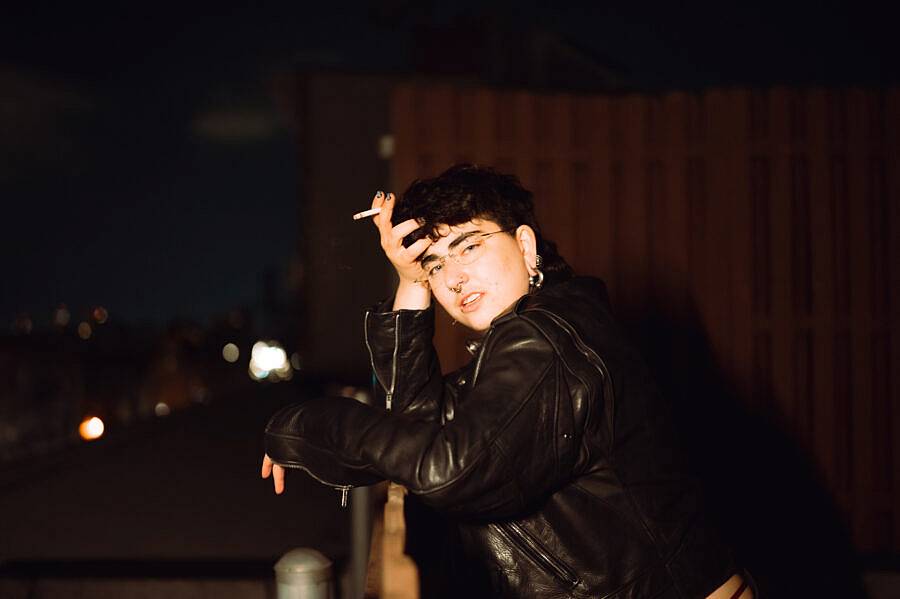
Tell us a little bit about yourself and what you do.
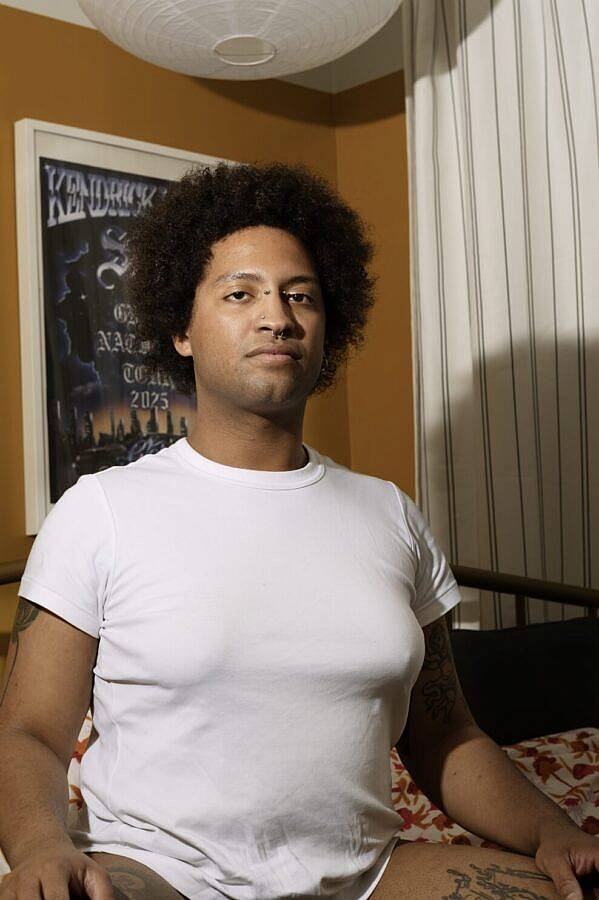
I’m a leatherdyke. Sometimes I list that I’m a transsexual butch leatherdyke. Sometimes “experienced menswear salesperson”. I was recently recognized as “Eve the photographer”. I was raised in Providence, Rhode Island and love to hate the state of which I am still a legal resident. I could list about forty trivia facts about Rhode Island right now but will settle for just one, which is that the oldest pest control company in the state (Big Blue Bug Solutions) has its headquarters right next to the stretch of I-95 that enters and exits Providence. On top of their warehouse is a giant sculpture of a big blue bug that is almost sixty feet long and weighs about four thousand pounds. His name is Nibbles Woodaway, and he’s a termite. Recently I was told I have “strong hands and a good vocabulary”.
You are a writer as well as a photographer. Could you describe your relationship to these mediums? Are they one and the same, or do they have complementary functions/places in your artistic practice?
They’re the same and different, complementary and separate… I think I am a “conceptual artist” in grand terms, a devotee in simpler ones. I happen to really know my way around a camera and a piece of prose, so they’re the methods I use to pay my homage, but the entire premise is said homage. Leather history, leather culture and leatherfolk are crucial to my life and living, and I feel an obligation to revere them, so these are my most effective tools—in the same way one might apply one’s hypothetical psychology degree to street harm reduction work. It’s applicable and necessary. I love pictures and I love words and I love my community, and fortunately, these things can all work together.
When and why did you decide to begin documenting leathersex?
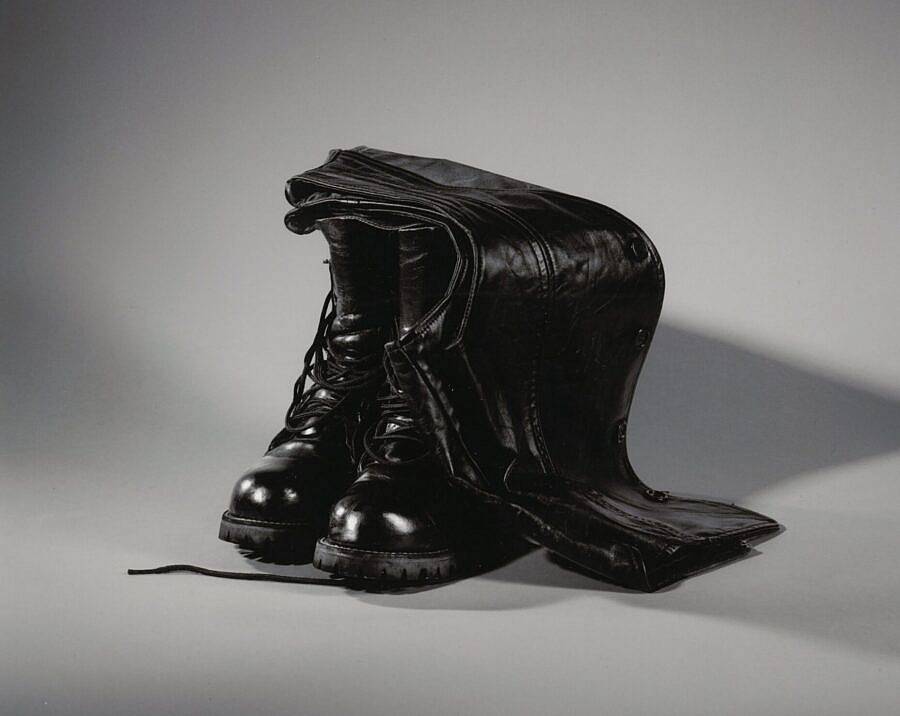
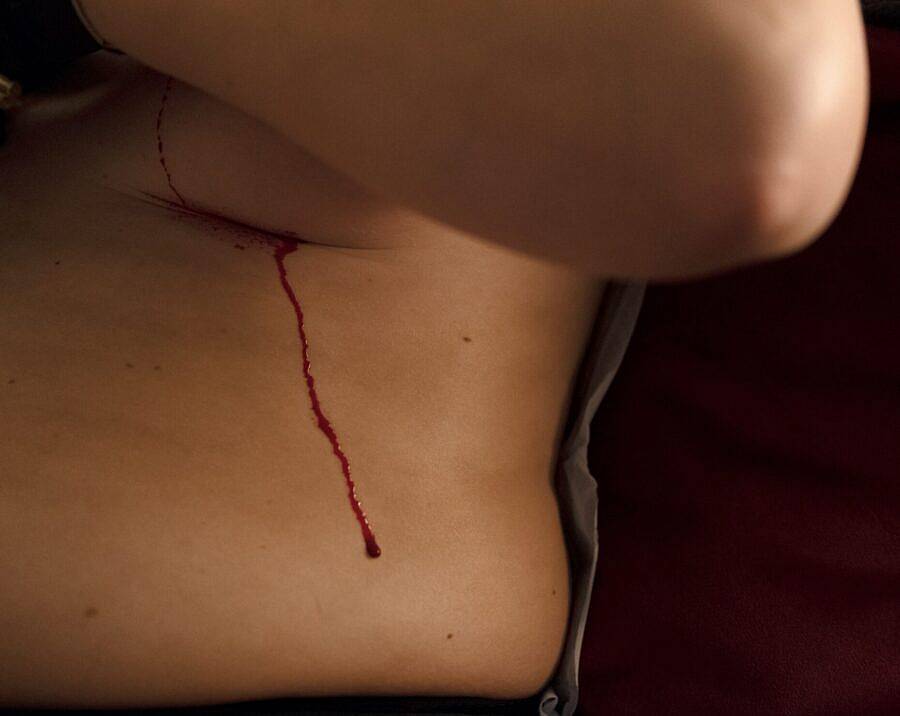
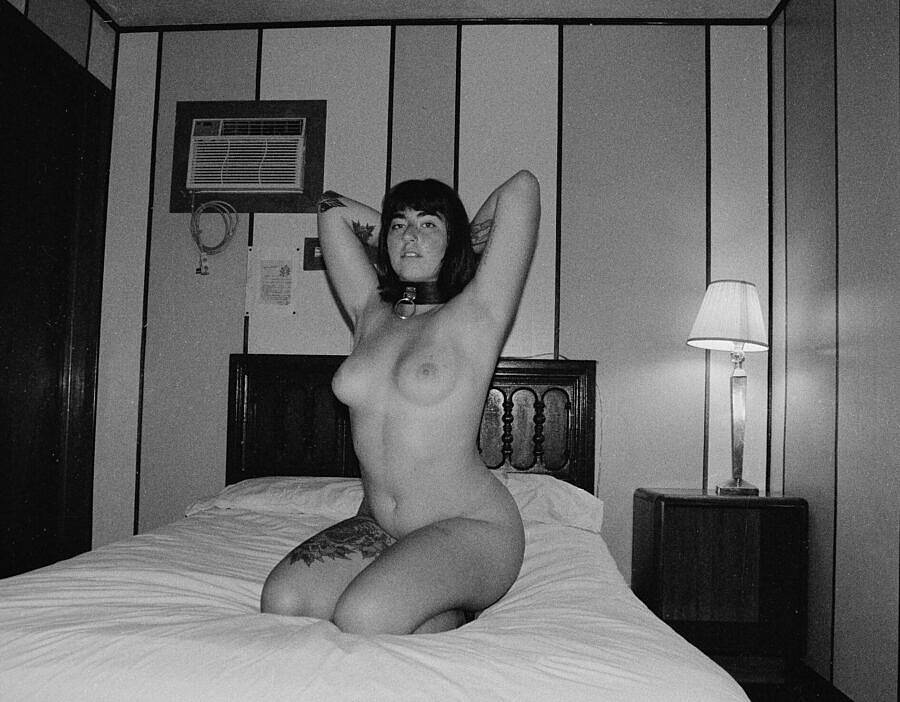
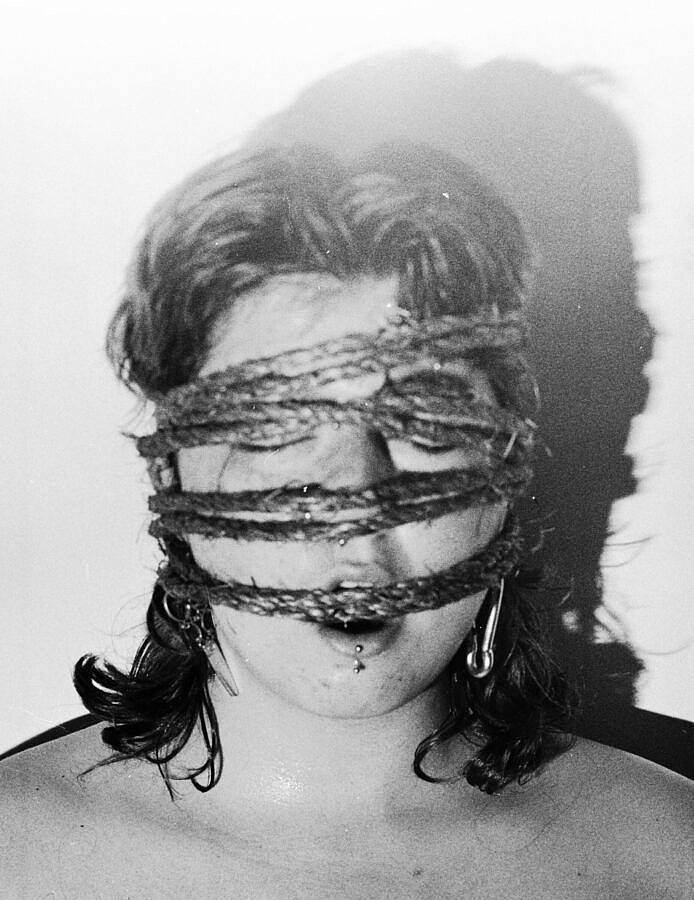
I think I less made a conscious decision and was more compelled. When I was first coming out, early days of college, re-engaging with art, I had a fascination with photographing my own body in trained submissive poses. I had a really particular obsession with one of Nobuyoshi Araki’s black and white photographs titled Kinbaku (Bondage) and was reading Judith Butler for the first time. It was a perfect storm that I do believe allowed me some of the knowledge and vernacular I now use in my own work. I used to play at a really seedy swingers club in Ohio—the few queer people around me were embodied in a way I only dreamed about. I was thrilled to have access to film and a darkroom and it felt somatically correct to turn my lens on my body and bodies I loved. It was (and still is) a really interesting symbiosis in which my community teaches me through images, I learn from my community (images or not) and I’m able to better inform my own praxis and therefore my artmaking, and so on, and so on.
Tell us a bit about your solo exhibition at the Leather Archives + Museum, Interval: Portraits Thus Far. How did your collaboration with the LA&M come about?
My exhibition has been one of the most rewarding experiences of my life to date. Working with Mel, Gary and the LA&M team to put this together has been so beautiful. I had a much more casual gallery exhibition in Brooklyn back in November of 2024 (it was called Glory Hole, and I built an actual eight-foot glory hole in that gallery on which I wrote my artist statement—shoutout to my dear friend Persephone who helped me put it together) and that show had a major turnout that I fully didn’t anticipate. Friends of mine were encouraging me to reach out to local organizations to see if they wanted to see my work or take some prints. I cold emailed the LA&M the week my show was coming down and in March of 2025 I dropped off a selection of prints into their permanent archive—when I went in 2025 they offered me a solo show, and almost exactly one year later it opened. It’s still a little bit shocking to me. But I feel so incredibly honored.
How do you see your work being in conversation with other generations of kink/leather art?
It is inherently so. There is no creation in or around this community that is not predicated on intergenerational influence and connection. All the identity labels I use now come from reading stories, theory and erotica that used them before me. My intergenerational interactions feed and inform my entire practice. That is a cut and dry value of leather for me. I need that hubris and humility to be effective in my creation.
What are some of the bigger challenges that you face as an artist, and how do you see that changing?
I don’t know if I “face challenges”. I feel like “challenge” insinuates an overcoming or a conquering, which isn’t my goal or ethos. And that’s absolutely not to say that my practice as an artist is easy, it’s to say that the effort of handling or working with what’s in front of me is most important by far—not the eventual outcome. Maybe the more succinct answer is that I made a really concerted effort in the last year to untangle my art from being a means to an end—the material challenges I face as an artist are watching my community, my lovers and my friends suffer at the hands of violent authoritarianism and imperialism, experiencing that same suffering myself, and reminding myself over and over that my practice is a crucial refuge for me and my community. It can feel frivolous in the throes of fascism. But I really, truly believe that it is not.
What does portraiture and photography offer you over other mediums and thematic approaches?
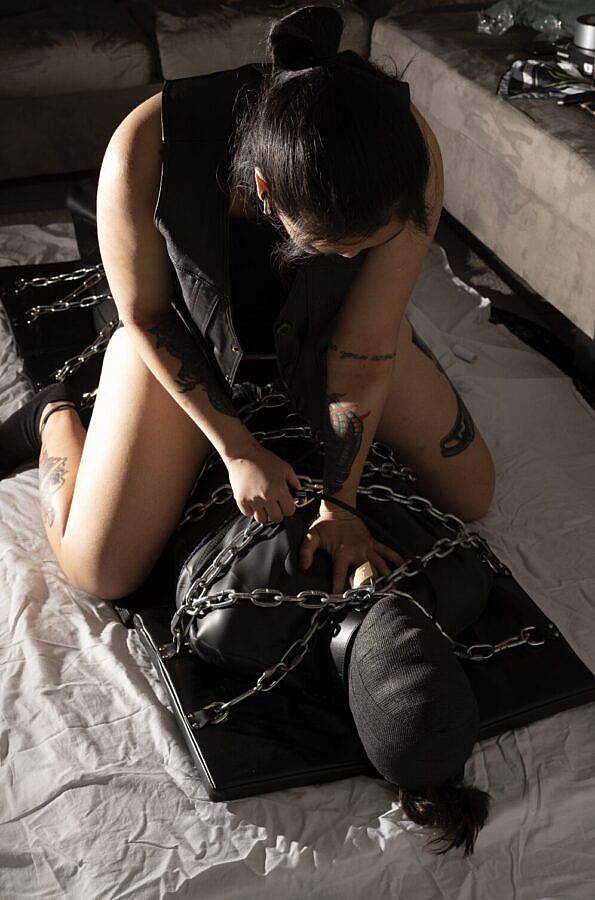
On a purely technical level, it’s predicated on my desire to accurately represent my community through art and acts of preservation. I’ve had a long-standing fascination with photography, and worked with analog photo for the earlier parts of my exploration —I now strictly work in digital. I’m a shit drawer and painter. And sculptor. Digital photography allows me to strip as much of the technical element as I possibly can out of the creation with whoever I’m working with, because using a camera is almost second nature to me—it lets me and the person I’m working with really soak in the container of the session. I often prepare people with a prompt, something really broad, “what clothing item or physical space or person makes you feel most embodied in your leather identity?” Or “what do you want to look like or feel like in a picture?” I like to think I have a unique ability to let the actual picture-taking fall to the side. I’m principally interested in creating depth of representation. I want to see the simultaneous seriousness and levity—that I know my sitter and I both experience—in the face of whoever I’m photographing. I will only pose people once I feel that we’re physically grounded in space: I often have people flex every muscle in their body, squeeze, let go—then I take the picture. To me, photography is an act of service, a skill I can share.
What does it mean for you to commit to the praxis of leather in terms of your practice?
This answer is a little cyclical (I think I mentioned before), in the sense that my practice is my leather praxis, in part, and vice versa. Values of leatherfolk are centered around service to community, integrity, mutual respect. There are many words floating around out there, these are the terms I center on. I kind of touched on the cyclical thing earlier, but more specifically, part of my praxis is to always operate with deference (I know I am not the first to do anything, and credit my lineages and elders with creation before me) and to always act in service to this community. With regards to my service, a lot of my thought around that has to do with choosing not to turn a profit off of my work. I’ve certainly sold images I’ve made that depict just me, or just objects, but I’ve written a clause in the model release I share for portrait sessions that explicitly notes I will not sell the images containing their likeness. I feel quite strongly that consciously removing some of the commercial aspect of this creation makes it easier for me and my sitters to really understand the purpose of the ongoing work. Conversation around the corporatization of art and galleries is maybe a can of worms I won’t open here, but it keeps my focus. My corporate and capitalist income comes from a totally different source (see menswear sales, above) and it keeps my portrait-making separate. I want these pictures to be seen by those who know what they’re looking at. I don’t strive for Hauser & Wirth or the Gagosian, to be represented by those six blocks of galleries in Chelsea. That’s not to call into question those that do, it’s simply to say this is a really important element of how I keep my ethos clear. I know that capitalism corrupts, I am directly corrupted by it from just being alive with a job. If I can keep some semblance of sanctity and still make effort to have my work seen by people who care about it, that’s what I want. I am a stylist, though (wink). For my job. Inquire within.
Who are the artists/musicians/creatives that have been inspiring or interesting to you lately?
I have to principally mention Efrain John Gonzalez. He’s a photographer that’s been around since the 70s, and I feel lucky enough to be his intern and personal archivist as of January. He has a massive and richly broad archive of New York City from the late 70s until now, and spent a lot of the 80s photographing the Meatpacking pre-gentrification— Hellfire Club, Paddles, all these places that were pinnacles of the NYC leather scene. He’s a delight to work with, and is so inspiring in that he has spent his entire life—and is still—dedicated to the subcultures he loves so dearly. It’s really beautiful, and it’s quite the honor to be trusted with this work. I’ve also noticed a really amusing aesthetic consistency between his 80s photos of leatherfolk and the people I see at events with me today. I love our consistency. It’s also really exciting to be alongside him in the LA&M permanent archives. Shoutout Efrain, I love you!
Can you share a reaction to your work that has lingered with you?
The message I get probably (amazingly) most frequently from people is one of gratitude at being able to see themselves represented in this artwork/community spaces. Notably, leather history is extremely white and usually masculine and cisgender (although dyke history is very much about gender play). But the circles of people I love and share values with most closely are inevitably a huge mixture of genders/races/families etc. I feel so humbled and so proud and honored that my work can help people feel seen in the history they have and continue to be a part of. I hope that continuing my connective work can establish that trans people/people of color are—and have always been—inundated in community, setting precedents, and engaging meaningfully. I have to mention along these lines that Honey Davenport winning IML is decidedly not a departure from leather values, rather an aligning of them.
What do you collect?
Fistfuckers.
Interviewed by Seth Nguyen. Artist portrait by G Pupkiewicz (@happypeoplephotoco).