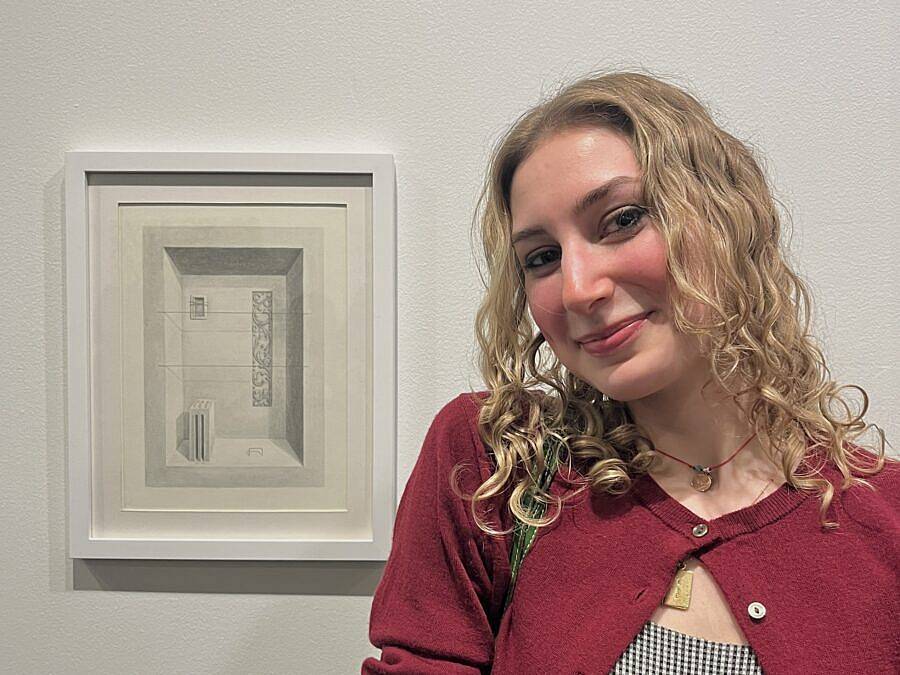
Tell us a little bit about yourself and what you do.
I’m an artist currently living and working in Chicago. I was born and raised in London, and have only ever lived in cities. This deeply influences my paintings and drawings, which focus on recontextualising urban imagery. Also I love streetlights.
What kind of imagery are you drawn to?
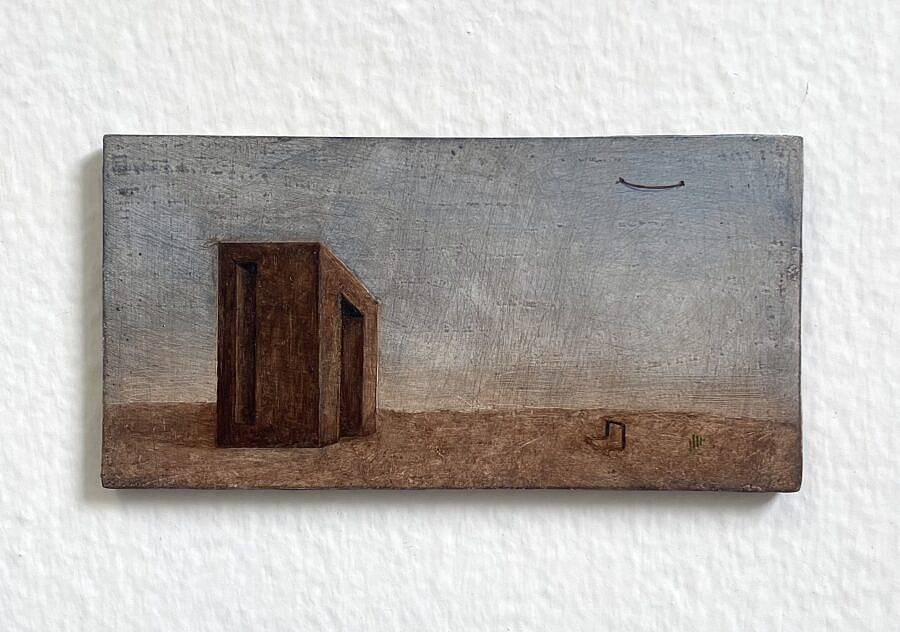
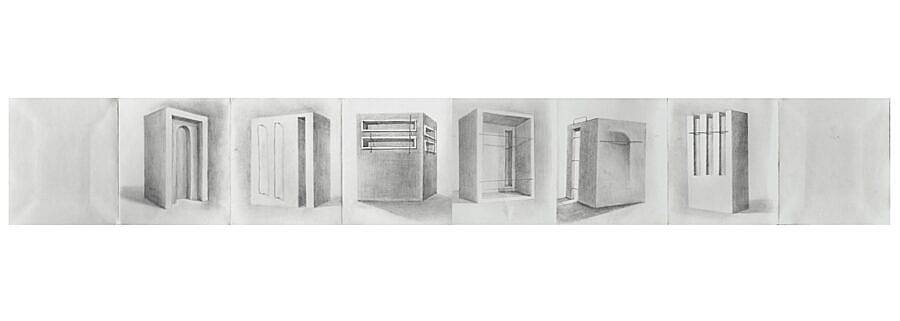
I’m drawn to simple structures—windows, archways, doorways. They’re very satisfying and have such a strong presence in art history, too. I recently saw the altarpiece Saint Humility and scenes from her life by Lorenzetti at the Uffizi Galleries in Florence. It has a bunch of panels with some really beautiful architectural structures that completely blew me away. I’m also a big fan of surrealism and magic realism. I love when things are just a little bit off-kilter.
Can you tell us about something that continues to influence your work?
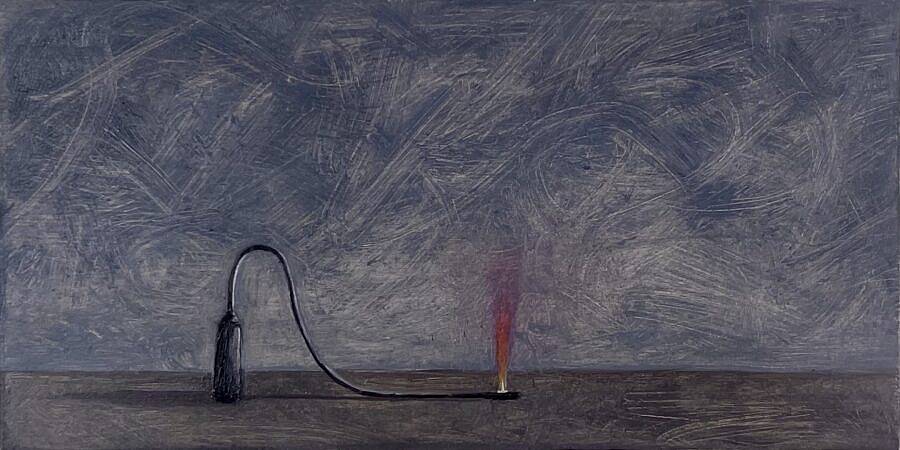
I’m influenced a lot by my surroundings in the city, so that’s a big external influence. But my work is influenced conceptually by reading, writing, and spiralling. A lot of the time, I’m motivated by philosophy. I focus on perception and observation. With the streetlights, I purposely used structures that help us see each other, objects that inherently make us feel seen. By anthropomorphising the streetlights, we relate to them. This not only allows us to acknowledge ourselves as observers (like them), but also to understand the streetlights as aware, perceived objects (like us). It’s a kind of equalising. This kind of intersubjectivity, usually person-to-person, is what I’m drawn to in phenomenology in philosophy.
When did you begin working at a smaller scale?
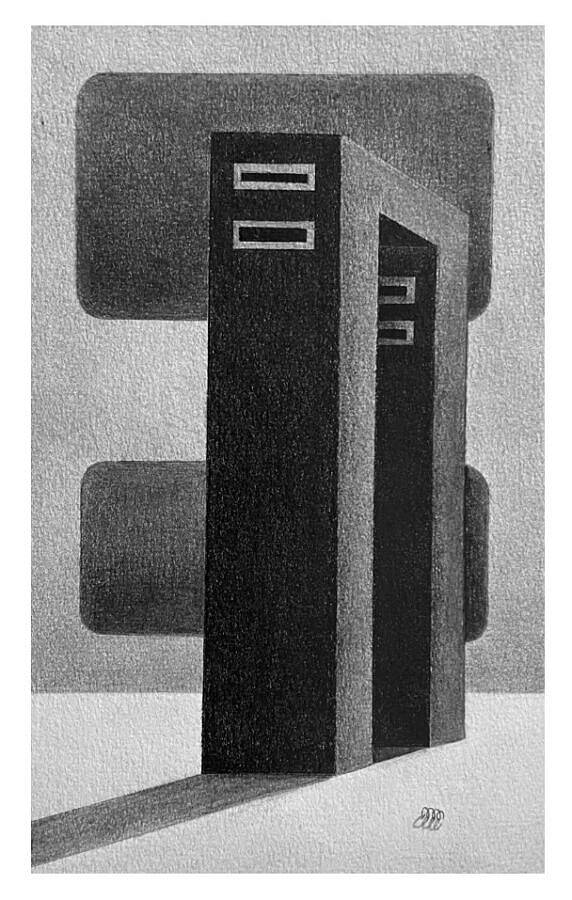
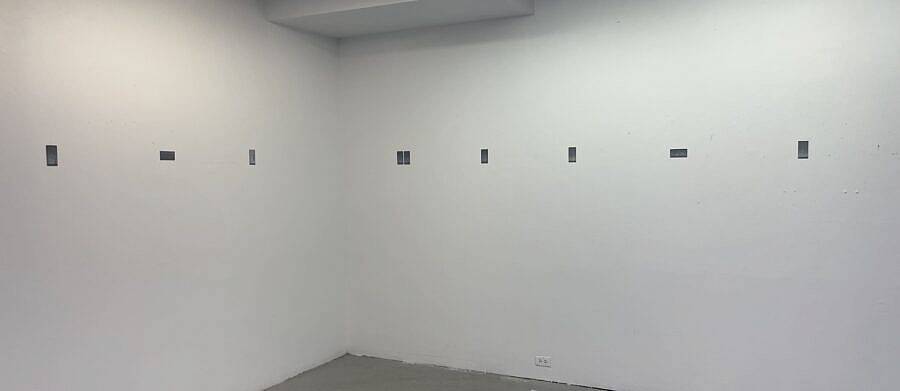
For a little while I was working primarily with 8×8” panels. The series I was making at the time needed that scale so I could create in the obsessive, repetitive way the work called for. As my work continued to develop, I was told I was “ready” to scale up. I didn’t like the idea of those pieces being a stepping stone rather than holding their own at that size. So, somewhat out of spite, I started painting even smaller. At 2×4”, I was able to be more deliberate about the intention of size and viewer experience. Making a painting while holding it in its entirety in one hand feels so personal; there’s a stronger connection between me and the surface. For the viewer, small work forces a physically close interaction with the art. I’m not opposed to moving to a larger scale as long as the work calls for it, when it’s time.
Depictions of urban infrastructure, lamps and buildings, tend to recur in your work. Can you tell us about what drew you to these forms and why they continue to resonate in your practice?
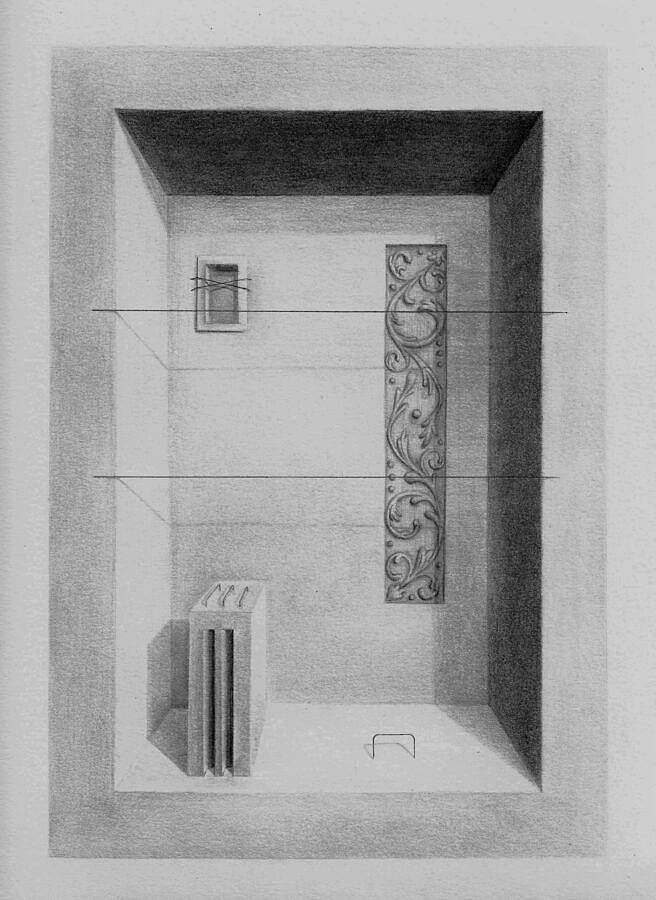
My work has featured urban imagery for a long time. It’s the only environment I’ve lived in, so it feels like all I know. My work doesn’t have any people, but the man-made structures act as “evidence of”. At first glance, the buildings are recognisable and feel familiar. But there are no clear entrances, even though things like windows hint at an interior. The more you look, the more they become unfamiliar, and the sharp, boxy structures become uninviting. City imagery is the perfect subject to play with inclusion and exclusion, seeing and being seen: is there any way to be truly unobserved in an urban landscape? Objects built by and for us, for community, become exclusionary with the fencing, lack of entryways, etc. To be seen is to be acknowledged, included. But to just see, to just observe, can feel very exclusionary.
Do you begin a piece with a mental image, a composition plan, a mood, atmosphere, or a state of mind that you want to evoke?
I do a couple sketches beforehand of general composition, but for the most part there’s no set plan. I create to understand. My work acts as a way for me to figure out an idea, a structure, something I read, something I saw, etc. I use painting and drawing to try to answer my questions, and usually end up with more questions.
How has your work evolved over time?
My work has been about simplifying for a long time. I was removing anything that felt non-essential and reducing things to their most basic. A street sign became just a shape, and I created symbols for things like balconies and windows. And from there, I got more specific. There are definitely through lines: light and shadow, city structures, atmospheric space. In the past few years, my work has gone from almost collaging symbols and structures to focusing on one thing at a time. At one point, simplifying to me meant reducing to abstraction, but it’s shifted to mean isolating a figure.
What is it like living and working in Chicago?
I love Chicago, I think there’s a good sense of community here, supportive and approachable. That’s probably in part because Chicago’s art world is pretty small, but I like that everyone is connected. I feel like the six degrees of separation in Chicago is more like two degrees.
What was the last art show you saw that stuck out to you?
I’m a bit biased because they’re my friends, but I’ve had a great time at Point Blank with their show My Good Hoe as It Bites the Ground Revenges My Wrongs, and I Have Less Lust to Bite My Enemies. Since moving to their new space on Chicago Ave & Ashland, they’ve really shaken up what traditional openings look like. When I first started going to galleries, I felt so intimidated and out of place. Point Blank totally changes that and makes the artwork, even conceptual work, accessible to everyone. They really consider how the work is going to interact with the space and how to disrupt the “white cube”. Their events are in large part about having fun, rather than just trying to make commercial moves, and I think real, strong connections have come out of that.
What have you been reading recently?
I’ve been reading a book about Joseph Duveen, the art dealer. He’s a major reason why America has so many influential European artworks. I’m always fascinated by the art market and try to learn as much as possible about how it operates now, and how it got to this point.
Interview by Paul Fitzpatrick