Tell us a little bit about yourself and what you do.
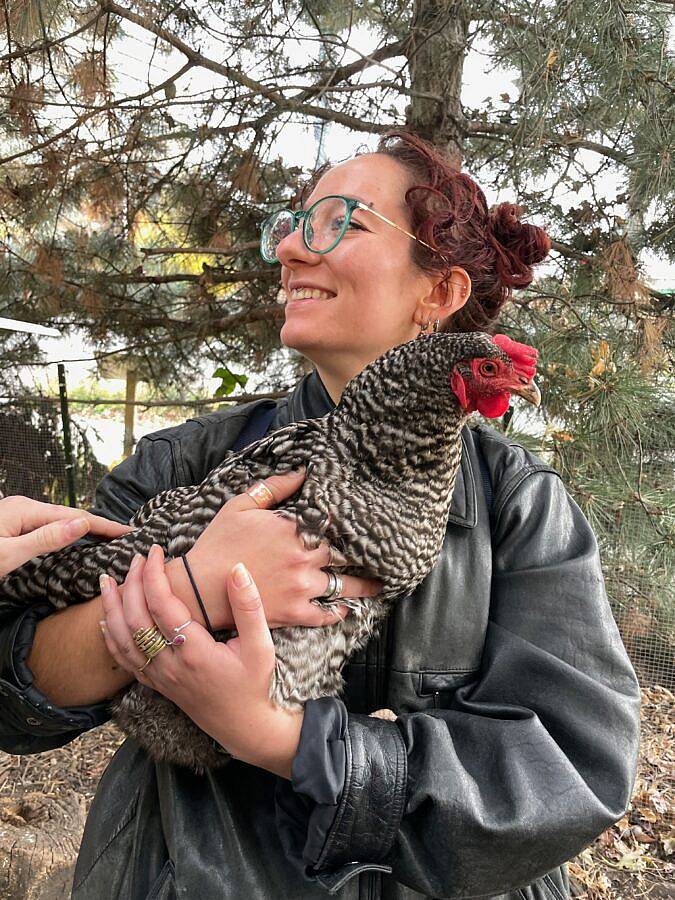
I am an artist, originally from Cranford, New Jersey. I made my way out here for undergrad at SAIC and stayed ever since. I work as a jewelry welder/ shop keeper in Andersonville and I like to make art. 🙂
How did your interest in art begin?
I never put down those crayons from elementary school. I was just always that kid that was drawing in the corner. The answer to ‘what do you want to be when you grow up?’ was always an artist. I was lucky enough to have support from family and friends later on when I made the decision to go to SAIC for undergrad.
Is there a phrase, an idea, or a notion that feels central to your practice, or that continues to resonate?
This idea stems from one of my professors that I worked with closely in school, Peter Power. The general idea is that “good” art doesn’t necessarily come from this cerebral and academic place. It doesn’t have to be esoteric and “highbrow”, it’s more like opening up the fridge and seeing what ingredients you’re working with.
What influences do you think play an essential role in your work?
My professor, Peter Power, continually validated through my undergrad that art is for everyone. Early inspirations for me come from my family, including Peter Dallison and Ed Monovich both local artists in New Jersey who inspired me to pursue art in the first place.
How has your practice evolved over time?
It’s getting more fun. Since graduating from SAIC, I’ve been able to pull away from churning out work on a quarterly schedule. I’ve been starting to adhere to the seasons when choosing mediums. For example, through this deep-freeze winter I’ve been sticking to graphite and ink, I always tend to take a slow tempo with those two. Whereas this warm weather is making me crave the frenetic tempo of working with hot wax; hard to control coupled with an almost nonexistent drying time makes you light on your feet. Perfect for summer. Keeping myself happy within my practice is something that’s important to me and something I’m still learning how to do.
What is your studio or workspace like at the moment? Do you have any rituals when you begin working?
I have a home studio where I’ve piled a bunch of old sketchbooks and art books right next to my hot-table. I really enjoy giving those a close read before working, just to get the creativity flowing. I usually keep my home moderately tidy but you’d never know that looking at the state I keep my studio in. It usually looks like a small bomb went off in there. The bomb is me, the organization needs to take a backseat when I’m working.
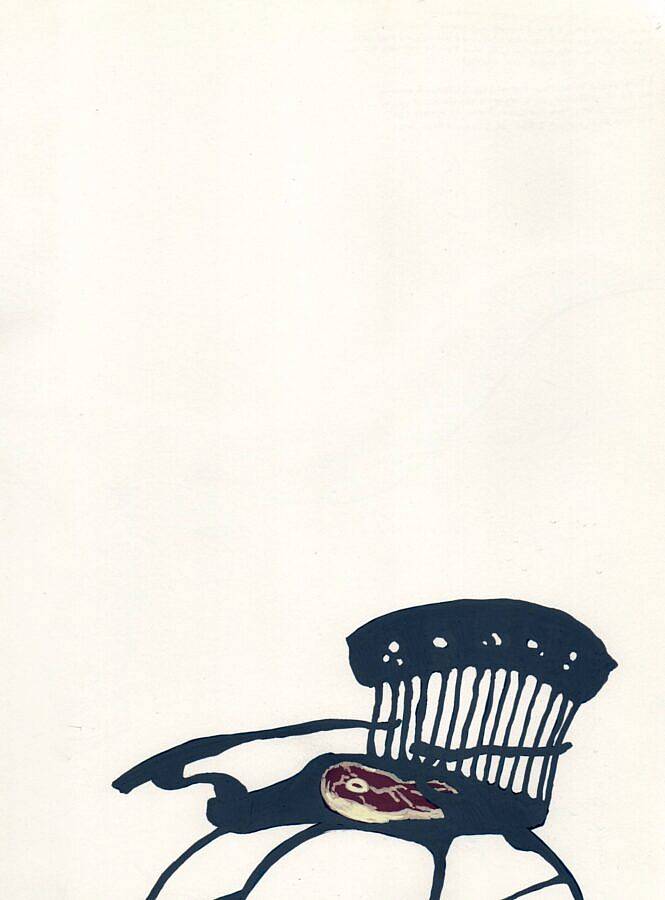
Certain motifs—chairs, animals, games like tic-tac-toe—recur in your work. Can you explain where your interest in these motifs began and why they continue to be generative for you?
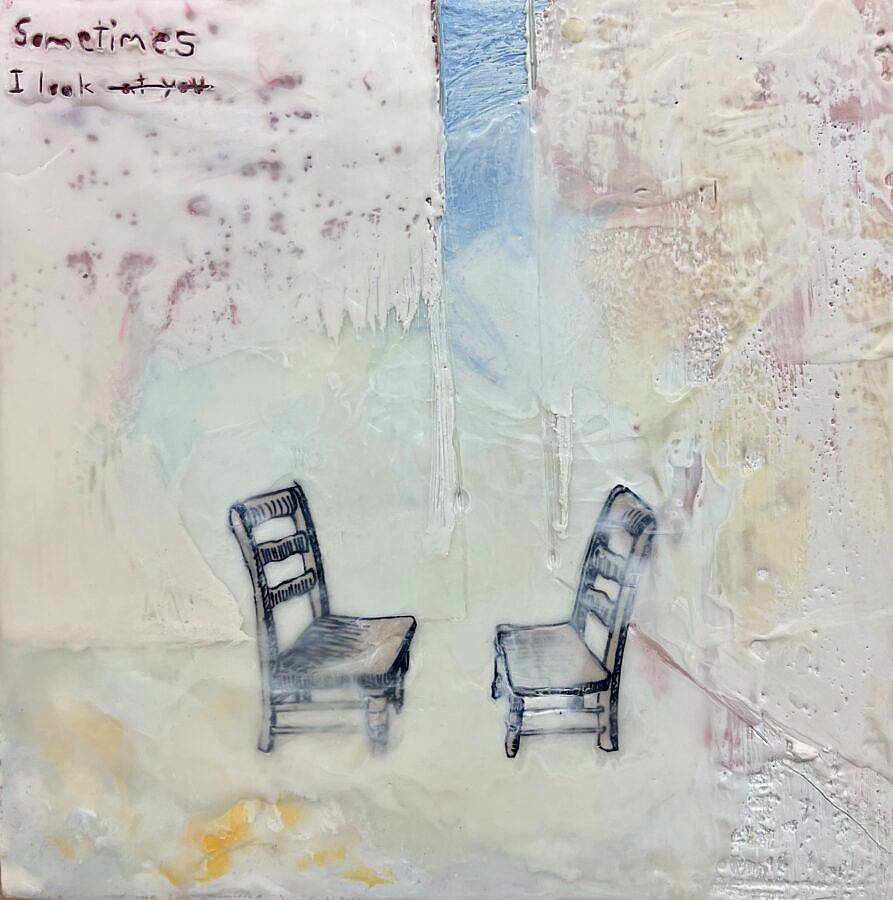
The chair is a high I’ve been chasing since I first laid down those forms on paper. They’re so human, they’re such a tender object that we have made loosely in our own image (‘legs of the chair’, ‘back of the chair’). They are made, ultimately, to hold you. For me, they became a place-holder for the human form, and they became a version of myself. Allowing space to self soothe and come to terms with the world around me without judgement. It allows me to explore my emotions through the lens absent of my physical self and absent of societal bounds. If I sink a metaphorical level deeper, perhaps it is my wish to be a chair to escape the harshness of being. I am not a woman, I am not young or old, I am a chair. These are my emotions, consider them truly and deeply because I am not a woman. I am a chair. I make space for that false world when I make these works.
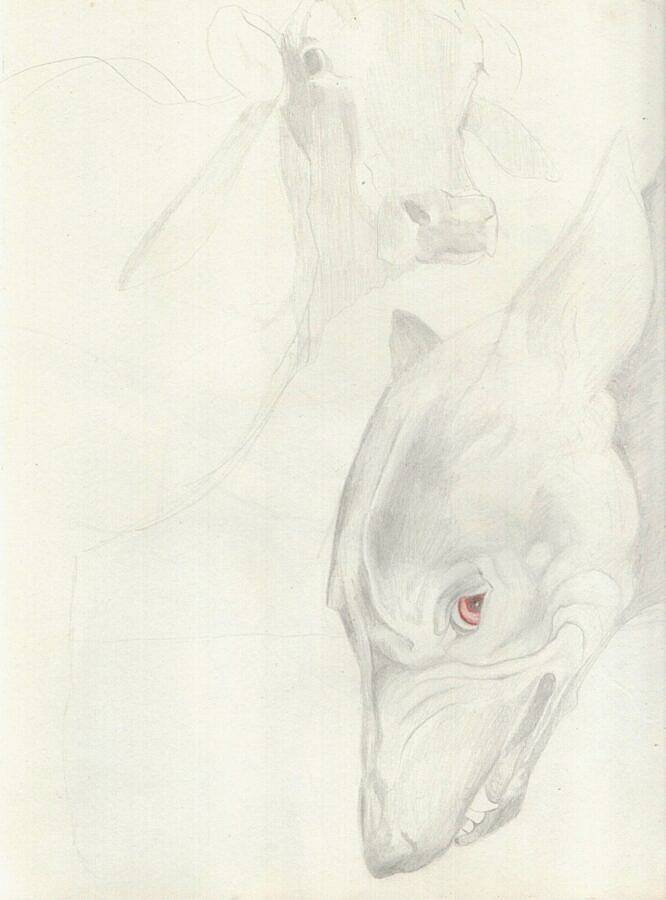
The farm animals (specifically the cow and dog) I also use to explore themes of womanhood. The cow is a special animal because not only has it been domesticated as a physical being but its reproductive cycle has also been capitalized by men. For me, the cow symbolizes womanhood in its most horrifying form, the continued suppression and control of our rights. The dog is a more hopeful motif. I think young women could learn a lot from dogs, no one messes with snarling fido. Be a bitch, bite.
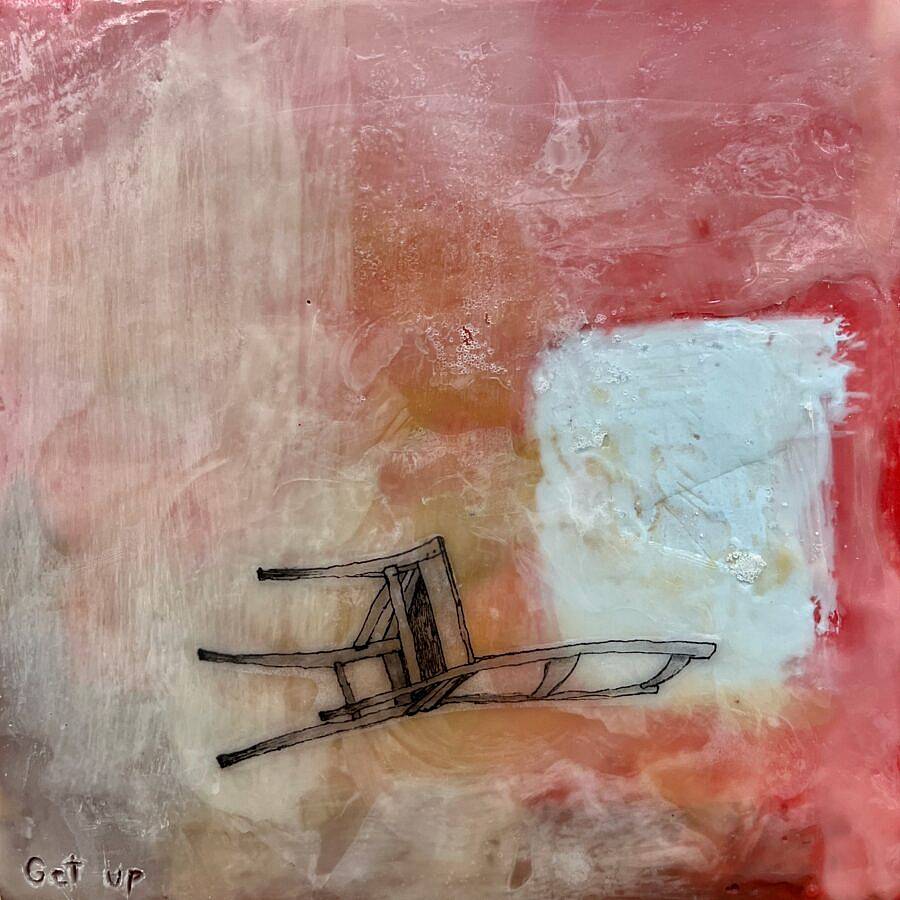
Your practice spans, painting, drawing, collage, printmaking, and sculpture. Do you approach a work with a notion in mind which then determines the medium you will employ or does the work’s meaning develop in the process of its making?
I had a friend once tell me that the more you dip into different mediums, the more dynamic your work will become and you’ll get to know your practice “in-the-round”. I was only painting at the time and immediately called bullshit on that idea, it turns out it’s pretty true. For me, each medium informs the other, concept and form intertwined. So the answer to your question is I use both methods of developing/ attaching a concept to a piece. When I start with a concept, I’m usually strengthening ideas I’ve explored in the past. However, when I start with physical composition or form in mind, the concept is more interesting and sometimes something totally new.
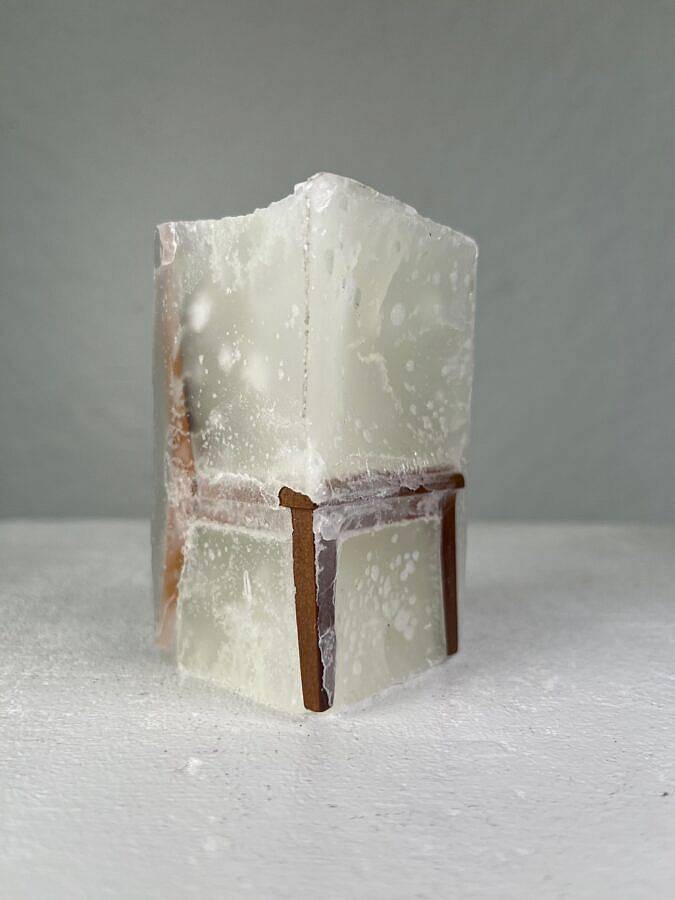
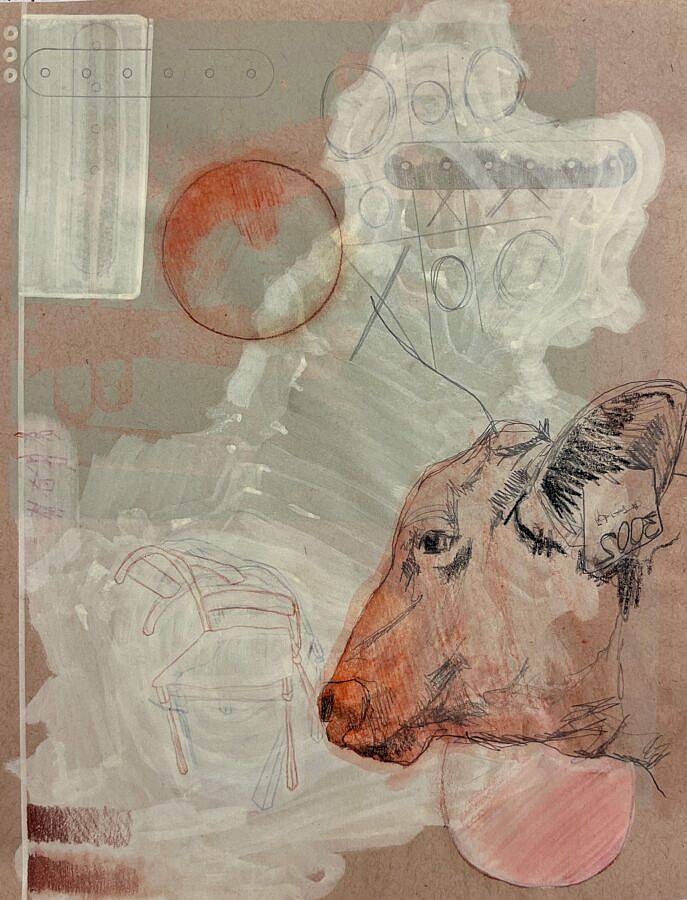
How has your work and your approach to art-making changed since your time in school? Do you continue to seek out criticism or feedback from other artists?
Yes. I feel more free to branch out and deviate from my usual work. Art school, as much as preaches individuality, usually creates something of a type. You’re most influenced by your peers so, for me, there was a spiral that happened after a while where the idea-ricochet-points became tighter. Like bouncing a ball off of four walls that are getting closer and closer together, eventually the walls close in and the ball becomes stagnant. That being said I’d lose steam if it wasn’t for the amazing artists in my life and their valued input. My roommate is also an artist and seeing each other’s progress is really inspiring.
Does humor play a role in your work?
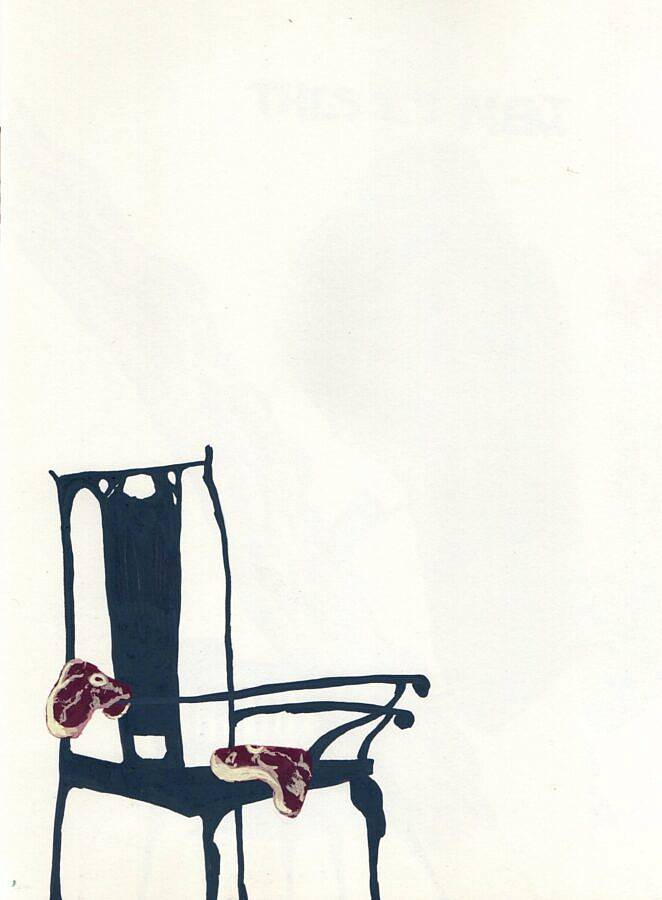
Depending on what I work on I’ll try to keep it light. Even if I’m pulling from the deep dark I like to create a sort of absurdity. I think I’ve started to flirt with that cynical absurdity a little more recently just because of the state of the world/America/politics. Everyday we wake up to a new level of insanity that seems more unbelievable than the last. One of the newest series I’ve done is a bunch of chairs with, what looks like, a bunch of round-bone sirloin steaks thrown at them. That really is how I felt about the news circuit and our changing policies: like I got several 32 oz raw steaks chucked at me, landing hard in the soft places. What an absurd thing to be a chair, assaulted by meat, and what an absurd thing it is to be alive in the world right now.
Interview by Paul Fitzpatrick