Tell us a little bit about yourself and what you do.
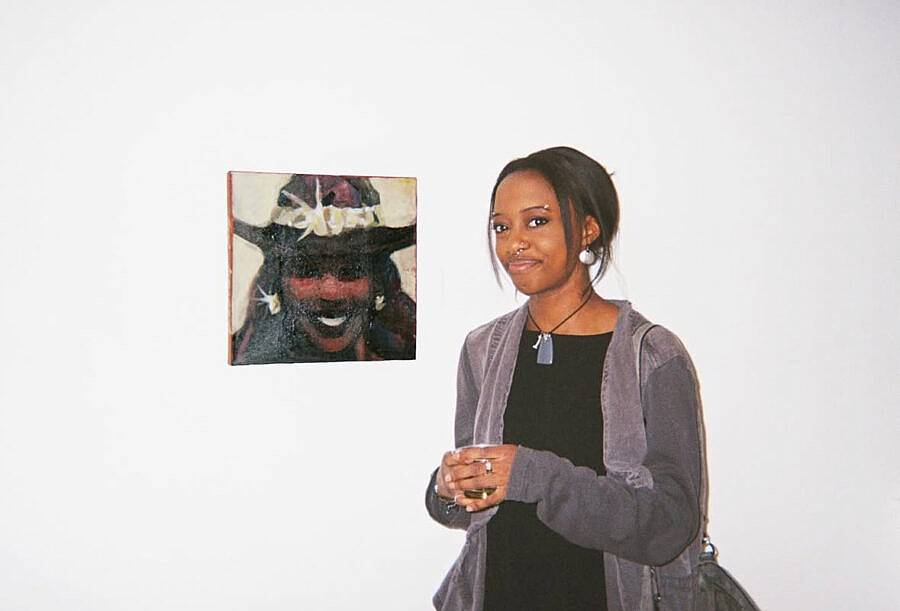
My name is Amira Diaw. I’m originally from Houston, Texas, now based in Chicago, and currently studying painting for a semester at the Beaux-Arts de Paris. Over the past few years, I’ve been reinterpreting/painting my family’s photographs, documents, tickets, and ephemera across generations.
Are there any influences that are core to your work?
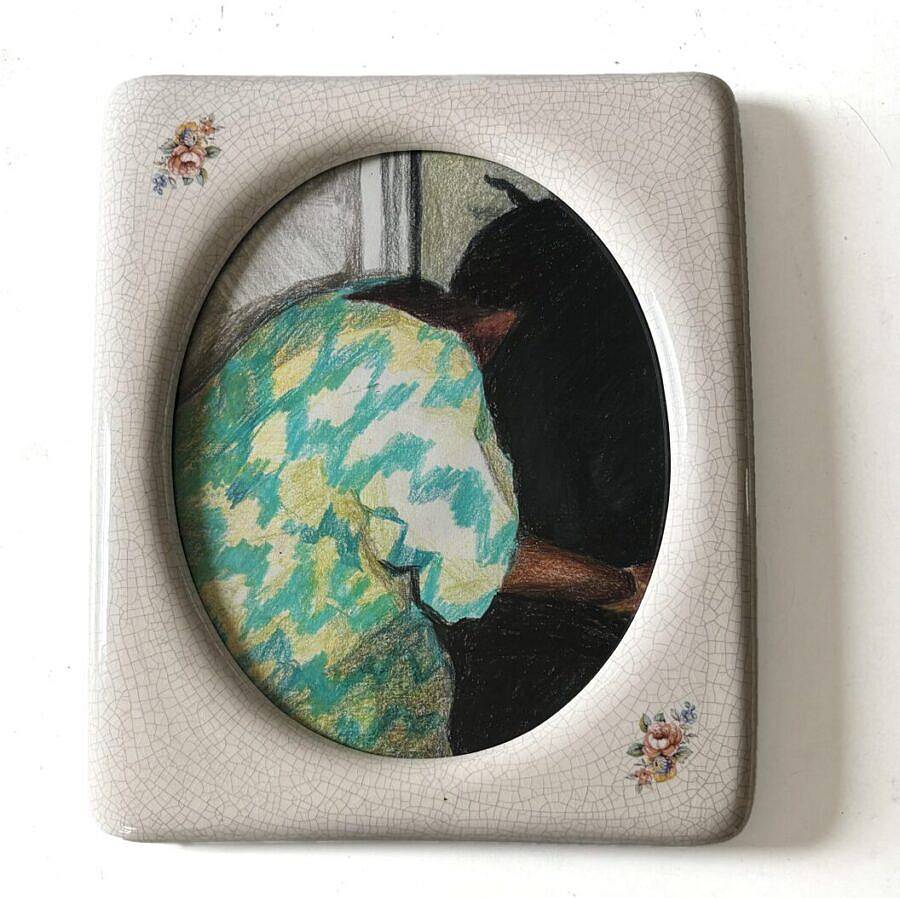
Grandma’s house and, funny enough, Houston’s Hiphop Radio station 97.9 the BOX. The house my Grandma lives in, and the house it once was, remains one of the most profound sources of inspiration for me. Comfort and the uncanny cohabit there through unrecognizable portraits and things too good to touch. She has porcelain dolls in glass cabinets, and a living room with the “good” furniture that people rarely sit in. It’s haunting, in a way. Everything is sacred — to be admired but not to be touched. I often find myself there mentally, especially when working with family photos.
97.9 The Box, Houston’s hip-hop radio station, was always playing on car rides when I was younger. Normally, the station would play your average top 40 Hiphop & RnB tracks. But I never admitted that I liked when it got “weird.” At 9pm, it would switch to playing Chopped & Screwed music. I remember Screw sampled another artist from 3rd Ward, in a song about being a ghost stuck in a house. The lyrics were something like “I’m stuck here and I can only scare y’all.” That’s so cool. I loved that slowed-down world, where repetition creates new meaning.
How were you introduced to the medium that you work with?
In middle school, I chose to join the orchestra instead of taking art class. I played the violin for a time, but that pull toward visual art never left. I was always drawing, always carrying a sketchbook, always returning to Hobby Lobby. It was there that I met Mrs. Elena, a local Houston artist who taught painting classes in the back room. I still keep in touch with her. Her class was small, every Wednesday with about four to five women, ages 11 to 60. She introduced me to acrylics and later graduated me to oils, showing me not just technique, but patience and pleasure in the process. That satisfaction was addictive. I kept coming back every Wednesday after school. I never missed a session.
When needed, where do you look for inspiration? How have these sources changed over time?
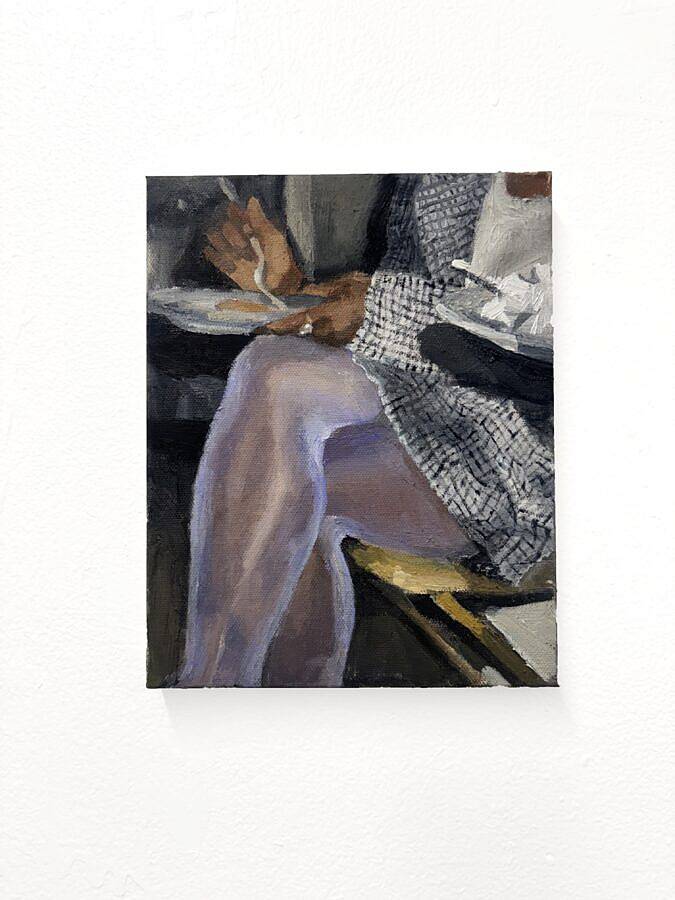
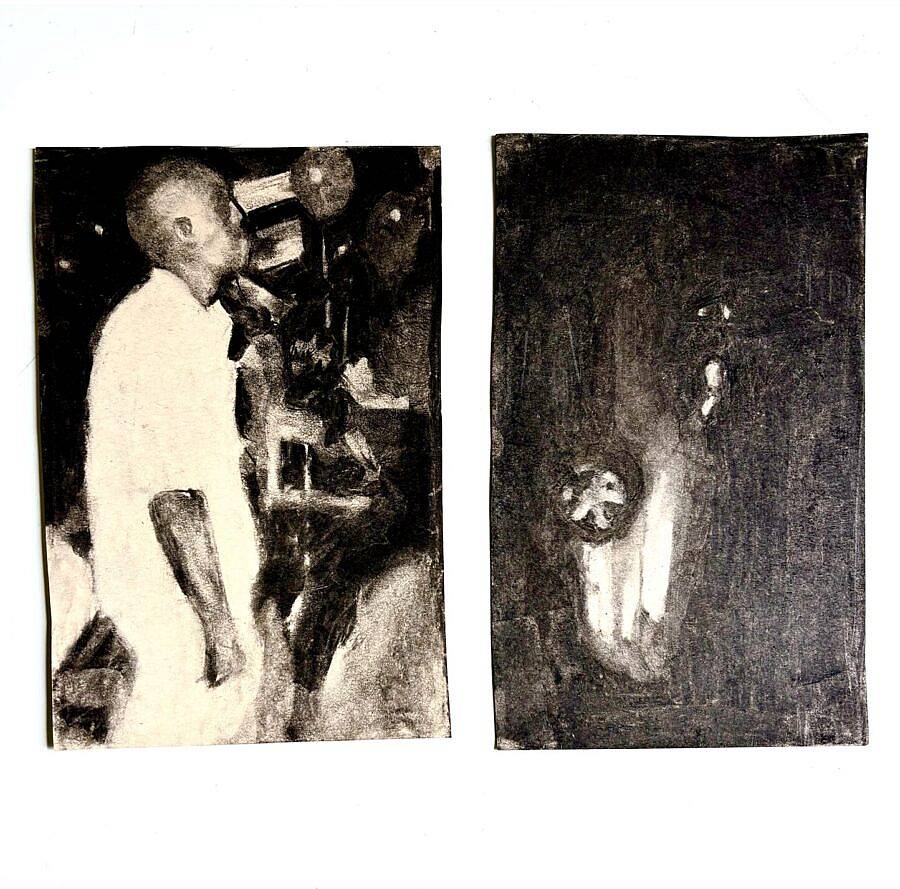
Until fairly recently, my work wasn’t rooted in reference. That shifted in 2023, when I stumbled upon a collection of family photographs and documents. Since then, these have been the foundation of my paintings. The photos were so intimate and unposed. I find candid shots and accidental pictures like that really beautiful. I thought to myself, “They can’t just be left forgotten in this box.” I had to paint them.
What kind of imagery are you drawn to?
Nollywood films were a huge inspiration for me growing up. I remember watching Aki and PawPaw all the time at my grandma’s house. I remember the living spaces especially. A lot of Nigerian interiors are based around 3 colors within a room. Patterns and tiles are necessary everywhere. You can sense the ambition for western, modern culture while seeing the constraints of old technology played out through the Bizarre, bootleg special effects. As in many cases, the technological and financial limitations in Nollywood back then were the driving force behind a lot of the greatest art.
Do you have any travel experiences that are formative to you as an artist or an individual?
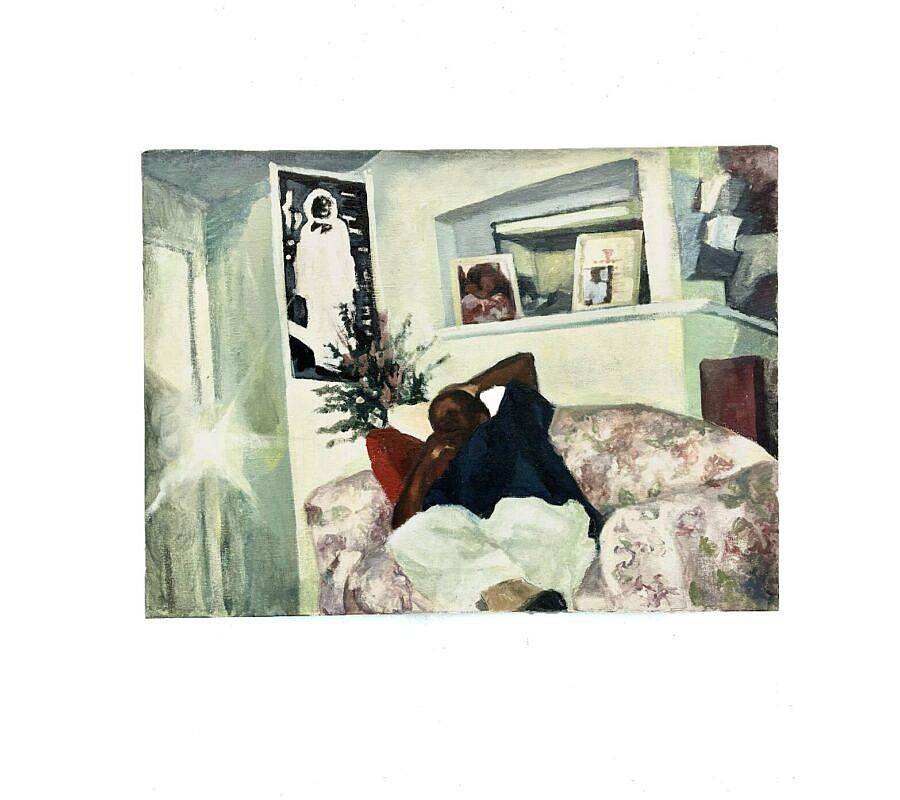
When I was in Senegal with my cousins for the summer of 2017, I got to spend the weekend in Touba, the religious capital of Senegal. It’s been so long but the biggest thing I remember is my Aunty Maye and how I miss her so. She was like a mother to me and all my cousins, genuinely a light, the biggest character, funniest aunt, Diva of the universe and unstoppable force. She sadly passed away in 2024, but she was a pillar in our family and I wouldn’t be the same without her.
Can you tell us a memory of someone interacting with your work that frequently crosses your mind?
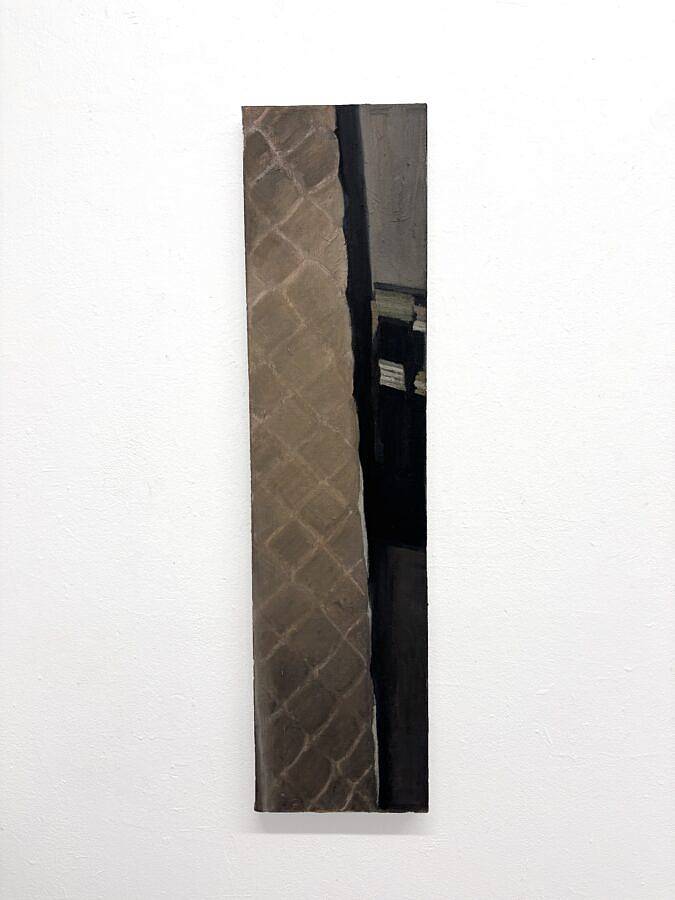
Unfortunately, I always think of when I had one of my final critiques from painting practice when I had just started my archival photo paintings. I was given a brutal question from my professor — “Who cares… We all have to pay the bills.” While I think his response to my piece was indicative of a larger problem in the way that people receive art, the pushback was encouraging because it made me realize that work like this has been done before. There is no need for me to regurgitate narratives that audiences are already familiar with.
The critique reminded me of Derrick Adams’ interview with Essence Harlem, where he speaks about the celebratory nature of blackness, which is so innate across our diaspora. Adams discussed how being a black artist, your existence is inherently politicized. I really resonated with his sentiment of wanting blackness to be a part of his art, and not the header and end sum of his work. He said that his work was based around things that resonate with black people, even if it isn’t specifically about blackness. My bad critique reminded me of this interview because, when my professor asked me to explain my paintings, I told him that they were inspired by American immigration and gentrification of black neighborhoods in Houston. This wasn’t a lie, my work is inspired by my environment, which is extremely important. But it is meaningless to just say “this happened.” My goal is to subtly let politics haunt the narrative through my subjects.
How do you see your work evolving in parallel to things that are going on around you right now?
Obviously America is in a very dangerous place right now. Black history is being “Reviewed” and redacted by the federal government. I saw recently that the Smithsonian will be removing an exhibit on race and identity in the United States because the president told them to. It’s really scary to be a black artist of any kind in a nation that is descending so quickly into fascism. I think that the mundanity in my work actually causes it to be politically biting, in contrast to the insane landscape we have to deal with now.
Is there a moment you look back on as being formative to your identity as an artist?
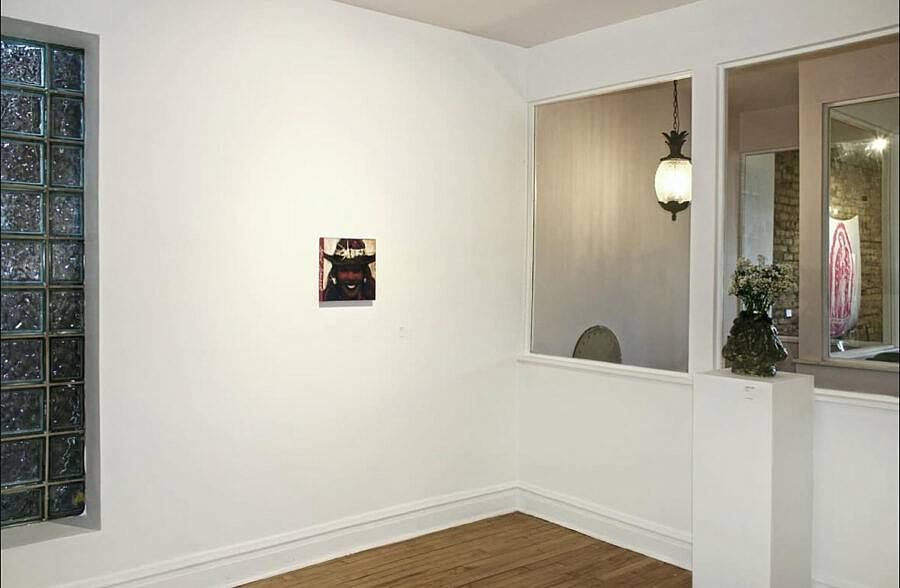
I would have to say my senior year of high school. Visual art students were permitted to each manage and create a group final show with 2 other classmates. I will never forget my amazing black women dream team with Ire and Adora. The show was titled “First, Forget Me Not.” We made everything happen under quarantine and had a good safe turn out for the show. I’m forever thankful to them. More recently, I had my first show outside of school take place in Brooklyn and had the blessing to attend the opening and explore New York for a night, though recent it felt so pivotal. It’s really no sleep till Brooklyn.
How does your creative community now compare to your creative community when you were younger?
I have been so lucky to have a creative community most of my life. I went to Kinder High School of Performing & Visual arts in Houston, where I was surrounded by musicians, actors, dancers, and I participated in set design. My community in Chicago has been consistent at SAIC, where I work around diverse & disciplined artists, but it doesn’t stop there. Chicago has a way of connecting. I have met so many of my talented friends randomly, through fashion or the music scene or just hanging out at a bar. A saying that I’ve heard and used is “We went to Chicago together” and that is really the case because while it is a big city, it is very tight-knit. You end up running into people whose work you are a fan of in random ways. Just this summer I met one of my favorite painters bartending after seeing his work at Anthony Gallery.
What’s your studio or workspace like? Do you have any rituals when you settle in there?
I didn’t have my own studio until I started my advanced painting course, where I was granted a shared 20 x 20 ft studio on campus. I have a palette that I clean every day and one that I leave how it is. There are a lot of rags at my disposal lying around because I move so rapidly, I go through like a rag per minute. I always wear my blue track pants and blue sweaters already covered in paint. They enable me to go crazy and paint however I feel. I tend to paint out of impulse while the reference is present. My friends can attest I leave the studio like a left a finger painting sesh.
How do you manage tending to the variety of responsibilities in the work you do? How do you mitigate burnout or exhaustion?
Burnout often shows up as imposter syndrome for me. Part of managing that has meant figuring out who I am outside of being an artist. Reigniting that joie de vivre that comes from being new at something. When learning without the pressure to be “good,” I’ve noticed I sometimes get stuck in comfort zones.
What is a challenge that you and/or other artists face and how do you see it developing?
Obviously money is a big challenge for everyone, but community support is embedded in artist culture. No one gets left behind. While this can be through resources, I think the more important aspect is emotional support. When artists reach out to each other, trade work, put each other in shows & vice versa, it is nourishing to the practice as a whole. Maybe we get rich off it, but that’s not the goal.
What do you collect?
Michelle Obama merch from the beauty supply store, Ebony treasures figurines, voice memos (conversations, DJ sets, the sound of the street), and I’m building off my dad’s old CD collection.
Portrait photographed by Chloe Harthan.
Interviewed by Luca Lotruglio.