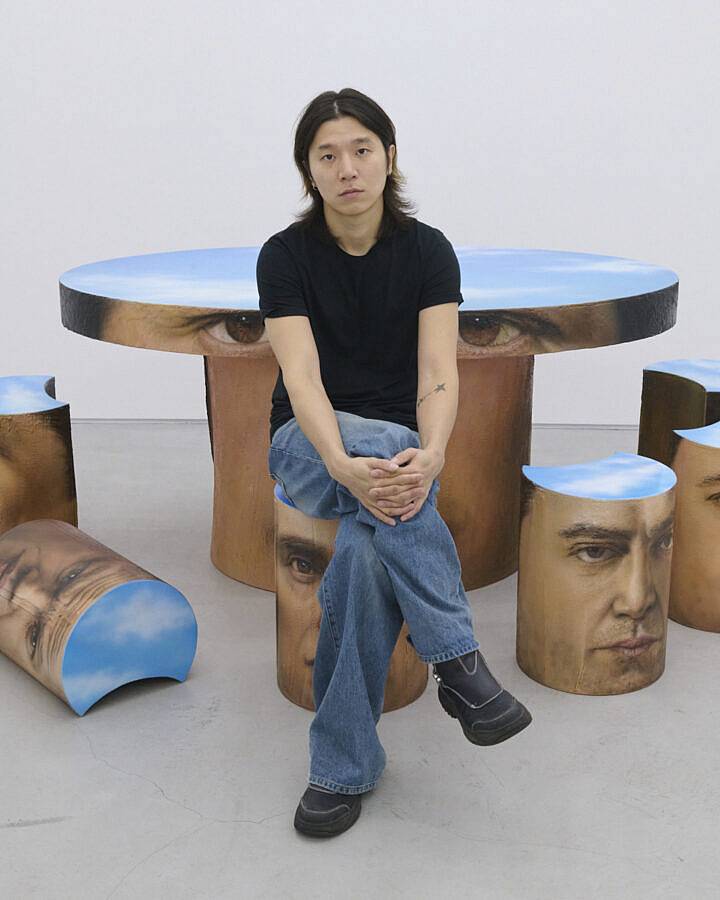
Tell us a little bit about yourself and what you do.
Hi, I’m Taewon Ahn, a visual artist from South Korea. I was born in 1993, around the time computers became common, so I basically grew up with the digital world. I got used to the visual stimulation of that space, and it’s had a big impact on how I make work in real life. Just like how what artists see and feel naturally flows into their work, I think the time I spend in the digital world naturally seeps into my physical pieces too.
Do you have any opinions on the amount of work being produced by artists in this current climate? How do you deal with this yourself?
It really depends on the person. Everyone has their own rhythm. I think I make quite a lot compared to my peers. Since I was a kid, I’ve always drawn to satisfy my urge to create. If I could express myself through writing or speaking, or if I was more into reading and research, maybe I’d make less. But I’m not like that—I’ve just always drawn when I had nothing else to do. I guess that’s why I naturally ended up making a lot.
Do you think it’s important as an artist to have a relationship with the Internet? If so, what might this look like?
For me, the connection between artists and the internet is super close. Our smartphones are basically extensions of us now—the doorway to the digital world is wide open and constantly pulling us in. If you don’t consciously look away, you get pulled deeper. Maybe someday, the line between real and digital will totally disappear. I think that has both good and bad sides. Some artists fully embrace technology and make high-tech work, others reject it completely and go for a natural, analog vibe. I’m somewhere in between—I welcome it, but I’m also cautious and skeptical at the same time. Growing up in the early 90s, when the digital world was just starting out, I was still heavily influenced by analog culture, which I value a lot. That’s why, even though I often use digital imagery in my work, I don’t want to make it look pretty or polished.
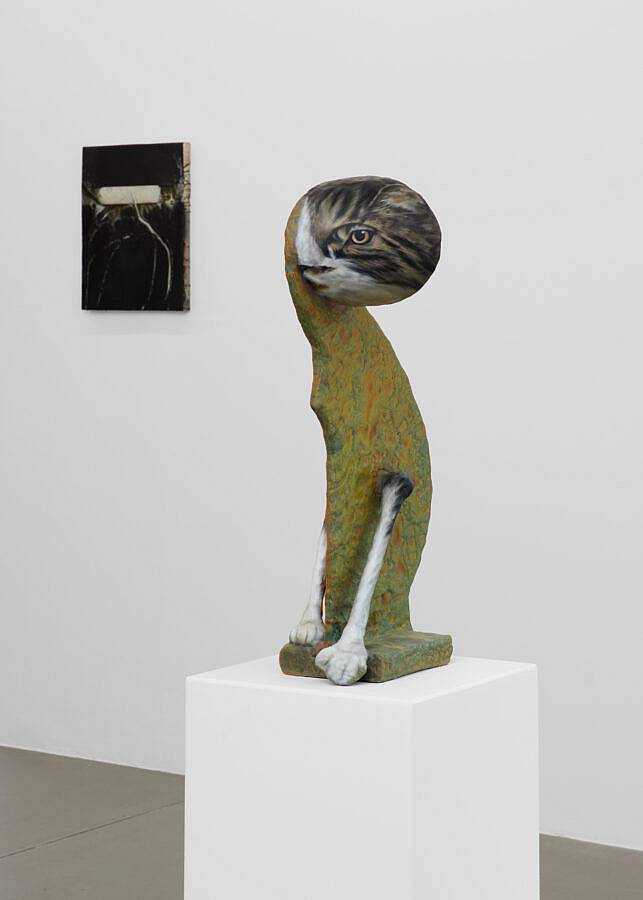
Does it ever feel intimate working with so many faces? What about with your cat’s face?
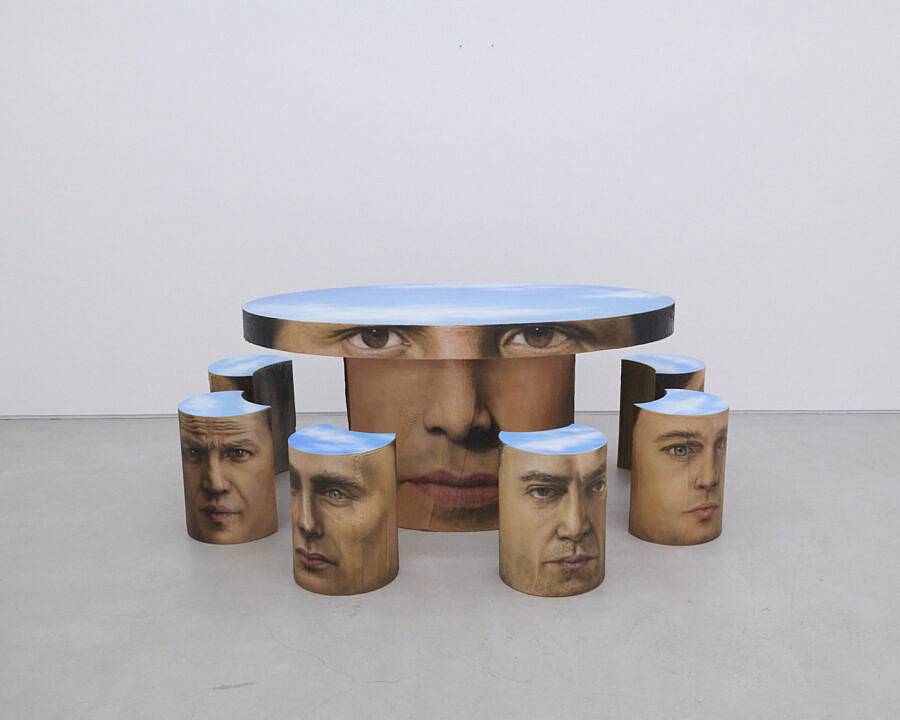
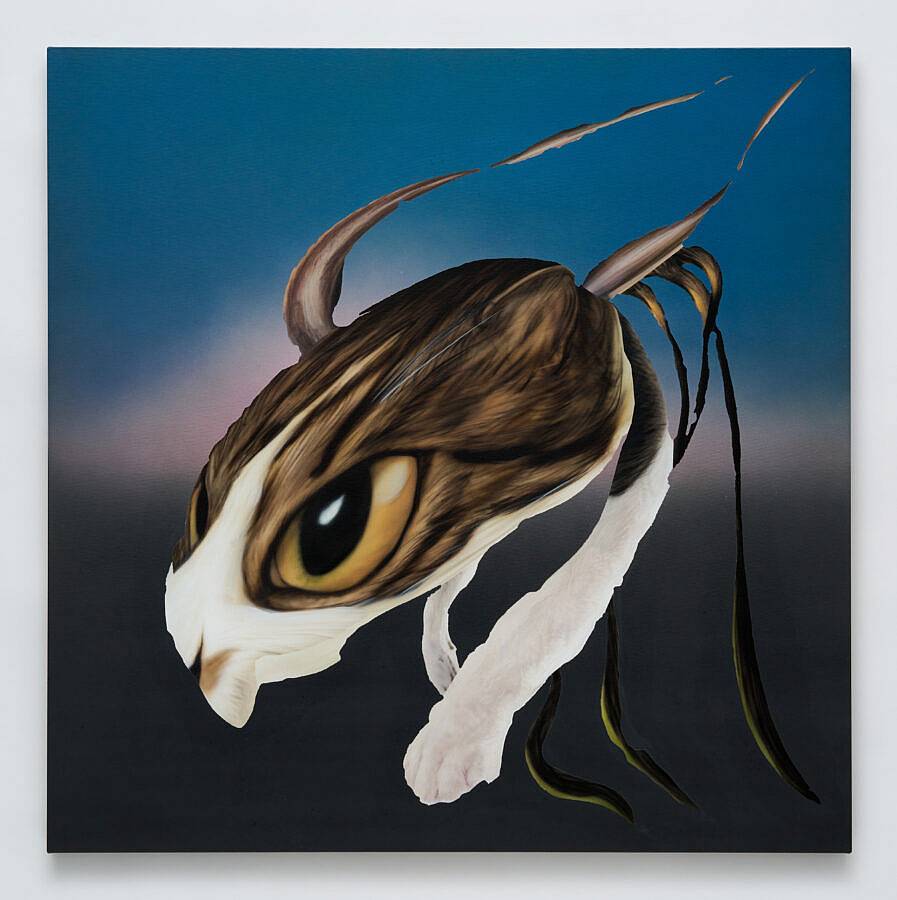
Actually, it’s the opposite. I usually use the faces of people close to me, but when I study them for painting, they start to feel unfamiliar. The closer I am to someone, the more their appearance mixes with memories and personality, so it’s hard to see just their face objectively. When I try to, it feels strange—like I’m seeing a different person. That split between visible and invisible information is fascinating. The same goes for my cat’s face.

Is there any source material you find extremely relevant to your practice right now?
Not really. I don’t do much research for my work. I mostly just search for images, so nothing specific comes to mind.
How do you find yourself conceiving forms?
There’s no set method. Sometimes a rough idea pops into my head and I sketch it, then develop it digitally. Other times I mix and distort images I’ve collected or come across in daily life, cutting and pasting on my iPad until something feels right. If I like the sketch, I move forward. Sometimes I even make the base form first—like cutting wood into a weird shape or gluing materials together into a sculpture—then paint on top. My process changes, but the key thing is “chance.” Since I don’t plan everything perfectly from start to finish, I often hit unexpected roadblocks. Responding to those spontaneous moments is really the core of my work.
What kind of imagery are you drawn to?
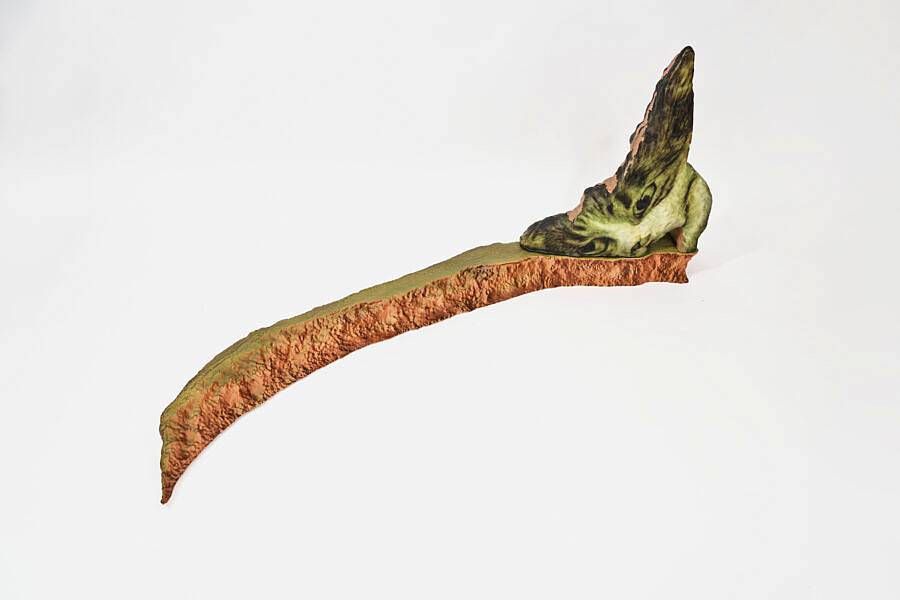
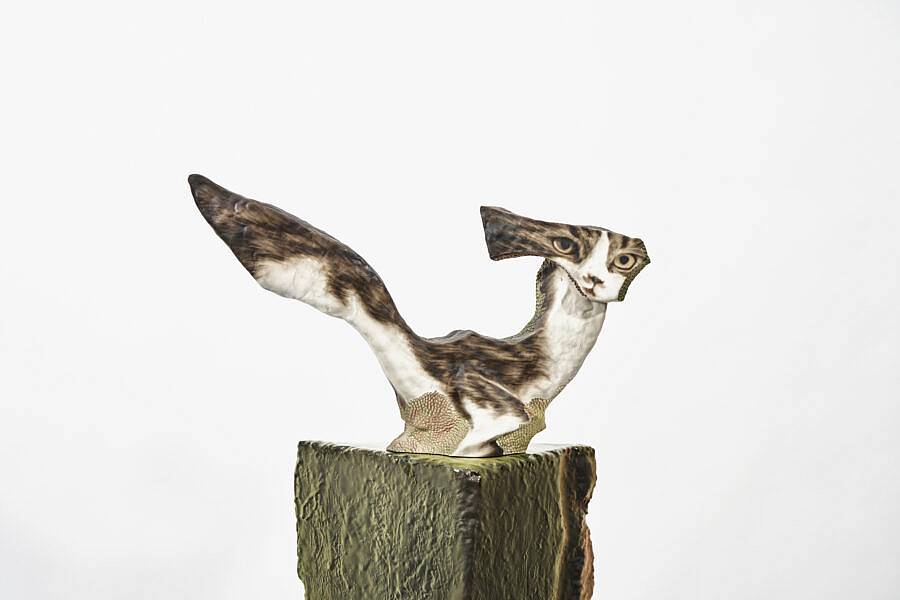
That’s hard to explain. I guess I’m drawn to images that feel ironic but natural at the same time. Like a distorted image of a cat—it’s not realistic, but as someone who lives with a cat, it still feels strangely familiar, like I’ve seen it before in some weird way.
Do you think of space and architecture when making your work, or is it more so conceived in its own private setting?
I studied painting, so until a few years ago I only cared about what happened inside the two-dimensional frame. But after sharing a studio with sculptor friends, I started to change. Once I saw how sculpture interacts with space, I became more aware of spatial elements in my own work.
Do you consider the space your work exists in as a necessity to the work itself?
Right now, yeah, kind of. In the past I didn’t think it mattered—as long as the image within the frame was strong, it could be anywhere. But now I want my work to expand into space and give viewers a more layered experience. Still, I wouldn’t call space essential—the aura within the piece itself always comes first.
Do you consider yourself to think more like a painter or more like a sculptor? Does this matter?
That kind of distinction doesn’t really matter to me. Honestly, I don’t even know exactly what “painterly” or “sculptural” thinking means. I just try to make whatever feels fun or exciting, no matter what form it takes.
\Is there a moment you look back on as being formative to your identity as an artist?
I can’t pick just one. I’m like a sponge—I absorb influence easily from my surroundings. So instead of one big turning point, I’ve had lots of small ones. But if I had to choose, maybe the moment my cat Hiro came into my life was the most meaningful.
What was the last show you saw that stuck out to you?
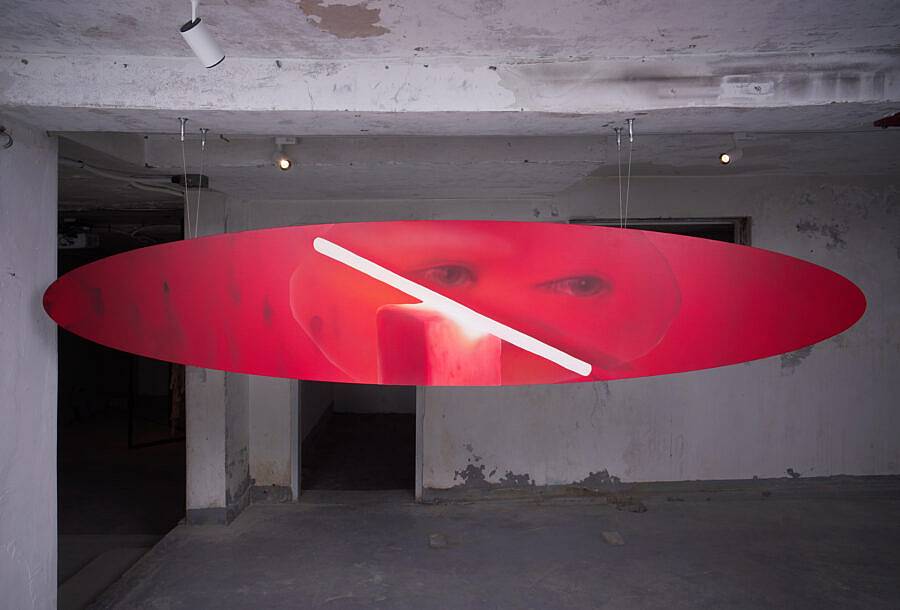
Yeah, I recently saw Adrián Villar Rojas’s show at Art Sonje Center in Seoul, and it really stuck with me. The way the works interacted with the space was incredible.
Do you think collaboration is important and/or inherent to being an artist?
I’m not sure if it’s essential, but I think it’s a great experience. Whether it’s with another artist or a brand, two different worlds coming together to create something new is always refreshing. Personally, I enjoy two-person shows the most—they’re the perfect mix. Solos can be stressful, and group shows can feel a bit impersonal. But with two artists, you can bounce ideas back and forth—it’s a really fun process.
Is art supposed to be fun?
Totally yes!
Is there a specific goal you’re working to accomplish right now?
Yeah, I’m preparing to launch a small brand. My work tends to resonate with younger people who grew up in the digital age. The problem is that they often can’t afford to buy my original pieces yet. So I want to create something more accessible for them. Launching that brand successfully is my main goal right now.
Can you tell us a memory of someone interacting with your work that frequently crosses your mind?
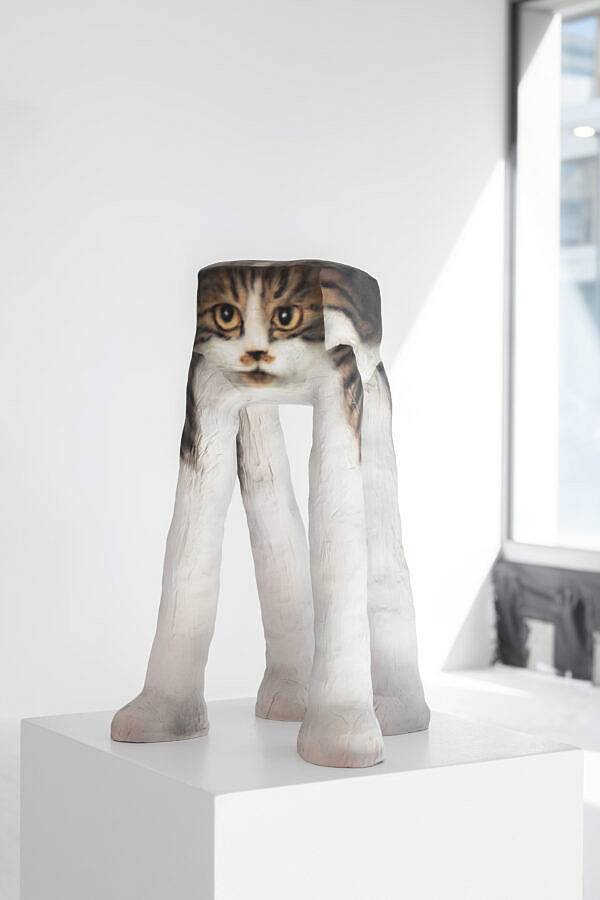
Yes—at the opening of my show at Project Native Informant in London in early 2024, a small dog walked into the gallery. It stopped in front of a sculpture of my cat Hiro, hesitated, and slowly approached it with curiosity. That moment really stuck with me.
Interview conducted and edited by Liam Owings