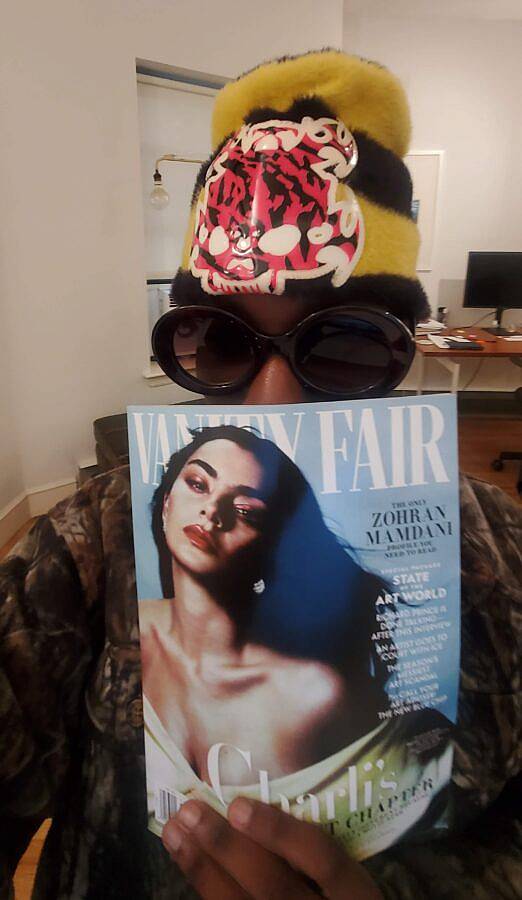
Is there a moment you look back on as being formative to the work you do?
I was really into A$AP Rocky in high school. Right before COVID, he posted a Wall Street Journal magazine cover on his Instagram page. I remember reading the profile, seeing those grainy photos—iPhone flicks by Juergen Teller—and being really shocked at what was possible. I had no idea that journalism could be about art, or A$AP Rocky. I only told teachers I wanted to be a “journalist” because saying I wanted to be an author felt childish. That article marked the first time I recognized the “mischief” of music journalism, which is to deploy the conventions and rigor of academic writing for a wider array of cool things.
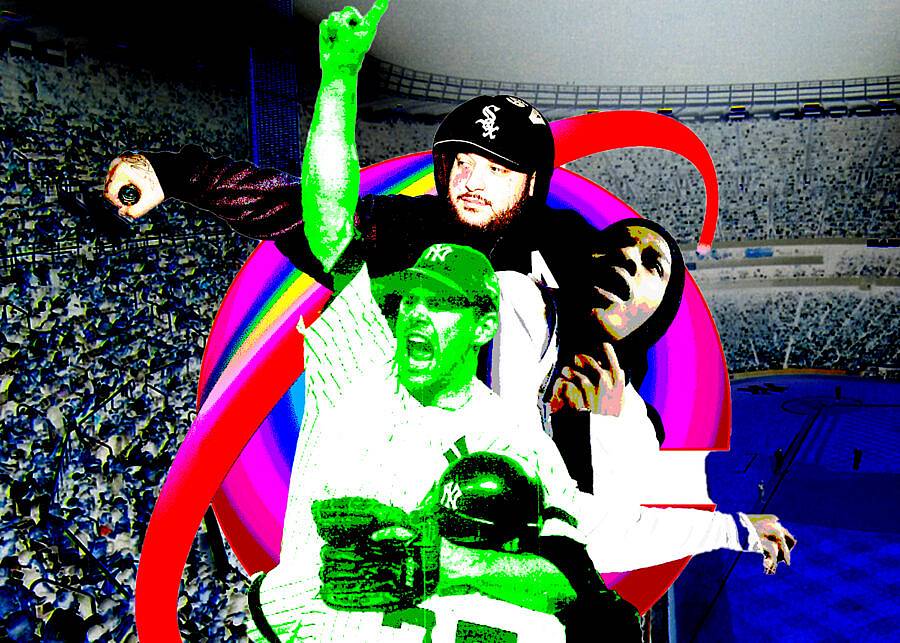
How did Sammy’s World begin? What draws you to the topics you cover in Sammy’s World?
Honestly, I’ve seriously considered rebranding as The Real World, or Bad News. I was just a high-schooler in need of a domain name. It’s entirely possible that “Sammy’s World” was a placeholder, and I just forgot to come up with something better. I was watching Parks & Rec at the time. Maybe Entertainment 720 has something to do with this? I remember really liking the idea: Just this oddball space where Detlef Schrempf does layups, a kiosk dispenses free iPads, and aloof 20-somethings look at their phones in cool outfits. Like Tom Haverford and Jean-Ralphio, I had a lot of ideas, some (digital) real-estate to stuff them into, and no real sense of direction. I was just really desperate to apply the things I was learning in English class to the things I cared about.
The second question is hard, because it kinda translates to “Why are you interested in the things you’re interested in?” I think the fundamental element of finding something cool is not knowing why. Anything I write about art, particularly on my website, is an attempt to answer that for myself. A lot of old journalism is very transparent about that. Before Bram Stoker wrote Dracula, he literally wrote two books about Henry Irving, just because he thought he was dope. I think we understand journalists as experts, or authority figures, which is wrong. I don’t think a journalist is someone who knows a lot, but I do think a journalist is someone who would like to know more.
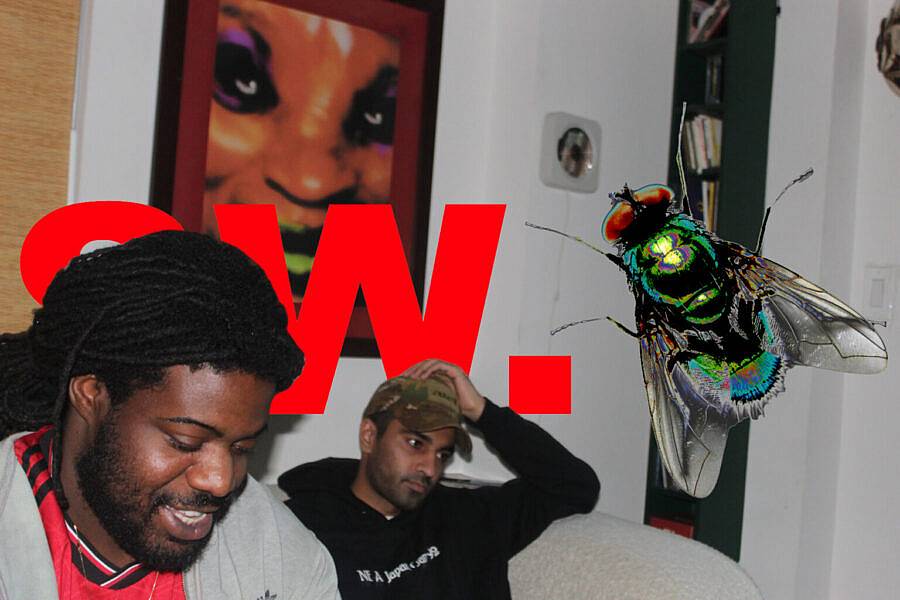
Do you have a typical process for conceptualizing an article? Does it differ at all depending on whether it’s an interview, op-ed, or review?
There are definitely differences between preparing for features, essays, and reviews, although one blanket truth is that I never outline anything. Whenever I have tried, it has felt very unnatural and dishonest. I can’t predict how I’ll feel about a subject 1,000 words from now, or how I’ll feel about an artist I’m profiling by the third time I interview them. I just keep going until I figure it out. Writing is fun because of this instability, this feeling of chasing something ephemeral until it gradually becomes concrete. You’re just playing Jenga with the truth. Stack up the things you know, fill the holes where they arise, repeat until satisfied. Whenever I’m interested enough in something to grapple with it, this is the process I follow, and it is never not rewarding.
When needed, where do you look for inspiration? Have/how have these sources changed over time?
I think a lot of my old writing came out of anger. I was just angry and overcaffeinated. I wrote a lot of long, convoluted essays sitting down with black coffee, looking at screenshots of things that pissed me off, and reading the angry, convoluted critics of the past. (That book Psychotic Reactions and Carburetor Dung changed me.) I was also really interested in web design, and obsessed with websites that looked great while also featuring great journalism. SSENSE, Kaleidoscope, 032c, Spike and stuff like that—visually appealing publications with hardcore research and reporting. The less I understood things, and the cooler they looked, the more I wanted to emulate them. I think that’s still true to an extent.
These days: there’s this book by Rob Doyle where he describes Georges Bataille as the “death metal” of philosophers. Ever since I read it, I’ve wondered about the different ways writing can channel music, which has been incredibly inspiring. Is there a Goth way to write? A Punk way? A No-Wave way? Before, whenever I was in a writing rut, I would revisit a favorite essay, or go to the New Yorker homepage. Lately, when in need of inspiration, I have been listening to a lot of James Ferraro, Chemical, and The Third Eye Foundation.
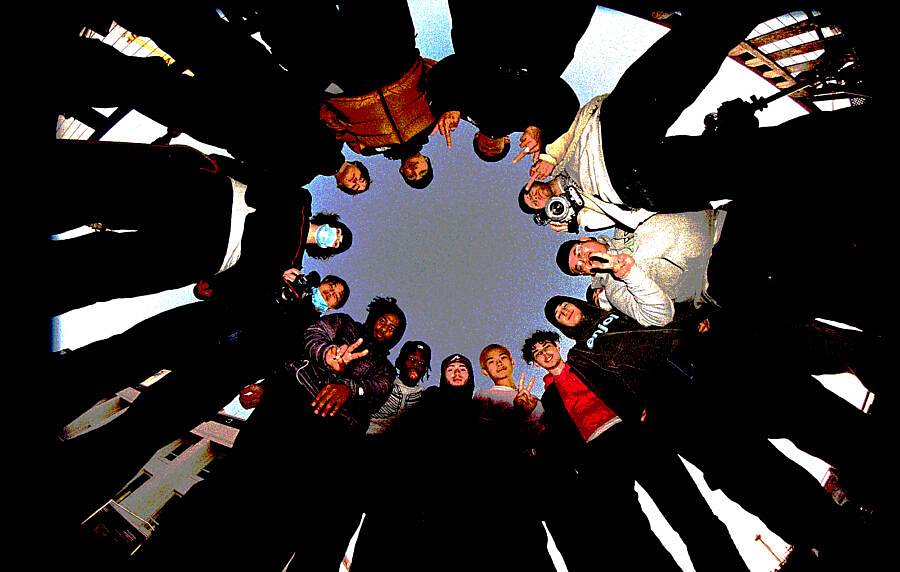
Is there something you want your work to ultimately communicate to the viewer? Is there a gap in the wider cultural criticism ecosystem that you want your work to fill?
Recently, I think I’ve been very fixated on nuances, and how ephemeral the “truth” often tends to be. I am very wary of absolutes. I want my work to explore gray-areas rhetorically, but maybe more so formally: writing as a way of figuring something out, sentence by sentence. The speed of discourse rewards absolutism, but I would love it if people slowed down and thought for a second. I would love it even more if my work helped them to do that.
As far as a “gap” in cultural criticism, I don’t necessarily think there is one. I don’t know what it is about journalism, particularly arts journalism, that attracts so many absolutists and doomsdayers. If you are discontent about the state of journalism, or criticism, or art, I think you bear some responsibility for bringing your vision into the world. My website is where I write what I wish I were reading. There doesn’t have to be a “crisis” if you are willing to do something about it.
Are there any areas that you’re interested in exploring further in your work?
I would like to develop my voice a lot more. Because I spent so many years reading the New Yorker, I think my prose is stuck in this pseudo-New Yorker mode, which is positive to an extent—writing for the average reader. But when I read my favorite writers, I admire their swagger, which is deeply difficult to deploy alongside insightful, well-studied ideas. Unpretentious cool that feels intimate, like talking to a tapped-in older cousin on Thanksgiving. So, so sick. I would like for my writing itself to be interesting, rather than just a soulless vessel for ideas I think are interesting. 2026 will be my year of swag.
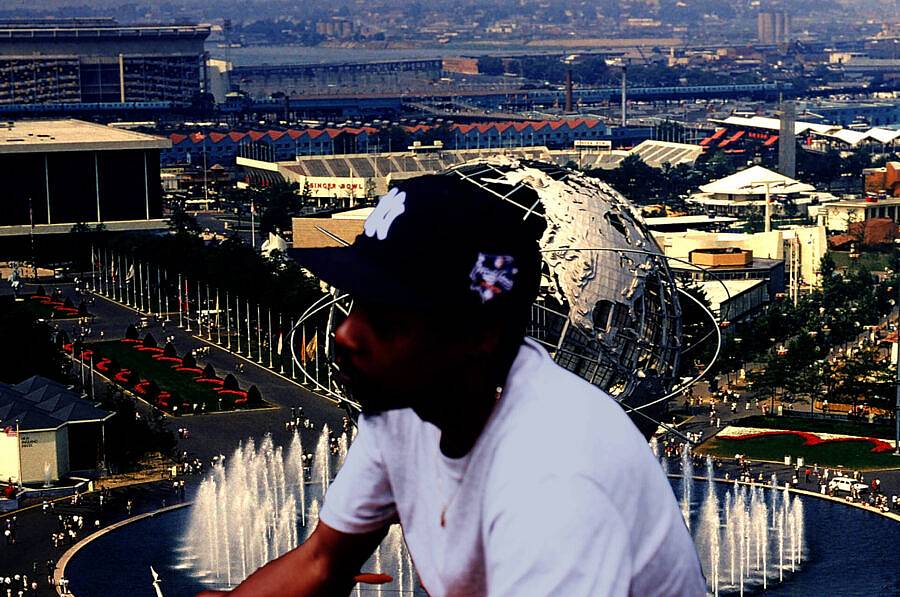
What’s your workspace like? Do you have any rituals when you settle in there?
I write in bed. I have one of those bed-desk thingies. My bed is completely covered in little pieces of cotton, because my Yankees pillow-pet, which I got for Christmas in 2012, has a small tear, which I am conflicted about fixing, as I cannot work without my pillow-pet on my lap.
Is there a memory from working on an article that lingers with you as you continue with Sammy’s World?
Last summer, I spent a lot of time with this band Prophet Thaddeus, from Brooklyn. The first and only time I saw them live, it was at this dingy venue on the Lower East Side. To this day, I’m unspeakably grateful to have brought my tape recorder. I’ve never heard anything like what I heard that night. Brilliant, unbelievable musicians. That memory literally lingers with me, because I listen to my recording of it at least once daily. Like, I have the entire set memorized. Maybe I’ll leak it.
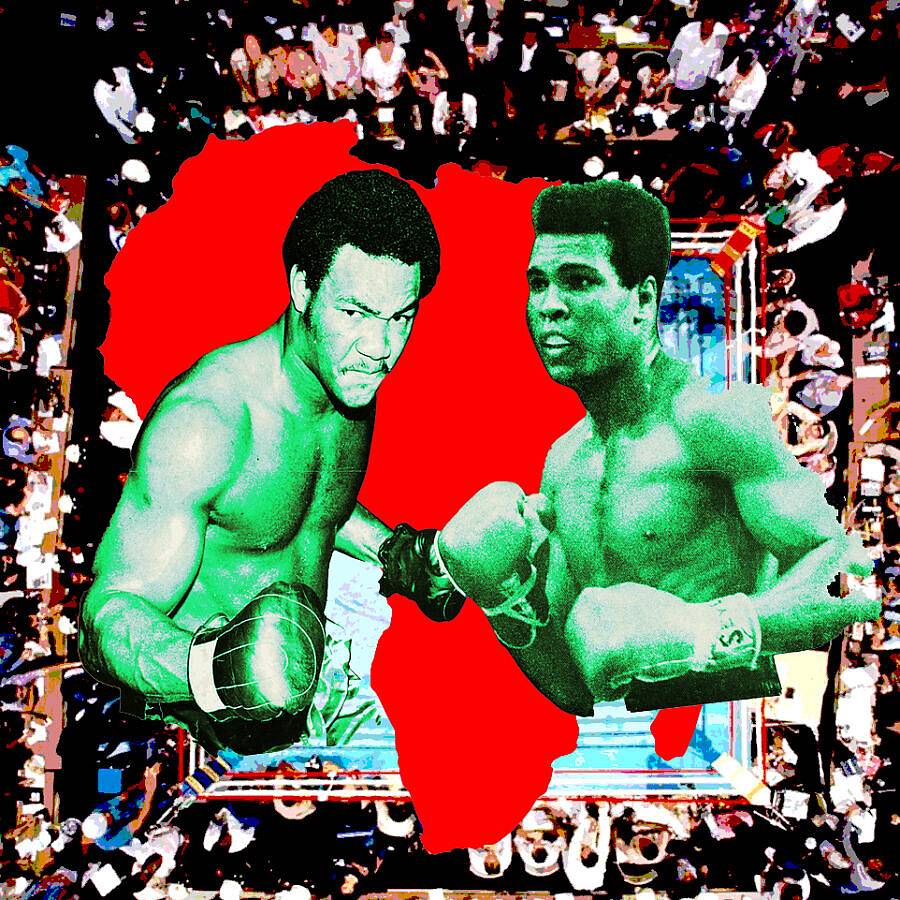
Can you tell us a memory of someone interacting with your work that you think back to often?
Two years ago, a close friend told me that my writing was pretentious and untimely. I took offense to that, but in retrospect, that friend was absolutely right, and I take every opportunity I can to thank them. I am still desperately doing the work to change.
Are there any influences that are core to your work?
Matthew Trammell was the first writer I ever really obsessively followed. When I was in middle school, I used to read Rolling Stone’s “100 Greatest Guitarists Ever” list(s) all the time, which is how I learned about David Fricke. Huge inspiration. Touré is another Rolling Stone legend with a crazy back-catalog. I always have Kelefa Sanneh’s New Yorker author archive open in another tab. Oscar Wilde means the world to me.
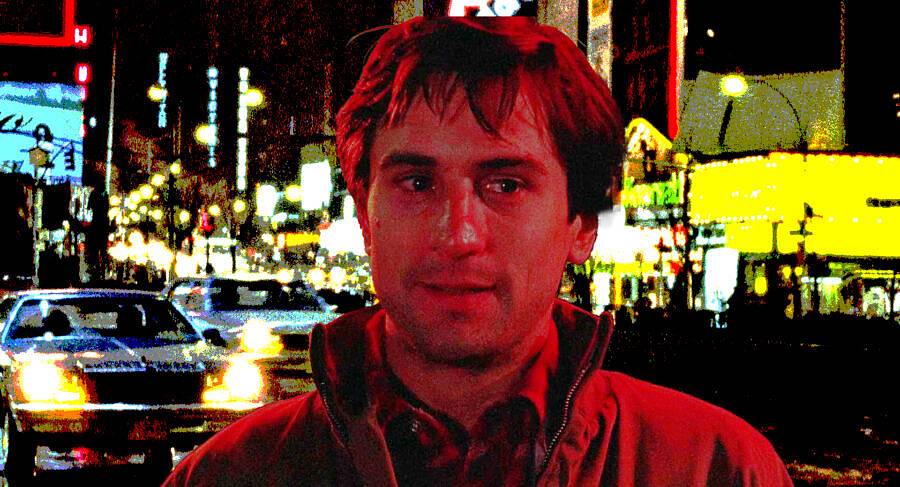
As someone who has conducted many interviews, is there a question that you’ve always wanted someone to ask you? If so, what would be your response?
I wish someone would ask me who I’d like to shout out. If someone were to ask me this question, I would say: Green Pigs in Heaven, No Bells, Derange, Skate After Work Skateboards, Olivier Lafontant, Rae-Aila Crumble, H.D. Angel, John V. Variety, Ben Arthur, Ock Sportello, Vivian Medithi, Eli Schoop, and many, many others, whose works I am eternally grateful for. There’s so much beautiful writing being done, so much beautiful music being made. I’m just happy to be here.
Interviewed by Luca Lotruglio.