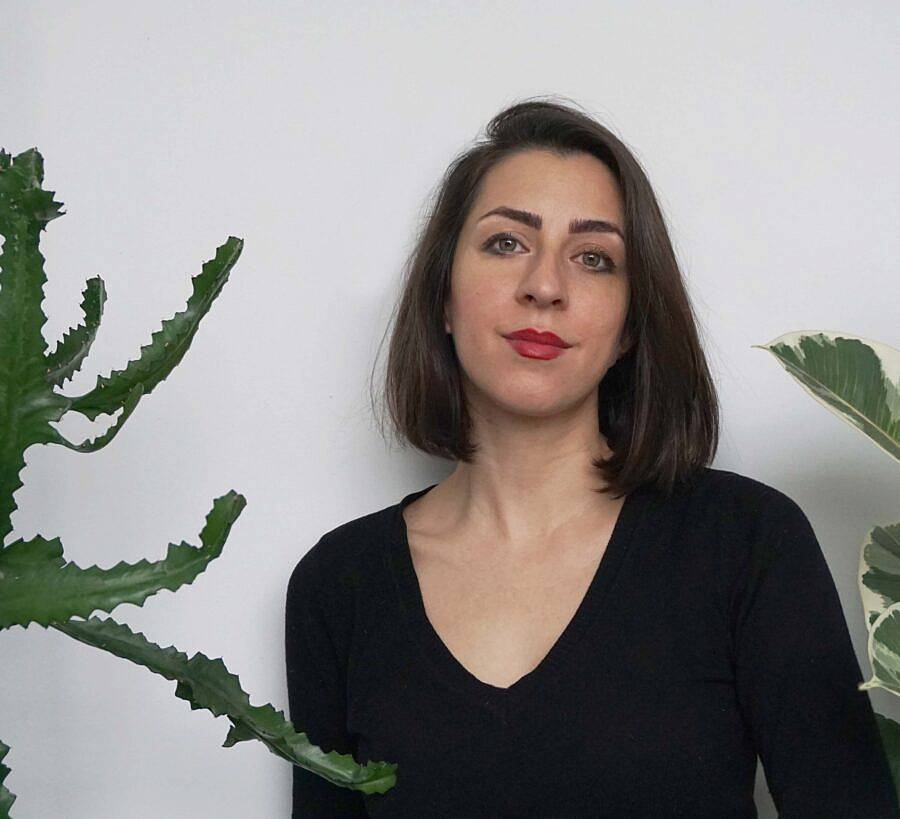
Tell us a little about yourself and what you do.
I am an Iranian-Azerbaijani American interdisciplinary artist based in Chicago’s East Garfield Park neighborhood. Born and raised in Tabriz (located in the Azerbaijani-speaking northwestern region of Iran) I relocated to Chicago in 2005 due to the destabilizing political conditions in our home country and to advance my artistic practice. My work spans diverse media, investigating the intersections of geopolitical landscapes, personal histories, and environmental observation.
What is your studio or workspace like? (Feel free to share images!) Do you have rituals to settle into the space?
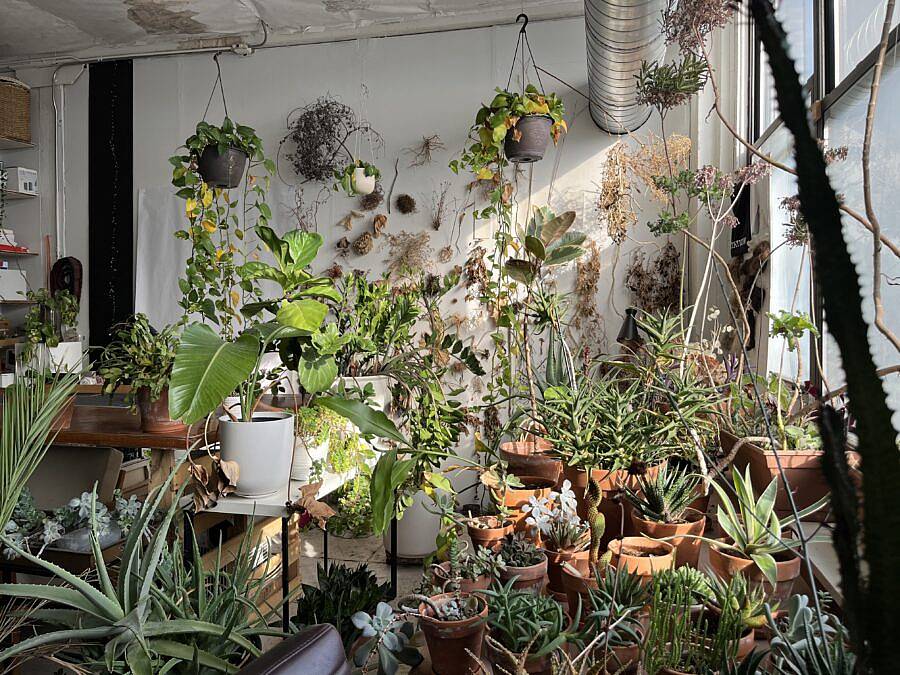
Studio is a special place. A multi-functional space where I think, research, make, and process emotions ranging from joy to grief. The room is filled with a living and preserved botanical archive of live and dried plants. My daily ritual always begins with brewing tea and responding to emails, which grounds me before I transition into deep studio work. It is the one environment where I feel a boundless sense of energy and belonging.
Is there a moment you look back on as being formative to your identity as an artist?
There was no single catalyst; I have always known I wanted to be an artist. However, a significant formative shift occurred when my ex-husband’s pressures characterized by the question, “What will you actually do as an artist?” pushed me into a ten-year career in interior design. While not my original choice, navigating that detour ultimately solidified my commitment to my true practice and sharpened my understanding of space and materiality.
What is influencing your work right now?
My work is currently driven by the intersection of my immediate environment, specifically my collection of over 130 potted plants, and ongoing global geopolitical events. For the past five years, this dialogue between domestic botanical care and broader political realities has formed the core of my research and studio practice.
Your work often touches on the dyadic relationship between embodiment and displacement: of place, of people, of life itself. How do you think your work operates in different spaces, whether that be Chicago, Tehran, your home, Mexico City, and so on?
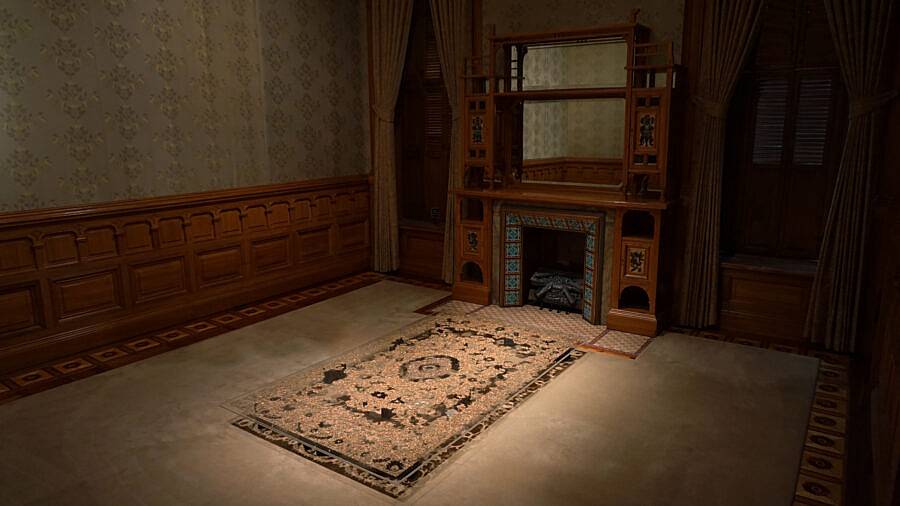
This is a wonderful question, and I think about it a lot. Most of my work respond to the site. Whether a site-specific installation like Treaded Memories at the Driehaus Museum, presenting a solo exhibition like Entanglement at SoNa Chicago, or a live performance in Mexico City, geography matters. I attempt to dissolve physical borders by transplanting material artifacts from a distant location directly into the exhibition space. I believe physical media (particularly botanical materials) operates as a vessel for memories. Activating these materials across diverse environments allows me to witness, archive, and expose how memory adapts when uprooted.
What is the last exhibition you saw that really stuck out to you?
Ann Toebbe’s paintings at the Hyde Park Art Center were amazing.
Liliana Porter’s installations and small works at SECRIST | BEACH were incredible.
Loved Leah Ke Yi Zheng’s works at the Renaissance Society.
And Theaster Gates: Unto Thee exhibition at the Smart was so deep and beautiful.
Who are the artists/creatives/musicians that you have been inspired by lately?
Lately, I have been deeply inspired by Rashid Johnson’s expansive, multimedia approach to making. I admire how seamlessly he transitions between different materials and formats without interruption, allowing distinct series to converge into a vast, multi-layered practice. This fluid movement across disciplines mirrors my own interest in letting the conceptual intent inspire the physical medium.
How has your work evolved over time?
While my conceptual core remains constant, my media continually evolve. My practice has always centered on human and non-human exchange, systemic and ideological critiques, and the biographical interrogation of growing up under a repressive, patriarchal society. To explore these themes, my work has transitioned across drawing, painting, sculpture, site-specific installation, performance, and video. Currently, I am expanding my medium into printmaking.
Your practice spans a variety of mediums (sculpture, performance, paintings, and drawings). How do these practices intersect with, differ from, and relate to one another?
My drawing and painting practices are constant, whereas my work in performance, sculpture, and installation is almost always site-specific and project-driven. Rather than choosing a medium beforehand, I let the conceptual aspects of a project inquire the format. If an idea requires a new material avenue, I embrace that path, learning to navigate the limitations and advantages of that specific discipline. For me, the intersection lies in how diverse mediums allow the same core inquiry to manifest in entirely different physical registers.
Are there any areas, techniques, or materials that you’re interested in exploring further in your work?
I am currently developing a new series of monoprints, a technique completely new to my studio practice. Looking ahead, I plan to integrate photography into my work to see how it can expand the scope of my upcoming bodies of work. Embracing these unfamiliar disciplines allows me to continuously challenge my material boundaries; for me, the process of making is an ongoing commitment to learning and experimentation.
Could you share some recent, current, or upcoming projects you’re working on?
I am currently preparing for two upcoming solo exhibitions. The first opens on July 19th at the Sacristy Gallery within the Epiphany Center for the Arts, where I will debut three new paintings. The second solo exhibition will open this September at SoNa Chicago during the Chicago Exhibition Week, presenting a cohesive body of work that continues my exploration of displacement, memory, and botanical life.
What do you collect?
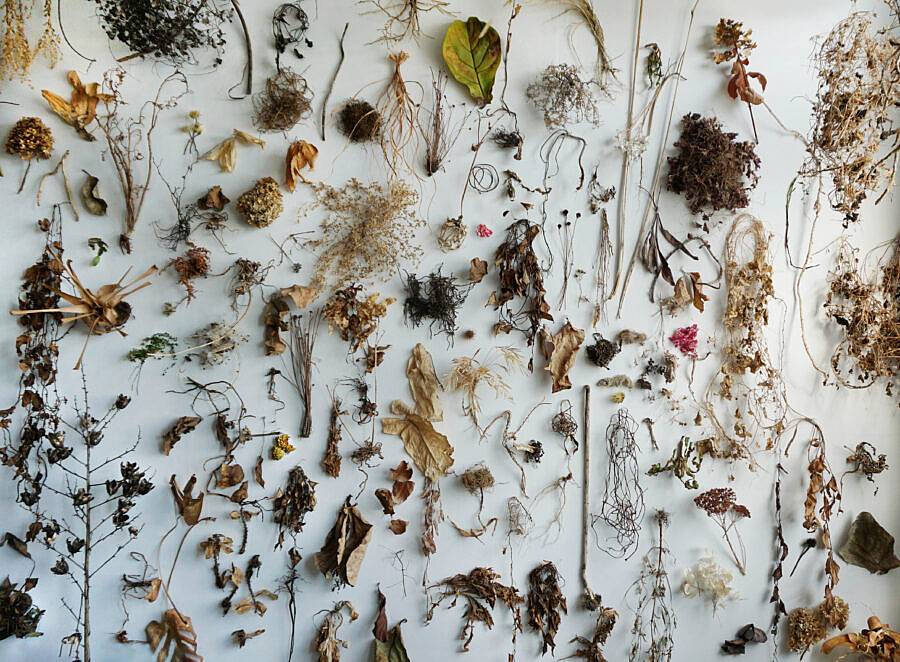
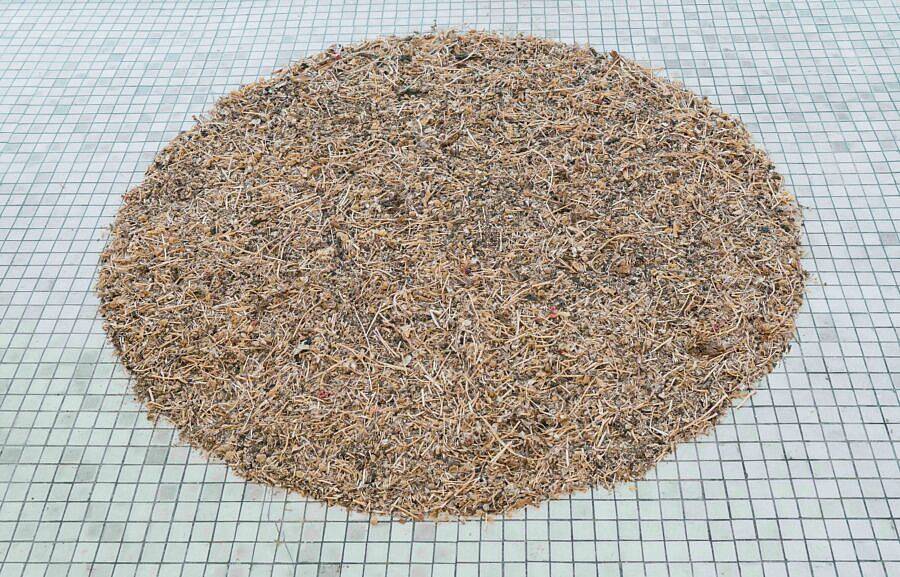
My collection consists of organic remnants from my studio and immediate surroundings. I gather plant material shed by my 130 houseplants, alongside bird nests, insects, bones, and weeds found during my daily walks through the East Garfield Park neighborhood. These overlooked elements function as a physical, informal archive of my locality.
Interviewed by Seth Nguyen.
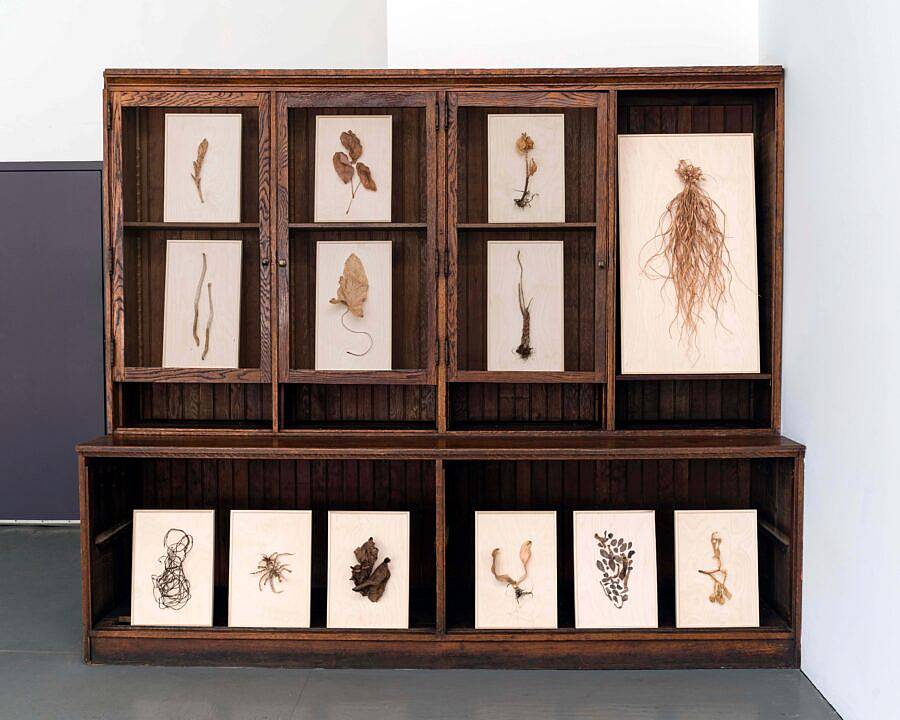
*Top row: Guzmania flower, Flamingo Lily leaves, Calla Lily roots, stem, and leaves. Work on the right: Ponytail Palm leaves. Middle row: Areca palm stems, Monstera leaf, Money plant roots and stems. Bottom row: Golden Pothos stems, Fishbone cactus flower, Philodendron leaves, Orchid’s roots and leaves, Jade leaves and stems, Christmas cactus stems and leaves.
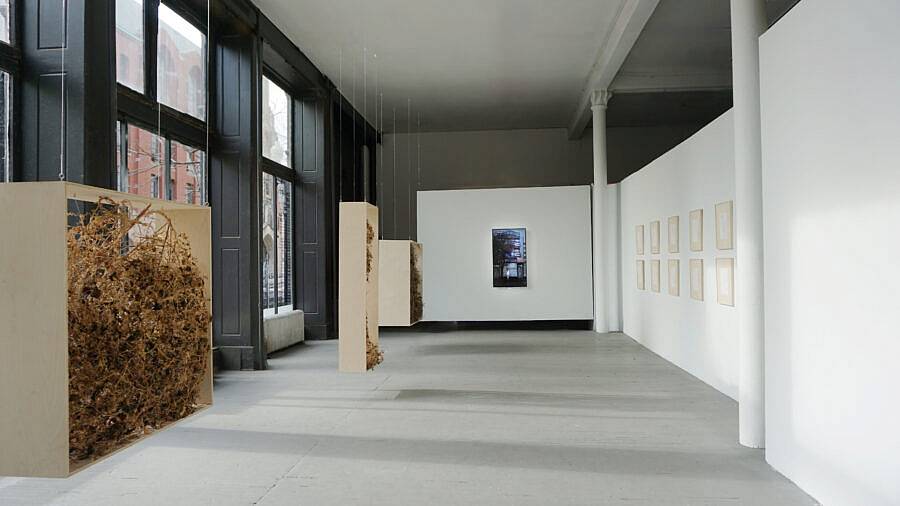
**Sculptures: Collected dried morning glories from the artist’s backyard, 2022 – 2024, framed in raw birch plywood. Video: Home, 7:32 silent video on loop, 2024 – Artist’s childhood home and the planted tree by her father, Tabriz, Iran. Drawings: Spring 2022 – Fall 2024, black and gray felt pen on paper, framed in raw birch plywood.