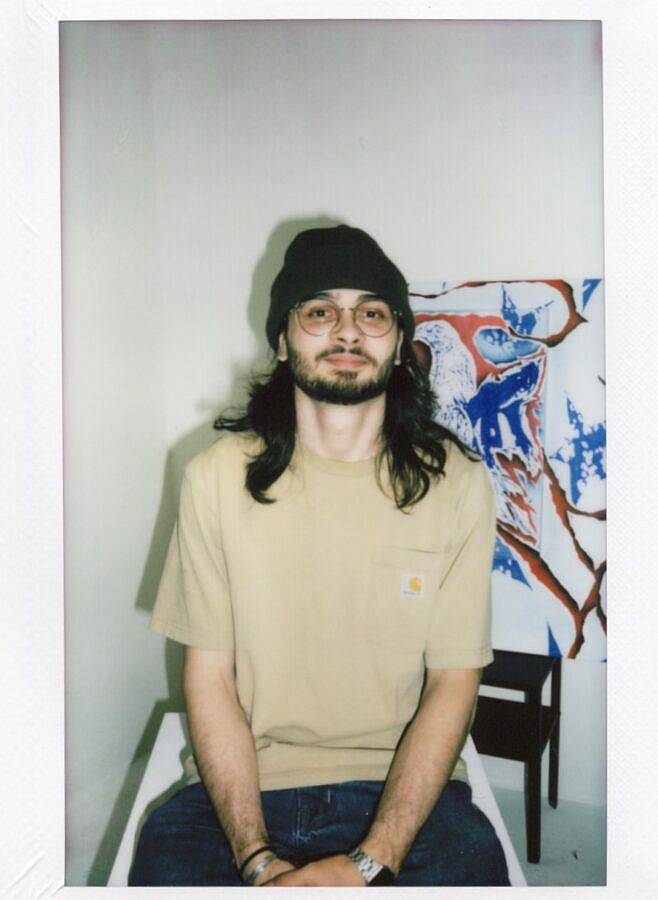
Tell us a little bit about yourself and what you do.
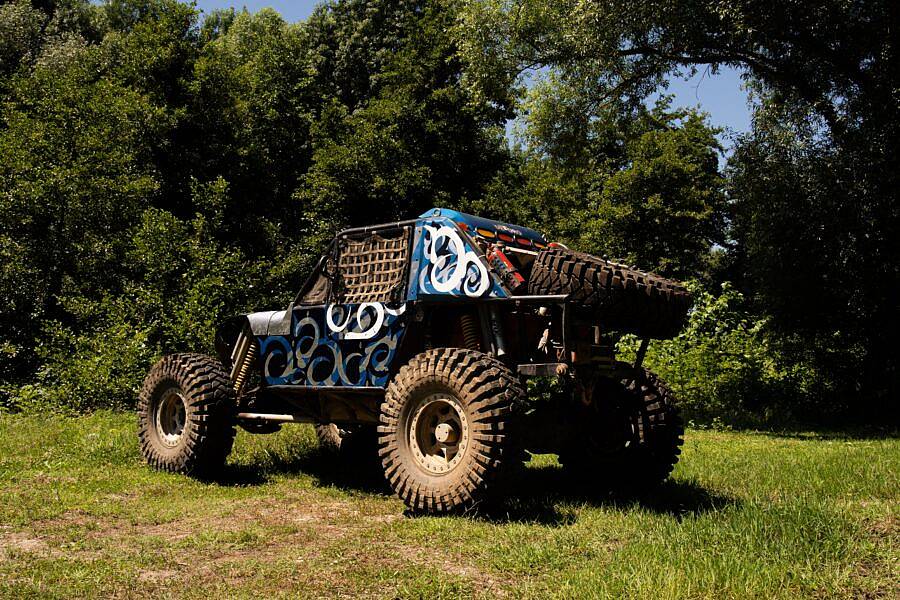
I’m a painter/art handler that lives and works in New York. I was born in the year two thousand and raised in Istanbul, Turkey. In the early 2000’s, my father would build custom off-road cars and also race with his own builds. Growing up around a customization frenzy. After watching a good amount of “Pimp My Ride” and “Count’s Kustoms” with my dad, I started airbrushing right after quarantine in 2020. Growing up around a racing subculture and airbrushing as a hobby, I got into collecting Hot Wheels, tattoos, and art books over the years. Lately, I’ve been in my studio a lot, working for an upcoming show at High Noon Gallery in January.
Your work often has many layers. How do you know when a painting is done?
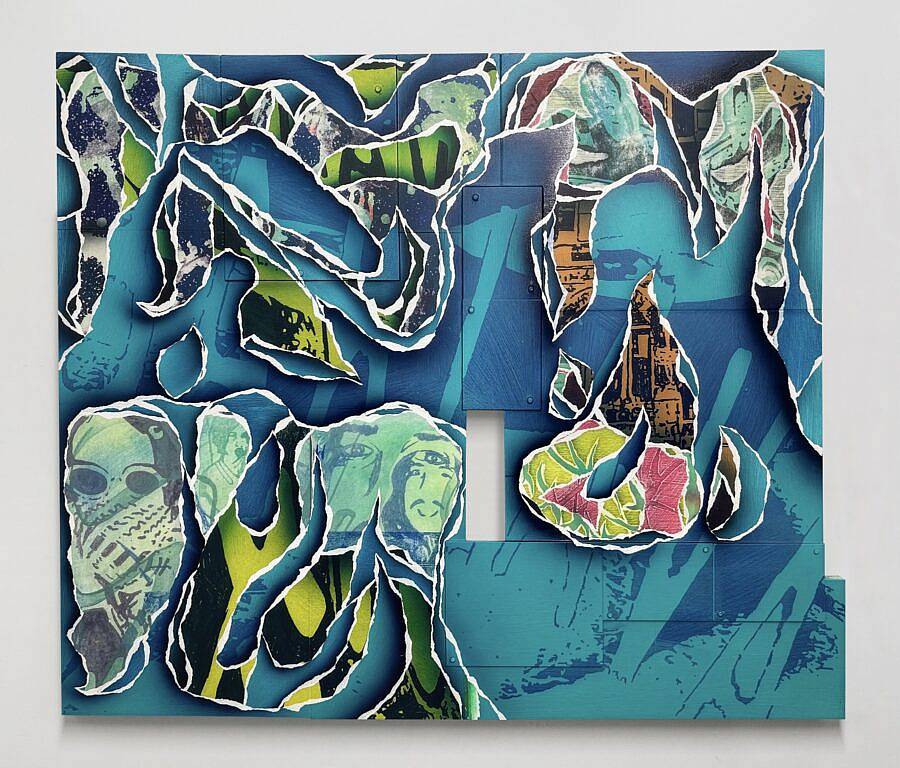
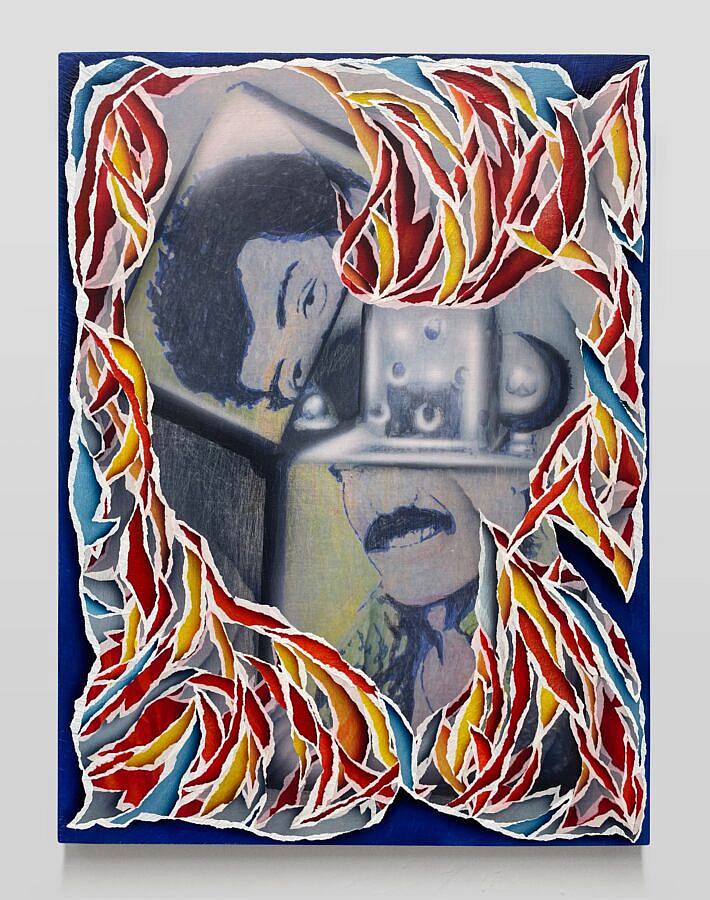
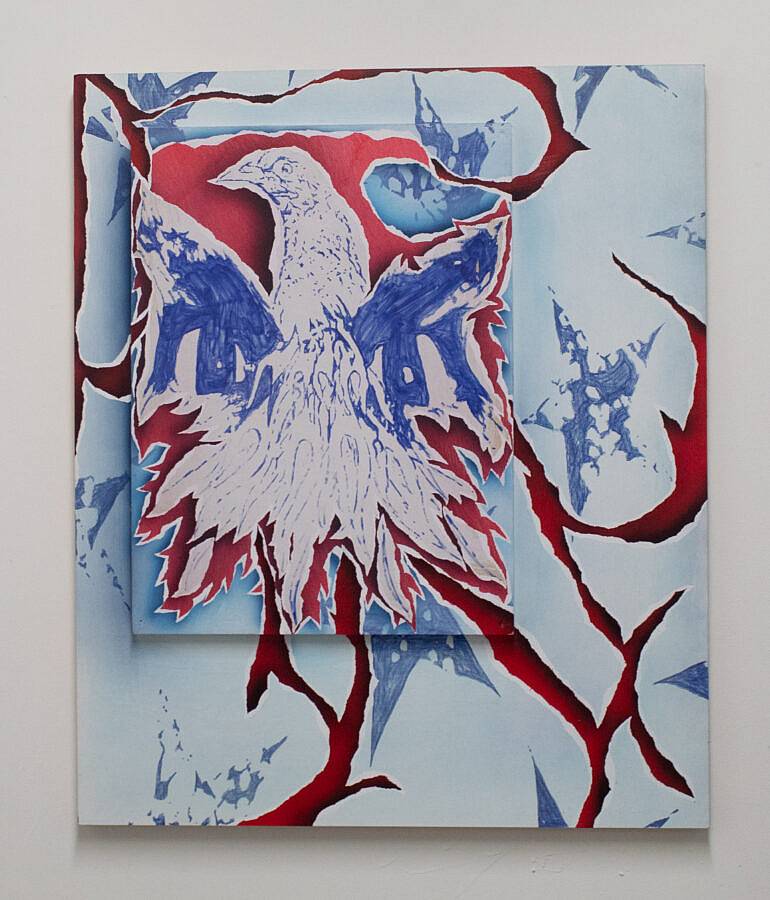
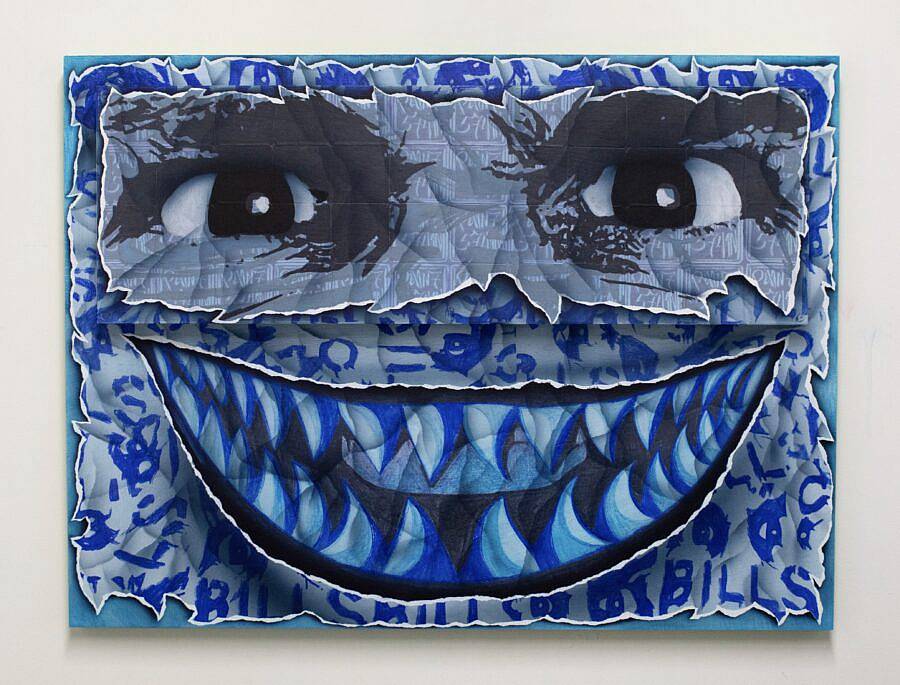
I enjoy how every single application of paint creates a pentimento that the painting process can be traced back to, serving as layers of stacked information. I’m interested in creating a visual history that unfolds as it gets deciphered through hidden easter eggs I plant in my paintings. As I lay my key visuals on the painting plane, I start to paint over certain information not just to cover what’s underneath but to introduce new opportunities to push composition. I usually paint until I feel fulfilled, most of the time it’s just an intuitive feeling of completion, more than a blueprint that I follow. I like to think about artworks as if they are meat temperatures, sometimes they’re rare, sometimes they’re well done, or something in between. If it’s seasoned correctly, you’re good to go.
Do your paintings arrive through careful conceptualization or natural improvisation?
In an interview from 2001, Laura Owens says, “Painting is a question or a problem to think about… to bring new things into it makes it interesting for me to keep making the paintings”. I feel exactly the same way as Owens, I see painting as figuring out a visual puzzle. I take my time as I select my references, curate them in a way that they make sense together. But on the other hand, I enjoy messing with what I’ve built as an image throughout my process with improvised decisions and arrangements. Having these instinctive gestures and figuring out compositions around them is what keeps me engaged in my paintings. I enjoy solving these visual problems I create on the painting plane along the way.
How do you see your work evolving in parallel to things that are going on around you right now?
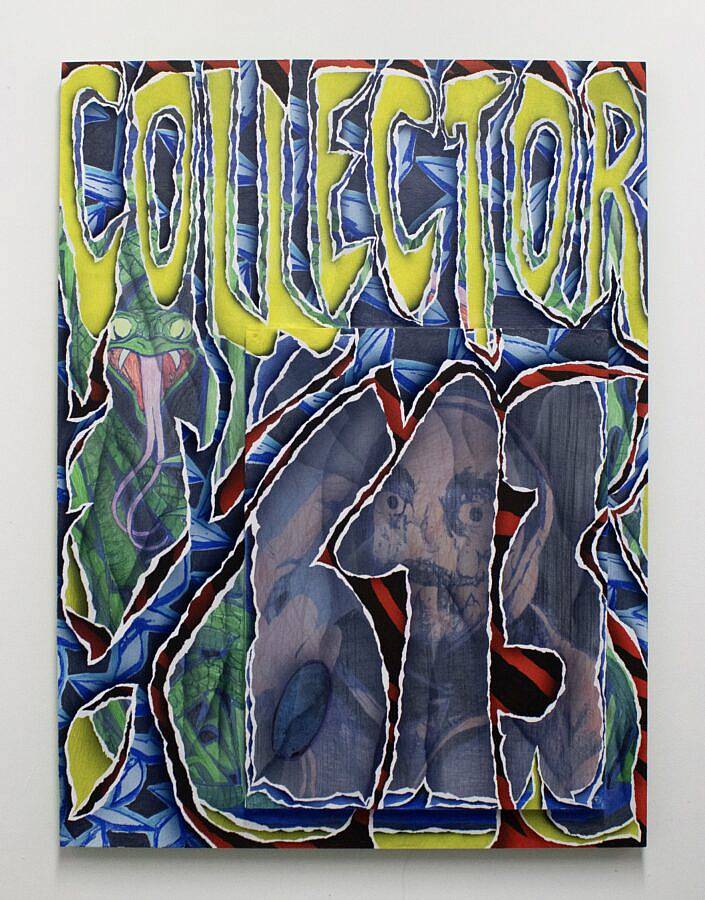
I have a lot of graphics collecting dust in my hard drive that I don’t think I will ever get to paint. I want to make use of these graphics I made over the years. So lately I’ve been thinking about publishing printed matters such as coloring books, sticker sheets, scratch-offs, pins, postcards, and collectible sets.
Is there any source material you find extremely relevant to your practice right now?
For the past five years, my source material has been from my personal life. I’ve been pulling images from my dad’s race car archive, childhood photos of me and my sister, photos of friends I took or sent over text, inside jokes that got stuck in my head, items I collected over the years, and the list goes on.
Can you speak on how your work is influenced by graffiti culture? What else do you think is a prominent influence?
I used to write around my neighborhood with friends after school. We would write whatever joke we laughed at that day on this huge wall in our neighborhood, we always kept it toy and silly. Throughout our high school years, we filled this wall with Turkish jokes and idioms that later would connect with each other and create new sentences. Looking back, I now realize that we were publicly playing exquisite corpses with words and spray cans. I got more interested in layering and stacking information, which I’ve been utilizing in my painting practice ever since.
I gotta say, car culture is another influence I feed from in my practice. Growing up in a newly developing off-road racing community, I started to develop an interest in the visual aesthetics of car graphics and the culture itself at an early age. Whenever I looked through my dad’s car magazines, I would find myself examining the pinstriping, airbrushed flames, or intense stamp decals that have a strong graphic quality. I was interested in the personality and attitude captured in the graphics itself.
Does your relationship with Istanbul play an important part in your practice?
For sure! As a kid, I frequently explored Istanbul with my mother. We would visit Grand Bazaar, the world’s oldest and largest marketplace, to walk around thousands of artisan shops, then have lunch in a century-old restaurant that only serves meatballs with peppers on inlaid silver plates. I got exposed to so many different layers of history just by wandering through the city. I was seven years old when I visited Yerebatan Sarnici (Basilica Cistern) for the first time. I remember seeing a huge pillar that had an upside-down Medusa head slightly submerged in water. I was mesmerized, scared, and curious all at once. I asked myself, “So this means Medusa can’t turn me into stone anymore?”, thinking she lost her powers because of the juxtaposition of her head, was such a Eureka moment for a seven year old me. When I reflect back, I cherish all the memories I collected in Istanbul, and can confidently say that the city I grew up in has a lot to do with shaping me as a person and an artist.
Can you speak on how personal your work can be? Does this offer intimacy in your opinion?
My work has always been pretty personal, not because of the source materials I choose to work with, but how and why I work with them. I use specific images from my archive that get flattened digitally to create a stamp graphic that I later paint. Turning personal material into graphics creates a detachment from the source and makes it easier to work with. As I curate these tangible personal memorabilia on the painting plane, I archive past memories but also relive those moments as I paint them. I think my work does offer a type of intimacy with the attitude of how they are made.
What was the last show you saw that stuck out to you?
I gotta say, Jack Whitten’s retrospective at MoMA was the show of the year for me. I went to see it three times, which is something I usually never do. I was familiar with his work because he would come up as a reference in our conversations with my mentor, Gary Stephan. He recommended that I look at Jack’s acrylic slab paintings and watch a couple of his artist talks. As I listened to Jack talk about his image-making process, I started to relate to him in a much deeper way. I took my family to MoMA and spent a whole day there showing them Jack’s work. I also got yelled at a couple times cause I was getting too close to the paintings. Which I get, but it also assures me that those paintings were so fucking good that I just needed to take a closer glance at them.
Is there somewhere you’d like to spend time to further your practice?
I’m kinda done with moving or getting used to a new city at the moment, so I could see myself bouncing between New York, Chicago, and Istanbul.
What artists do you think are making important work right now?
EVERYONE <3
What do you think is a new issue arising in the arts, and how do you deal with it personally?
This might be a hot take, but I gotta say A.I. has started to bother me lately. I’m not trying to discredit anyone that uses it as a tool in their practice. I think there’s a great amount of opportunities if it gets to be used intentionally. I get irritated when A.I. is used as a replacement for the artist. Recently, I’ve come across a coffee shop that has all their branding and packaging designs generated with artificial intelligence. Pretty tasteless, bland, low-quality graphics that sting your eyes as you’re sipping coffee is not an experience I thrive for. It was too obvious for me that all the graphics were generated with A.I. to cut down the cost of hiring an actual professional. Taking the artist out of the equation affects how much care goes into each graphic and the quality of the brand.
Interview edited by Paul Fitzpatrick