Tell us a little bit about yourself and what you do.
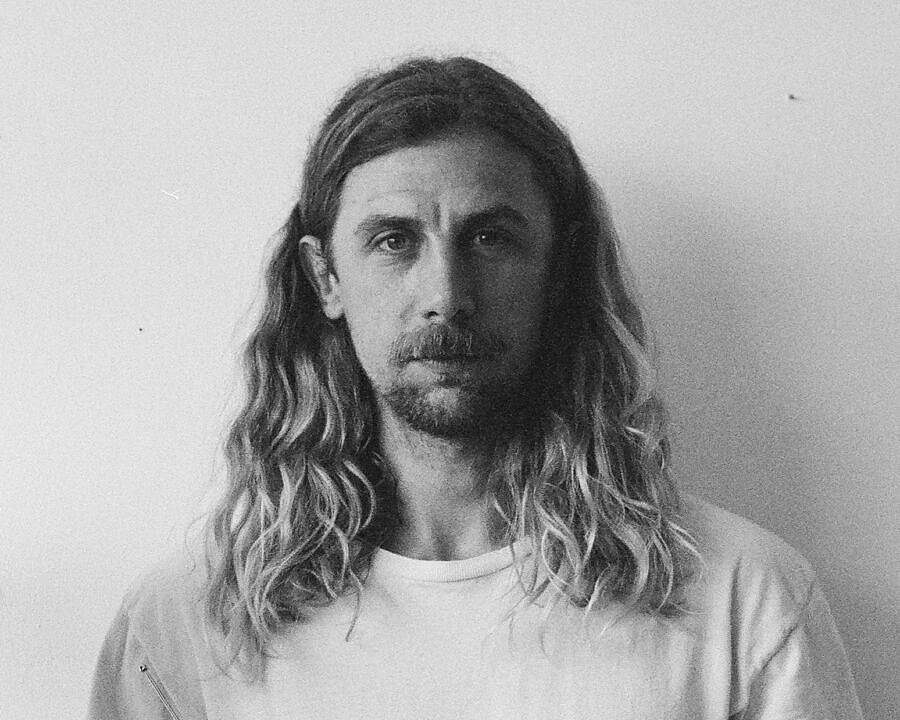
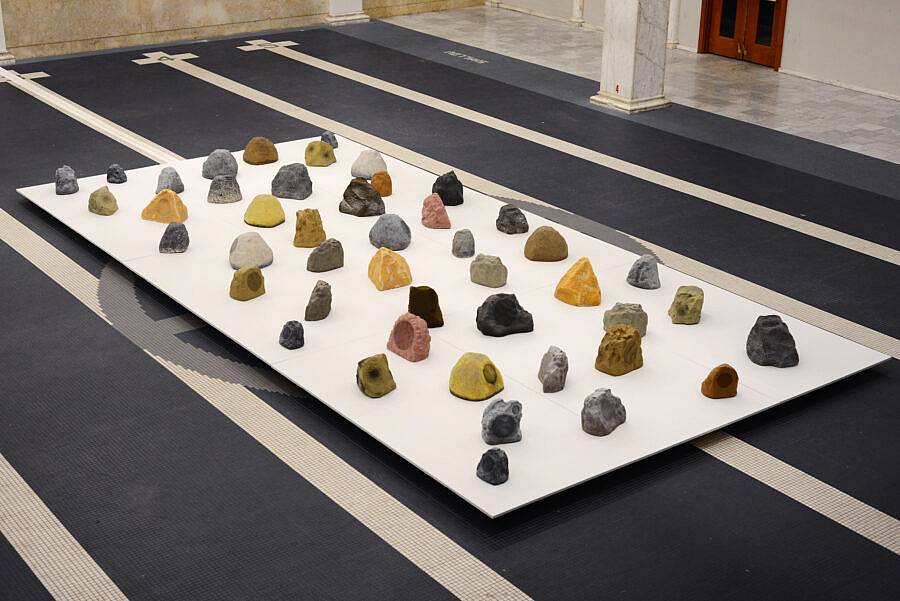
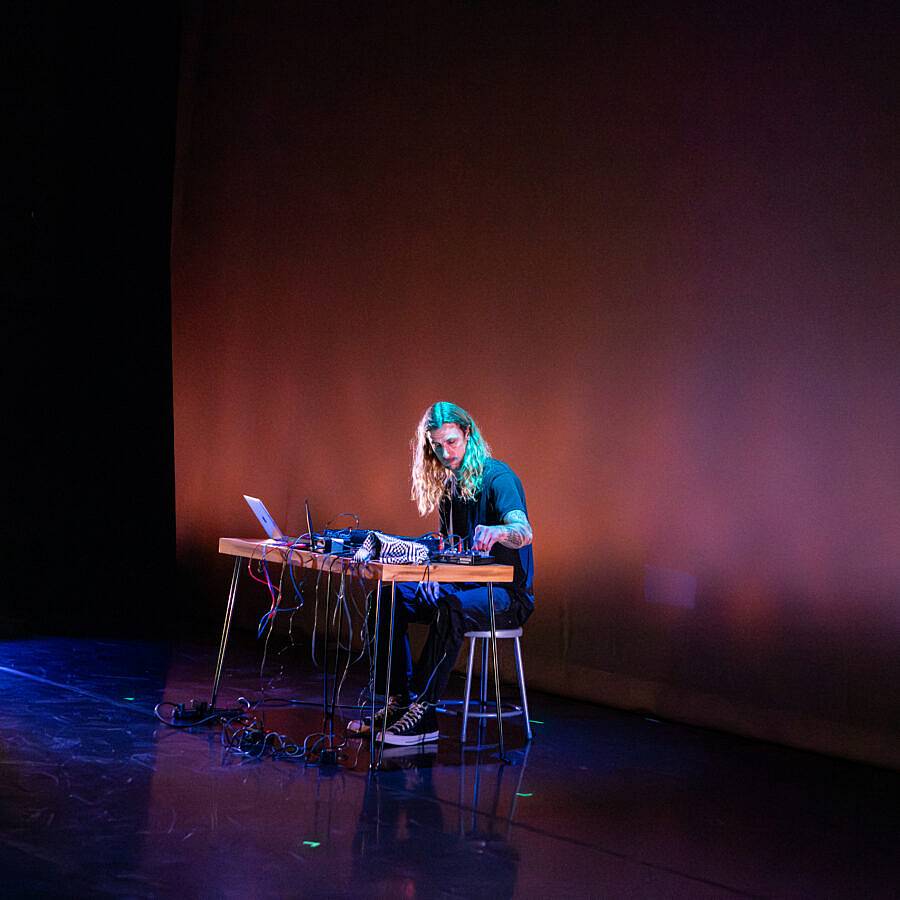
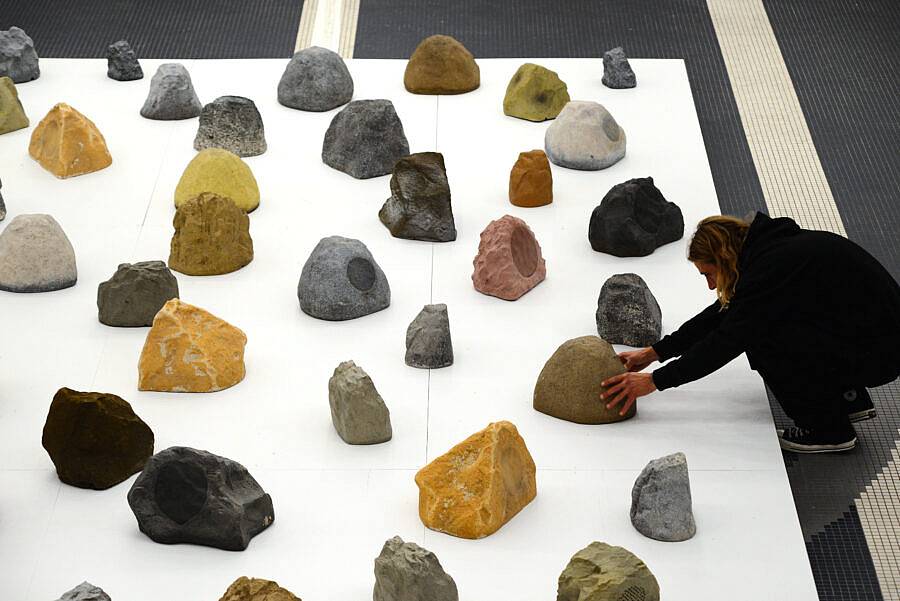
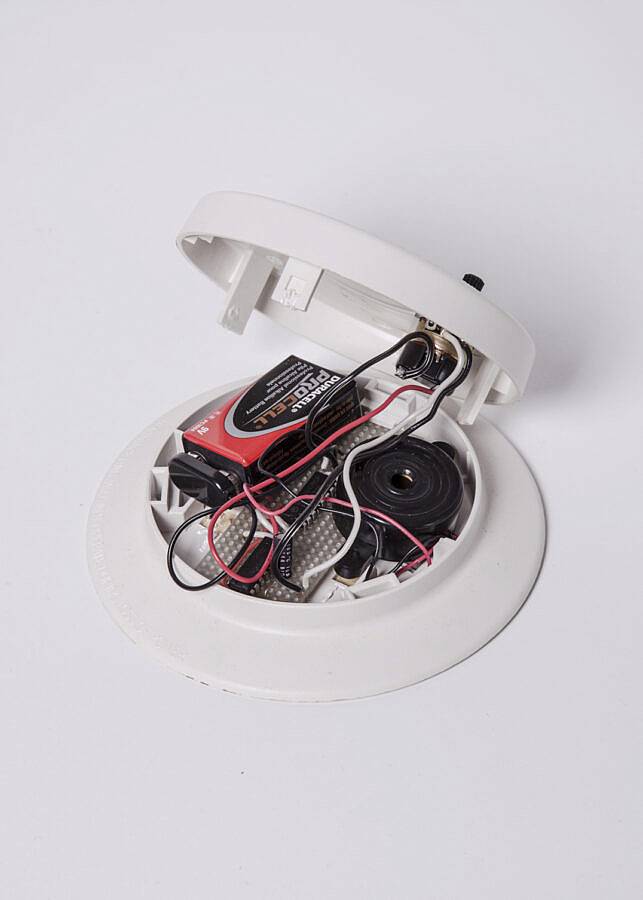
I’m Jeff Kolar, an artist, composer, and curator based in Chicago, Illinois. My work often activates sound in unconventional, temporary, and ephemeral ways using appropriation and remix as a critical practice. My solo and collaborative projects, installations, and public performances often investigate the mundane sonic nuances of everyday electronic devices. I mostly present my work somewhere between the art world, music world, and the performing arts world.
What is one of the bigger challenges you and/or other composers and musicians are struggling with these days and how do you see it developing?
I think making work as an artist right now is very difficult. Being an artist is even more difficult. I think it’s important to remember that being an artist is a lifestyle. It’s a way to look and listen to the world. It’s about sensibility and awareness. It’s about being open and vulnerable. All of these values seem hard to focus on right now. I think one thing artists face is the idea that their work must create some kind of social change, which I don’t agree with. I take being an artist very seriously, and try on a daily basis to advocate for our place in society, especially in America where art has been crushed. I think part of the struggle is understanding your value as an artist and not taking no for an answer. Stand up for yourself and believe in what you do.
Who do you think is making important work right now?
In music, I’ve been listening to a lot of Voice Actor, james K, 2 8 1 4, Autechre, Actress, Dean Blunt, Eartheater, Pole, and Tirzah. I’ve also recently gotten back into Daniel Lopatin’s (Oneohtrix Point Never) album “Check Person’s Eccojam’s Vol. 1” which helped create the genre of vaporwave.
What kinds of things are influencing your work right now?
I think that I operate less from a space of influence and more from a space of discipline. I do love to see other work and get excited by the amount of time and effort that went into something. I think I thrive most by being consistent with my practice, which remains for me the most important part of being an artist: showing up. My good friend, harpist, and artistic collaborator Zeena Parkins once told me she improvises for an hour every single day. I think by creating these sorts of habits that push you both into excitement and also boredom is where the real work and inspiration can happen. Inspiration comes mostly from within for me.
What are some recent, upcoming or current projects you are working on?
I recently composed music for choreographer Noelle Kayser on a new piece for the ballet called “Scales on the Wings of a Butterfly”. The work premiered in late summer of last year in Philadelphia with the ballet company BalletX. This was the first time I have worked with the ballet and dancers who use point shoes, which was such a fantastic experience. Working with Noelle was an enriching experience, and it’s the first time I’ve made a work that can tour without me being on stage. To see elite ballerinas dancing and moving to my music was very exciting and I hope to get the opportunity to work in that space more often.
What was the last show you saw that stuck out to you?
Lia Kohl’s “Music for Union Station”. There was something so special about the site specificity of this work combined with acoustic architecture that felt so special to experience in person. The piece was performed live in the Great Hall of Union Station Chicago at rush hour accompanied by musicians Dorothy Carlos, Zachary Good, Gerrit Hatcher, Riley Leitch, Nick Meryhew, Beth McDonald, Zach Moore, Jason Stein, and Macie Stewart. Also finally getting to see Autechre live in person last year was a highlight.
How did your interest in your work begin?
I didn’t take my first art class until I was nearly 20 years old. My interest in art at an earlier age came from my participation in alternative sports and culture like BMX and skateboarding. Being part of that culture growing up had a huge impact on my interest in design, creativity, and realizing there was more to life than just working a job. I was completely obsessed with graphic design back then in particular, and was making a lot of digital art using pirated software at home. This led me to be interested in the intersection of art and tech, which later blossomed into sound more specifically. My first introduction to sound art was from an experimental and avant-garde theremin named Anthony Ptak from New York City. He opened my practice up a lot, allowing me to explore sound as an artistic medium.
How does your environment influence your music?
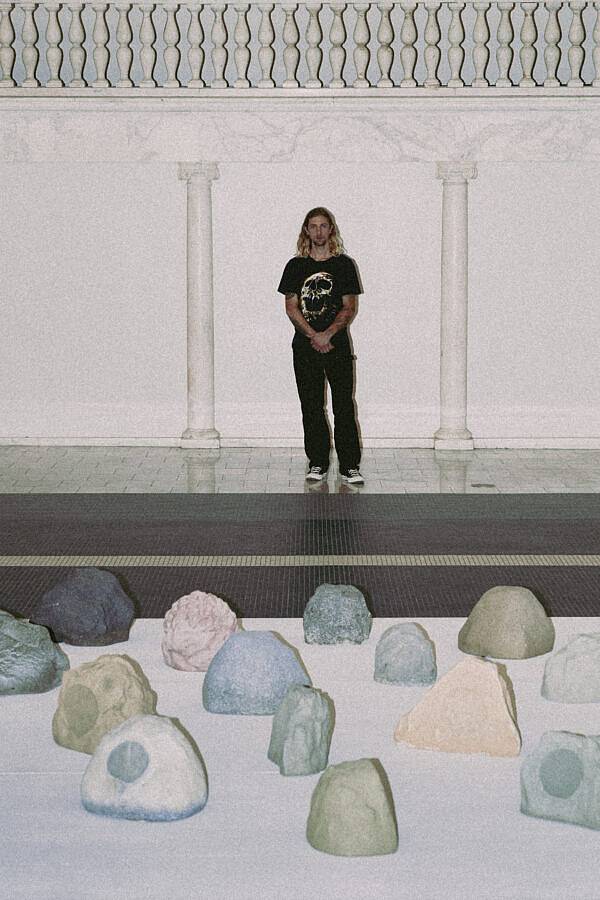
A lot of my early work was situated and exhibited in unusual locations. I was often trying to expand art outside of the gallery context and instead to develop a direct relationship to where I most like to experience art: in daily life. I think there is something inherent in sound that is extremely site specific. Sound is a medium that can shape space, and inversely space can shape sound. I love to experience art in places that don’t feel like a place to experience art.
There is something special that can happen when an artist is intentional about both the art work and how/where we hear it.
How does your work sometimes work in tandem with others? Is collaboration important?
Collaboration has been the most core and important part throughout my career as an artist. Very early on in my career, I started working with a choreographer named Jennifer Monson, who is a master improviser that started her career in the 90’s in New York City’s downtown dance scene.
This experience of making something in tandem with artists of different mediums (ie. movement, light, costumes) opened up my art practice a lot. One of the beautiful things about working in sound is that you can present your work in so many different contexts, all with a different audience. This type of exposure helps push and strengthen your work. And also allows for a type of feedback that is entirely separate from the usual artist-audience relationship.
What do you want someone to walk away with after experiencing your work?
I think most art, well good art, is hard to talk about. It takes a lot of practice, sensibility, and experience. I also think depending on the context your work is shown, the experience is different. In the art world, you have to really protect and defend your work from all of the angles: it has to sound good, look good, and be conceptually tight. In the music world, you don’t have to answer those types of questions of making and meaning. Instead it’s more about experience. I think performance and art that is happening live, opens up a lot more internal conversation. I am not so interested in directing people to feel or think a certain way. However, I put a lot of care and attention into how I think my work will be perceived. I think being aware of your audience is a strength as an artist. I don’t prescribe to the idea that the art just happens in the studio and then people experience its after effect. Art is alive.
Do you have a typical process for conceptualizing?
A lot of my early work was very conceptually forward. I think that has to do with my training and background in the fine art world. I present my work in both the art and music world, both of which demand different things from work. My process is constantly changing, as is my work, and I view that as a good strategy for artists to continue to grow and improve at what they do. My more recent work has a lot more to do with feeling, and trying to let go of constraints. I think my process is often more tied to design actually, with an emphasis on execution and order.
What are you really excited about right now?
Recently I was gifted a deadstock Library of Congress C-1 Cassette Player, which was a government-designed music device by The Library of Congress. They started building their own cassette players for the “blind and physically handicapped” from the 1960’s until the late 2000’s.
The device is legendary amongst many ambient musicians for the ability to play cassettes backwards, and play at two different base speeds (15/16 or 1 7/8). The design is incredibly utilitarian, beautiful, and simple to use. I’ve been obsessed with it.
Are there any areas that you’re interested in exploring further in your work?
I would like the opportunity to show a few new large scale installation works in the future. Much of my early work involved making projects that could be part installation, part performance, part music release. In the past few years I’ve been much more focused on creating music, and really honing in on what things sound like. But I do have a few new large scale installation ideas on the backburner that would involve a lot of local city government approval to pull off. If anyone reading this knows anyone in your local department of transportation that would help push along a sound art project, please get in touch!
Are there any influences that are core to your work?
Radio. I have a deep history with radio art. As both a practitioner and curator, much of my career has focused on exploring radio as an artistic medium. In 2010, I started a radio based platform called Radius that produces, exhibits, and distributes work by radio and transmission artists from around the world who use radio as a primary element in their work. Radius provides artists with live and experimental formats in radio programming. The goal is to support work that engages the tonal and public spaces of the electromagnetic spectrum. Radius has curated and produced nearly one hundred episodes featuring over 200 artists to create installations and performative works utilizing radio as a live multi-channel tool.
Can you share one of the best or worst reactions you have gotten as a result of your work?
Much of my career has involved unlicensed radio broadcasts. Last October I was a participating artist in an exhibition at a museum in Luxemburg. For the project, I had installed a high power radio transmitter in the gallery space that played work by sound artists. In the last few days of the exhibition, the museum was contacted by the Luxemburgish Institute for Regulation with a complaint that there was a high power frequency emitting and interfering with a nearby French radio station. Employees of the agency drove around in a van full of radio frequency emission equipment taking measurements around the city to try and find the location of my transmitter.
After several days, they were successful and came in person to the exhibition. It’s the first time my work has been hunted down by a government agency.
Interview conducted and edited by Liam Owings.