Tell us a little bit about yourself and what you do.
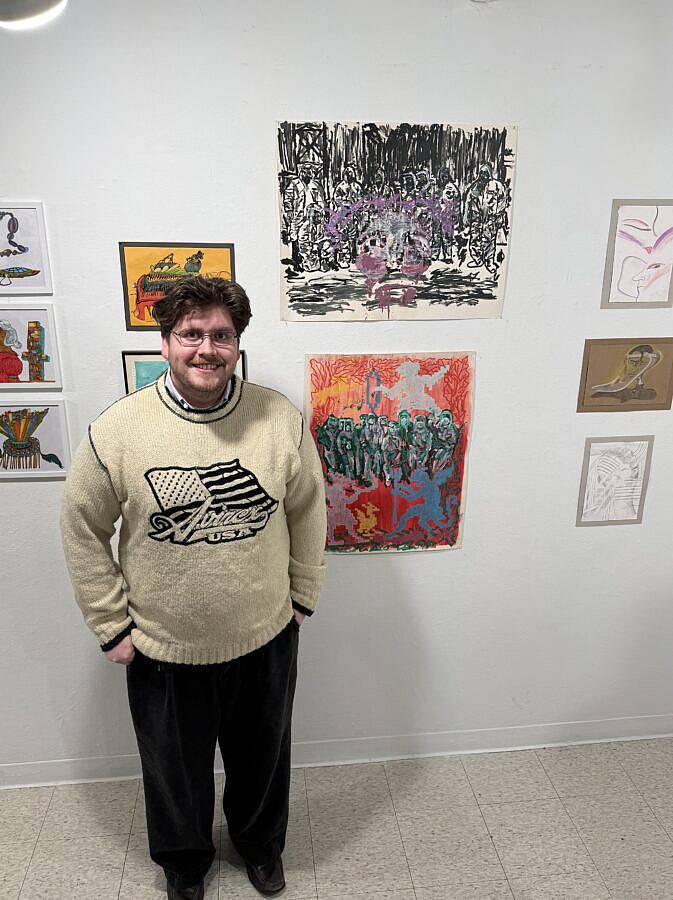
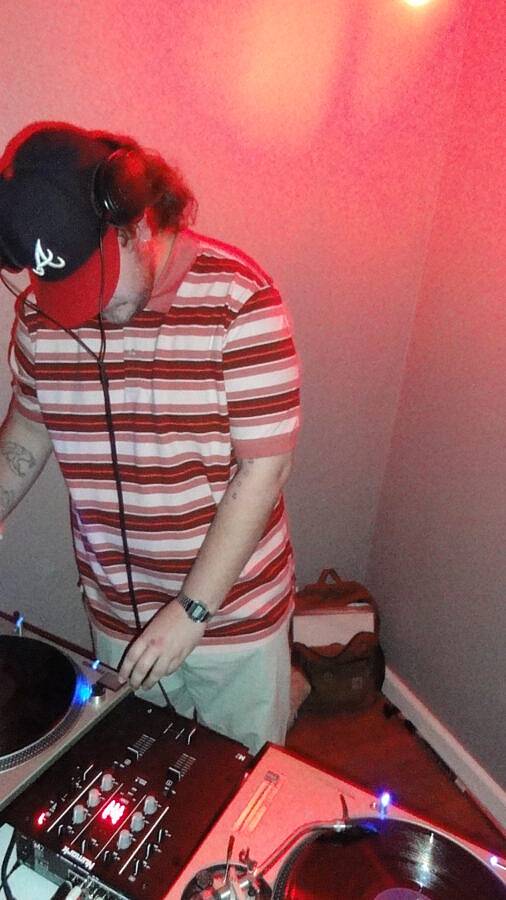
My name is Henry Tegethoff, and I’m an art historian as well as a practicing artist, DJ, and musician based in Chicago. I study art and visual culture of the ancient Americas primarily, as well as making and exhibiting paintings from time to time, playing records at various clubs and parties, and producing my own music, usually sampling disco.
Is there a phrase, an idea, or a notion that feels central to your practice, or that resonates?
I’d say the majority of the work I do, across various media, is geared towards reminding viewers, readers, or listeners of their humanity, or their species being, to borrow a Marxian concept. In referencing and remixing history, I hope to illuminate continuities of human nature, intelligence, ingenuity, and creativity across generations, rendering our world as always having been constructed and malleable, with different possibilities appearing more tangible at different times. I want to repurpose the referential postmodern paradigm to promote sameness rather than endless difference. I think of the quote from David Graeber: “The ultimate, hidden truth of the world is that it is something that we make, and could just as easily make differently.”
As someone who makes music and art regularly, do your practices inform each other, and if so, how?
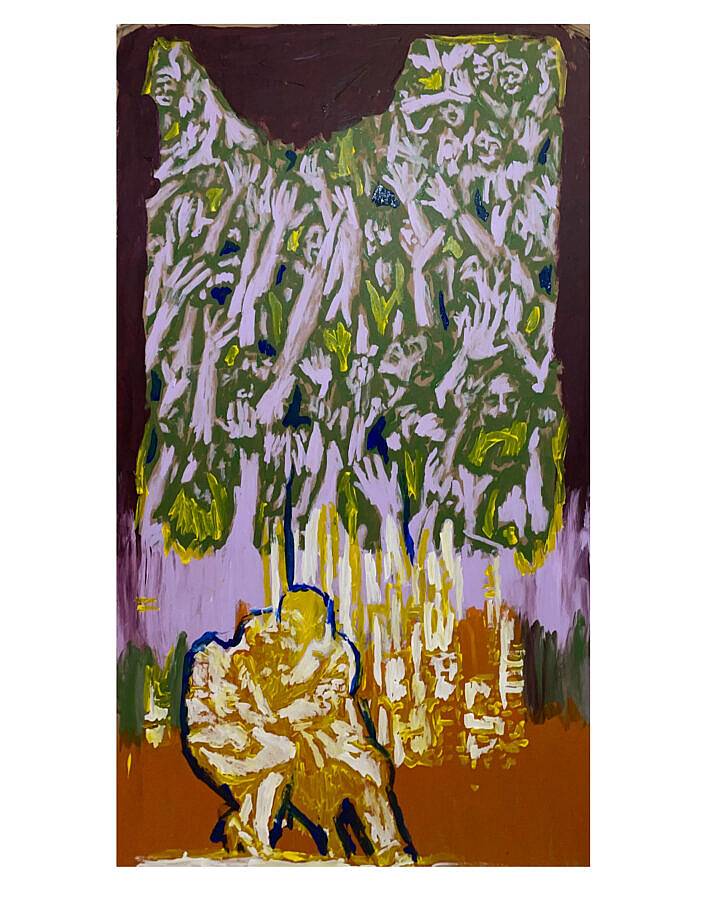
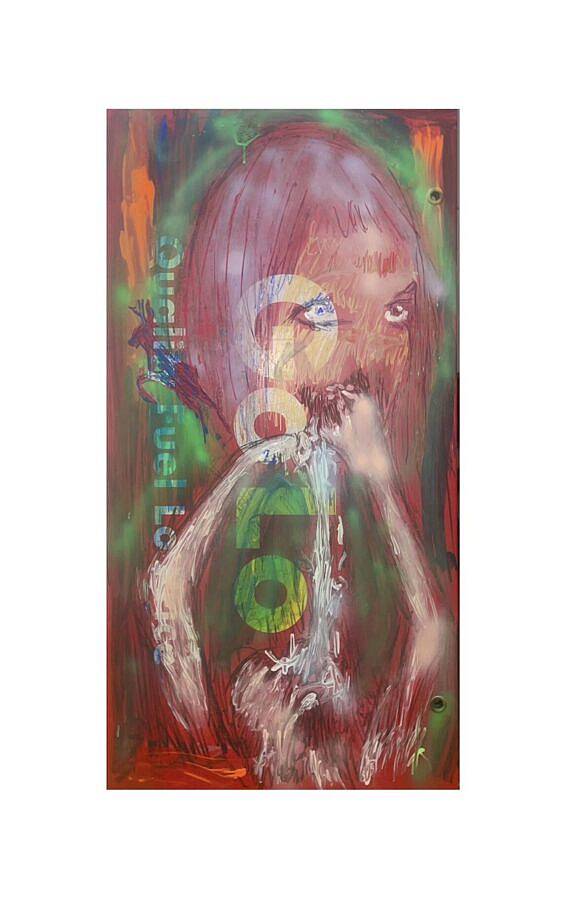
My music and art practices overlap quite a bit, whether that be in the way both are displayed (with my paintings often being shown in nontraditional gallery spaces, like DIY music venues) or in their formal content. For instance, I often ‘sample’ photographic references when painting in the same way I do musical ones when making tracks, splicing and manipulating them in service of a cohesive narrative. I believe this practice in both music and visual art hints at the possibilities of history as a font of knowledge without defaulting to cycles of nostalgia, instead imbuing historical references with forward inertia.
What inspires you lately?
I’ve been incredibly inspired by the work I am doing for my master’s thesis on the mural art of Teotihuacan, particularly its stylistic tendency towards anonymity and group portraiture rather than the rendering of particular, historical individuals. The formal techniques used in Teotihuacan’s art to accomplish this anonymity along with a humanistic collective subjectivity have been consistently motivating and challenging in my own practice.
What is it like living and working in Chicago?
I feel incredibly fortunate to live and work in a city as active and as historically conscious as Chicago. In going out to music events, especially parties in the underground disco scene, I am constantly reminded of the development of the canon of what came to be known as house music, and the way it is carried forward and transformed to speak across generational lines and envision collective futures. A stake in the musical continuum of the city is constantly an inspiration to me, and interacting with forebearers of Chicago’s distinct musical identity is not a privilege I take lightly. I am especially invested in the lineage of the local invention of disco edits, pioneered by Ron Hardy, and their significance as an art form rooted in history but propelled by imagination.
What was the last show you saw that stuck out to you?
The last show that had a major impact on me was curated by a friend of mine, Mary Amelia, at my school, UIC, and was called Cataclysmic ecstasy and Apocalypse. I was lucky enough to exhibit two works in the show, but the body of work it exhibited as a whole was incredibly refreshing and invigorating to me. It reminded me of the possibilities of drawing as a medium and the significance of invention in modes of representation. Paralleling the work I’ve been doing in my thesis, I was reminded of the ways in which novel visual languages or representational strategies can shine light on new possibilities in the subjects the work creates. It felt freeing to see works which played with this idea in such a joyous and fruitful manner, and reminded me of my own ambitions as an artist who often succumbs to the stylistic dominance of the photograph. Seeing this photographic mode of representation disregarded with such fervor, in favor of invention and whimsy was wonderful.
Where do you find new music?
I find most of my new music in the budget bins of the various record stores I frequent, perhaps too often. There’s no greater high to me than finding a new sound to add to my repertoire, either sampling or DJing, for one or two dollars.
When you are working, do you consider where the work might end up or how it might function in someone else’s life?
The viewing experience of my finished work constantly plays in my mind during the production of a painting or song, perhaps to a paralyzing degree. As an art historian, I am constantly asking existential questions about what art can accomplish, which often plague my mind during the creative process. However, I find the best antidote to these thoughts is the pursuit of instilling pleasure in the viewer, whether it be superficial or more profound.
Does your art historical research significantly influence your art practice?
Absolutely. Oftentimes, too much. I am in near constant fear of derivation or futility when starting new works and have to remind myself that the stakes are not as high as they may seem to be after spending so much time studying art history. On the other hand, I have a near constant source of inspiration from history to deal with and do find it incredibly useful. I often see myself as continuing the missions picked up by earlier movements or works, trying to complete an unfinished thought from the annals of history, per se.
What was the last thing you changed your mind about?
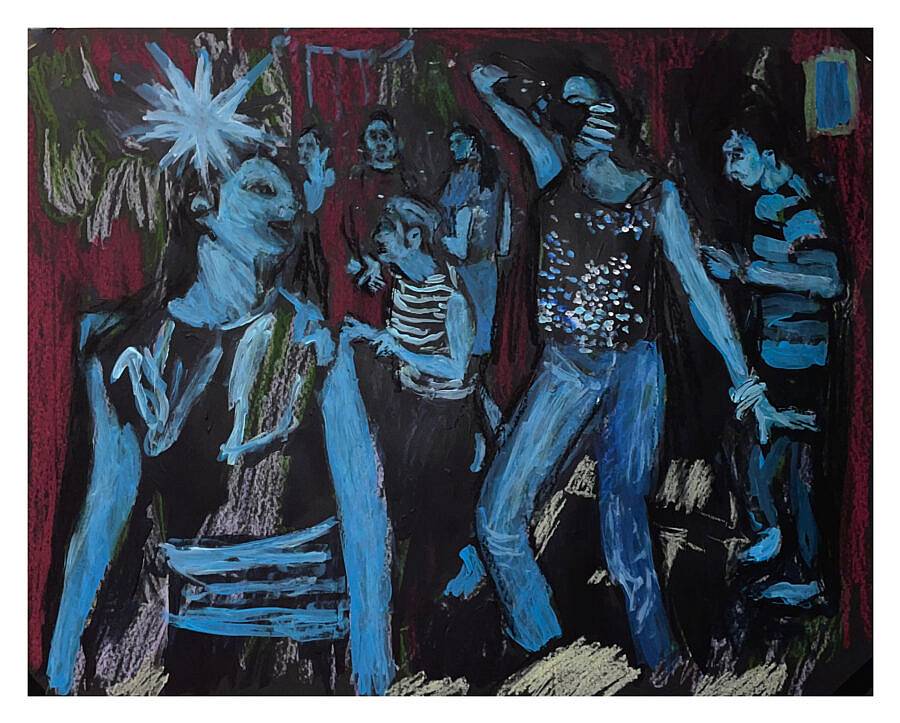
Painting nightlife. I always avoided painting scenes from clubs or parties because it felt played out or too easy, but the more I do it recently, the more I’m realizing that number one, it’s fun, number two, it speaks to all the things I had wanted to in my work anyways.
What gives you hope for the world?
My friends and artistic peers, especially in musical spaces, who foreground their collective and DIY work as a prepolitical organization, and who are profoundly aware of the work they do in shaping the culture and collective imagination.
Are there any areas you’re interested in exploring further in your work?
I am always interested in exploring the ideas I study in the Ancient Americas in my own artwork, but am overly cautious, because I want to do so in a way that is both respectful and fruitful. I am not entirely sure what this would look like, but I think my experiments with group and anonymous portraiture inspired by Teotihuacan is a decent start.
What are some recent, upcoming, or current projects you are working on?
I’ve released three albums over the past year, but most recently uploaded about 40 unreleased tracks to my bandcamp page, which deal with all kinds of musical influences in service of dancing and pleasure. I have several DJing engagements lined up over the summer which I am looking forward to, and plan to keep painting whenever I can.
Interview by Paul Fitzpatrick