Tell us a little bit about yourself and what you do.
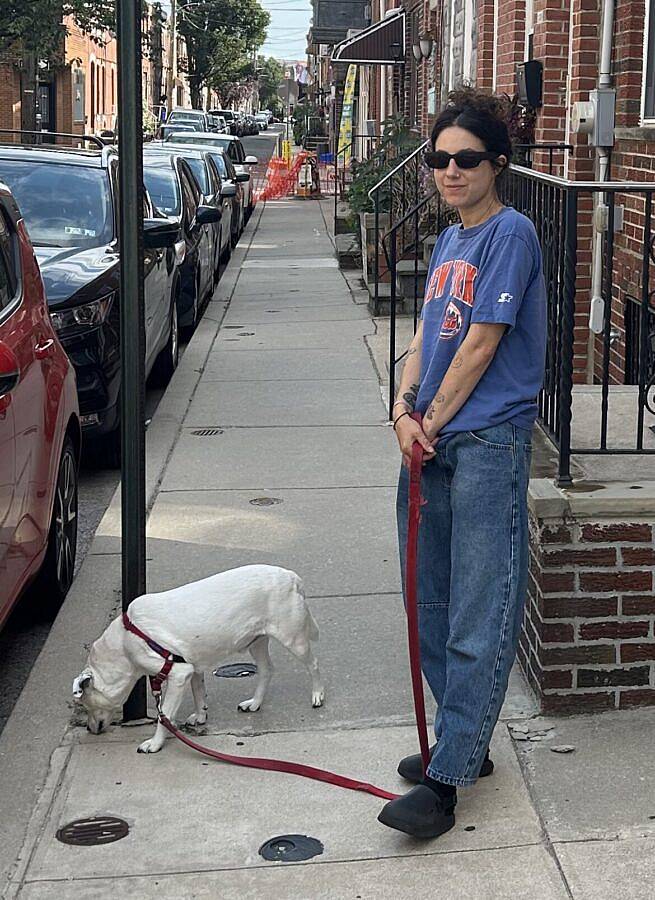
I grew up in New Jersey but have been living in Philadelphia for the past 10 years. I work full time at a literacy nonprofit where I manage what is essentially a free bookstore. I spend most of my free time quilting!
What kind of imagery are you drawn to?
I’m mostly drawn to little everyday moments in life, scenes between people that feel more magical in retrospect than in the moment and nature for sure.
Are there any influences that are core to your work?
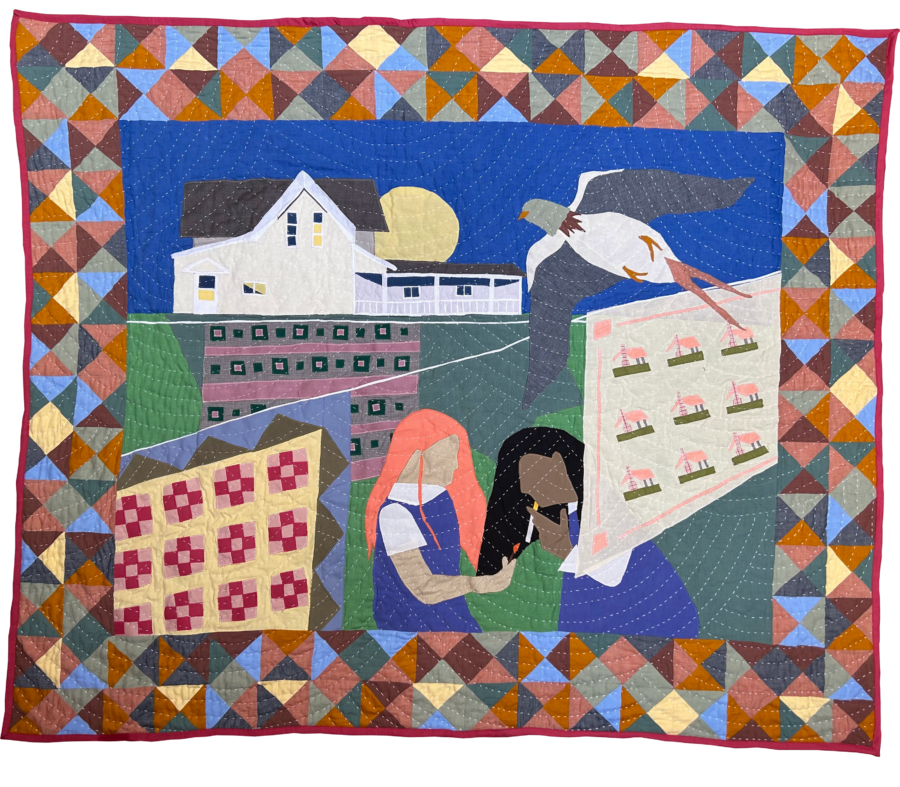
Through my job at the free bookstore I have become super inspired by children’s books illustrations. I’ve worked there for about 8 years and go through thousands of book donations a month, so I feel like I have seen basically every book at some point. I’m especially inspired by the drawing style in older picture books spanning from the 70s-90s. Faith Ringgold is a huge influence and I was actually first introduced to her at my job through her children’s book Tar Beach and it wasn’t until later that I found out she was also a quilter when I came across a book of all her quilts. I was sooo excited because her quilts are incredible and it felt very synchronistic. I also love traditional American quilts with traditional blocks and more specifically Amish quilts. Living in Philly it’s really easy to go to Amish country and get to see so many amazing quilts in person. Also just American Folk Art in general.
How were you introduced to the medium that you work with?
I don’t remember exactly why I decided to make my first quilt but I got my first sewing machine when I was 13 and then mostly used it on and off over the years for simple clothing alteration type projects. It had been at my parents’ house in New Jersey for years before I thought about it again and decided to bring it back to Philly with me. Then I guess at some point I had the thought “hmmm I should make a quilt”. I’ve always thought it was really cool to be able to make your own stuff and to be creative in a way that then led to a tangible useable item, I guess the intersection between craft and art…I really love things that look handmade… but I don’t really know how to make that many things, so then when I made my first quilt (which I learned how to do through internet tutorials) I was like whoa this is crazy, I can’t believe I made something! Then I kinda just went with it and wanted to keep doing it all the time. Especially once I started experimenting and learning about more figurative and illustrative quilts, something really clicked in me and I felt like this new world was unlocked.
Documentation of Place feels like a present dynamic in your work. Is this an active consideration or is it something that arises naturally?
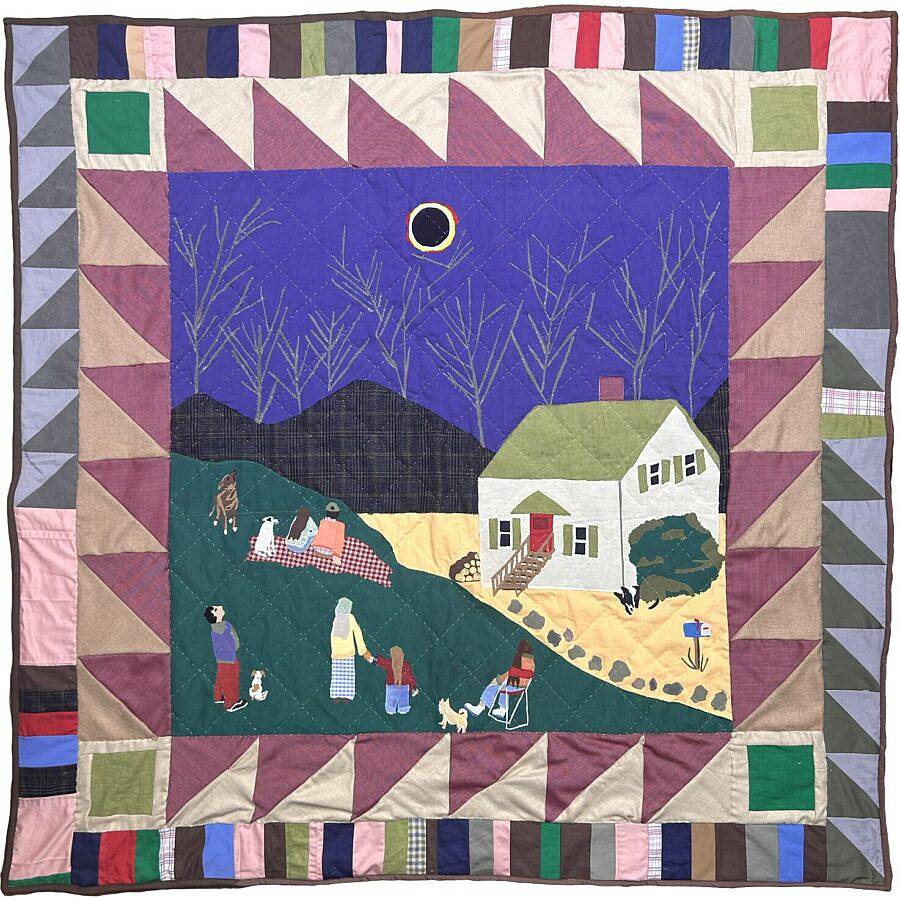
I would say it’s more something that just naturally arises. Sometimes it’s more direct like me and my friends going to Vermont to see the eclipse and I’m like ok well that was amazing and beautiful I want to document… and sometimes it’s just little moments from a place that show up later in work. For example I went on a trip to Iceland with a bunch of my friends and we rode horses in the snow and then later I had a quilt with people riding horses in the snow and all my friends were messaging me like “ooooh is that us” and I kept being like “noooo” but actually I guess it is haha.
Quilting has a rich history throughout American communities. When quilting, do you delve into its past to inform your work with this medium? How does it feel to add your voice to the stories that exist in this medium?
Yes, definitely. Something that I think is really cool about quilting is that quilts continuously build off of each other. You can use the same block or pattern a million different ways, or deconstruct it and make a variation but it’s all still inherently paying homage to or referencing a different quilt or quilting period. Something that I also love about quilting’s history is how quilts have become valuable heirloom pieces passed down through generations. Sometimes I like to think about my grandkids one day having a huge pile of my quilts and being like “Look at these weird quilts my grandma made!”
When needed, where do you look for inspiration? Have/how have these sources changed over time?
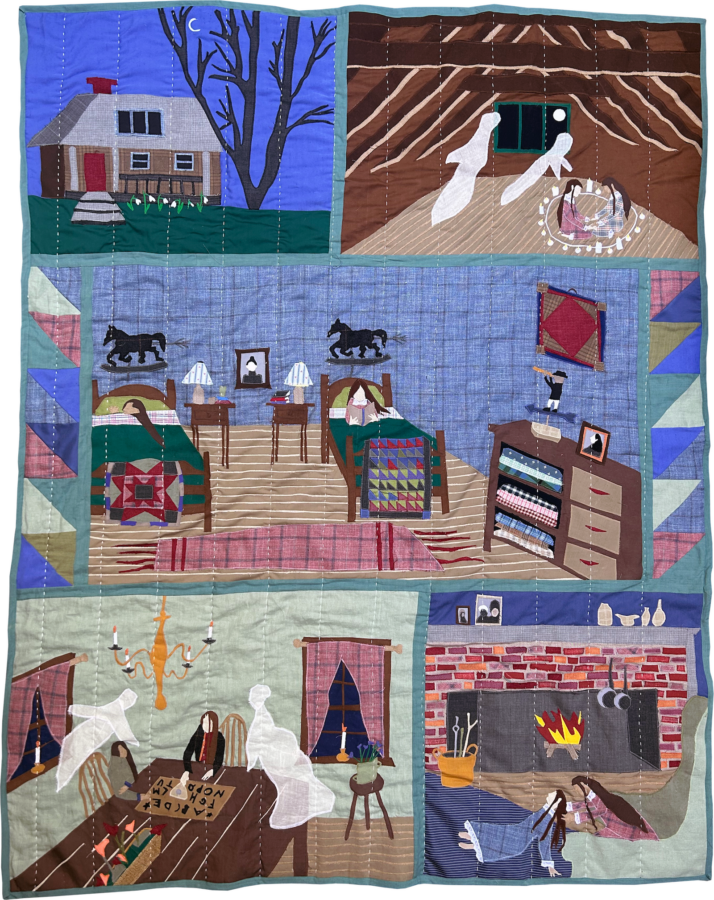
I keep a little list of imagery or moments that I feel inspired by that I always look through …some have been there for years and haven’t developed into anything further, some become something right away. Some of it comes from movies or looking out the window of a car, honestly it mostly comes when I’m lying in bed with my eyes closed and I’m just thinking about things and start seeing little moments that I want to recreate. I also get really inspired by looking through quilt books. That’s often how I come up with quilt blocks or color combinations I want to try. Sometimes I start there and then spend time thinking about what imagery would fit best and sometimes it’s reversed.
Is there a moment you look back on as being formative to your identity as an artist?
Honestly I think I’m only just becoming comfortable calling myself an artist. I’ve always felt drawn to creative outlets and to engage with works of art and as a kid I definitely would have said I was an artist or would have said I wanted to be an artist when I grew up.. but I think it’s a pretty common experience for the creative light to dim a bit as you get older, and to have to spend time doing other things, and to experience self-doubt. I guess I’d say when I made my first quilt, which was relatively recently, in 2019, a shift in my thinking began and I started learning about quilting’s history and folk art and self-taught artists and I was just really inspired and maybe opened up more to the idea that you don’t have to be formally taught about art or know every technique or know how to draw things perfectly you can just kind of make the things you want to make and it feels really good to do and also sometimes really frustrating which also feels good to me in a sense because it means I’m engaging with my own work in a critical way.
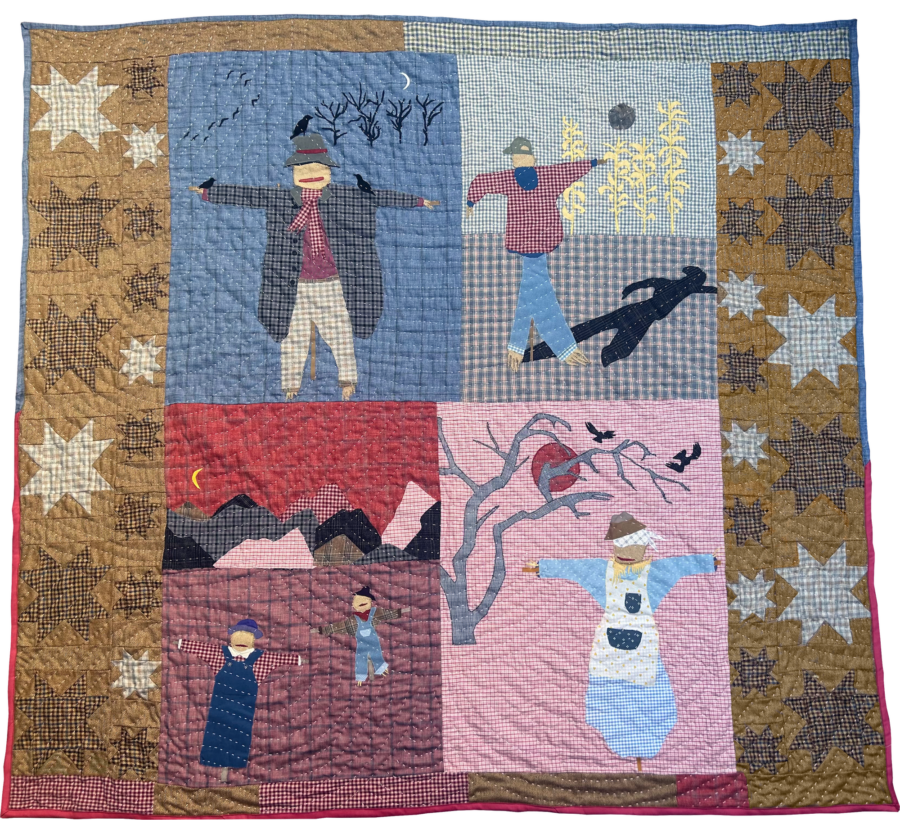
Do you have a typical process for designing the compositions you create?
Usually I start with some image, or a quilt block, or a border idea I’ve been wanting to try and then start playing around with it on procreate. Procreate is really helpful because you can use a grid which is necessary for all of the math parts of piecing a quilt together. Even though I typically design first, I try not to get too married to the design or make it too rigid because I want to leave myself room to make changes as I go and feel what’s working and what’s not. Especially when it comes to color. Colors look so different in fabric and often the mood I’m trying to create changes throughout.
What’s your studio or workspace like? Do you have any rituals when you settle in there?
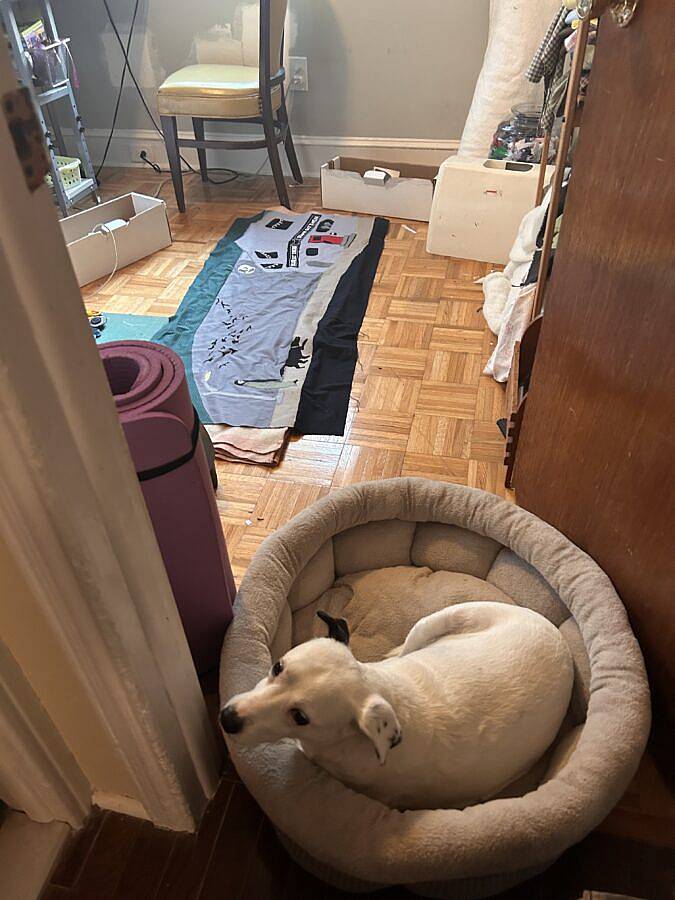
My studio is a small room in my house where I sometimes don’t have enough space to spread out as fully as I’d like but it still feels luxurious to me because up until last year I was working on the floor of my one-bedroom apartment. I like to put my dog’s bed right in the doorway so he can hang out with me while I work because otherwise he’ll come in and sit right on top of whatever I’m working on.
How do you manage tending to the variety of responsibilities in the work you do? How do you mitigate burnout or exhaustion?
I think because I have a full time job, being able to spend any time quilting still feels like a huge privilege to me and I constantly want more time for it, so I don’t often feel burnt out. One thing I have done to help that though, is to really make sure I’m working on the quilts and ideas that I want to work on. I used to be much more open to commissions and custom pieces, which I appreciated for a while because it forced me to think through ideas in a more full way upfront, or just to make quilts I wouldn’t have made otherwise, but now I have started to move more away from that, especially as my work becomes more intricate and takes longer. I don’t want to fully stop because I love that historically quilts have been special gifts for new babies, or marriages, but I’m just trying to be more intentional about what I take on.
Are there any areas that you’re interested in exploring further in your work?
I always kind of want to be the type of person who’s experimenting all the time or branching out into new things and just going for it, but in reality I’m a very focused, one track mind person. Once I find something I like I stick with it and like to hone in. Over time my methods and processes have definitely changed and I’m sure they will continue to but it usually happens in more of an incremental slow way, then a jumping head first into trying something new type of a way, which is just what I’m like in general. I don’t foresee it moving out of the traditional quilt form anytime soon at least, because I just really love quilts more and more all the time.
Interviewed by Luca Lotruglio.