Tell us a little bit about yourself and what you do.
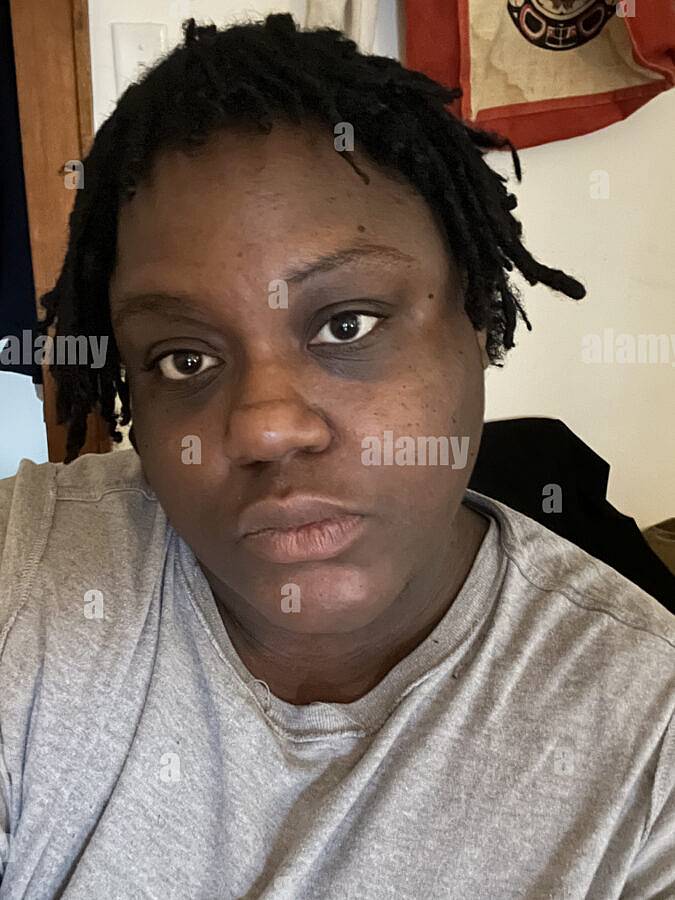
I am an artist working across painting, fashion, video, and confessional writing and criticism, occasionally lapsing into sculpture. During graduate school I felt compelled to identify as a painter-poet but that designation feels limiting recently. Hyphens are a big help and suture the differing vocations of artist and writer. Recently, I’ve concentrated on limited editions of clothing, paintings with collaged elements, provisional iPhone videos, and writing that tries to collapse the distinction between formalism and an identity politic. I’ve written and designed a book The Precieuse, a collection of confessional writing and criticism. I am (basically) a third generation Chicagoan with significant time spent in the surrounding suburbs. My family migrated from Mississippi to Chicago in the first half of the 20th century. I’ve lived in Virginia and Western Illinois. I have never traveled internationally.
Are there any influences that are core to your work?
I love Godard, psychoanalytic theory, bleached out blue skies, the Southern Black quilt tradition, girlbloggers, Manet, Adrian Piper, condensed milk, Chris Kraus, Susan Cianciolo, Bernadette Corporation, Guy Debord and his films, Michèle Bernstein and her novels, overalls, Miu Miu.
How were you introduced to the mediums that you work with?
My friend did watercolors in high school and I loved that Free People hippie vibe it imparted. I went on to explore acrylic and more recently, oils and hand-painting dyes. My undergrad art school education has a tremendous influence on my development. I first attended VCU in Richmond, Virginia, where the art program has a foundation year called ‘AFO’. AFO had a time-based art class including creating moving-image and performance art. My first video had a computer voice speaking some imagined letters of Simone Weil to her brother that I wrote, documenting her relationship with food and God. I love video, and film, I’ve watched a lot of movies ever since my brother showed me Annie Hall. Fashion feels more reflexive. I have altered clothing since Kindergarten. The first tshirt I designed was a furry version of Yugioh drawn in sharpie. I am a self-taught patternmaker. I watch fashion runways frequently. My great grandmother was a seamstress and my great aunt would always repair my comforters and clothes and she also taught me to sew. In a way, stitch is like my first hand. Drawing and painting are maybe second. Writing is the medium I feel the least skill in, because I lack craft. I have never really taken a writing class and have no training as far as form. I just read a lot. Reading impresses upon the brain. Robert Walser said that the reader is the writer’s chaperone. He also, like me, didn’t edit. My writing is ‘received’ in the sense that I get flashes of inspiration that I note and later expand
upon.
Is there a moment you look back on as being formative to the work you do
The artwork I first felt perfect self-expression from was a video I made in 2017 called Towards a Caress. At the time, I was studying Sculpture and Extended Media at VCU. With Towards a Caress, I started to realize I had simple problems as an artist. I think before I conceptualized my work as having ‘bigger’ more macro problems of race, class, and gender expression. The video taught me, and continues to teach me, that I am most interested in formal problems. I think politically inflected art is also a problem of form: are institutions and collectives not the formalism of the avant-garde? Anyways, Towards a Caress started with a simple problem: I wanted to depict myself dancing with an orange on a checkerboard floor. I didn’t dance but instead documented something more somatic yet mannered, moving my body and on top of a stage I built from wood.
What’s your studio or workspace like? (Please include a photo if you are open to sharing.) Do you have any rituals when you settle in there?
I currently work out of my bedroom. I’ve only had a a dedicated studio space in grad school, where I was enfant-terrible due to my messy space. Um I have storage under my bed with totes storing fabric and supplies and a shelf compartmentalized to dyes and paints and related supplies. I have a desk where I do sewing and detail work, then I have a medium-sized cutting mat I’ll take out and work on the floor. I carry the studio with me, not in a hackneyed sense. The Studio’s, like, in my head and body and psyche. But also Kill the Studio In Your Head. That works for me because for a while I had the illusion that the studio was fulfilled by a more research-based and writerly practice. And I had to realize that I’m not really imaginative. Some people pull things out of their head, but I work with what’s there. In some sense I am an appropriator lost until I find what I want to recontextualize and reuse. An artist without her medium. I feel like people can get a lil woo woo about the studio and I like that sentiment. I don’t believe in telling or showing work I’m making in a public sense or even in conversation haha. I guess I’m superstitious. I can be very guarded with my artmaking that contrasts with my openness in writing and text-based work.
What kind of imagery are you drawn to?
I like how-to imagery, stock imagery, low-res blogger pictures, and barely indexed search engine imagery. The more fringe the image is the better. There is a digital aspect to most of the images I encounter, as I find them on the Internet, but I also favor printed matter. Early concrete poetry is nice. I like the imagery of classical Chinese poetry as well, so simple and spare.
When needed, where do you look for inspiration? Have/how have these sources changed
over time?
More woo and a bit of interiority. I look inside and wait. I’m very passive about creating things. This is kinda contradictory to the deadlines of exhibitions and biennales, but a lot of the artwork I made was because I waited to receive an idea. I am often looking around my immediate environment for inspiration, compositions assembled by chance have been the starting point for several works I’ve made. Before I looked at my contemporaries. When I was 12 that was DeviantArt and my art class peers; now that I’m in my late twenties I guess it would be Instagram and Contemporary Art Library. I try to look less at contemporary artwork now because I figure I am already embedded in the present moment. Being contemporary comes naturally, but looking at little known and less-represented artists and artworks from the past is a bit more difficult in our image-inundated world. I like leafing through exhibition catalogues and really getting into the citations. Everything is networked. I also somewhat moodboard the artists I look at or get turned onto on my Tumblr.
What are some common motifs in your work, and what do they speak to?
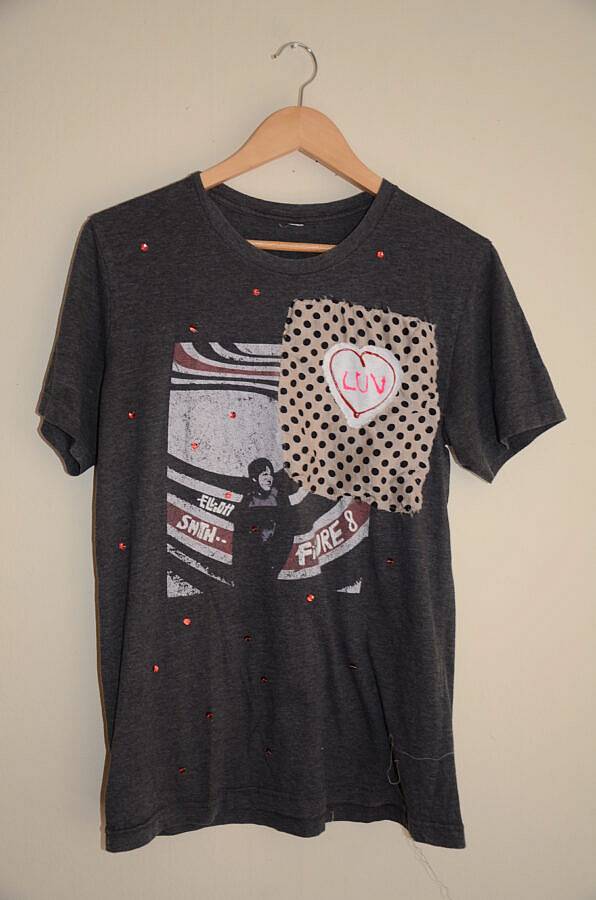
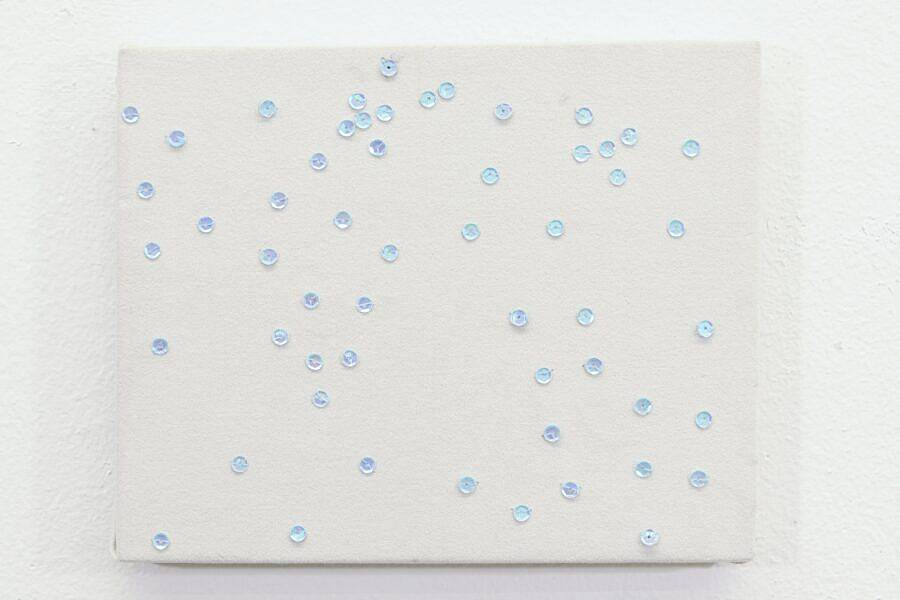
Decoration and embellishment as markmaking devices and as a testament to painterly indulgence. A simultaneous irreverence and devotion to the pictorial tradition. A proffering ofendurance in time-based works. The artist as her own theorist, no need for catalogue essays from curators. Everything has a found quality to it, from video to writing. I work with what is in front of me and what I find. I’ve found things on the ground and on little visited 2010s blogspots. Functionally I’m a hoarder but personally I view myself as a dandy. A dandy is in love with the things you buy that you can’t bring to heaven anyway.
What draws you to the found objects that some of your wall-based works incorporate?
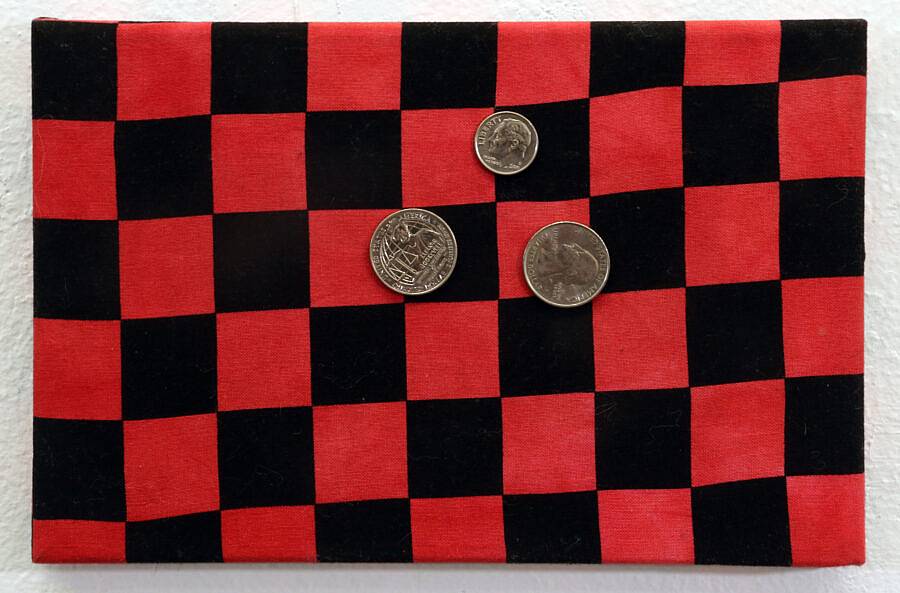
I like common things repurposed for subversive means. A lot of the mystery of fabrication behind sculpture and installation works is unappealing and illusionistic to me. I am most attracted to artworks where there is no mystery to how they were assembled. I like plainness in design and construction. This is partly defensive, as I am a failed craftsperson that resents craftsmanship because I have no aptitude for it. But also I dig the repetition compulsion of crafts and fibers, a stitch made over and over again or yarn woven time and time again, a kind of OCD. So I meet that fetishistic attitude towards one’s time in the middle by making kinda runty objects. I like it.
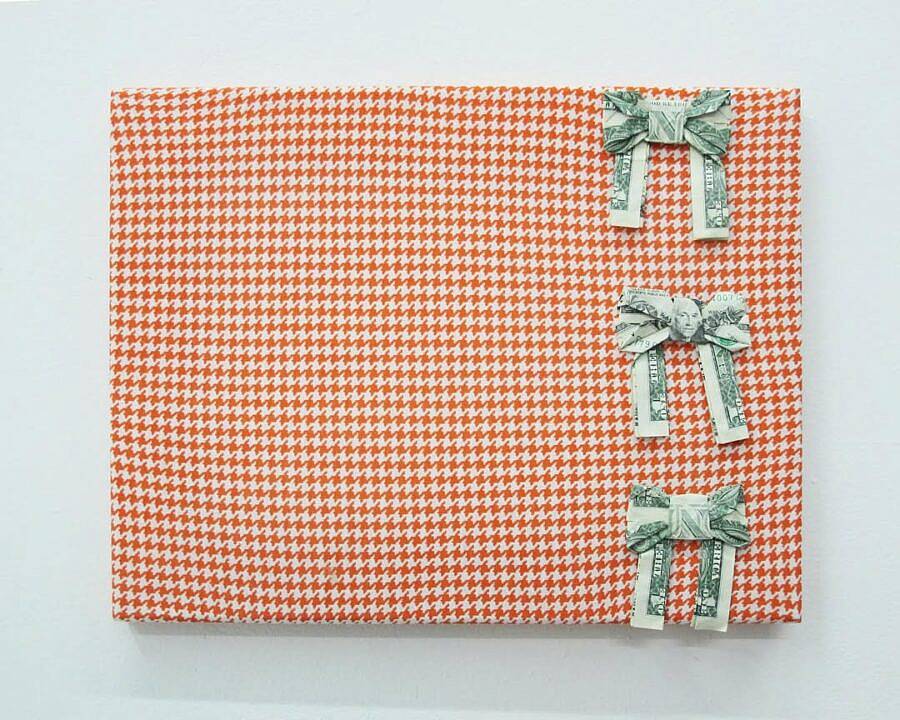
Like your wall-based works, there are sometimes found objects incorporated into the garments that you work with. Does this incorporation follow a similar philosophy, or does it speak to something different depending on the medium it is affixed to? When working with garments, do the objects incorporated respond first to the garment itself?
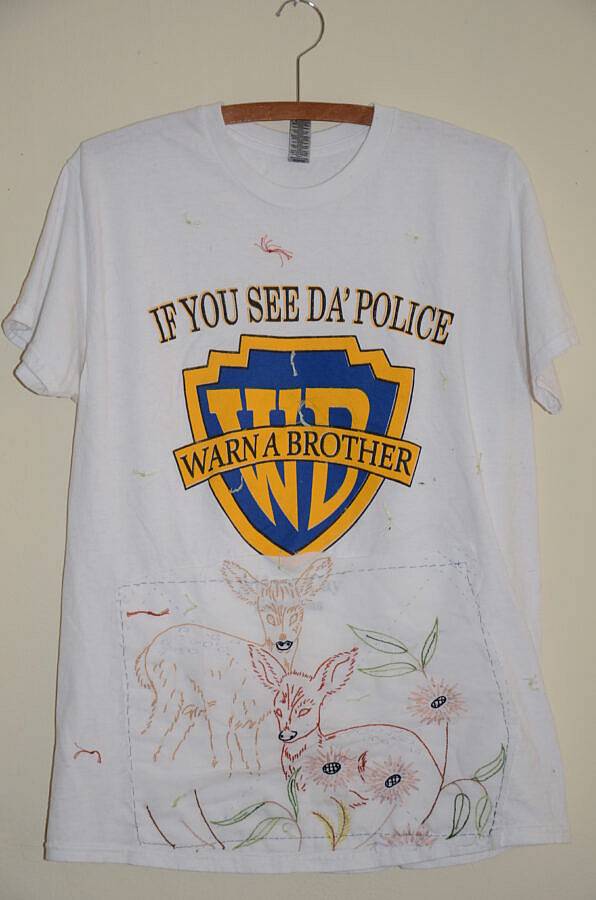
There are some lost garments in my history of making clothes, but I always approach fashion and personal style as an extension of pictorial space. They are similar to the extent that I approach the three-dimensional space of clothing with a two-dimensional approach of the painterly. With clothes there is a certain functionality that has to be followed, can it be washed, is it too cumbersome to wear? The wall-based works avoid those questions and are more fantastic in their graphic qualities. The found objects sometimes affixed to the garments begin like subject matter, or focal points in a composition. I start with the objects. The garments themselves are like the ground or surrounding environment, and the found objects and embellishments are the figures. Some of the garments I also would consider found objects. The t-shirt<3 series mainly consists of thrifted shirts from local Village Discounts, or otherwise from my closet or donated by friends. So the shirts starting as ‘found’ objects is important too. I like working with pre-existing material, be it brand or team logos, and essentially effacing the original design. Like I said, I don’t imagine much. Everything is an extended fabulation.
Does what you explore through writing intersect with what you explore with your visual work, or do you view these two outlets independently of each other?
What I explore in my writing is basically parallel to my visual work. I am trying to recall geometry, because I think it would be inaccurate to refer to what is going on as art and writing intersecting. But also them being parallel lends them a relationship that doesn’t exactly signify independence. When I consider parallelism, I think of my art and writing being on different planes but running along the same axis. Often, my writing is an outlet to theorize my own work on my own terms. I am my own theorist. Mostly I put my writing in the tradition of artist’s writings and confessional writing, what I write has increasingly become adjacent to what I do in the studio. When an artist is writerly and in a critique setting, there is often this question of how to incorporate the writing into the visual art and vice versa. My answer is that while both my writing and art have the same obsessions, they have nothing to do with each other and function as independent entities. I will say that my writing and art share the nominal language: they are ‘works’ or ‘pieces.’
Can you share a memory of someone interacting with your work that lingers with you?
There is an accepted hostility one’s audience has towards one’s work. And I am hostile in turn. In a sense, criticism is this parasocial activity related to fandom. All this is to say is that I typically don’t retain interactions with my work, perhaps a holdover from my defensive disposition in undergrad. But I will say that Sam of Dracula’s Revenge identified a characteristic of my work that has stuck with me since. He called my wall-based works an exercise in ‘painterly indulgence.’ I think that’s perfect. Responding to a work vacillates along the pole of passive reflection and active reception. Most of the time people reflect, but reception is an act of seeing the work for what it is. I think of the psychoanalytic concept of transference. I think there is a lot of transference happening when peers, curators, or gallerists critique or respond to work!
How does your creative community now compare to your creative community when you were younger?
I spent significant time in suburban Chicagoland where there is a decisive dearth of the arts. Growing up I felt like a freak. I had a few friends who did art as a hobby, but the whole discourse and world of contemporary art was unfamiliar to me. I encountered contemporary art on Tumblr as a teen, but my first year of art school was mindblowing. I maintain community across regional, national, and international lines. The Internet is great for this. My friends are bright and talented people poking and prodding at the world. Community is its own little art school. My friends have taught me so much about the logistics and business of being a working artist. I am a Libra so monkey see monkey do, I am greatly influenced by my interpersonal relationships.
How do you manage tending to the variety of responsibilities in the work you do? How do you mitigate burnout or exhaustion?
My desire is to be militant and ascetic in my art practice. In practice however it looks like a lot of scrambling. I like the Notes app for organization. I am wary about the word intention in artmaking. I more so set formal constraints: what materially needs to be in the work? And what takes place, be it by chance or on purpose, happens within these formal constraints. So I’ll make a Notes app bullet-pointed list of what needs to be done for a given artwork. And often, either typed into a phone or computer, or mentally organized, I envision and break down a work into its main components of activity. I feel like, also, because I work in my bedroom, I work small, and there’s a lot less of this gigantic work to manage, and more so a small arena where play can happen. I have some deadlines coming up, and I’m thinking ok, I’m in this stage of making work where I’m collecting material and supplies to work with. I work well with short deadlines, and am unfortunately fueled by procrastination. I dealt with burnout after I completed my undergraduate degree at Knox College, where I transferred from VCU to be closer to home. I think burnout is situational. If you can change your environment in small and big ways, then you can induce an environment conducive to making creative work. I had to change my environment in big ways and move to Chicago and pursue graduate education. On a practical level, managing burnout involves taking breaks, wearing patchouli and dancing around my room, taking flower essences and herbal tinctures, taking walks around my neighborhood, studying the I Ching, reading poetry. Anything that’s not art that can subtly inform my way of artmaking and slightly shift my state of consciousness.
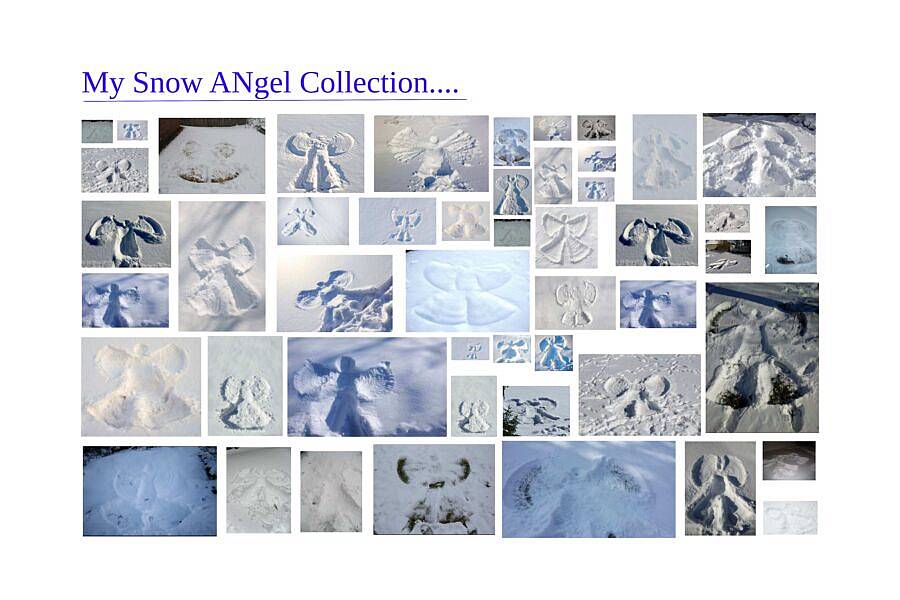
My Snow ANgel Collection…. | Digital collage | Dimensions variable | 2025
What do you collect?
The main thing I collect, or have been driven to purchase, is artist-editioned clothing and self-published or small press artists’ writings. I have a t-shirt from Boot Boyz Biz, Lauren Cook’s screenprinted shirts, clothing, and handmade clothing, a Cometees long sleeve that Kanye wore once, a Lucky Jewel tank top, garments from Noel Puello. Some stuff I’ve sold unfortunately. I have Dark Pool Party and Cunny Poem. I feel like I’m bragging but there’s so many little treasures I’ve kept over the years that are really special, either made by my friends or people I’m a fan of. Clothing and books dominate my purchases. I regret nothing.
Working in a studio can become personal and intimate. Are there any feelings of hesitation or vulnerability that come from letting the public see your work?
I am extremely rejection sensitive, haha, which you can tell from a previous answer about people interacting with my work. I didn’t understand the idea that critique isn’t personal for a while. I felt so embedded in my work that it felt indistinguishable from my person. Now there is some detachment which I actively cultivate and think is necessary. For example, when I first began to get serious about making garments, I was designing and creating clothing for myself. Now, I’ve gotten to the point where I can say the clothing and t-shirts exist for others too. Remembering that it takes a viewer to complete an artwork through their reception makes letting go easier. I am almost too vulnerable and too open sometimes, especially in my writing. I look back at some things I wrote and feel embarrassed. And that’s a part of it too.
Interview conducted by Luca Lotruglio and edited by Amira Diaw.