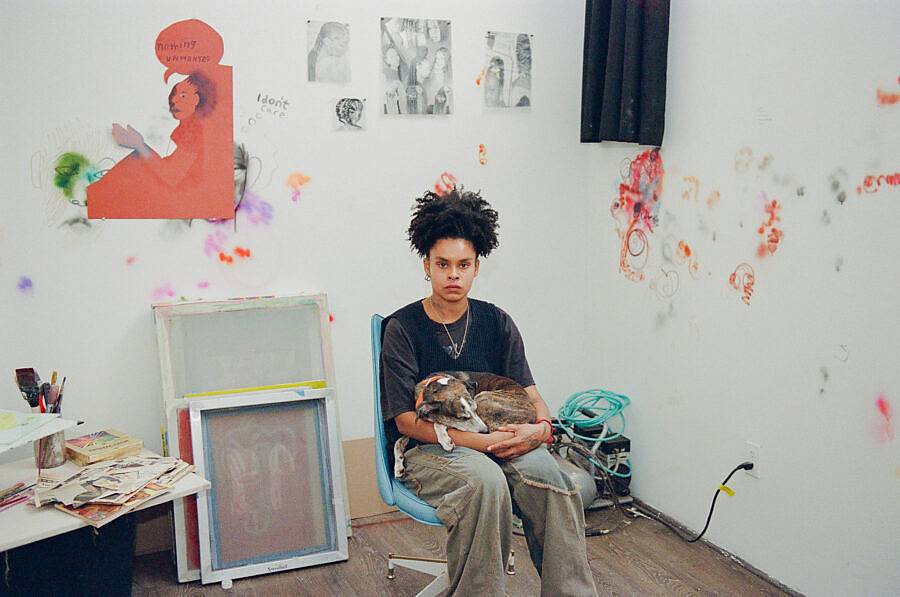
Tell us a little bit about yourself and what you do.
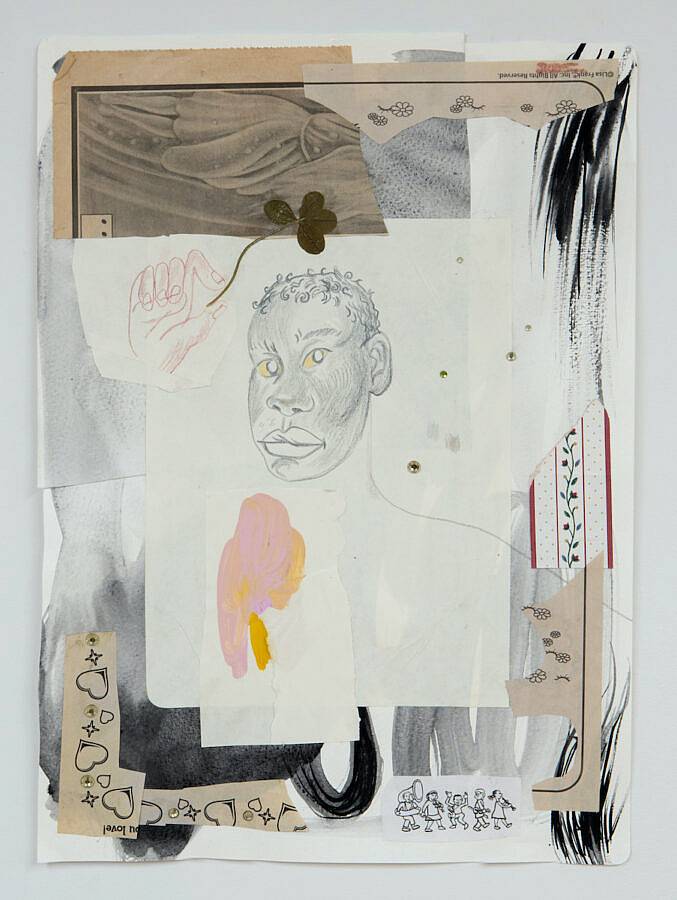
My name is Bri, I am currently based in my hometown Providence, Rhode Island, where I was born left handed and 10 days late during a blizzard in March, 1997. I have also lived in Brooklyn, NY and Chicago, IL. I use they/them pronouns. I would describe myself as a soft-spoken person. I like to laugh and I like a good cry, too. I like to run. I like to watch reality television. My favorite color is usually green but sometimes it is the shade right between red and orange. My work often starts in the speculative dream world of a diary or journal; intuitive drawing is central to my practice. From there it develops into other forms. The figures in my work are amalgams of past present and future selves- the people in my life- caricatures- cartoons- memories- fantasies… I see art as an energetic outlet for – a temporary escape from – a lot of the dilemmas and grievances of being a human.
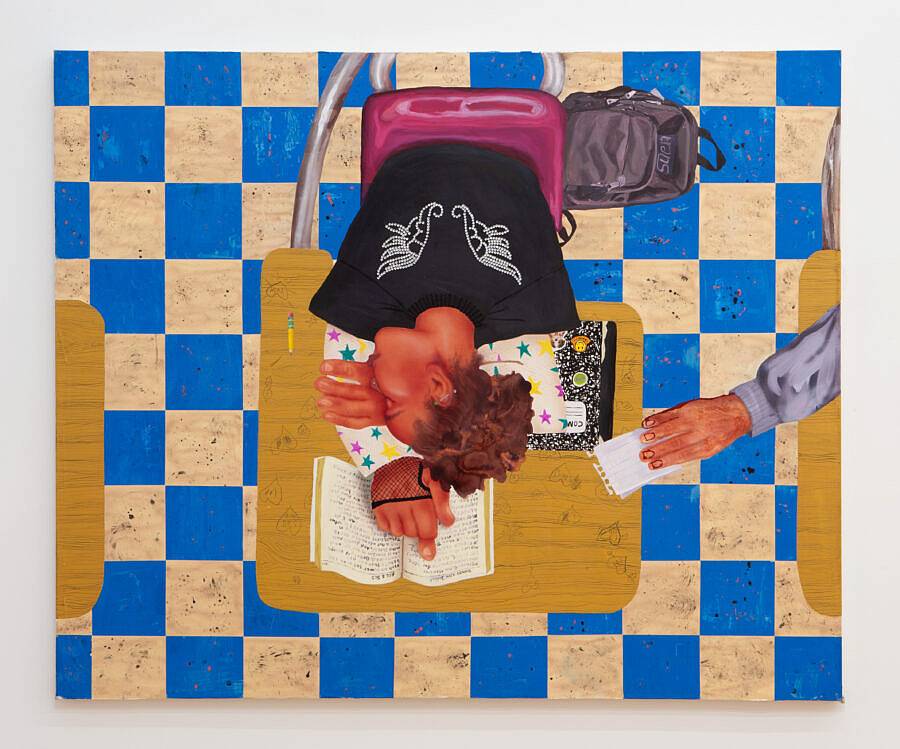
Are there any influences that are core to your work?
It’s impossible to answer this question without leaving so many things out and I’m afraid to over simplify the assemblage, as I’m indebted to too much and I’m not done yet…There’s not enough time in a day. I would like to write a long-winded list for the sake of assuring you that I think just as much if not more about form as I do about content but it just goes on and on and on. It would give you more insight about my work to tell you about a couple books that have helped me find language in the last few years.
The first I want to mention is Ugly Feelings by Sianne Ngai. Ngai analyzes the affect of some minor transgressive emotions in literature and media. She writes about boredom, jealousy, paranoia, and other negative emotions that are often regarded as immature and ugly and creates a context in which we can read these feeling states as generative, liberating, and politically relevant. The second book I want to talk about is The Future of Nostalgia by Sveltlana Boym. In this book the writer defines two different types of nostalgia- one that can be harmful and another that can be useful. The first type of nostalgia is “restorative nostalgia” which echoes the sentiment of a lot of the fascist ideology we see making a comeback today- nostalgia that longs to restore the present to a former glorified past and undo progress. Nostalgia for the “good ol days.” This is likely what comes to mind when we think about nostalgia in a shallow sense. We might imagine restoration as the goal- to recreate and reminisce a simpler, better time. The second form of nostalgia she defines is “reflective nostalgia”, which attempts to return to the past as a way to unearth things lost to time, to further understand and find solutions that could alleviate and explain fissures patterns and problems in the present. This form of nostalgia expands rather than contracts the past. Nostalgia can feel like a dirty word in art, but I try to use it reflectively.
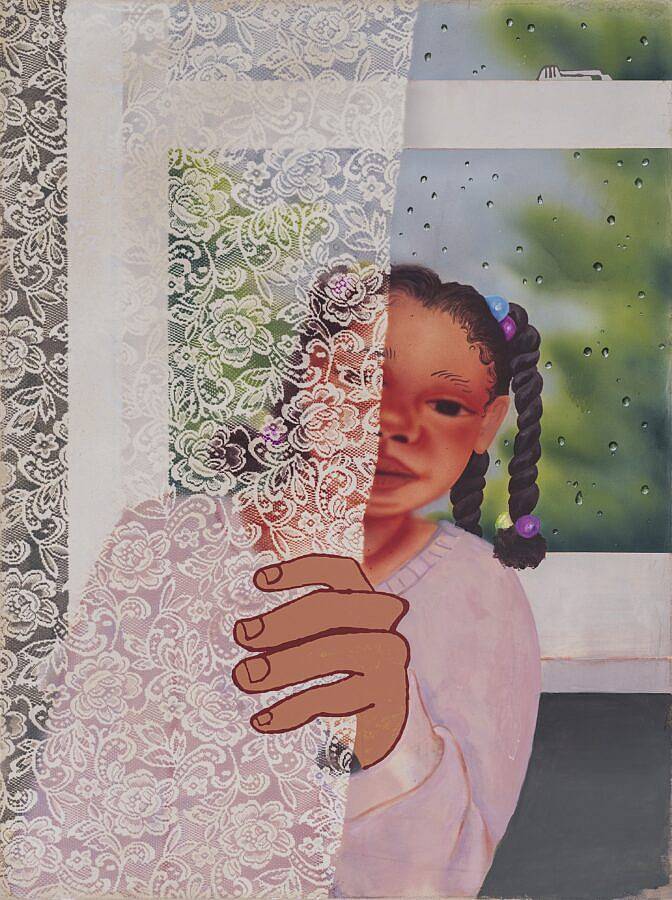
How were you introduced to the mediums that you work with?
As a really introspective and moody kid who spent a lot of time alone, I found solace early on in drawing. It was a real come up to find that I could transcend time and space with a pencil – effortlessly passing hours and inventing a different reality to exist in on paper. Family and community members gifted me colored pencils and art sets to try. I was in innumerable free after school art programs growing up, too. When I was in high school, I learned how to use a silk screen in one of these programs. I was exposed to a lot of zines, underground comics, artist books, and DIY/punk art spaces, local artists. That informed the development of my early art style and sketchbook practice. I like to use all kinds of media, and I’ve continued to pick up new forms along the way. If something needs to be a drawing it will be a drawing and if it needs to be a video it will be and I’ll figure it out. Although people know me for my paintings and drawings, I don’t want to feel confined or bound to particular media – I hope to build a visual language that will carry across anything.
You mention building a language that can be conveyed across various media and not feeling confined to one thing. Can you talk about a particular idea or media you would like to work with in the future that steps away from painting and or drawing?
One work that comes to mind is a video I made back in 2019/2020. It is about my parents and I’ve been holding on to it for sometime. Without giving away too much I would say it centers themes around biographical family portraiture, dancing as a liberating practice, found footage, online videos and street performance. Thus far I’ve only shared it with peers and a few people in studio visits, at residencies and in private settings. The video feels super relevant to the oeuvre of my practice, but the tone of the piece is very different from the type of thing I typically show. It is admittedly extremely personal and I think it can make some people feel a bit uneasy. It has been a slow process to find an appropriate venue and context to show it in since I want to do so with as much care and consideration as possible. I also think it’s easy to get pigeonholed out here, and since my work has mainly found itself in conversation with illustrative black figuration, it feels at times awkward to get my foot in the video door or open up a different kind of conversation. Anyways I feel very proud of this piece, like it sort of just happened to me, and I think I’m destined to share it eventually. I’m not worried or in a rush because I know the right opportunity will find me at the right time… but I am happy to put this out into the world as an open invitation for curators to ask me more about it.
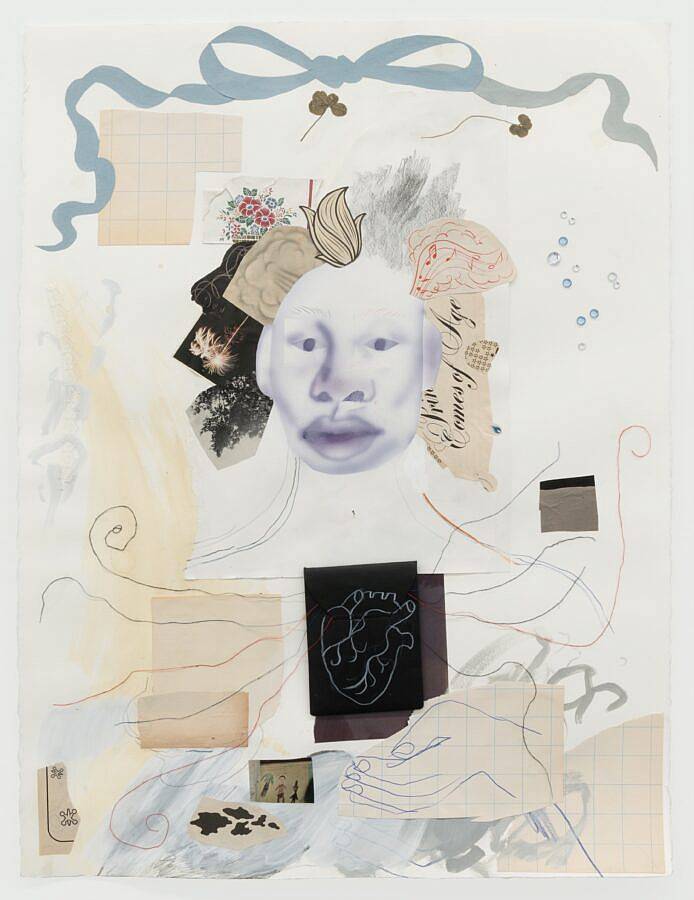
Is there a moment you look back on as being formative to your identity as an artist?
There are plenty of formative moments that come to mind but maybe an early one is from when I was 14. An art mentor asked me why many of the characters I was drawing were white or in general why they did not look like me. She was genuinely just curious, and not interrogating or trying to make a point- but I think from that moment on I became aware of the images I was seeing, the media I was consuming and what that taught me about the aesthetics I had internalized as ideal or granted. It goes without saying that there are many things young people internalize about social hierarchies from very early on in life… that moment was the catalyst for a lot of learning and discernment where I could finally untangle those hierarchies outside of feeling angst and suspicion from personal experience. I think I really came into myself after that.
What’s your studio like? Do you have any rituals when you settle in there?
I don’t have pictures. My studio is in a church. This was an opportunity I kind of just happened upon. There aren’t any particular rituals, but I always feel more (literally) grounded in my studio when I’ve spent some time on the floor, laying down, shoes off, staring at the ceiling, taking a nap, drawing on my belly. I make a mess, I clean it up. As a general rule I see the studio as very sacred and I imagine working inside of a church will only reinforce that idea. I’m a sensitive person so I’m kinda cautious of who I let up in there. I don’t like to come in with any negative associations or memories that might distract me or have me avoid being in my creative space. I suppose that’s more of a rule than a ritual, which can shift, tighten or ease up depending on what’s going on in my heart at any given moment. So yeah, actually I think the ritual is that; protecting it in a way that makes it feel extremely safe and happy to be in.
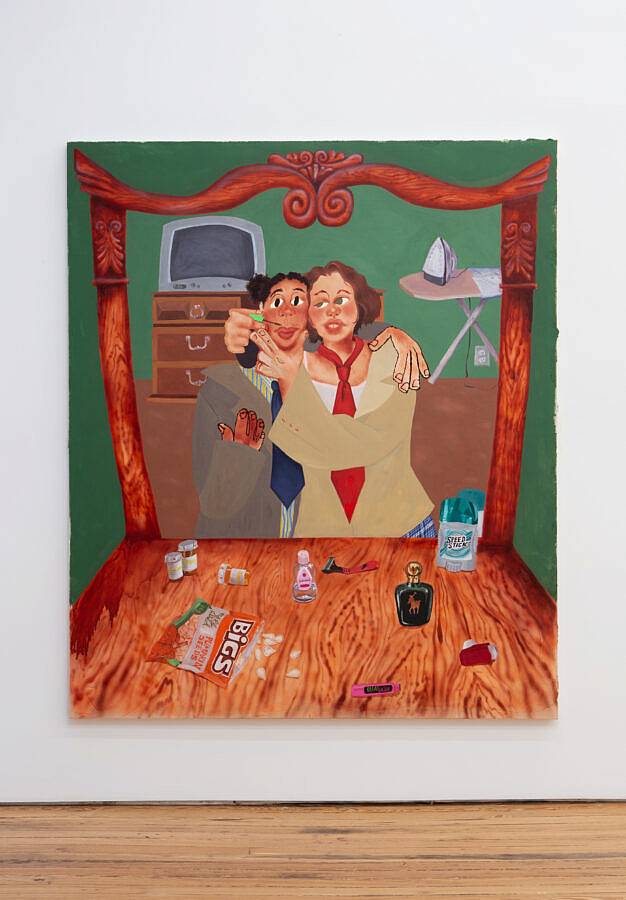
When needed, where do you look for inspiration? Have these sources changed over time?
Sometimes I get tired of drawing the same thing on a loop. Though repetition can be generative, I find it’s healthy to have moments where I am producing and moments where I am absorbing. When output starts to feel exhausting, I have to go and see new things and hear new ideas and have new experiences and physical sensations to fill me up with something. This might look like spending time with people, being in nature, traveling or even just stimulating my mind and body in other ways. Music is a huge source of inspiration, and I often incorporate lyrics into my work. I reach back into my memory for inspiration too, but I need to spend a good amount of time metabolizing a memory before I can get around to an attempt at articulating. I think that requires behaviors, actions, routines that extend beyond the studio. Childhood comes up. Whereas previously I was primarily sourcing material from my recollection, books I’d read, or a vernacular nostalgia, I started teaching art to children over the past 2 years. Working with kids gave me a direct reference to their world views, what it’s like to be growing up in 2025, a perspective beyond my own.
What draws you to the moments you distill in the compositions of your works?
I try to make things for myself. I use art to process the world around me, navigate and archive the things I revere as well as my myriad neurosis and personal experiences. Embedded in that exploration naturally are collective truths that relate to different intersections of my identity – as a black person, as a queer person, as a neurodivergent person, etc, but if I’m being just completely frank, I make things because I want them to exist. I do hope my work invites people into connection and encourages them to embrace their emotions, and I feel really honored when people resonate with the things I make or feel empowered, but if I think too much about a target audience, I start to feel stifled and performative.
I’m interested in making art about a wide scope of emotional expressions because throughout my life I have experienced a lot of suppression and shame around having or embodying emotions and behaviors that are messy or viewed as inappropriate, “too much” or negative. I used to say that my work was about love and tenderness- but it is equally as concerned with alienation and volatility. I find the insistence people have these days on moral purity to be harmful and punitive. I’m interested in complicating what makes a person virtuous or worthy of being represented or remembered or celebrated or loved or supported. I know it’s maybe tired to think about representation in black or white frameworks, but I really am still interested in Black representation and questioning how it operates and why. I appreciate nuance. I’m curious about what qualifies as a dignified representation of blackness and how that informs collective values. A lot of narratives that inform history- whether they’re personal or communal or a little bit of both- are untold because the witnesses or narrators are not thought of as being trustworthy or respectable. These voices include those of children, queer people, and neurodivergent people. That repression echoes in our collective ability to accept one another at our most raw or turn away. Emotional material is often considered superfluous or irrational and irrelevant to history – but even the ugliest most ridiculous emotions and breakdowns when dissected, can inform truth and expose structural inequality.
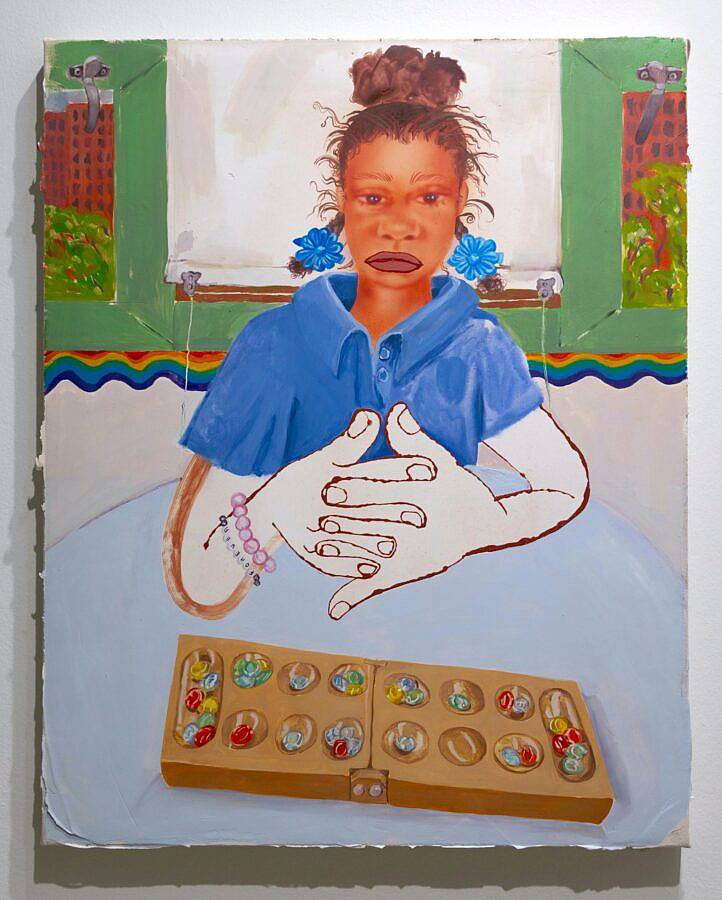
Are there common motifs to your work? What do they speak to?
Adolescence, learning motifs and other symbols that relate to youth culture commonly reoccur in my work. I’m really interested in the perspective of children and teens as a class of people that are super vulnerable and often dismissed. A lot of children – especially marginalized children – navigate a world that is extremely hostile to their existence and in fact have very adult sized problems. Children are brave complex insightful honest funny playful and sincere, and I can only hope my work at times encapsulates those qualities too. However – without being too quick to reject being likened to a child, I would make a distinction between art that deals with adolescence and art that is “faux naive” because my work is often put in this category and I don’t think I am pretending to be a child. Perhaps I was at a different stage of my artistic development. My work can be fast and cartoonish, and I like to play with abstraction… it doesn’t always prioritize realist precision. That to me does not automatically default it to faux naive or suggest that it lacks technical rigor or intention. I find that label reductive and kinda derogatory.
Does scale play a role when you make work? Is there an intimacy or a vulnerability afforded to working with more compact or expansive dimensions?
Some of the figures in my work really desperately desire to be seen and some narratives and memories really want and need to take up space so I make them bigger. Large scale works give me an opportunity to flesh out more complex color worlds and details. Diaries, sketchbooks and journals already have an inherent energetic charge so leaving them at their original scale can be a powerful gesture. Because my work at times relies on expressions like line quality or mark making it can be a disservice to attempt to recreate something that already has so much character. I also like it when the viewer has to get up close to a work and have a private experience with it. Plus, I like to challenge the hierarchies between monumental work and tiny work, canvas and paper, painting and drawing…
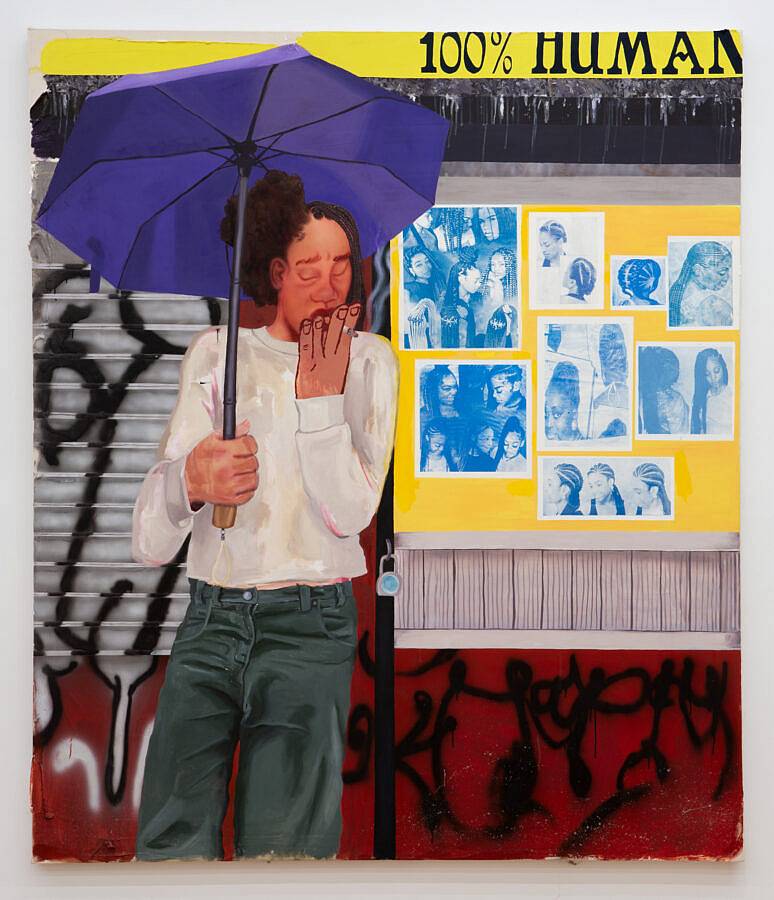
Can you tell us a memory of someone interacting with your work that lingers with you
I’m honored to say that I’ve had a lot of beautiful moments with people connecting to my work and telling me that it really makes them feel something deep inside. It never ever gets old when people tell me that. I don’t have a particularly huge moment to talk about but one time I was parked somewhere in a car catching up with my friend and when I showed her a painting I was working on at that time, she burst out into tears. The painting I’d shown to her was one I made really quickly and intuitively and so it shocked me that she felt so strongly about it and I was extremely touched. I also almost started to cry.
How do you manage tending to the variety of responsibilities in the work you do? How do you mitigate burnout or exhaustion?
To be completely plain and straight forward- if I need to, I take a break. The art world is fickle and exploitive, and it has a short attention span. The market tends to prioritize artists who constantly output, and that is not always realistic. I started showing when I was pretty young and I have learned the hard way through neglecting my well-being for the sake of deadlines and streamline production that glamorizing the grind has long lasting consequences on one’s mental and physical health, the overall quality of one’s work and their ability to build a sustainable career. I really don’t fuck with pulling all-nighters and making myself sick to produce art. Now of course…Being a working artist requires extreme dedication and with any extreme practice there are moments in time where you are being freaky and intense and pushing yourself harder than maybe a normal person would to paint a picture… but I think that happens in incremental periods of time and then there are off seasons.
When I have a deadline or big project coming up, I kinda turn dog-like. Life revolves around making sure I’m able to show up at my studio and pour my heart into what I’m doing. Making sure I’m sleeping right, clocking in hours, fueling my body correctly, making time for play and breaks in the rigid routine, tending to my physical health, limiting distractions, staying clear headed, perhaps making ridiculously long to-do lists just so I can keep crossing things off toward a big picture timeline – all of this becomes really important to me. When the deadline is over, I don’t abandon ship, but I ease up a bit, get back to feeling the sun on my shoulders and being a real person again for a while.
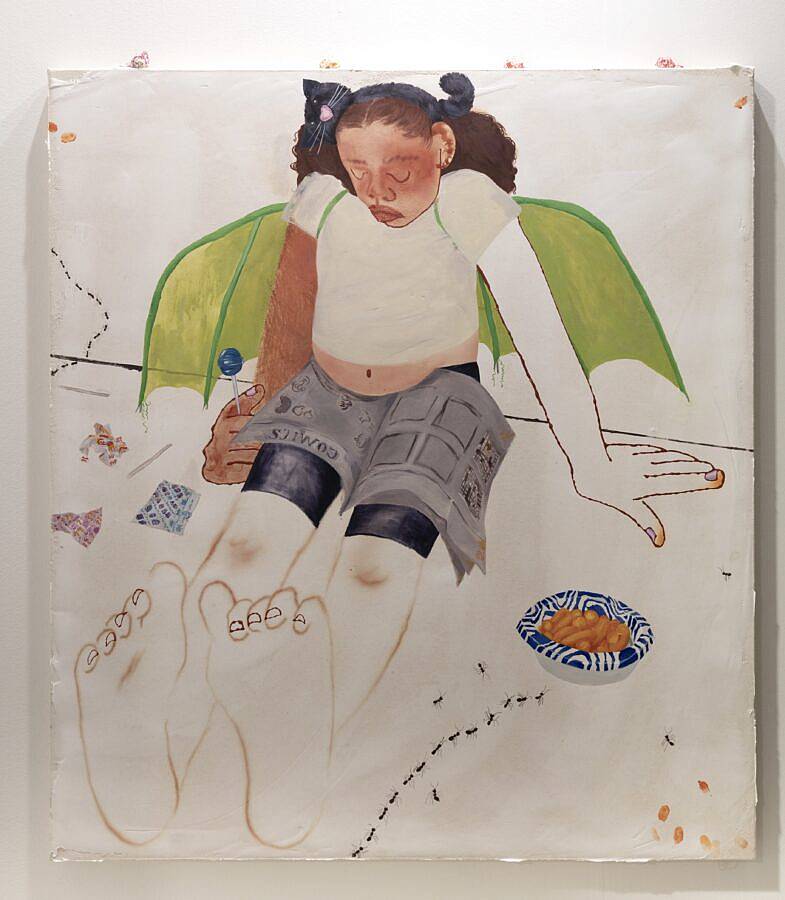
How does your creative community now compare to your creative community when you were younger?
I went back and forth about how or whether to answer this one because I’m in a transitional moment in my life and the subject of community feels tentative and a little bit tender. When I was younger, I saw my art practice as the only possible bridge to form connections with other people. Since I originally built an audience for my work online, ideas and dreams around creative community were tethered to my internet presence. I felt like if I posted online a lot it would eventually help me “find my people”. I hate that a question about community brings up social media for me, but it feels relevant to think about in the current world moment where people are finding it harder and harder to connect offline… I’m trying to be honest. I’ve had to pull back a bit from letting social media define how I relate to the world and community. There was a time when I was young and alone and wishing for my voice to matter where online spaces like tumblr finally made me feel like I had a say- but I don’t depend on that sense of empowerment from engaging online anymore because social media is not what it once was. Now there’s too much profit incentive and nothing is real. As I’ve gotten older, I’ve sort of learned not to shit where I eat- just cause someone makes something that I feel connected to online does not mean that we will click in community. Just cause someone relates to the things I make or post online does not mean we will click in community. Being connected online does not equate to being in community or being able to see one another eye to eye. Putting things into the world that someone might like doesn’t equate to being the type of friend someone needs or aligning in value systems.
I have to be careful not to put others on pedestal or let others put me up on a pedestal. We are all just people. I have many artist friends who make work I absolutely adore but the things they make were never the driving force behind building a connection with them. All to say, what I consider my creative community is smaller these days- made up of people I’ve met in more intimate settings like residencies, communal art spaces and in school over long periods of time. That also means the ideas I’m exposed to are really exciting because they don’t just reflect my immediate sensibilities or exist in an echo chamber of things that I would think to double tap. My creative community is also more intergenerational now and extends beyond the realm of career artists- I am lucky to connect and share ideas with people who are younger than me and older than me and who live creatively beyond the scope of the art industry. Community takes time and effort to build. Moving forward, I really want to build something that feels more aligned with me and my longing for collaboration and intimacy. I really like to spend time with people in the real world. I’m not opposed to the internet as a starting point, but I have a hard time when things are suspended in that place. Can we get a fucking coffee? I don’t want to do the Instagram thing today.
What do you collect?
Bows, four leaf clovers, paper ephemera, collage materials that sometimes feels too precious to use, vintage ebony magazines, lighters that I have stolen from people, found or that have been gifted to me, locks and keys, stuffed animals that my dog chewed up.
Portrait photographed by Hiram Trejo and Cherry Ayala.
Interviewed by Luca Lotruglio.