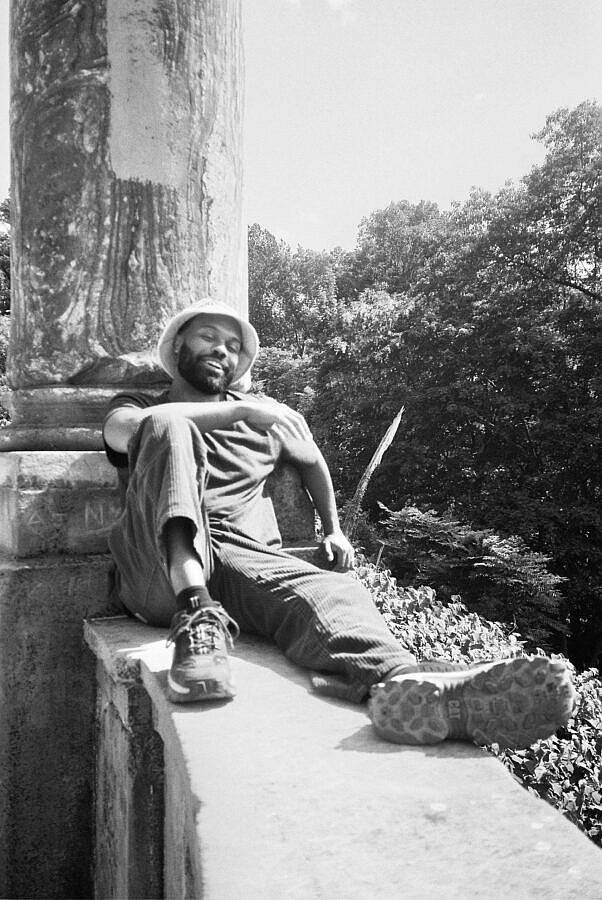
Tell us a little bit about yourself and what you do.
My name is Adé Hakim, and I consider myself to be a renaissance artist. What most people don’t know about me is that I’m a writer and visual artist first. But expressing myself through musical vibrations is what changed my life.
How did your interest in music begin?
To be honest, that’s a hard question to answer because I never thought I’d be a musician. Music was just something that I always took with me anywhere I went.
I had an iPod Shuffle when I was younger. My older siblings and I would download so many songs from LimeWire onto our MP3 players.
The decision to write rap songs came from years of loving the genre, with one of my earliest influences being Kanye West. Later on, in my teens, I became a huge fan of collectives like Odd Future, Black Hippy, and Pro Era.
My decision to make beats came from not having many original options to write to. When I discovered Special Herbs by Metal Fingers DOOM, it opened up my world to becoming a producer as well.
How has living in the Bronx affected your music?
The greatest thing that hip-hop and I share in common is that we were both born in the Bronx. That allows me to go anywhere as a hip-hop artist with confidence.
To be able to say that I’m a hip-hop artist from the Bronx makes me feel like royalty, which contradicts the impoverished stigma that’s placed on us in almost any other context.
What are some recent, upcoming or current projects you are working on?
Right now, I’m in a really cool creative place because I haven’t released a lot of the projects I’ve been working on just yet. So I have a little bit of everything coming up.
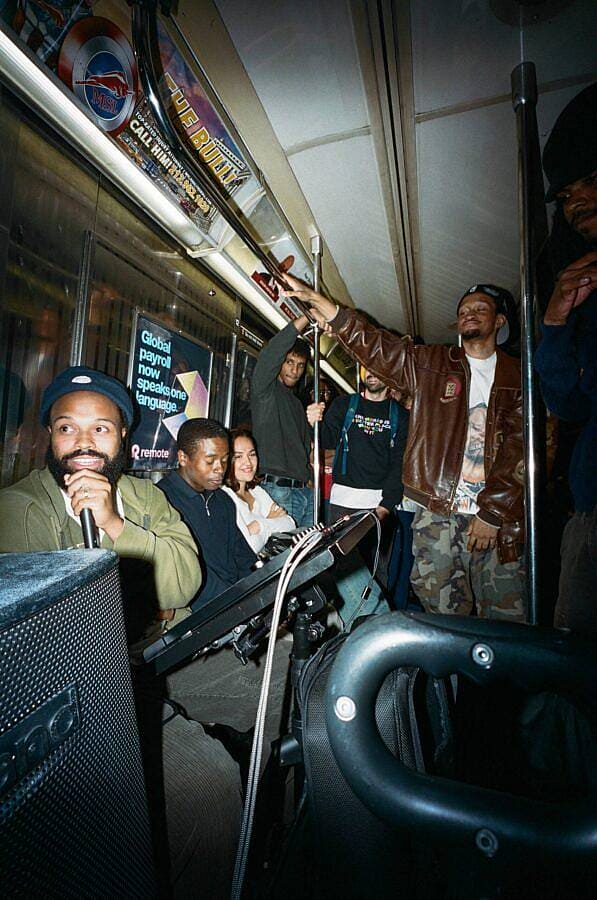
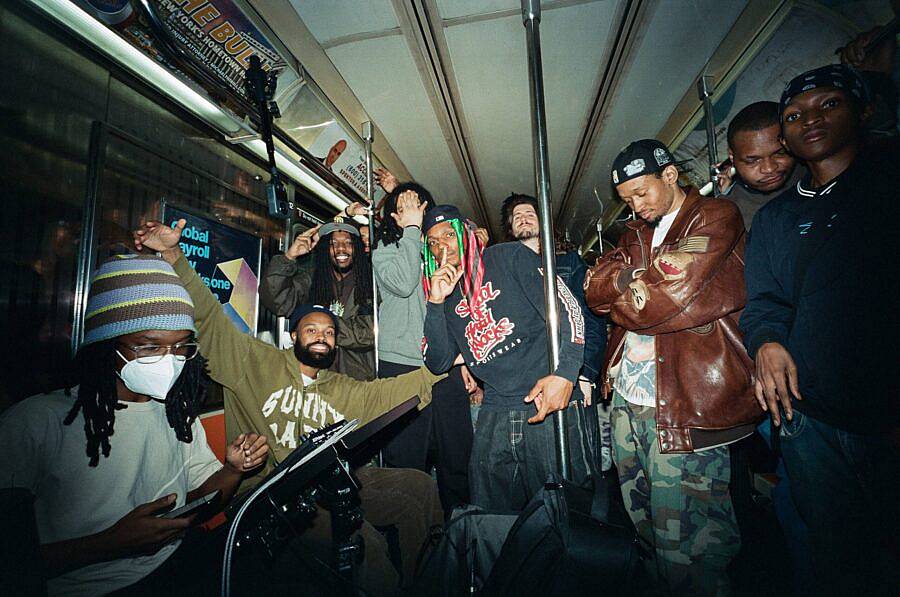
I’ve got a beat tape, new merchandise including hoodies and branded accessories, a couple of children’s books inspired by fatherhood, and a series of train shows full of niche underground artist.
I’m also working on a self produced rap project scheduled for spring 2027.
Who would you ideally like to collaborate with?
I would love to collaborate with 88-Keys. From “Thieves in the Night” by Black Star to “No Church in the Wild” by Kanye West and Jay-Z, his work on albums often ends up being everyone’s sneaky favorite.
What was the last show you went to that stuck out to you?
Jiji’s Jazz Club Presents: Open House 3.
Late 4 Dinner’s DJ set stood out to me the most. The emceeing from the special guests he brought on was refreshing. That night reminded me how powerful an emcee’s call and response is in hip-hop. I met some established artists who gave me a ton of props for my contributions to the game. I also got to congratulate and chop it up with Ovrkast about our individual come-ups in the game.
This show stood out to me because, for a few years, I had stepped away from the scene and started losing a sense of who I was to the hip-hop world and what I was doing it for. That feeling of uncertainty was erased all in one night.
 .
What is your beat making process like?
Peak Adé Hakim beat making process looks like recording hours of samples from YouTube without making a single beat. Then I’ll take those hours worth of samples and make a large batch of beat ideas that roughly take 15–30 minutes each.
Ten good beats a day is the goal. If the grind is turned on, you do the same thing the next day until you’re out of samples.
What plug-in do you think really defines your sound?
Since 2014, I’ve only used Ableton’s stock effects and no external plug-ins. What defines my sound is my choice of warping, time-stretching, and pitch blending.
What sound did you develop over time, and do you consider yourself to have one?
My sound is experimental. The outcome is completely determined by what samples grab my attention that day. I tend to lean toward ’70s–’90s recordings that feel euphoric and triumphant.
The programmed drums are the most important part, though, because they add that new-age digital thump that personalizes the production even more.
What are some motifs in your work?
The sun of course! Navigating having a good heart in a shady industry, and reflecting on life through an honest lens.
When I make music, it’s often never made for the club or with consideration for how it might chart. Instead, it must always answer the question, “Does this sound like an honest representation of who I am?”
If it does, then I put it out, even if there’s still room to change or grow.
How did the idea for Train Shows start?
I wasn’t getting booked for shows in NYC enough, despite contributing to a huge wave in hip-hop. I was often able to appear as a special guest, performing one or two songs during someone else’s set, but my desire to perform full bodies of work and connect with people had to be fulfilled one way or another.
In New York, people perform on trains all the time. It’s part of the culture. A lot of my drive and inspiration to do a train show came from honoring those roots, but this time, we would stay in one subway car and structure it like a 4-6 act venue show.
What’s the most gratifying part about being an artist?
Getting paid to do what you love to do.
I’ve been in situations where people tell me I’ve changed the game, that I’m their favorite artist, etc. Those compliments motivate me to keep showing my gifts to the world. However, I can’t show those receipts of high praise to my landlord when it’s time to pay rent on my one-bedroom apartment without the money to show for it.
The more I get paid to do what I love, the more I’ll be able to afford the time to KEEP doing so.
It’s no doubt that Ableton’s sample warping is one of the signature pillars of your sound. What led you to start utilizing that feature so frequently?
Platinum plaque-winning producer Laron inspired me to try the different warping methods in Ableton! I already knew the language of Ableton well, but there was a particular beat I heard from him that made me less rigid about when and how to use warping.
During the making of ON THE ROAD, SUNNY PATH, the track “Love Instead of Gold” was the beat that made me fall in love with Ableton’s wobble warping effect on samples.
From there, I never looked back. I started implementing it more and more until it became associated with “my sound.” But I never shy away from giving credit to the genius Laron for being the source of inspiration.
As a producer who has pioneered a remarkably unique sound, how much gatekeeping do you believe is appropriate in terms of sharing your process, if any?
I don’t gatekeep much. I’ve taught several dozens of people my methods and techniques through 1 vs 1 Zoom lessons and, more recently, through a digital beat course off my website.
I love sharing the process. I believe that’s what the modern day Renaissance is about, helping others optimize their ability to express themselves through multiple creative outlets.
What was it like making 100 beats in 10 days?
It was a great accomplishment! It felt like Kanye West in Spaceship when he said “doing 5 beats a day for 3 summers”. I made 100 in 10 days, and sold a handful of them that year.
It set a new standard for myself that isn’t always realistically attainable. Younger version of me was built different… I would like to do something like that again to honor those times!
What’s your favorite place to eat in the Bronx?
Food made in my kitchen.
Has your creative process and/or your relationship with creating art changed since becoming a father? If so, how?
Great question! I’m now making things tailored around being a father. Sometimes I don’t always hold the space to be a “rapper” around my son, so at times I’ll create nursery rhymes for him and have him sing along or to help practice new skills.
Right now, I’m also working on a couple of children’s books inspired by my son. Sometimes the hip-hop world isn’t so accepting of positive and uplifting messages, but when you make something like a children’s book, the more positive, the more profitable. I feel aligned with that reward system, and It’s a privilege to have my son as a source of inspiration.
I think that the music we are exposed to as children has a highly significant influence on the music we create. What is some music you listened to as a kid?
Early Childhood – Kanye West (household favorite), Outkast (funky car rides with my pops), Usher, Aaliyah (had the ultimate crush on her, and her music is timeless), Missy Eliot (most fun), Joe (my mom loved him), Jadakiss (my dad respected him), Juan Luis Guerra y 4.40, Lil Wayne (had one of the greatest runs a rapper can ever have), Slick Rick, Prince, Michael Jackson, Linkin Park, Blink 182, Lauryn Hill (she’s like the matriarch of my hip hop world), Wayne Wonder (no letting go probably being one of the most nostalgic of my life time).
Early through Mid Teens – Mac Miller (before i saw his face i thought he was a black guy), Chiddy Bang (huge inspiration of my early raps), Tyler the Creator (funny guy), Earl Sweatshirt (to me was the best rapper when he was at the age of 15), Childish Gambino (Royalty is easily his best work), Capital Steez (spiritually one of the richest rappers to ever grace the mic) Kendrick Lamar, Gang Starr (all time fav hip hop duo), Tribe Called Quest (all time fav trio), J Dilla (the best producer of all time) MF DOOM (his music encouraged experimentation and formed a lot of friendships/creative bonds).
Interviewed by Amira Diaw.