Tell us a little bit about yourself and what you do.
My name is Vu Bao; I am a bespoke tailor. My work tiptoes between fashion design and image making in exploration of gender expression within personal narratives. In my day to day at my tailoring brand K-ZAO, I work mostly with queer and trans clients to help them realize the fit of their dream. I practice a rigorous tailoring process, which starts with the paper pattern, followed by extensive fitting sessions before finishing the garment completely by hand. It is an analog process that could be done even without electricity, however my steam iron and my two sewing machines do speed up the process.
How were you introduced to the mediums that you work with?
Garment construction has always been a DIY thing for me. I made my first garment in a painting class in college. It was a pair of pants made of heavy painter canvas that I would wear to make a ‘painting’. The ‘painting’ was a 4’x5’ stretched denim over handmade stretcher, which I then bleached and dyed with handmade indigo. The pants were shown in a frame on the wall, and the ‘painting’ stood on the floor of the gallery.
What are some artists, writers, and designers that have influenced you?
I watch a lot of movies and am definitely influenced by the work of Trần Anh Hùng, Nguyễn Hoàng Điệp, Jia Zhangke, Tsai Ming Liang. Embroideries work and writings by Giang Nguyễn-Nguyễn. Writings by Imogen Binnie and Torrey Peters. Ann Demeulemeester is my earliest fashion obsession. Savile Row tailoring tradition for better or worse. My favorite designer (duo) right now is Matieres Fecales and I would love to collaborate with them.
You have referred to your garments as sculptures on several occasions. Is there anything you are excited to explore further in your sculptural practice? Any new material or process that you are excited to use?
Sculpture for me is a thought process rather than materiality. I like to think of my garments as site specific kinetic sculptures – activated by the person who it was made for. In art school I split my time between the photography and the sculpture departments. For me, the expansiveness of what is considered sculpture balances out the specificity of a photograph. I started questioning the concept of a photograph, an image, a portrait; what is a portrait without an image? At the same time, I was interested in garment in its sculptural form, and was questioning the relevance of a garment without a body.
The more I work with people with different body types, I gain more interests in connecting with the person and understanding of their own definition of beauty. Making a beautiful garment is not as important to me as making whoever is wearing it feel beautiful. Recently I’ve been exploring draping, which opens up a new world of silhouettes that is not confined by the strict rules of classic tailoring. In draping, the material is everything: how it moves, how it hangs, where it was secured, weighted, reinforced. I think I pushed tailoring so far now I’m in couture territory.
K-ZAO’s house style is quite strongly defined: sleek, sensual, and absolutely no skinny lapels in sight. How did you develop this signature style, and have its defining characteristics shifted over time?
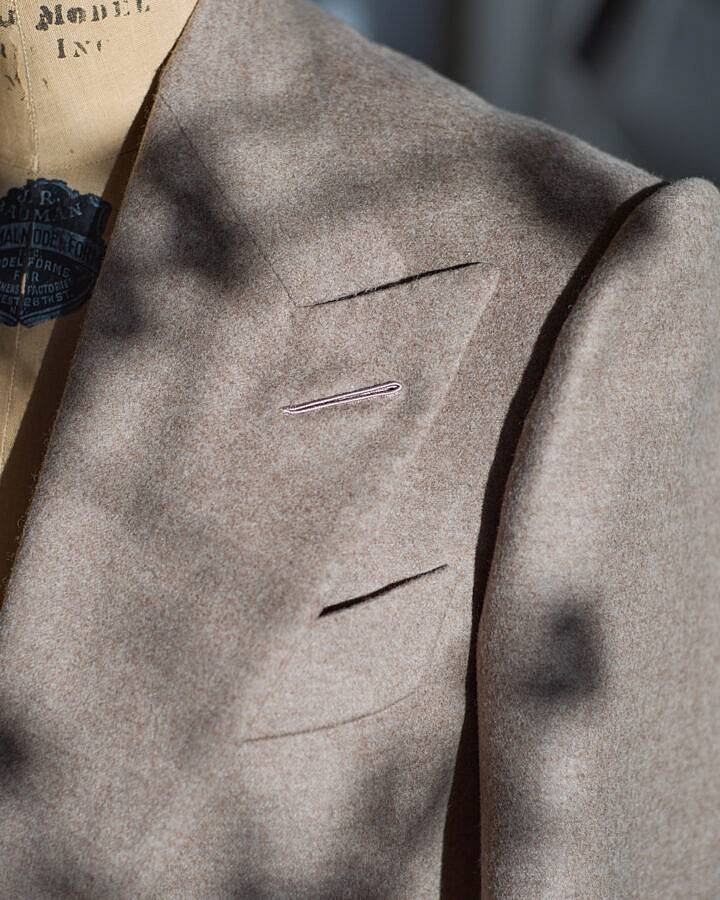
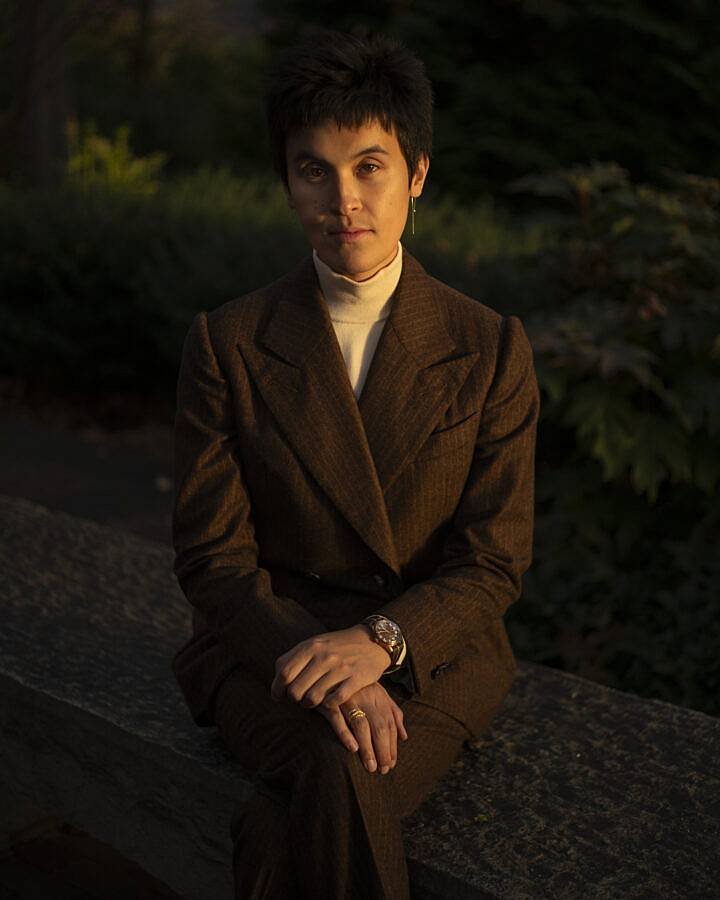
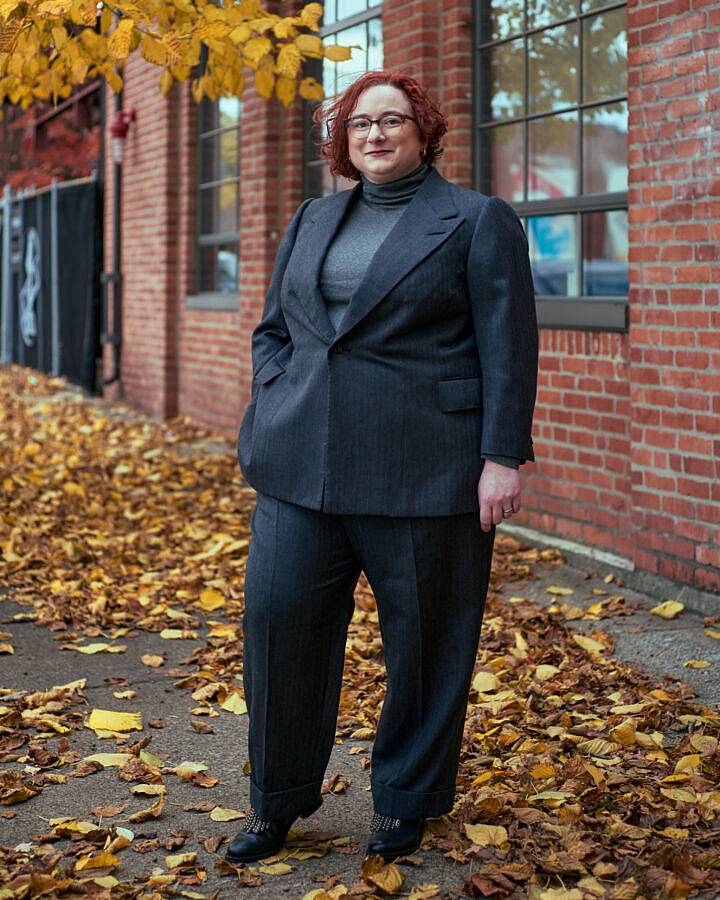
I just started making what I thought would look good on me! But honestly, I’m just drawn to the proportion. I like a defined sleeve head, which I think creates a striking upward energy. The wide lapels make the shoulder appear narrower, and when it is cut with a peak, the tip points to the sleeve head. My collar sits a little higher on the neck, which emphasizes the concave shoulder line. There are silhouette details that are more influenced by the construction techniques. For example, I like no padding on my shoulder, so the slope is different on everyone. It’s their natural shoulder.
Even though I want to have a defined style, all of these details are varied between clients. Because we all have different proportions, some of us want to look sharper and more angular, some rounder and soft. I like exploring this with people. If you have a very good reason for skinny lapels, I’m listening.
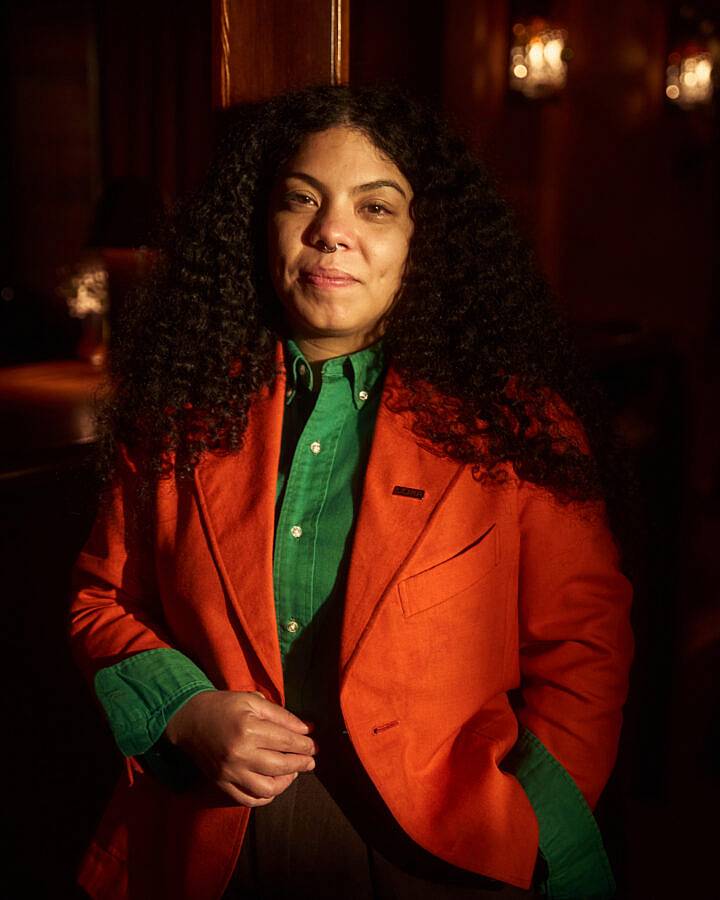
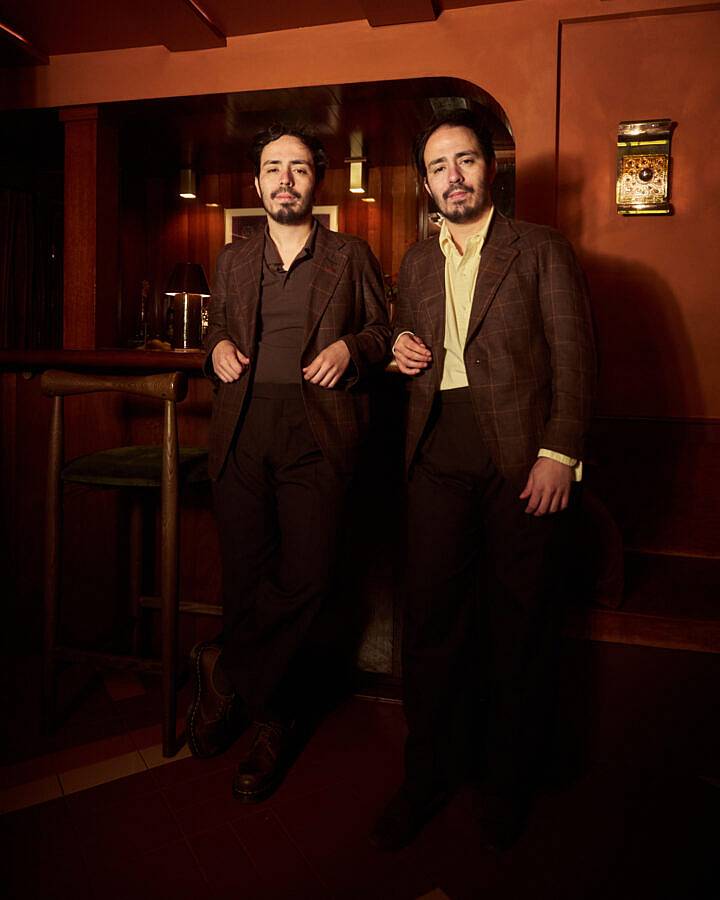
You recently made a capsule collection for the team at LOMA, a cocktail bar in Providence. Was the process of creating these garments, which need to simultaneously fit with each other, with the people wearing them, and with the physical space at LOMA much different from other bespoke tailoring work that you have done?
My garments are always designed with the wearers as the starting point. What is significant about the LOMA project is that I’m now dressing a team instead of an individual. I was instantly inspired by the late afternoon light that lit up their space on my first visit. We brought a few swatches to the space to see how the colors work in the light, especially when the space is lit up by candles. Leishla Maldonado is the mastermind behind their brilliant cocktail service. Because of this, I wanted to see her in a color that pops and set on a blazing orange. The pattern on the guys’ jackets are orange check on an umber background, expanding the palette to a more subtle note.
All the jackets for LOMA were cut with raglan sleeve, where the shoulder and sleeve are continuous. This give them a better range of arm movement forward and upward that is crucial for their service. Beyond mobility, this cut makes the overall silhouette a lot rounder and softer to fit into the casual, yet refined vibe the team is creating.
How does photography figure into your artistic practice?
I think about how a garment on a person is photographed all the time because we are being recorded all the time. Many of the material I work with are difficult to photograph, and I think it is nice knowing you are wearing something that can’t be easily filmed. On the other hand, there is a similar vulnerability between getting clothes made to one’s body and sitting for a portrait. The garment becomes a portrait. I make the garment and I take the portrait. It’s a portrait within a portrait. It is an important archive too, of queer people in my life. Seeing our changes and growths and transitions through both images and paper pattern is fascinating to me.
When needed, where have you looked for inspiration?
The ocean and the night sky.
What’s your workspace like? Do you have any rituals when you settle in there?
I start my day tidying up the space after my coffee. I usually leave a small mess at the end of everyday because I’m afraid of starting my day looking at an empty table. I just moved to a shared studio space with four other artists. This is my first time sharing a creative space ever, which is pretty wild. I got tired of working by myself in my own space and craved the collaborative energy between friends. There are also resources I could never have by myself, so maybe I will experiment with hand-weaving and machine knitting and even jewelry making soon.
What are some upcoming or current projects you are working on?
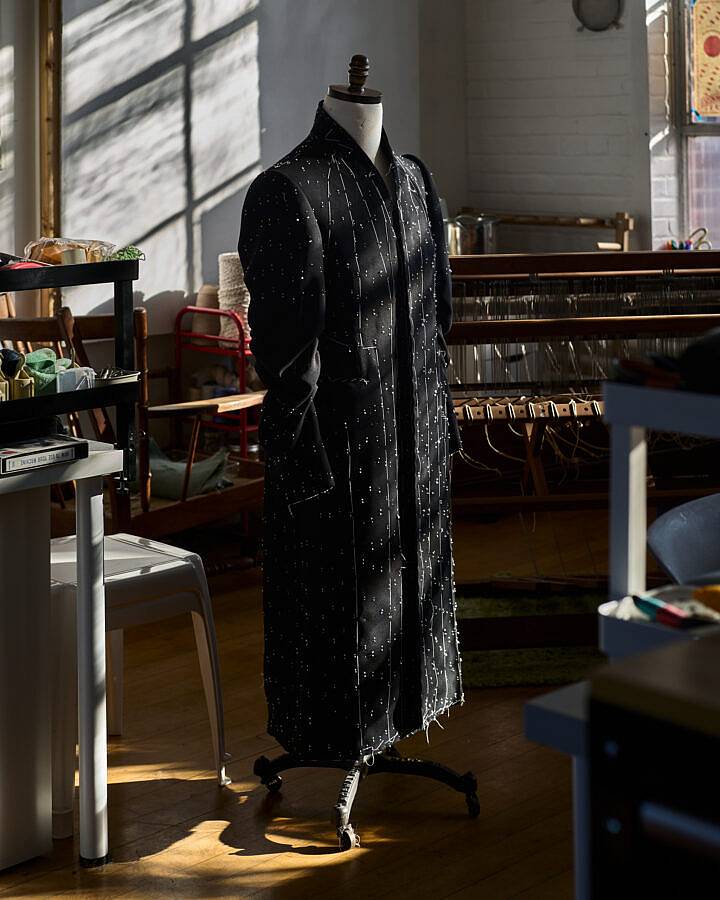
I’m working on a collection titled INFINITESIMAL FINITUDE through which to explore the stretching and compression properties of black holes and time warps. Quantum phenomena are the source of inspiration, an infinite constraint of infinite possibilities where theory is indistinguishable from mythical lore.
INFINITESIMAL FINITUDE is pulp sci-fi. Mathematical examples of non-orientable surfaces such as mobius strips and klein bottles serve as technical references in pattern making. Familiar silhouettes are stretched and compressed. Sharp creases are twisted. Tailoring and draping are used simultaneously. Deep velvet is paired with draped jersey. Wool crepe moves from rigid to fluid. Superposition theorem is interpreted through the permanence/impermanence of basting and thread marking. These tailoring construction techniques are subverted as surface treatment.
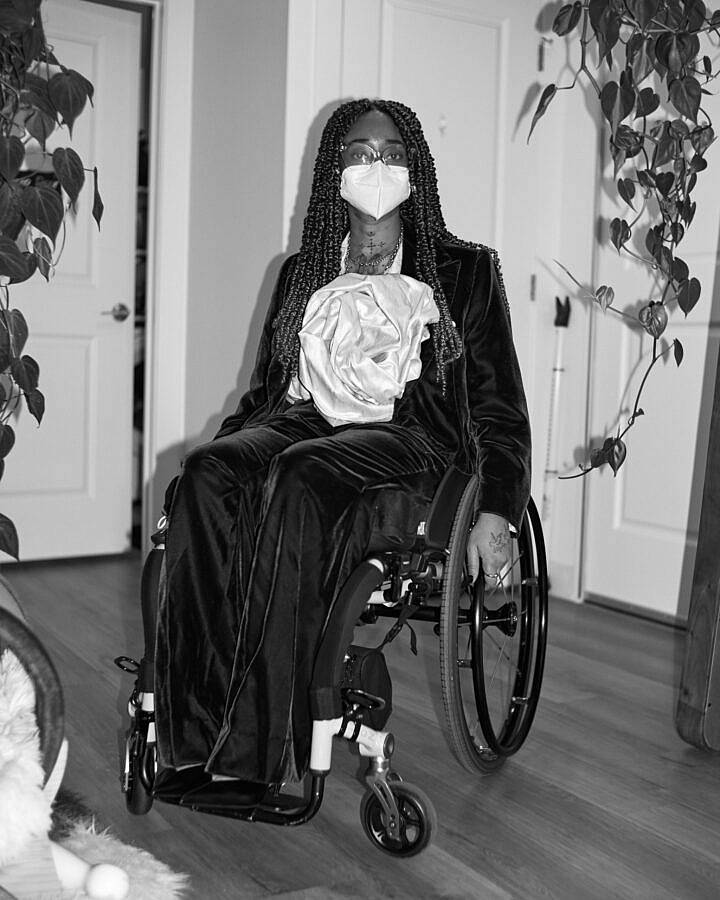
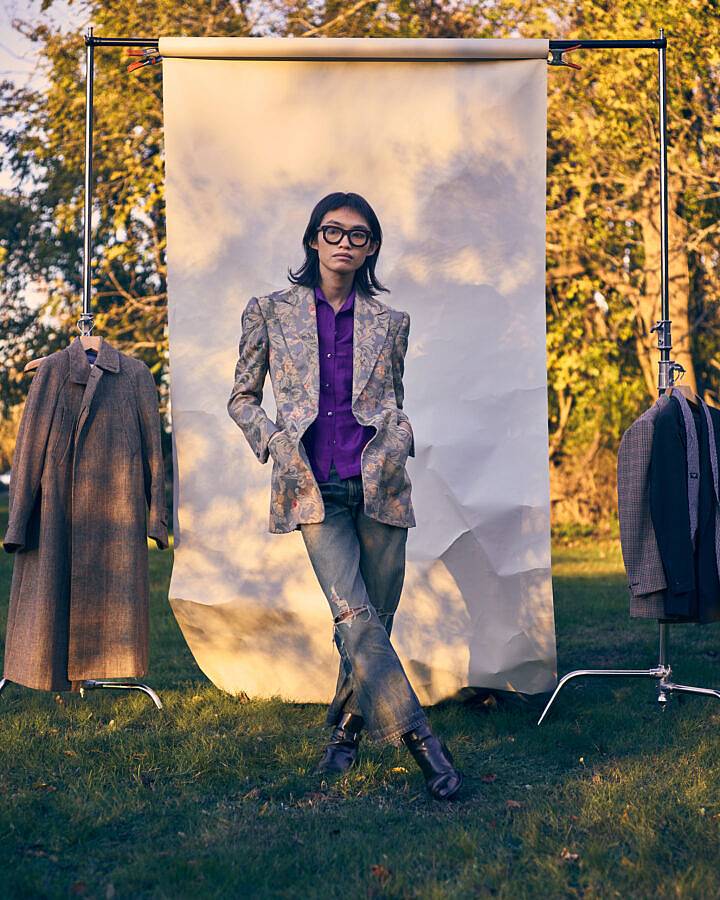
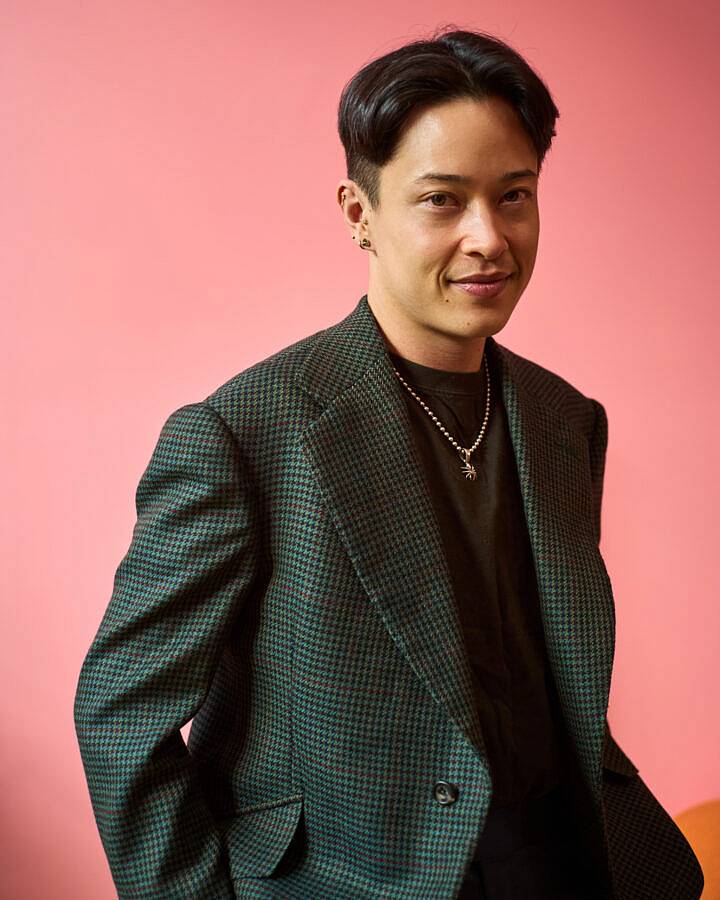
Interviewed by Seth Nguyen. Portrait photographed by Eden Tai; Bao is wearing a K-ZAO dinner jacket made of vintage upholstered cotton jacquard.