Tell us a little bit about yourself and what you do.
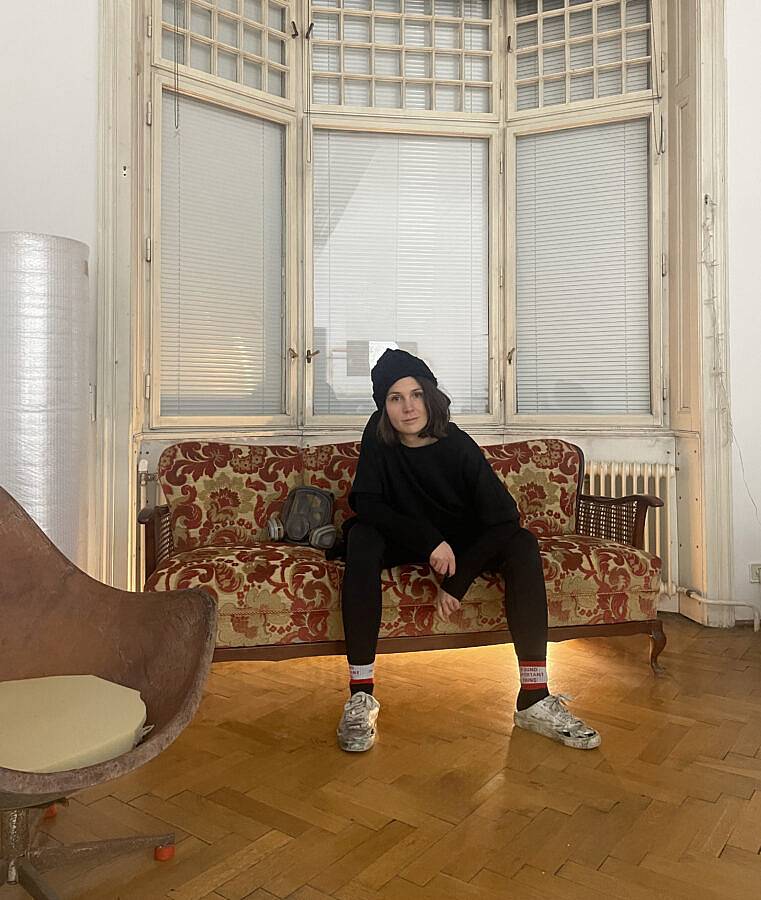
I am an artist based in Vienna, Austria. My interests revolve around imagery and associations we assign to it. This idea expands also to objects and installation.
Walk us through what it might look like when you enter the studio.
I come into the studio and change in my work clothes right away, because everything around me starts to spill before I even notice it. Then I prepare some coffee and sit with the works. After a short while something settles, my thoughts fall into place and the next step becomes obvious.
What do you think is a new issue arising in the arts and how do you deal with it personally?
I am not sure how new this is, people talk about this for a while already. It is not less pressing for me though.
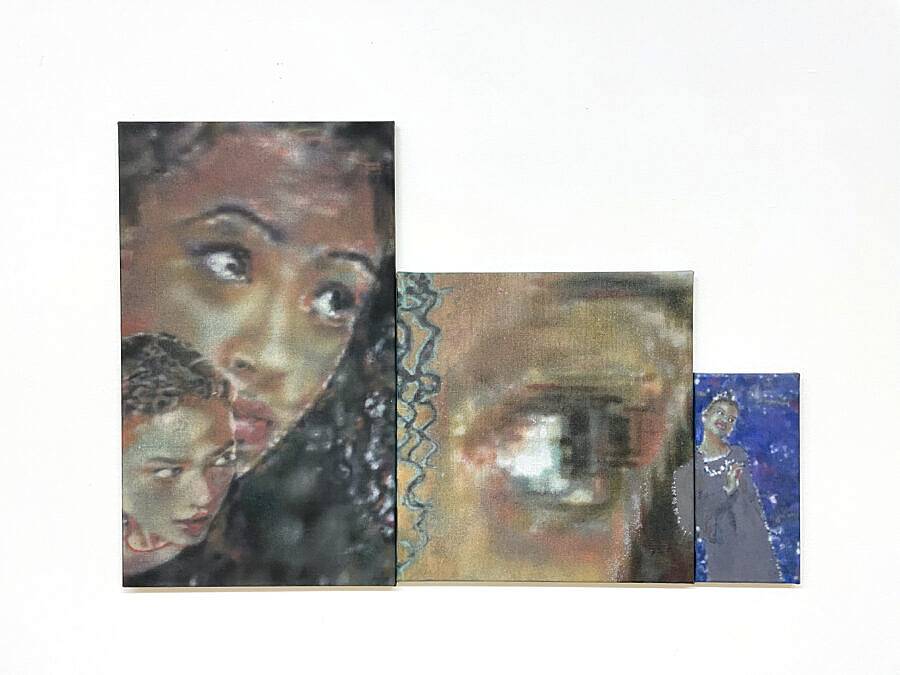
Images, information, content have become so quick that it can feel as if they dissolve before they settle and I deal with this by painting. It slows everything down. It lets me sit with subjects long enough to understand what they might hold for me, for society maybe. I don’t want to disclose any of this, thats not the point. The slowness creates space for thought. Because it makes a difference if you spent 1 second with an image or 3 days. And it makes a difference if you create content, online images, consumables or if you go through the city, walk into the exhibition space and see a painting in real life. You had interactions on your way and you feel the work differently.
How do you see your work evolving in parallel to things that are going on around you right now?
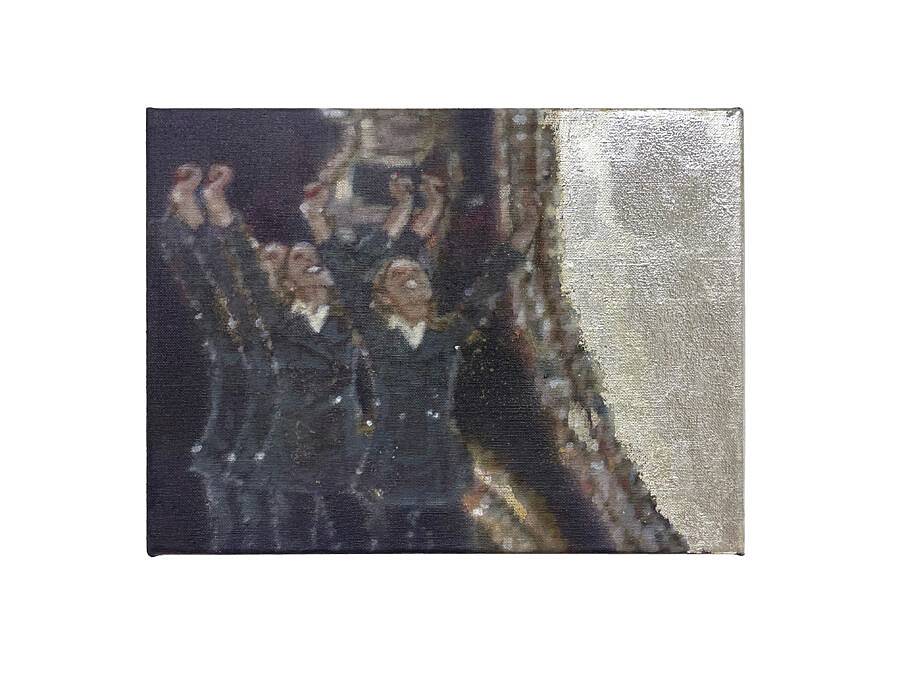
Right now, I have been thinking a lot about how different times seem to overlap. With digitised archives and online libraries, it feels like we can move between the 1890s, the 1950s, the 2000s, and today in just a few clicks. It is almost as if all these eras exist at the same time instead of in a straight line.
I am really interested in bringing those layers of time together; mixing images, references, and moods from different periods and letting them coexist in my work. This mixing feels close to how we experience time and memory today: not as something clear and orderly, but as a collection of moments sitting on top of one another. Modern tools and technology make that kind of blending very natural and accessible.
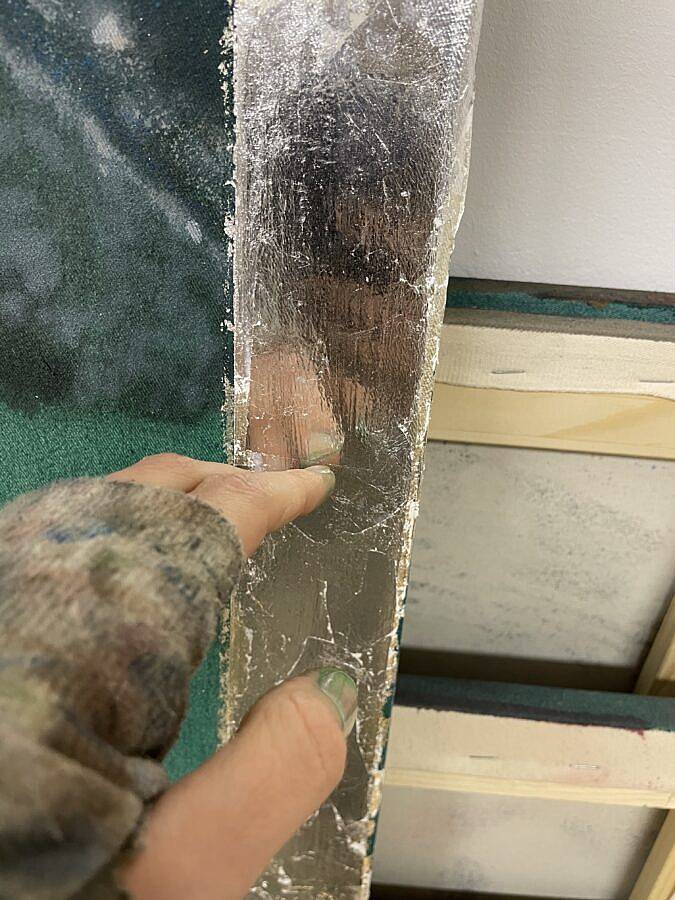
This is also why I am working with gilding more often now. It is so interesting, how the metal reflects its surroundings, the room as well as the spectator. This grounds it so deeply in the now, in the real world.
Is there any source material you find extremely relevant to your practice right now?
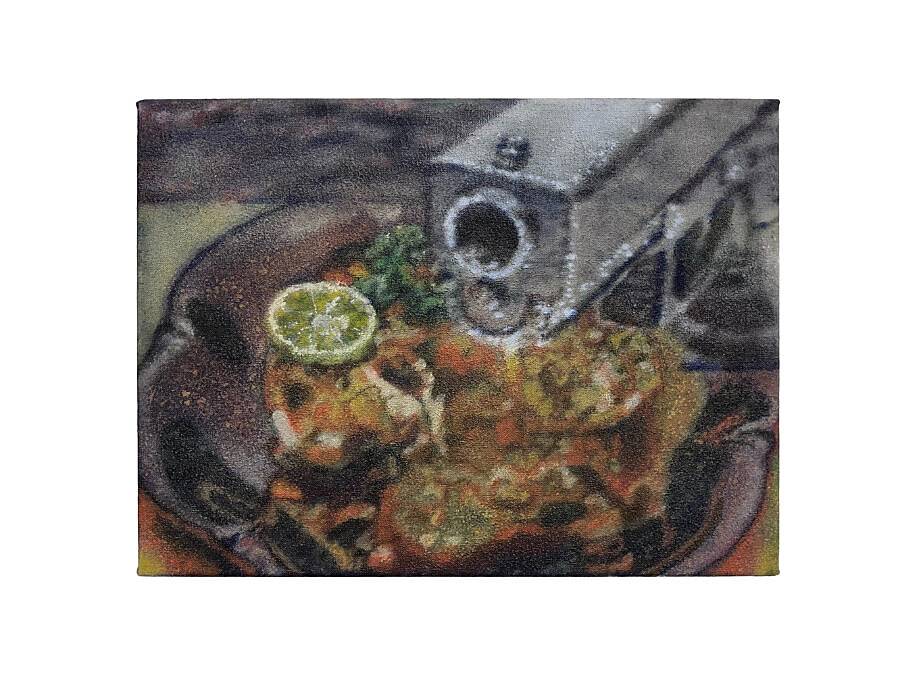
My main source material comes from those same overlapping periods of time. I often look through digitised archives and online image collections where different eras meet in unexpected ways. I am drawn to materials that already show signs of age, such as scanned photographs, early film stills, or prints that have been copied many times.
What interests me most is how these materials have changed through different stages of preservation and technology. The small imperfections, like glitches, fading, or distortions, carry a sense of history that becomes part of the work itself. In that way, the material keeps evolving, reflecting the shifting sense of time that I explore in my practice.
Your work has a foggy quality to it, eerily parallel to old camera footage if you will. Can you speak on this?
This foggy quality you mention often gets connected to memory, and I understand why. Many of us grew up with films that presented flashbacks in a softened, smoky way, so the look becomes part of how we imagine the past. I think some of that influences my work because the first filter I use is the camera lens itself. The image is already carrying the marks of how it was recorded, and those marks stay present when I paint.
Many of the source images I use already carry traces of age or technology: scans with dust, copies of copies, stills from early digital cameras. The imperfections give them a softened surface that hints at a long journey through time. When I paint them, I do not clear those traces away. I let them shape the atmosphere of the work. And also today’s snapshots will be memories at one point.
Does your relationship with your setting play an important part in your practice?
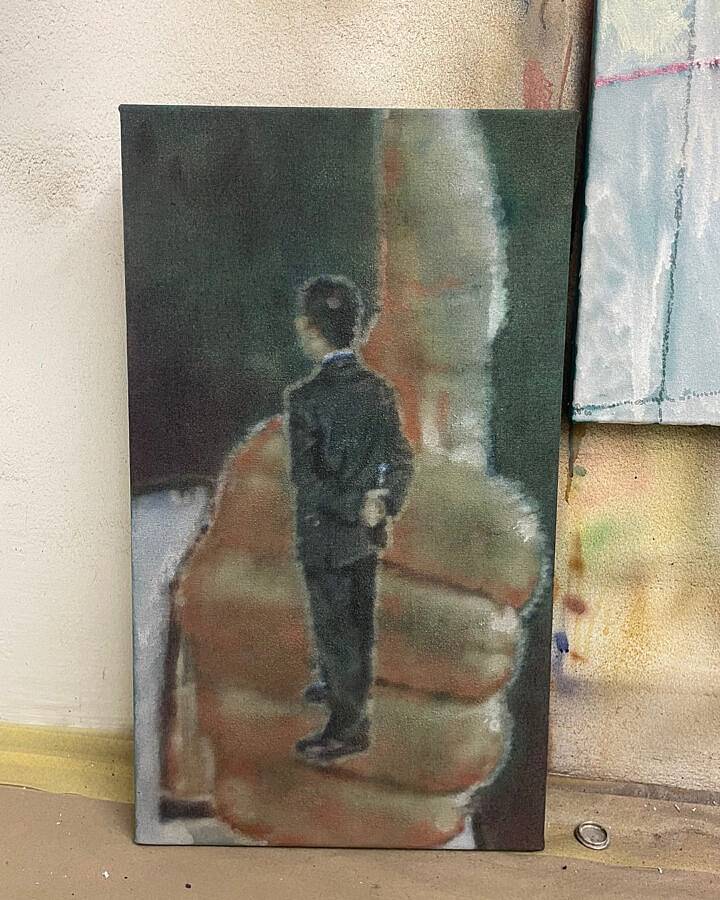
Yes. I pay close attention to the spaces I move through, and the images I collect often depend on small details in those surroundings. In solo exhibitions, I also respond to the architecture. I like to guide the viewer through the space in a physical way. You might have to bend, stretch, or look around a corner to see something. It creates awareness of the room and turns the paintings into objects you share the space with. I think in todays world of online image consumption it is important to point out the three-dimensional character of painting, its size, thickness and haptics, in contrast to a consumable image online. I try to emphasise this by using different canvas surfaces, different thickness of stretcher bars or quoting the room they are presented in.
Do your paintings arrive through careful conceptualization or natural improvisation?
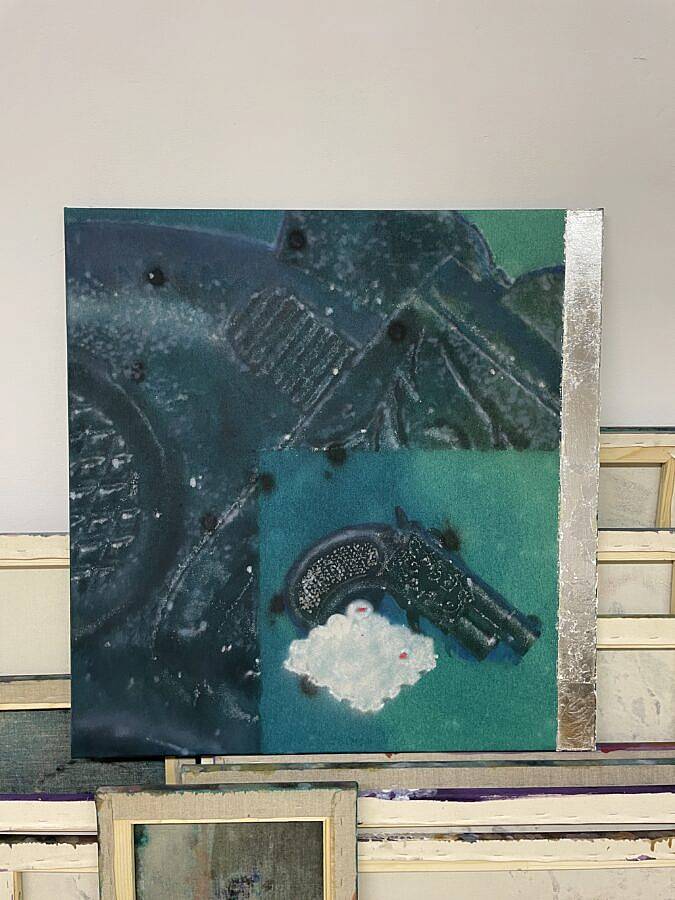
A mix. They grow out of both. The archive and the sujet give the work structure. I prepare sketches and collages, set the composition beforehand. The painting process brings the improvisation. Once I start painting, the medium takes over and something else begins to direct the decisions.
Can you speak on how personal your work can be? Does this offer intimacy in your opinion?
I try to not make my work too intimate. Since painting is so heavily commodified, I don’t want to become a product myself. But surely I like to spend time painting and therefore all the works are personally charged in this regard. In the end they are done by me, as a human for other humans.
They are personal in that sense, but they do not tell autobiographical stories.
Is there anything you’re looking forward to doing?
I want to continue expanding the work into the room. I am interested in building structures or objects that echo the logic of the paintings. Quoting utility but denying it at the same time. I am fascinated by DIN or ISO standards: so many things actually fit into each other although they are not meant to. Just because society decided on certain circumferences and they are easier produced this way. It shapes our everyday life aesthetics – how thick a pipe is, or a drain strainer, of a leaf catcher basket or the size of a salad bowl.
So, I imagine a body of work where images and materials enter a conversation.
What was the last show you saw that stuck out to you?
Guglielmo Castelli at Castello Di Rivoli. The surfaces and layers he creates in his paintings are fascinating.
Is there somewhere you’d like to spend time to further your practice?
I used to be drawn solely to rural areas because the quiet helped me sort my thoughts. But recently I have become interested in larger cities as well. The impressions you can absorb, exhibitions you see, the people you meet. This is why I am happy to go to London for a residency at the end of 2026.
Are there any quotes or ideas that you have stuck in your head lately?
Es kommt erstens alles anders, und zweitens als du denkst.
It also reminds me that we are neither the first nor the last generation going through unpredictable times. It seems to be a thing.
What artists do you think are making important work right now?
Lately I have been really interested in the work of Em Rooney and Tenant of Culture. Their way of working with materials resonates with me a lot, even though on the surface their practices feel quite different from mine. What connects us, I think, is a shared interest in the archive.
With Rooney, I am drawn to how photographs are embedded into pewter, resin, or steel, giving the images a kind of physical weight and slowing them down, taking them out of quick, digital circulation and into a quieter, more reflective space. I think, Tenant of Culture does something similar conceptually by taking discarded fast-fashion garments and reconstructing them into sculptures, extending the life of things that were meant to be temporary. Both artists follow an archival impulse that treats overlooked materials as worth of long-term care and attention, which feels like an important counterpoint to a culture that expects almost everything to be disposable.
Can you tell us a memory of someone interacting with your work that frequently crosses your mind?
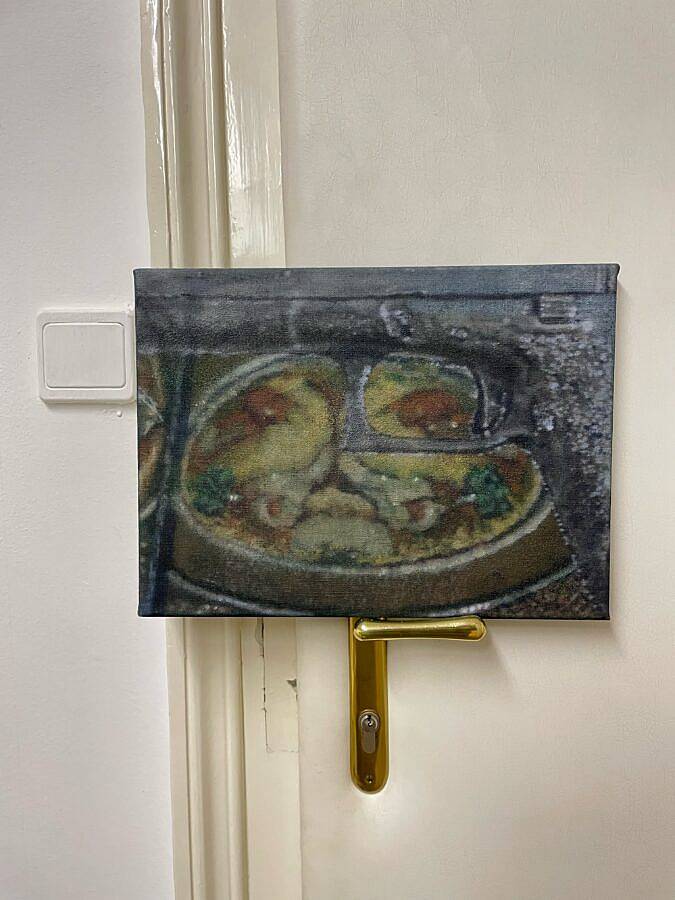
I do not have a particular memory, but I like it when people do not only see paintings as motifs but step closer to absorb and detect the colours and layers. Often it is, of course, painters who are doing this. But I am happy to see when regular people also start to inspect the works closely.
Interview conducted and edited by Liam Owings