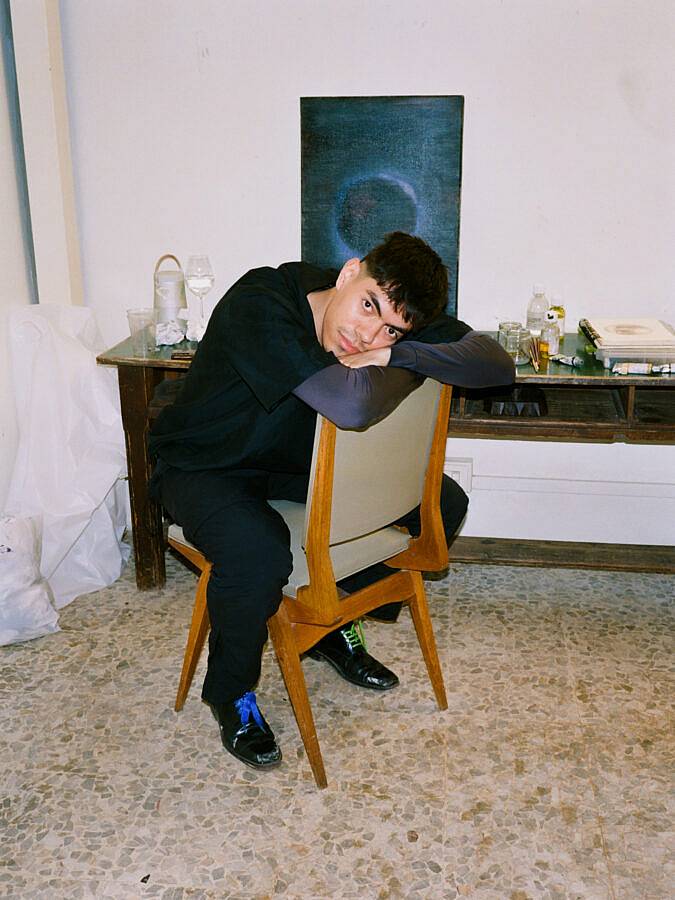
Tell us a little bit about yourself and what you do.
I’m a visual artist who was born, lives, and works in Mexico City, and I’ve always been deeply shaped by that context. The territory is a constant presence in my work, and it’s something I try to approach from different angles: not just territory as a nation-state or a geographic region, but also the bodies that inhabit it, questions of identity, and the tensions that emerge from that. Those are things I find really compelling.
Even though most of my work is painting, I’ve always said that I work with it because it’s the most immediate medium for me, along with drawing and sketching. But I’m always interested in seeing how an idea can evolve or take on a different form. Because of that, my practice often expands into other media like video, music, and installation.
Are there any influences that are core to your work?
One of the influences that has been most persistent in my creative process over time is the way we perceive Mesoamerican cultures, particularly those of Anáhuac. I’m interested in the transformation of the body, the process of Spanish colonial rupture, and especially how all of this is continuously reshaped through contemporary frameworks through both the physical and imagined structures of what we call “modernity.”
When it comes to naming specific influences, that’s something I find difficult to pin down. It’s constantly shifting, especially if we’re talking about particular artists or specific cultural references like books, films, or music. Those references are always changing, and I tend to think of influence as something fluid rather than fixed.
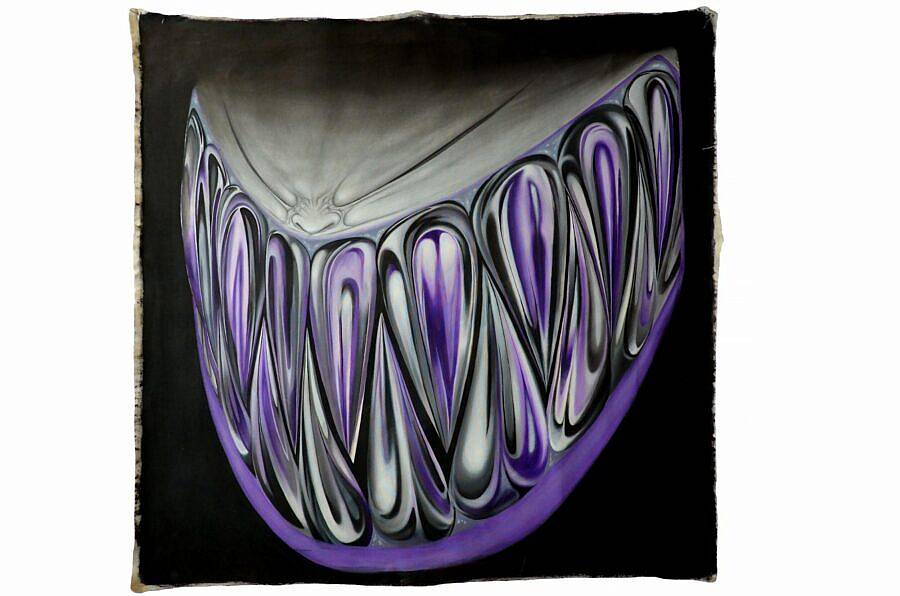
How were you introduced to the mediums that you work with?
The way I was introduced to the mediums I work with was very organic. I started with painting, but really, like many people, it began with drawing starting from zero: sketches, blank sheets of paper, graphite. That was the first step. The second step was painting, specifically acrylic, and I often mention that because it was the most immediate medium available to me. Acrylic paint only requires paint, water, and a surface, and in the beginning, that surface wasn’t even primed most of the time.
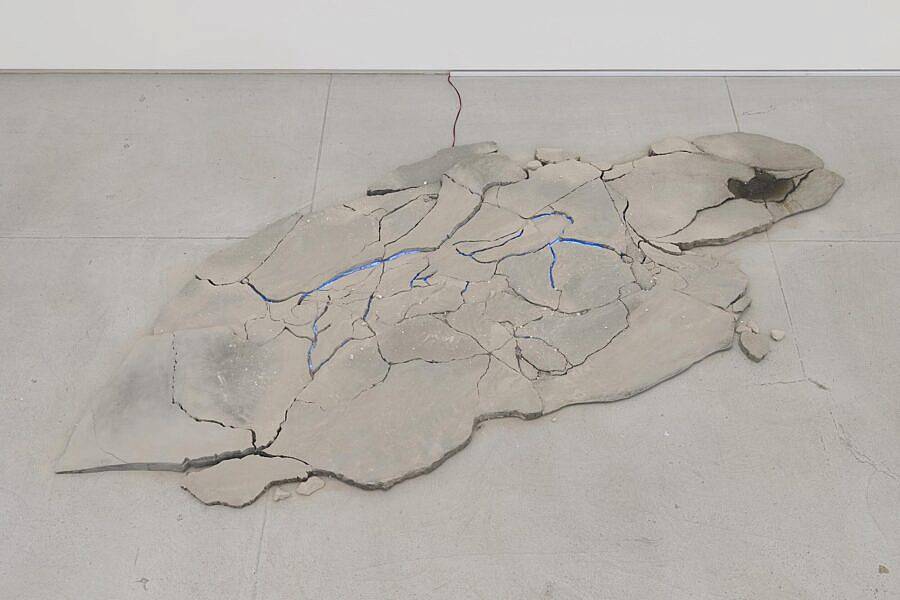
From there, my practice gradually moved toward sculpture and three-dimensional work, often through exhibitions and collaborative projects with friends, and eventually into installation. Installation has become one of my favorite ways to approach certain ideas, especially because some concepts work well within two-dimensional formats like drawing, painting, or even photography, while others feel very limited by those formats and need to exist in spatial or three-dimensional forms, such as sculpture, installation, or readymade.
I try not to center my practice around a single medium, because I understand artistic practice as something that reflects how a creative person relates to the world. I’m interested in approaching that relationship from as many angles and perspectives as possible, without letting the work feel constrained or conditioned by one medium. That’s why I often draw from what we might call the products of modernity working with digital technologies, video, music, and music production. For me, the practice is always a constant search.
Is there a moment you look back on as being formative to the work you do?
There are many moments I could point to, and I could answer this question in a more objective or traditionally “formative” way. But reading the previous question actually made me think of memories that feel more intimate, almost humorous or curious memories from my practice that I don’t often share, except with very close friends, and that feel meaningful to include here.
I remember being very young and becoming completely obsessed with certain things that really struck me films, music videos. One specific memory that comes to mind is a very popular music video in Mexico from the early 2000s, Beso en la boca. I must have been four, five, or six years old, and I was so fixated on it that I constantly drew it. Looking back, I understand that drawing was my way of processing an overwhelming amount of emotion and stimulation that I didn’t yet have the language to understand or articulate as a child.
Another memory that I find both amusing and meaningful is from kindergarten. I don’t remember the exact age, maybe four or five, but I clearly remember the moment when drawing people stopped being just sticks and circles. It was as if something in my awareness suddenly shifted. I began to draw shoulders, to give figures more presence and structure. That moment marked something important for me: a realization that I had agency, that I could choose how something appeared and how it was represented.
It’s a very early and perhaps hard-to-name experience, and even now I don’t fully have the words to describe it. But it’s something deeply embedded in my process, something formative, and very intimate.
What’s your studio or workspace like? Do you have any rituals when you settle in there?
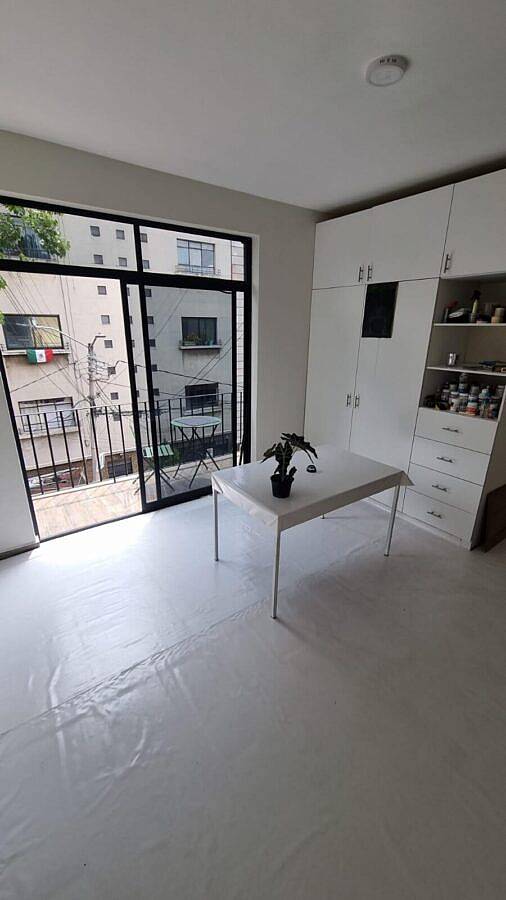
I really enjoy this question, especially because I’ve just recently moved into a new space and I’m very happy there. I now have one room to live in and a separate room that functions as my studio, which feels incredibly important to me. It has beautiful natural light, which was non-negotiable from the start.
I wanted the studio to be completely white, almost like a laboratory. That idea came very intuitively; it was just a theme I had in mind. Beyond the light, it was important that the space felt inspiring and supportive of my process, and I feel like I found the right place. There’s a balcony, an incredible view, and I try to keep the space decorated with simple, thoughtful objects that don’t take up too much room, since it’s not a very large space.
That includes things like candles and small vases. I really like feeling influenced by the objects that exist inside the studio. Many small works or sketches that didn’t leave the studio over time remain there, alongside personal objects I’ve collected things that feel precious to me, even if they’re modest in scale.
I didn’t start with a very fixed idea of how the studio should look. I only knew I wanted it to be white, and from there the space slowly shaped itself.
In terms of rituals, I wouldn’t say I have very specific studio rituals, especially because I also live in this space, so they blend a bit with my daily routines. What does feel important, though, is starting a new piece in a clean environment.
During the process itself, the studio often becomes quite chaotic not messy in a careless way, but simply full and disordered. There’s usually very little room for things to look “nice,” especially when I’m working under deadlines and everything becomes more intense.
If I do have the time and I’m about to begin a new piece, I like to reset the space. I make sure everything is clean, ordered, and in its place, so I can start from there. One small ritual I always come back to is opening the balcony door, standing there for a moment, looking out at the view sometimes smoking a cigarette and then settling into work.
What kind of imagery are you drawn to?
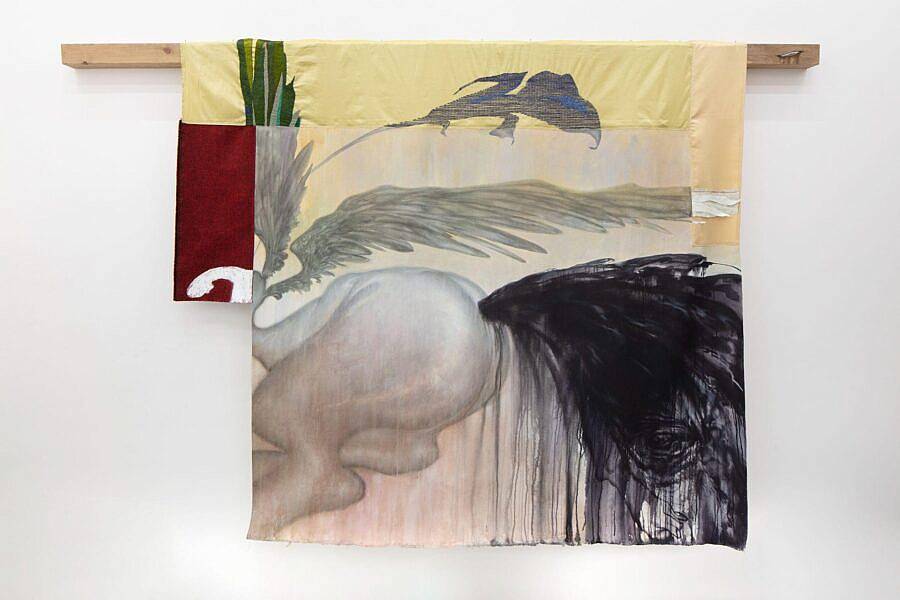
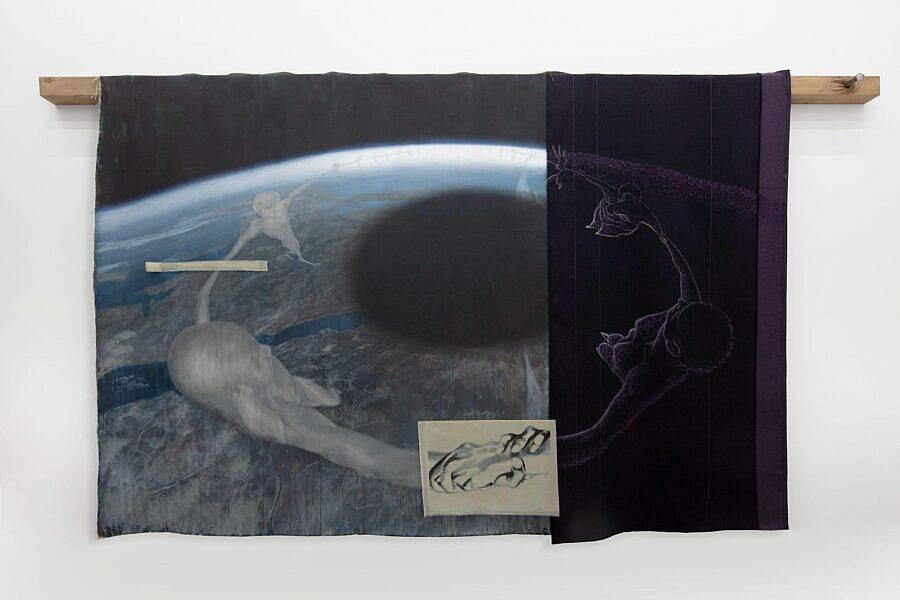
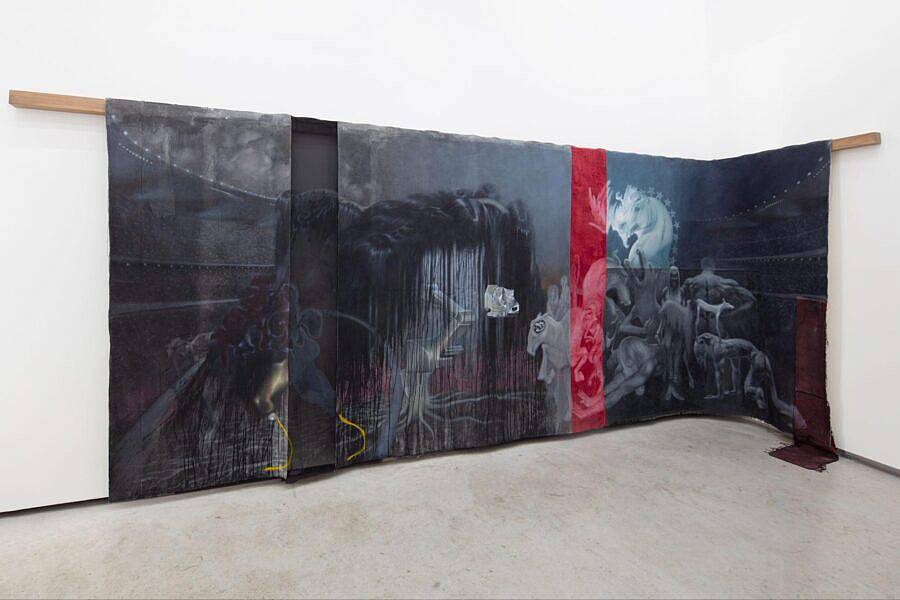
Lately, I’ve been feeling very influenced by imagery related to the transformation of bodies, particularly through the lens of nahualidad. In Mexico, this concept often carries a background that feels almost paranormal, but I don’t approach it from that angle. For me, it’s closer to a metaphysical process. It’s certainly mystical and tied to the occult, which is why it has often become a central figure in horror narratives. But beyond that, it’s something that has always been present in the cultural imagination of Indigenous communities, especially within the cultures of Anáhuac.
I’m not interested in understanding this imagery as horror at all. Instead, I approach it as a way of thinking about bodily transformation processes that resonate strongly with the kinds of transformations we’re experiencing in the present.
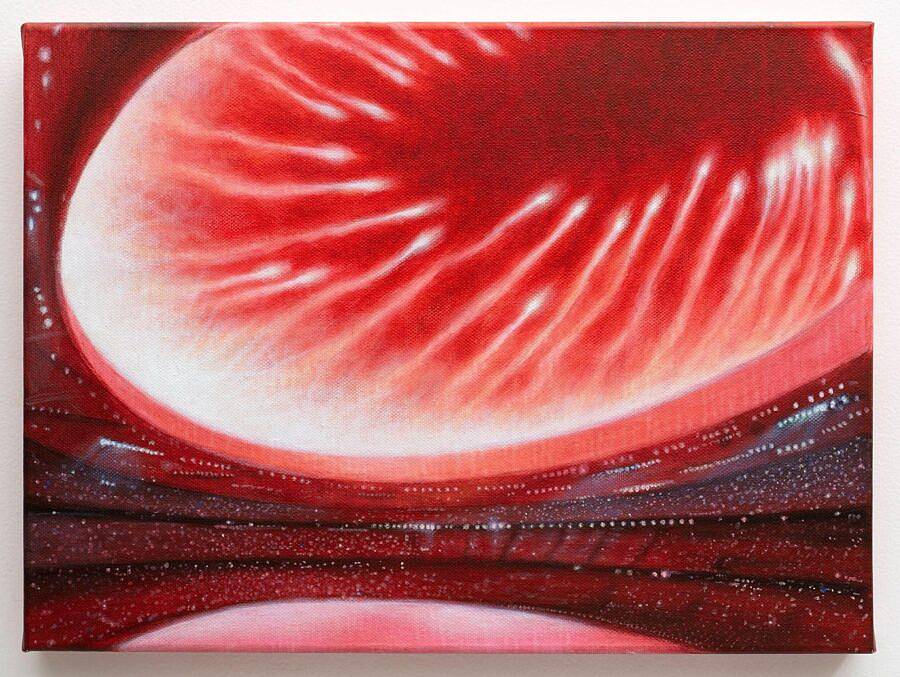
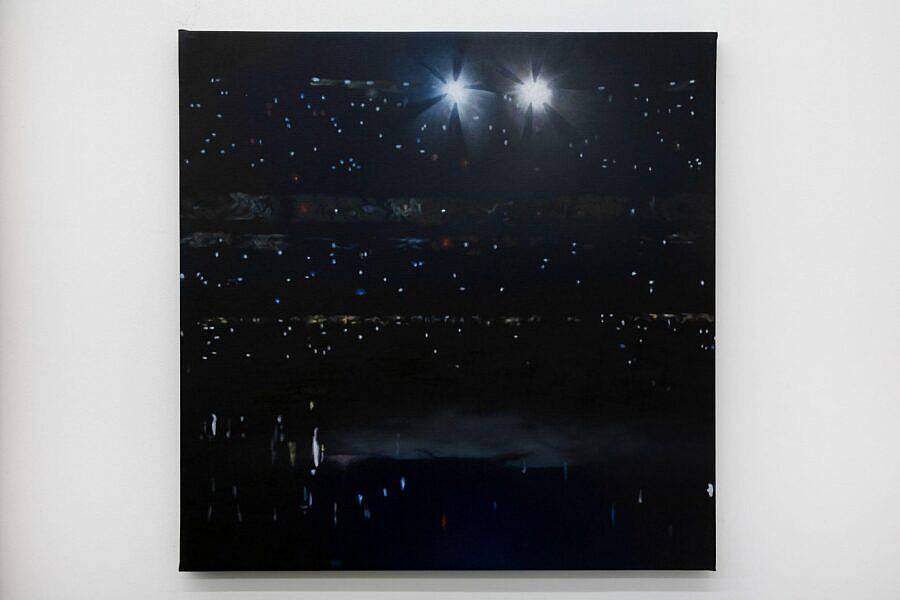
What I enjoy about working with imagery is that even when references seem to contrast sharply with one another, they can still coexist and make sense together. Alongside these more mystical ideas, I’m also deeply drawn to large-scale structures megastructures of the city, like stadiums, airports, and urban skylines. I’m especially obsessed with stadiums. Images of stadiums anywhere in the world really captivate me: the lighting, the scale, and the way they function as contemporary arenas spaces of gathering where experiences can feel almost spiritually revelatory. It’s something I never get tired of witnessing, whether in person or through images when I’m not physically there.
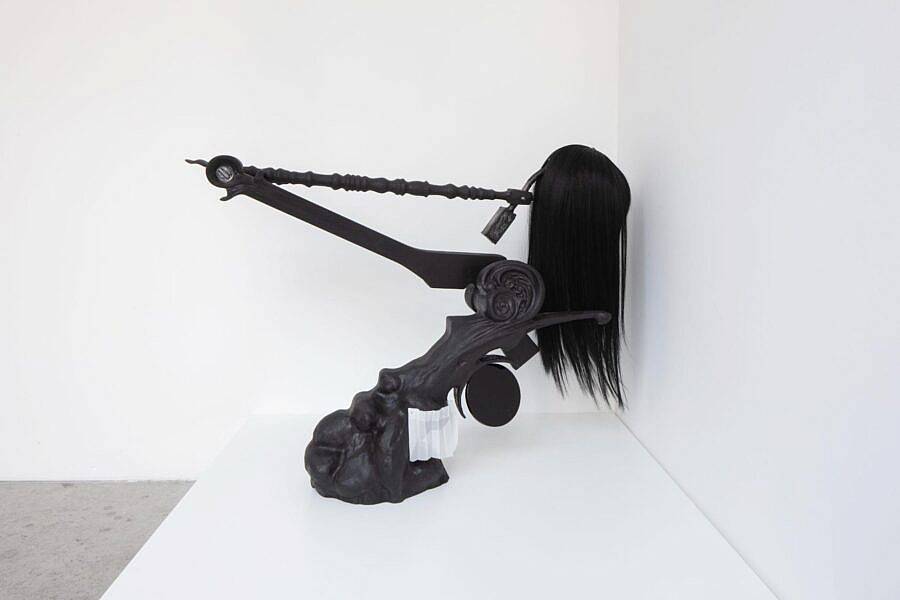
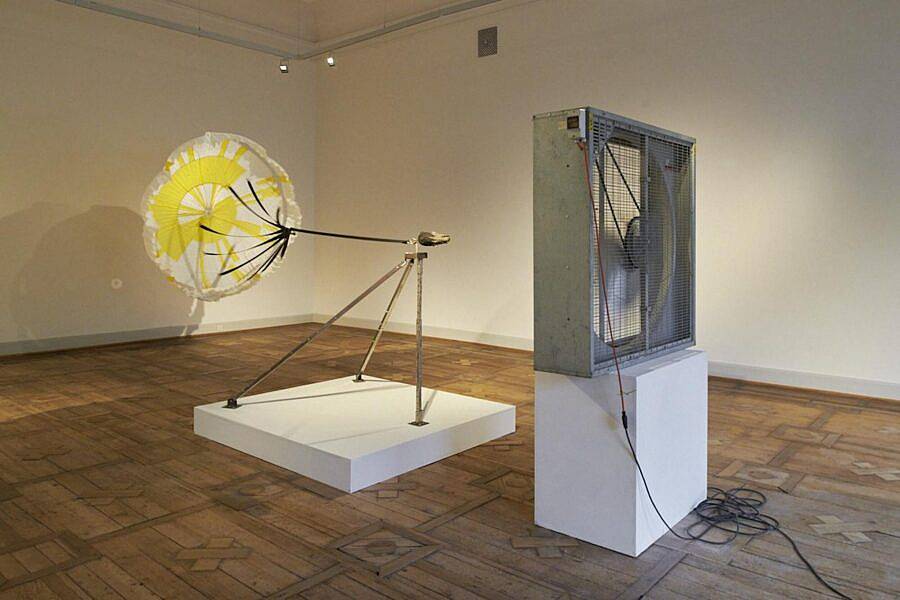
Also, industrial robotic arms really obsess me the imagery they produce, the movements they make. Not only from a conceptual angle, but also in a much more immediate, almost instinctive way. There’s something deeply poetic about them, but at the same time it’s very direct: just looking at the object for what it is. The beauty of those movements feels overwhelming to me every time I see them.
When needed, where do you look for inspiration? Have/how have these sources changed over time?
When I need inspiration, I usually return to material I’ve already accumulated over time, things I’ve saved and keep building onto. That includes images saved on my computer, TikTok, Instagram, music playlists, and other visual or sonic references. It’s not that I go back to one single source; it’s more about revisiting a personal archive that’s constantly growing.
If there’s something I return to often, it might be large-scale mass events, like Olympic opening ceremonies, especially because of my interest in stadiums. I’m always trying to find new ways of looking at these kinds of collective spectacles. The same goes for events like Formula 1. It’s not that I follow or even fully understand it, but I’m really drawn to the imagery that surrounds it.
I also sometimes return to documentaries that feel familiar in a very casual way, films that many people encounter during university years. Things like Samsara, or documentaries by Adam Curtis, for example. They’re part of a shared visual culture that I occasionally revisit.
I sometimes like to think of books as a source I could return to for inspiration, but in reality, inspiration for me is very immediate. I usually just need a small stimulus: a single image, a song, a short video, or occasionally a film to trigger something. Books take time, and that slowness doesn’t always align with how inspiration works for me.
And honestly, when I feel overwhelmed or stuck from working too much and things stop flowing, inspiration often comes from stepping outside the studio altogether going out into the street, exercising, watching people. That reset is sometimes the most effective source of all.
Can you tell us a memory of someone interacting with your work that frequently crosses your mind?
There are a few memories that come to mind, some more banal than others. One that stands out is when I made a series of paintings of bodybuilder figures wearing high heels. My uncle, who is a cis man with a fairly traditional, slightly macho mindset very much shaped by the Mexican context reacted to them with a mix of intrigue and discomfort. It wasn’t outright rejection, but there was a clear tension there, and I’ve always found that reaction curious.
Another memory is much more banal and almost funny in hindsight. During an exhibition, two people accidentally kicked a sculpture of mine that was placed on the floor damaging it and then ran off without telling anyone. I got upset and told them they had to leave the party. It almost turned into a bigger drama, but it eventually resolved itself. That experience made something very clear to me: I don’t want to do exhibitions that are also parties or music events in the same space anymore.
The last memory is very recent. At Art Basel Miami, a woman who works with hypnosis and who also teaches it approached me during the show. She seemed genuinely affected and asked if I was the artist. When I said yes, she told me she was very impacted and asked whether I practiced hypnosis or anything similar. I told her I didn’t. She then explained that one of my paintings, Domine Deus Noster, resembled what she and her students often experience when they leave a conscious state and enter what she described as an astral plane.
I found that moment really interesting. I took it as a kind of compliment. I like to believe in those kinds of things, even if they might sound a bit “hippie.” But honestly, I find them compelling, not gonna lie.
Does/How does your sculpture practice interact with your painting practice? Or do you view them independent of each other?
I don’t see them as independent from one another at all. For me, they’re complementary. Whether it’s sculpture, video, or even music especially lately, everything functions as an extension of everything else.
I don’t think about using different mediums as a way to better describe an idea, but rather as a way to communicate it more clearly and more fully. Working across disciplines allows for a deeper, more layered understanding of what I’m feeling, what I want to express, and what I’m trying to represent and say through the work.
Are there any areas that you’re interested in exploring further in your work? Whether that be new mediums, processes, materials, etc.?
Absolutely. There are areas I’m actively working on right now, especially video involving CGI, green screen, and processes that are no longer purely experimental, but that require a more structured production and collaboration with other people. That shift really excites me.
Music is probably what moves me the most, but it’s also something so expansive in my mind that it can feel intimidating at times. It’s new, and it feels like learning a new digital language one that I’ve needed to speak for a long time.
Performance is another area I haven’t explored extensively yet, but it’s something I’m increasingly drawn to, particularly in relation to audiovisual work and the way I’m currently thinking about it. The idea of character development of embodying a character, embodying the work itself is something that deeply motivates me from within. It’s also about leaving the studio and allowing the work to exist in a more lived, physical way.
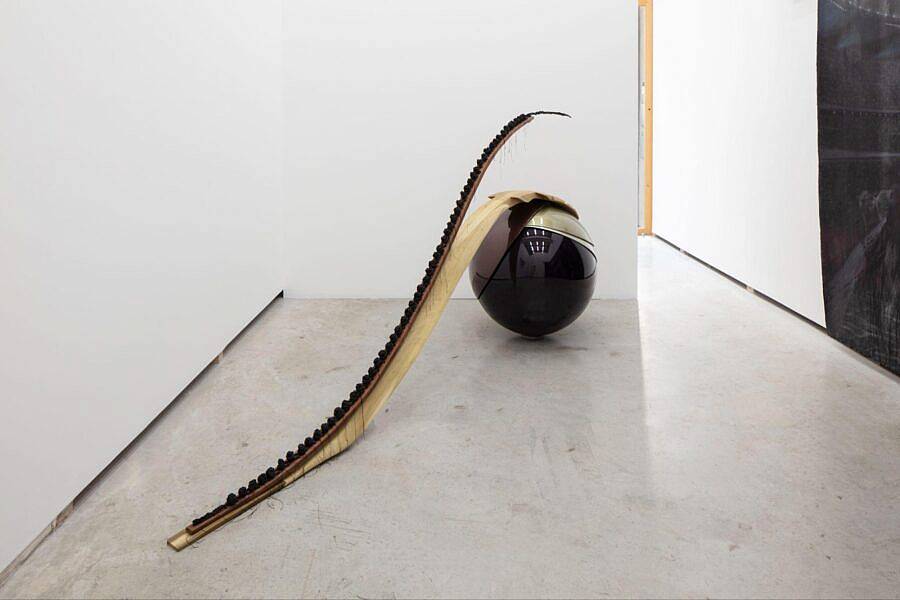
What is your experience like as an artist living and working in Mexico City?
It’s definitely not a sweet glass of water; it’s a bitter drink. Bitter in the sense that it can be deeply motivating, but also very frustrating if you don’t come from a stable economic background, which is my case. That doesn’t mean my entire process has been defined by frustration, but it has very much felt like a leap of faith into the void.
I want to approach this question from a more realistic and grounded perspective, from the actual conditions of making art. Beyond feeling inspired, which of course happens, how inspired you feel is often determined by how much financial stress you’re under and by your ability to sustain a practice over time. This is something I see constantly among close friends and fellow artists.
Mexico City is a place where inspiration is everywhere. There are countless stimuli, a strong historical weight, and a potent energy. You feel it even if you don’t know how to fully read it. But that inspiration is much easier to access when there is some level of stability, and when your survival doesn’t depend entirely on whether or not a piece sells. Like in most cities, it’s easier to create with a sense of calm when money is not an immediate concern.
Lately, I’ve been looking back at a long list of ideas and works I’ve wanted to make for years. That list keeps growing, and many of those ideas are still very present: they’ve stayed with me for five years now. Sometimes I wish I could make all of them at once, which is obviously unrealistic. But that sense of impossibility is closely tied to the reality of working in Latin America, where sustaining an artistic practice depends heavily on economic stability in many ways.
I don’t come from a family with financial security. Choosing this path was more a collective leap of faith to my family, by trusting me when I decided to study art at university. Looking back, I feel proud of how far I’ve come despite the obstacles, but I also remain cautious. It’s important not to feel too comfortable, because the ground is always shifting.
How do you manage tending to the variety of responsibilities in the work you do? How do you mitigate burnout or exhaustion?
That’s actually a very important question, especially at this moment in my career. As my practice has grown, the volume of work I’m handling is larger than ever, and it has started to feel overwhelming.
I’m at a point where I definitely need assistants (particularly in painting) in order to properly develop the pieces I already have planned and the projects that are coming up. So far, I’ve been managing everything on my own, and that inevitably becomes a bit chaotic.
I don’t yet have a fully structured strategy for dealing with it. What tends to happen is that I enter very intense production cycles: I work under significant pressure to meet deadlines, I deliver the pieces, and then I’m completely exhausted. The following week I just want to rest, to be outside, to stay away from the studio. The difficulty is that another deadline quickly approaches, and often I’m still tired. So the cycle repeats itself.
It’s a very demanding line of work, and the art market constantly requires you to have work available and to meet tight timelines. Without strong structure, it’s difficult to step out of that rhythm, and it can lead to anxiety and burnout sometimes even to the desire to stop doing anything for months.
The way I try to mitigate it is by listening to music, going out, and seeking intense experiences that take me out of the studio routine. I don’t mean extreme excess, but rather emotionally charged moments that allow me to disconnect and reset.
Are there any travel experiences that are formative to your work or to you as an individual?
Yes, there is one experience that remains very present for me. It was a residency in Florence, and it ended up being far more formative than I expected.
I stayed in a very old building near the city center. The space itself was deeply historic — the room where I lived had frescoes on the ceiling. In Mexico, a place like that would most likely function as a museum, yet there I was, living in it for a month. That experience profoundly shifted my perspective.
My practice often reflects on access to history and knowledge, and on how we experience them in relation to territory — particularly in Mexico. Being immersed in a place where history is not something distant or institutional, but embedded in everyday life, reinforced many of the arguments and internal reflections I had already been developing in my work. It made those ideas feel more concrete and embodied.
It was one of the most constructive travel experiences for me in that sense.
That said, I learn something from almost every trip. Some experiences are more transformative than others, often depending on how long I stay. I don’t always travel with the intention of seeking something specific — I tend to move with the flow. Sometimes I have expectations, but many times I try not to expect anything at all, so I can remain open to whatever unfolds.
What do you collect?
I collect perfumes or more precisely, scents.
Because full bottles can be expensive, I usually collect discovery sets from brands I genuinely like. I’m especially drawn to niche perfumery not exclusively, but I do pay closer attention to it. Sometimes I collect more, sometimes less; it depends on the moment.
Whenever I travel, I try to visit local perfumeries, especially to discover brands that aren’t available in Mexico. I take those opportunities to smell fragrances I’ve only encountered through online reviews. There’s something frustrating about trying to imagine a scent based solely on descriptions you can hear someone talk about notes and accords, but you can’t truly understand a fragrance until you experience it yourself.
In a less physical sense, I also collect music digitally. I really enjoy building playlists and organizing songs, especially as a way of revisiting moments from my adolescence or even imagining moments I feel I’m about to live. There’s something meaningful about arranging songs and giving them a certain order.
Sometimes that also involves doing a lot of research trying to remember the name of one or two specific songs I used to listen to years ago but can’t fully recall. That process of searching and recovering them feels like a form of collecting as well.
I also enjoy “liking” albums on streaming platforms. For me to like a full album means that, aside from maybe one or two, at most three songs, the entire record feels incredible. That gives me a deep sense of satisfaction.
In general, I’m not someone who collects many physical objects except for scent.
Interview conducted by Luca Lotruglio and edited by Seth Nguyen. Artist portrait shot by Jesper Lund for Numeroventi.