Tell us a little bit about yourself and what you do.
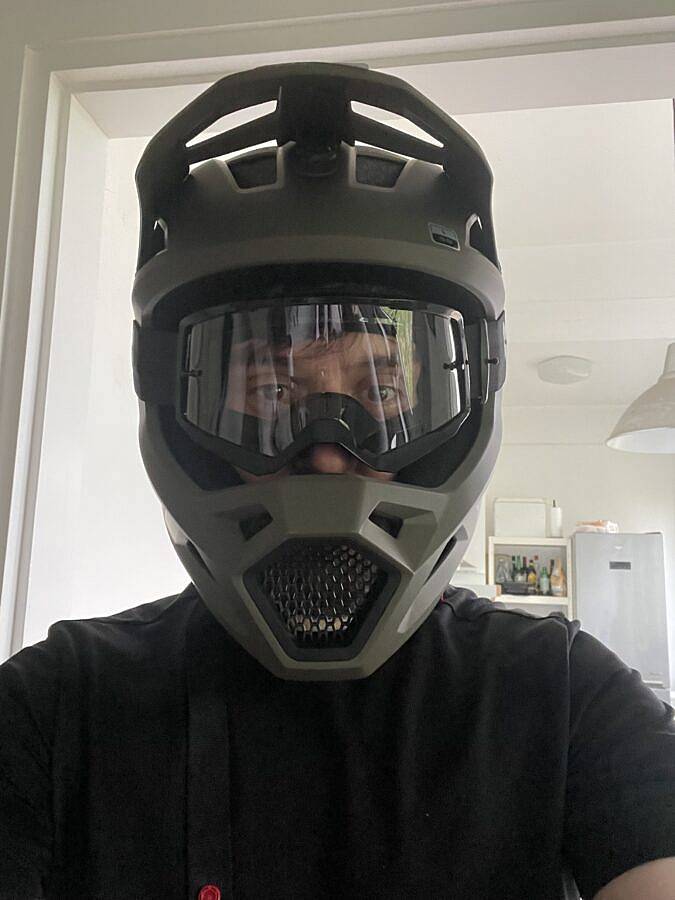
My name is Matija. I was born in Yugoslavia in 1987 (now Slovenia). I’m a professor of fine arts, which is just a fancy name for an art teacher. I don’t teach, because my true passion has always been painting. I live in Slovenia in the countries second biggest city of Maribor. I like playing my electric guitar, downhill biking, and running.
Why do you think it might be so important to talk about pop culture in art?
Because pop culture is an essential part of our society. It constantly influences us, changes, and influences how we perceive ourselves and others. And art is a reflection of our society, so these two terms are intertwined in a very primary way. I think art, even in its most abstract form, is almost always connected to our society and therefore to pop culture. Pop culture makes art more accessible. By painting cartoons and science fiction motifs I think I can connect with a broader audience and make a dialogue with them about contemporary issues.
What do you think is a new issue arising in the arts and how do you deal with it personally?
I think Artists relying too much on AI to cut corners is a problem. I don’t see much creativity in that. Also, AI taking over graphic design and illustration, it writes gallery texts, I guess it helps with auctions. In some aspects I don’t see that as a problem. It’s a good tool for helping you out when you get stuck, but the problem is when AI i s used to think for you. I personally never use AI in my art. It just defeats the whole purpose for me. My creative process is as important as the completed painting. And the worst part of AI art is that it lacks emotion.
Do you ever see yourself as one of your paintings?
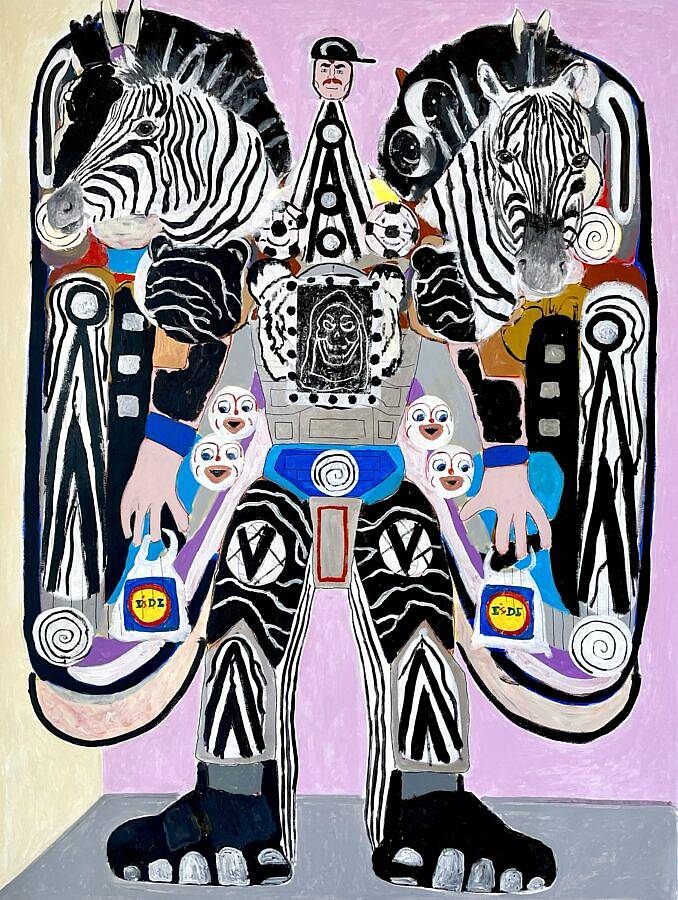
When I first started to paint my characters, I was always seeing them as people in our society. People who exist in our capitalistic world and wore brands and carried shopping bags. Those works were a critique about over consumerism. But the more I looked at the characters the more personal connection i felt about them until I discovered they were infact self-portraits and the people around me weren’t guilty of over consumerism, but I was.
Is there any source material you find extremely relevant to your practice right now?
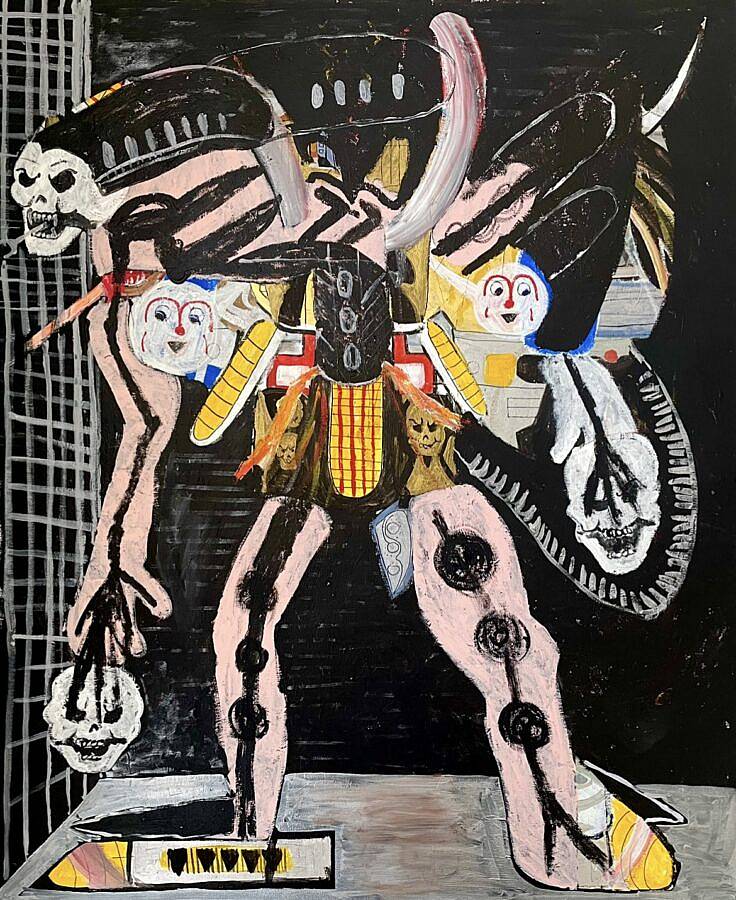
I have always felt that the first Alien movie somehow influences almost all of my paintings. The xenomorph, the perfect organism, the ultimate survivalist is almost like the consumer in my paintings. You almost have to be as aggressive as an xenomorph to survive in this world. Also, the Xenomorph has a symbolic relevance, because it embodies primal fear, corporate greed, bio engineering, and AI. Which are really important issues today.
Can you speak on how your work is influenced by cartoons/characters? What else do you think is a prominent influence?
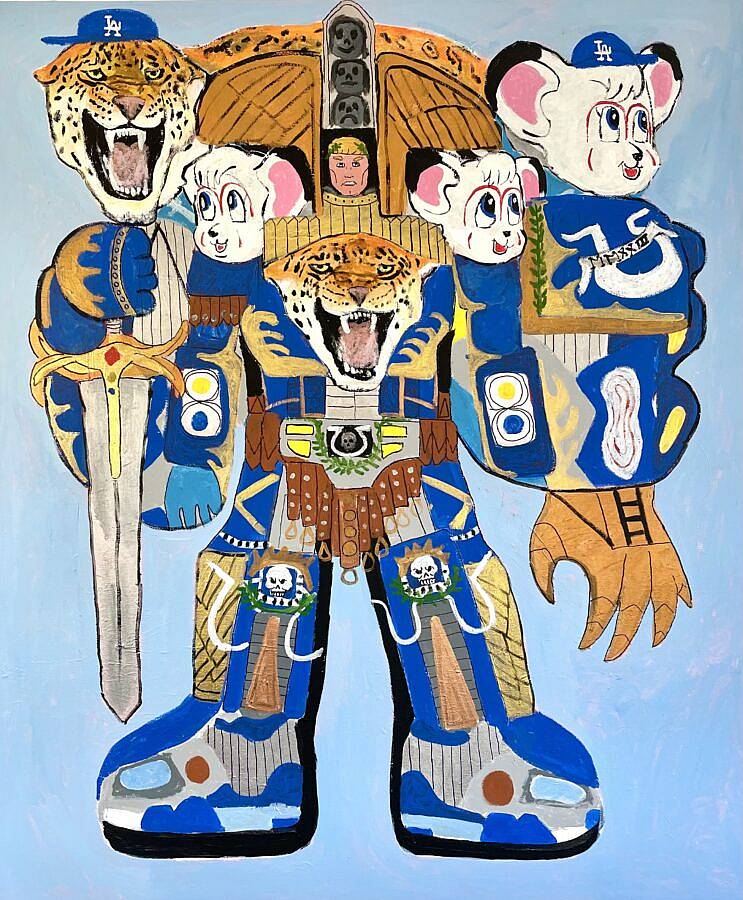
Cartoons were the first thing I remembered I was fascinated with. In Yugoslavia there were only socialist cartoons which had a completely different concept than western cartoons. When I first saw a western cartoon (teenage mutant ninja turtles) It was so different from what I used to see. The saturated colors the action the Idea. I used to put paper on the television screen and trace the characters, redrawing them on cardboard and then I made carboard cutouts that I turned into my own toys. I wasnt allowed to paint and draw those characters in school, the teacher insisted that we painted characters from slovenian literature, and thoutht cartoons were stupid. When I started painting, I remembered that I could paint whatever I wanted, and the first thing I wanted to paint were cartoon characters that I painted on cardboard cutouts so many years ago.
Does your relationship with where you’re from play an important part in your practice?
Yes. As I mentioned, I was born in Yugoslavia which was a communist country. We didn’t have access to western stuff, but after the collapse of Yugoslavia, many countries emerged and one of them was Slovenia. Whit the collapse an influx of western media and goods overwhelmed us. The toys, the movies and cartoons were extremely fascinating for me in i still feel this nostalgic fascination in my works.
Do your paintings arrive through careful conceptualization or natural improvisation?
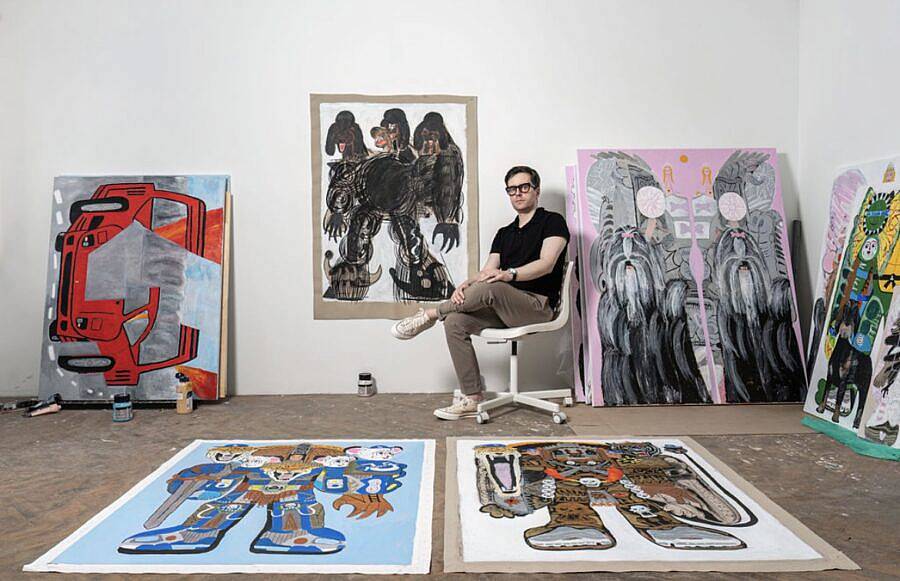
Almost all of my works are sort of improvised. I never do sketches. I try to make the whole painting in my head, and then i try to transfer the image from my head to the canvas. A lot of distortions happen in the transfer, but i find them really exciting. Sometimes the painting in my head looks good, but it works terrible on the canvas. In this case, I usually improvise and change it with different layers and elements.
Can you speak on how personal your work can be? Does this offer intimacy in your opinion?
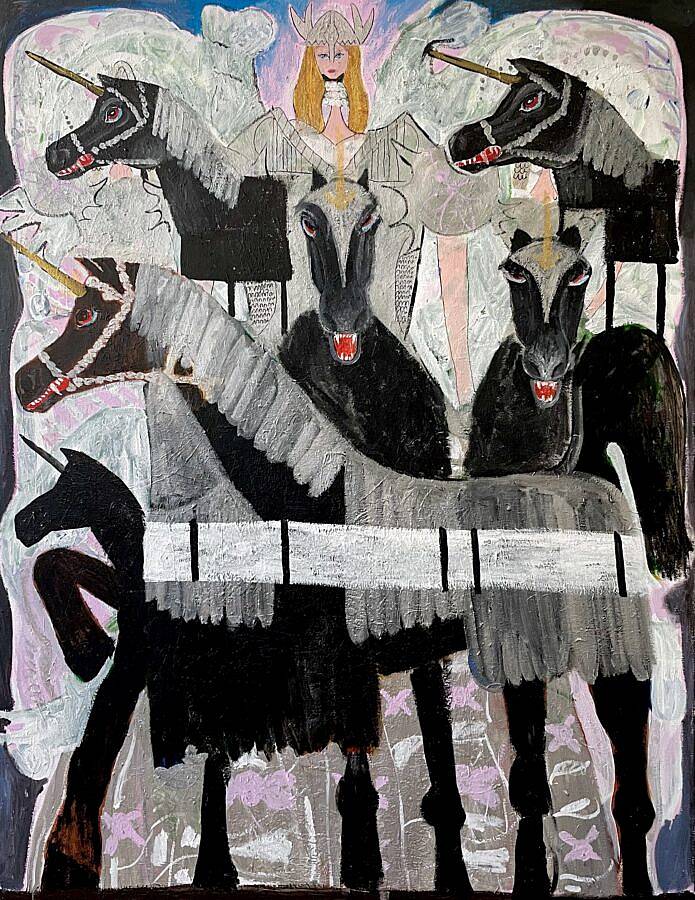
I think my work can be very personal if the viewer feels a connection with it. I think I am nothing special about how I fit into society and who I am. I am the cyborg, Frankenstein’s monster, alien, cartoon, clown, and I found out that most people are also all those things as well. I think this is the reason my art speaks to people, because it makes them feel normal.
Can you speak on how your paintings speak on consumerism?
At first I thought that my works were just a critique about consumerism, but soon I realized it’s more connected to the transition from socialistic to capitalistic world that I experienced back in the 90s. All the influences from the western world and the fascination about them. My art critiques consumerism and is also influenced and inspired by it.
What was the last show you saw that stuck out to you?
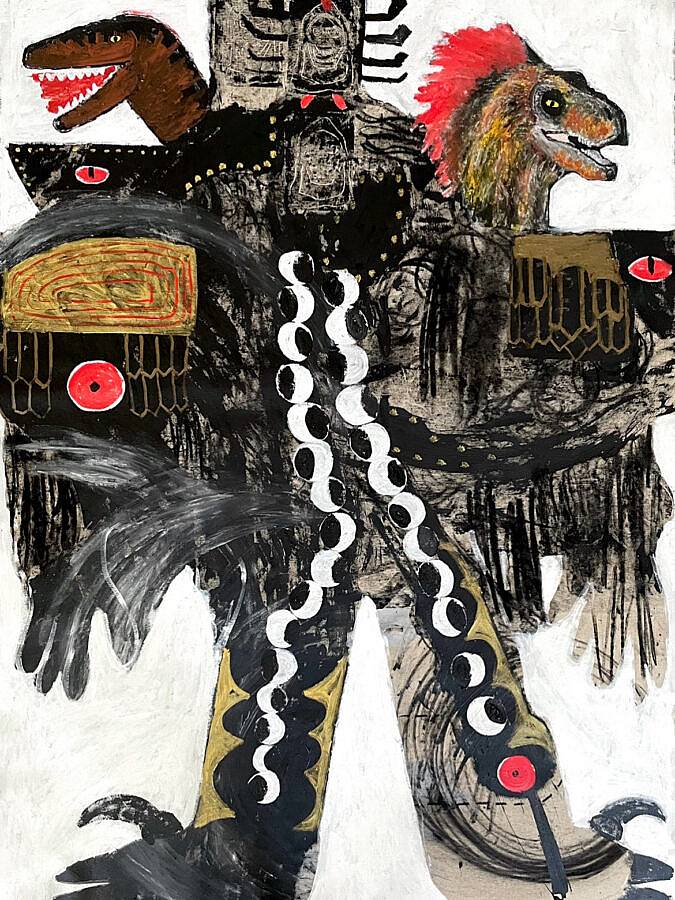
The Basquiat show in Vienna. I was always a huge fan but seeing his works in person was just mind-blowing. The layers the colors and the social commentary! I especially liked how he built his paintings. He added layers and removed elements that he thought were unnecessary for the painting. I felt a very strong connection with that, because my artistic practice was always very similar.
Tell us about how your paintings take on concepts like Frankenstein and the cyborg in this modern era.
I build my characters from cartoons, science fiction and elements from daily life, and how I experience life and society. So my characters are literally like Frankenstein’s monster, composed of many things and emotions that I pick up from the environment. Cyborgs like robocop or the terminator are an essential element of the frankensteinan figure, because the coldness and calculating nature of a machine is also necessary to survive in this world. And similarly, as the xenomorph, issues regarding AI, cybernetics, and weapons are one of the biggest threats for humanity today.
Are there any quotes or ideas that you have stuck in your head lately?
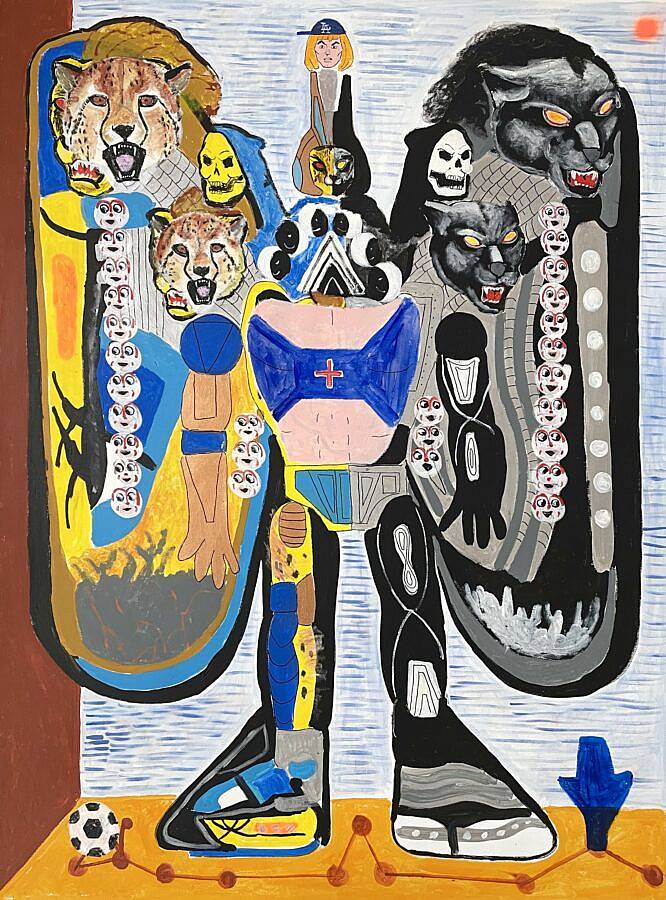
I don’t have any concrete ideas or quotes stuck in my head. But I’m thinking a lot about what I should paint. I’m trying to observe the world and myself even more and trying to find connections between painting and society in an even more profound way. Maybe using art to raise awareness about social issues and to better understand the shared human experience across different cultures.
What artists do you think are making important work right now?
The ones that are experimenting and creating their own stories and styles. Artists who are pushing the limits and are not trying to be trendy or hyped but doing their own thing no matter what the art world expects from artists and what art should look like and what sells.
Can you tell us a memory of someone interacting with your work that frequently crosses your mind?
The best memory of an interaction with my work was a little girl punching one of my works on a musem show literally fighting and boxing with one of my characters. I still think kids are the best critics. I don’t really know if she liked the painting or not, but she picked up a fight with it, and I think that was amazing.
Interview conducted and edited by Liam Owings