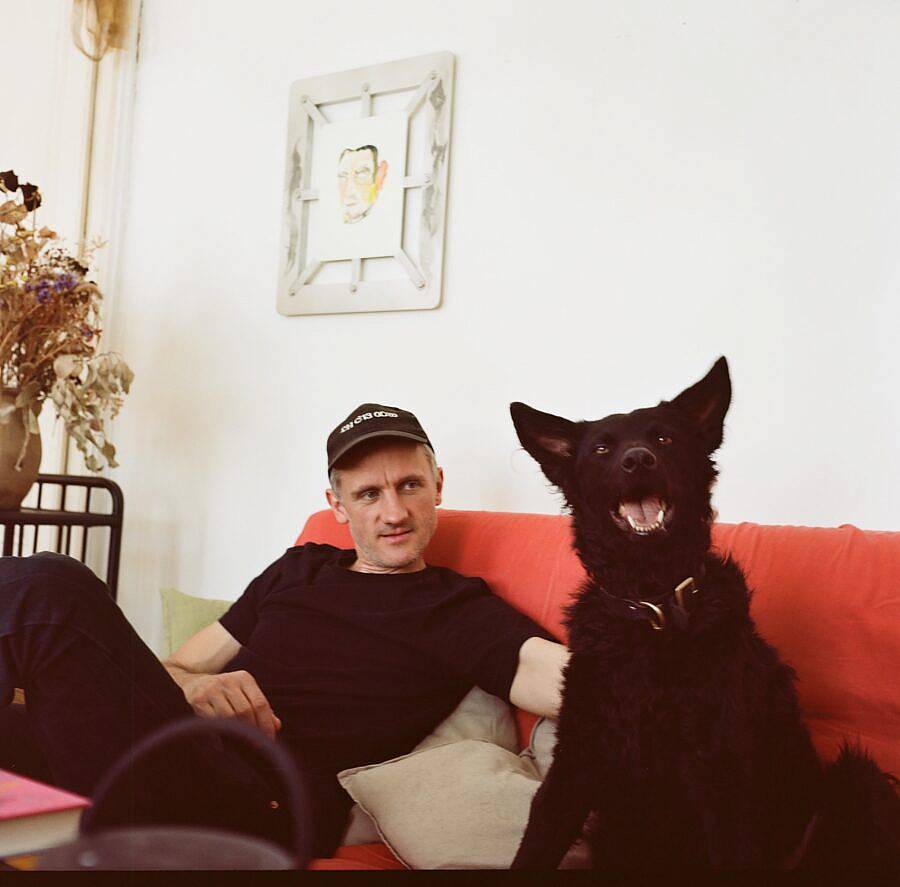
Tell us a little bit about yourself and what you do.
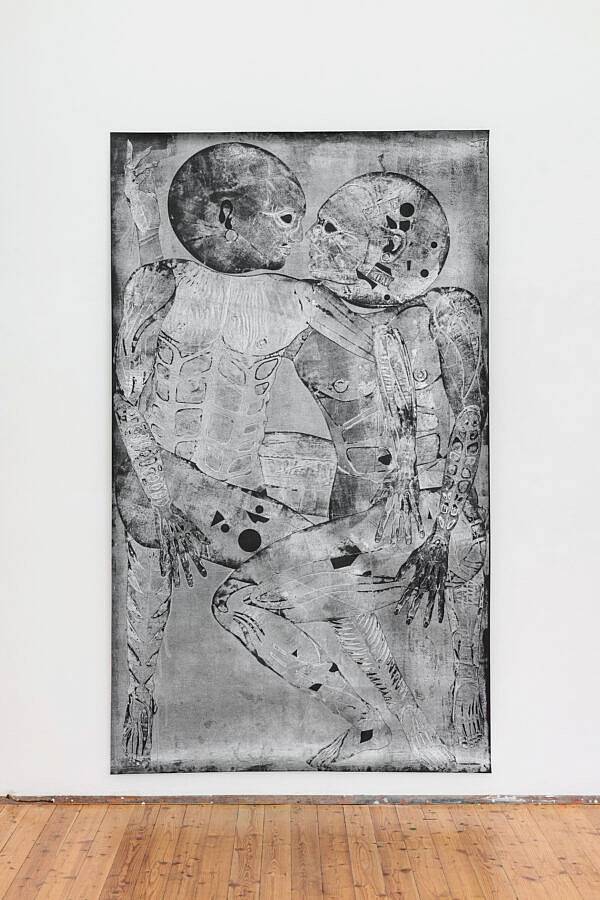
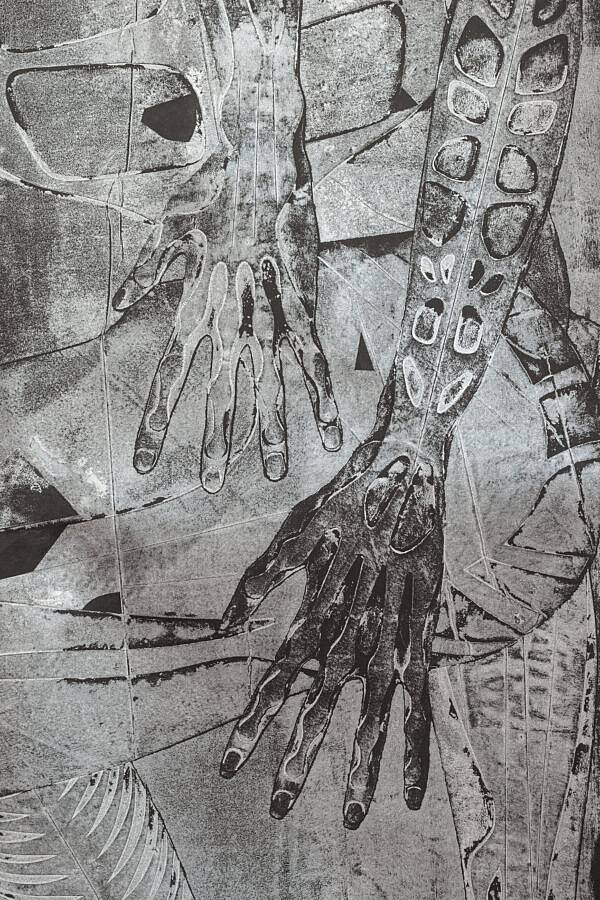
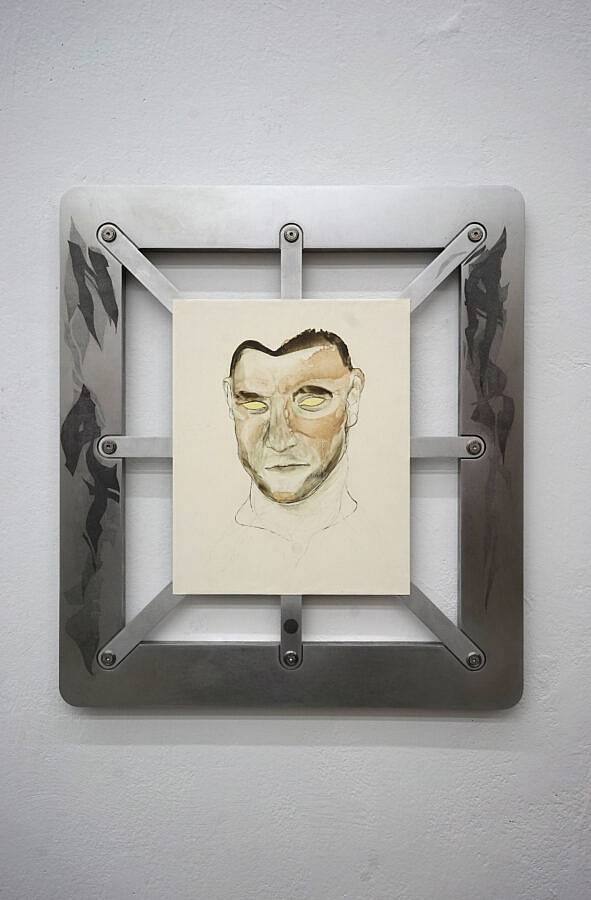
Hello, I’m Lukas. I live and work in Cologne, where my studio is located, and in Brussels, where I run the autonomous exhibition space FLⒶT$. Ever since, I have been fascinated by images of the human body. My works are characterized by an anatomical approach to the motifs, whereby the focus is less on the physical constitution of organisms and more on the relationship between the inside and the outside.
A lot of what you produce works in tandem as painting, drawing, installation, sculpture, and more. It can easily fit into more than one box. Is there any particular form that attracts you most?
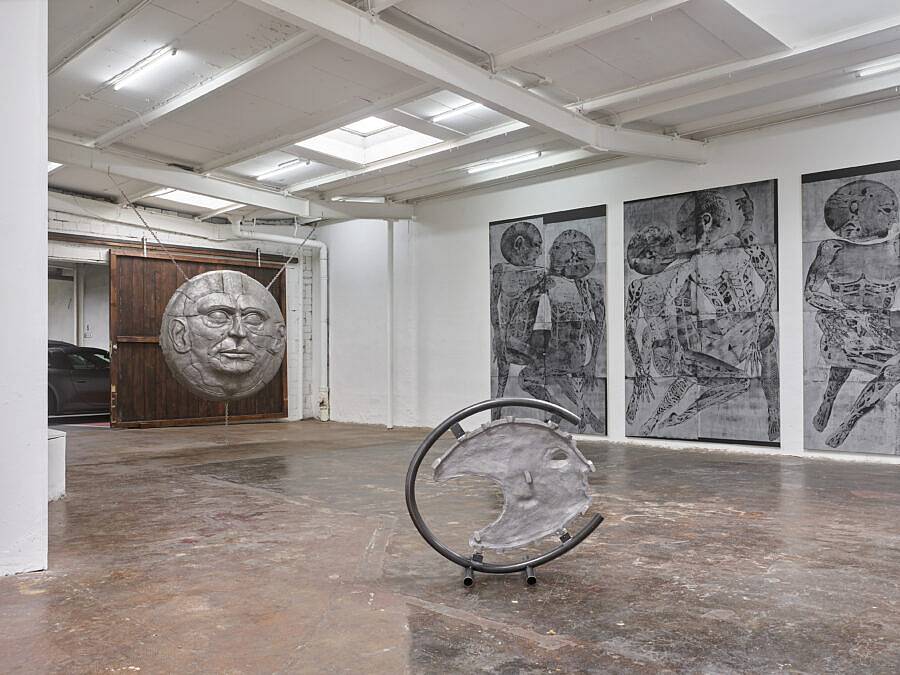
I am much more interested in hybrid manifestations than in normative ideas or border lines. The idea of media purity has always struck me as ideological and therefore somewhat suspicious.
That being said, do you think that certain mediums might carry those messages differently? Is there a benefit to not even taking this into account?
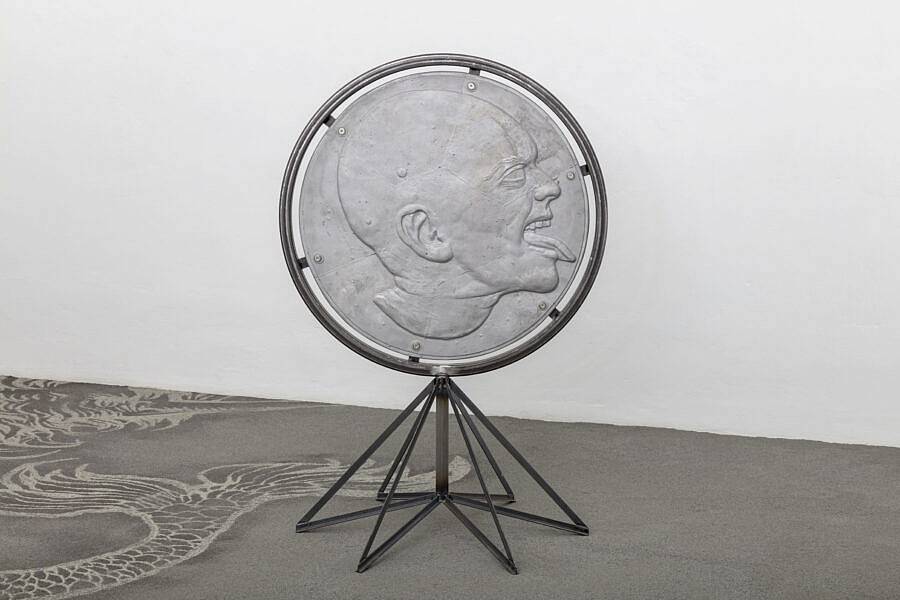
If the term “medium” simply refers to the materials used, then I definitely agree with this idea. The Gestalt of my figures always emerge while working in the studio and is strongly influenced by the characteristics and dynamics of the materials i use. When I model a huge head with clay, it naturally looks different than when I scratch a tiny figure into a copper plate with a needle. I very much welcome this momentum of its own, because it leads me to results that surprise me. It often happens that I then transfer certain glitches or accidental shapes into new works in a different material.
Art mutates or dies.
Is there any source material you find extremely relevant to your practice right now?
Particularly relevant to me are all images of the human body and objects that relate to the human body in order to expand it: objects from art and cultural history, comics, anatomical drawings, sci-fi designs, fashion and functional clothing, all forms of protective gear or prosthetics.
What do you think about the relationship modern technology has with nature? Who draws the line in the sand?
I like the idea that we are all naked monkeys. Against this backdrop, I find it difficult to see technology as something unnatural. For me, transhumanism is something very human and, seen in this light, began with the use of the hand axe. Which doesn’t mean that I’m not looking forward to the day when certain representatives of our species finally get themselves frozen and shot to Mars. Let’s hope that by that day we will have left some of our world intact.
How does science come into play?
For me, science, like technology and art, is one of the rare things that we as humanity can be proud of. All these disciplines are beautiful in their inherent drive to move forward, in their creativity and vitality. At least science and art are currently under serious threat from the advance of the new right, including so-called alternative facts, avant-garde copycatism and neo-fascist AI aesthetics.

Do you think collaboration is important and/or inherent to being an artist?
Collaborating is great. I have organized concerts with friends, made a documentary film with my brother, wrote texts with fellow artists, designed exhibition displays and books with coleagues. But in the studio, I need to be alone. That is my private space.
Is art supposed to be fun?
If fun is a Stahlbad, art should never be fun. Art makes our nerves sensitive and our hearts open. Art makes us alive and therefore vulnerable. Nevertheless, I of course enjoy working in the studio and looking at art….
Do you think it’s important as an artist to have a relationship with the Internet? If so, what might this look like?
I am sure that somewhere out there is a great artist who, for whatever reason, is not active on the internet. For me personally, that’s unthinkable. What happens there is far too interesting, and I love losing myself in things…
Is it ever helpful to make diagrams or write? How do you know when it reaches the point where that becomes the work itself?
Often I sketch out ideas roughly before I start the actual work. For me, writing always happens afterwards, as a reflection. Sometimes, however, these activities lead somewhere other than where I intended and cease to be functional. That’s always like a little gift.
Do you think of space and architecture when making your work, or is it more so conceived in its own private setting?
This question is very difficult to answer. On the one hand, I want my artworks to be independent and self-contained, and to convey a kind of self-evidence. Nevertheless, I still want them to be accessible to as many people as possible. This is sometimes a dilemma. The art world’s obsession with context and institutions is usually very hierarchical; I grew up with DIY subculture and am often surprised that people in the art world seem to be more interested in where you do something than what you do. It’s a bit like Henry Miller’s Astrological Fricassee, except that in the art world you’re not introduced by your zodiac sign but by your gallery representation.
Do you consider the space your work exists in as a necessity to the work itself?
Of course I want my work to be perceived as art. In this respect, this space is very important, although I like the idea of bringing my work back into the subcultural sphere and, for example, installing a sculpture at a rave or using it for a record cover.

Do you have any opinions on the amount of work being produced by artists in this current climate? How do you deal with this yourself?
A very important question.
Barnett Newman racked his brains over what to paint. But we should rather ask ourselves why to paint.
The new right is flooding the world with shit, the industry is overwhelming us with products we didn’t ask for, the tech companies seduce us into self-destructive consumption with addictive designs and dark patterns. It is more necessary than ever there is people who rather give than take. That there is artists producing things that make alternative offers.
Of course, I don’t mean the waves of fracking art that are constantly washing over us everywhere.
I don’t want to see any more exhibitions that immediately make me think about oral and anal cash flow and remind me of my low production budgets.
Please don’t show me any more vampire art.
Please show me art that breathes.
Please show me art that is beautiful.
It can be ugly, cynical, or fucked up. But in its ugliness, it should be beautiful. In its cynicism, it should be vulnerable. In its fucked-upness, it should radiate love.
What was the last show you saw that stuck out to you?
Nan Goldin’s show at the Neue Nationalgalerie in Berlin immediately comes to mind. So much beauty, so much pain. Such a powerful poetic resistance. I walked through the exhibition with tears in my eyes. Absolutely outstanding. An exhibition like this gives me hope and confidence, and the feeling that art is something wonderful, something thoroughly positive.
Can you tell us a memory of someone interacting with your work that frequently crosses your mind?
Some time ago, I had an exhibition. An artist friend told me that looking at my new works was like watching animals in the forest. That was the greatest compliment anyone has ever given me.
Is there a specific goal you’re working to accomplish right now?
I´m still trying to paint a flower still life with vanta black .
Interview conducted and edited by Liam Owings