Tell us a little bit about yourself and what you do.
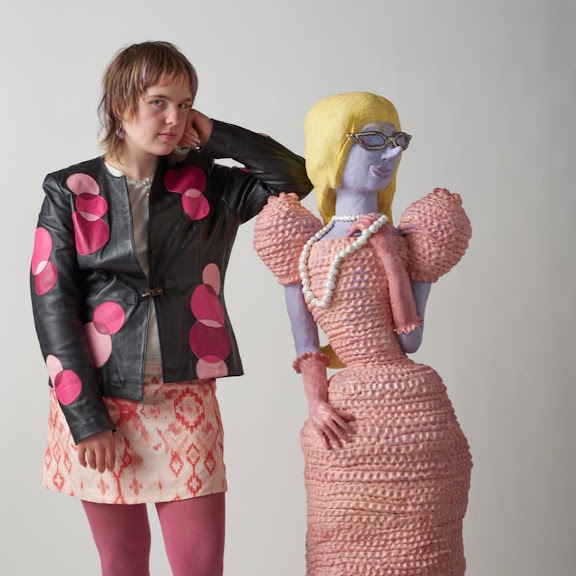
I was born into a kiddie pool inside a small bungalow in Kansas City, Missouri during a summer thunderstorm that caused a power outage. I’m told the dogs sat nearby watching in candlelight, and my placenta was planted beneath a rose bush that grew so large it began to overtake the house. The sense of mystical energy around my own origin story feels important to how I approach my sculptures.
I attended a French immersion school and became fluent at an early age, having teachers from all over the world and an understanding of language and communication has allowed me to have a well rounded perspective on the world which I am eternally grateful for. I stayed in Kansas City for college, attending the Kansas City Art Institute, where I developed a foundation in ceramics and sculpture that continues to inform my practice today. I currently work primarily in ceramics, but recently have been venturing into textiles, creating objects and figures that exist somewhere between fantasy and discomfort.
Is there anything you’re working on right now that you’re really excited about?
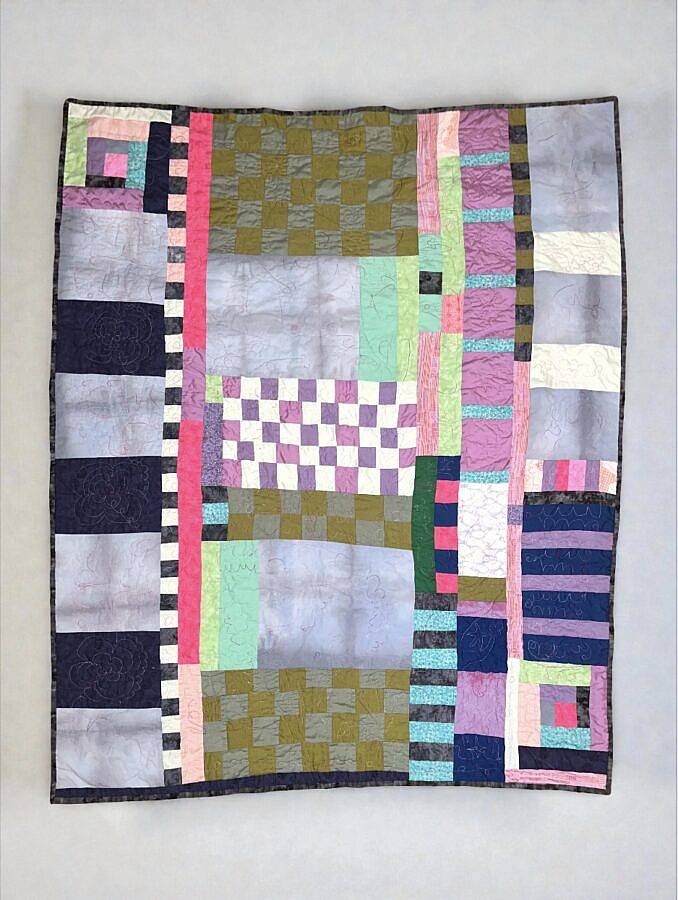
I’m currently working on a series of quilts that began as supplemental projects while I’m between ceramic studio spaces. Initially, I thought of them more as craft objects, secondary to my art practice, but they quickly became studies of color, pattern, and intuition. These are elements I’m deeply connected to in my sculpture, but hadn’t allowed myself to revisit in such a raw and immediate way.
I quilt them using intuitive top-stitching, allowing the surface to build. When layered over intense geometric patchwork, the quilts begin to feel like paintings. They are dense with dimension, movement, and hidden information. I’m excited to integrate these quilts more formally into my practice and to explore what happens when they’re shown alongside my ceramic work. The contrast between hard, fragile ceramic and soft, bodily textile opens up a conversation between permanence and vulnerability that feels connected to where I am right now.
How were you introduced to ceramics?
I was first introduced to ceramics at a young age through a summer camp at Belger Crane Yard and I remember being both mesmerized and so confused by the material and the processes. I wasn’t able to return to the medium until later in high school. Once I did, I became completely absorbed by it. The squishiness of clay, and the way it responds so directly to touch, allowing you to create virtually anything.
During my senior year, I had half days at school and spent nearly all of my free time in the ceramics room working on sculpture. My teacher allowed me to take bags of clay home, where I set up a small studio in my bedroom and brought greenware back to school to fire and glaze.
That period made it clear to me that ceramics was something I could spend my life doing. I went on to attend the Kansas City Art Institute, known for its ceramics department, where I received a rigorous education in both concept and material that laid the groundwork for my current practice.
What influences do you think play an essential role in your work?
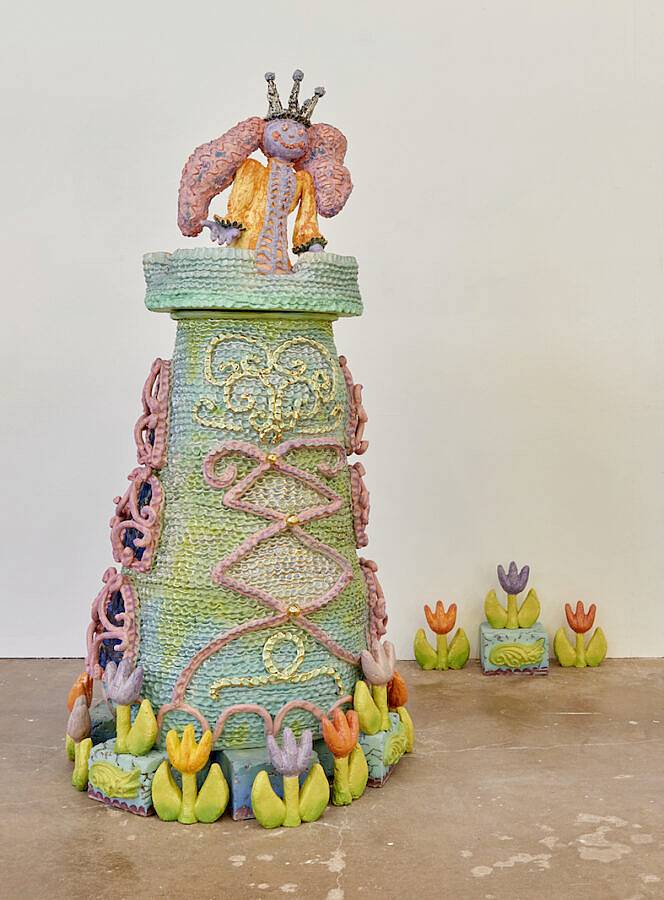
Girlhood, delusion, and heartbreak play essential roles in my work, often overlapping and feeding into one another. I’m interested in how fantasy is used as both protection and disguise, and how desire, especially learned desire, can become warped over time. These themes surface in these figures who feel emotionally charged, yet difficult to pin down through exaggerated forms and intense color.
I’m drawn to states of excess, where things become too much and begin to rot under their own weight. The threshold between pleasure and discomfort is the place I feel most connected to in my work, though it is a journey to get there.
Who do you think is making important work right now?
Many people are making important work right now. However when asked the question, Ruby Neri comes to mind. particularly in the context of ceramics. As an artist raised in and living in California, she has an inherent reference to funk ceramics, a movement taking place primarily in the 1960s and 70s. Ruby Neri brings a modern, more femme approach to this style.
How has your work evolved over time?
My work has shifted from a desire to rigidly control outcomes toward a more fluid and trusting relationship with my hands. A shift happened in my practice where I moved from smaller works which felt more like explorations to creating larger pieces. Losing structure in the way I was thinking about what I’m making has allowed me to work in a more physically structural way in clay as I moved on to making larger gestural works. I think a lot of this comes from hand building, and specifically coil. It’s about the practice of not trying so hard to create something perfectly that exists only in one’s imagination. My hands sort of become a very human 3D printer. My mind computes images to my hands, thus translating them into an object being made in real time. Letting go of the outcome has allowed the work to speak more clearly for itself in its intentions. This is something I’ve been actively thinking about for a long time, and continue to feel growth in.
Your work encompasses a lot of figures. Can you speak on this? Who are they?
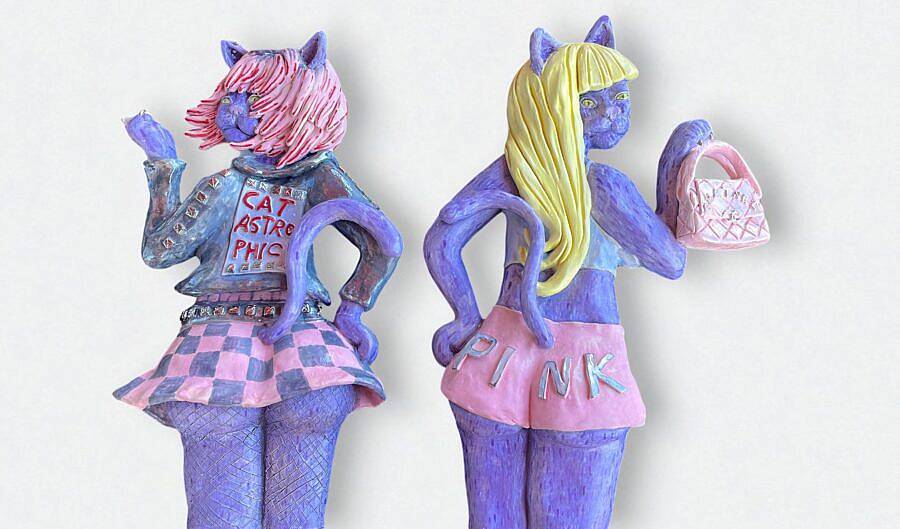
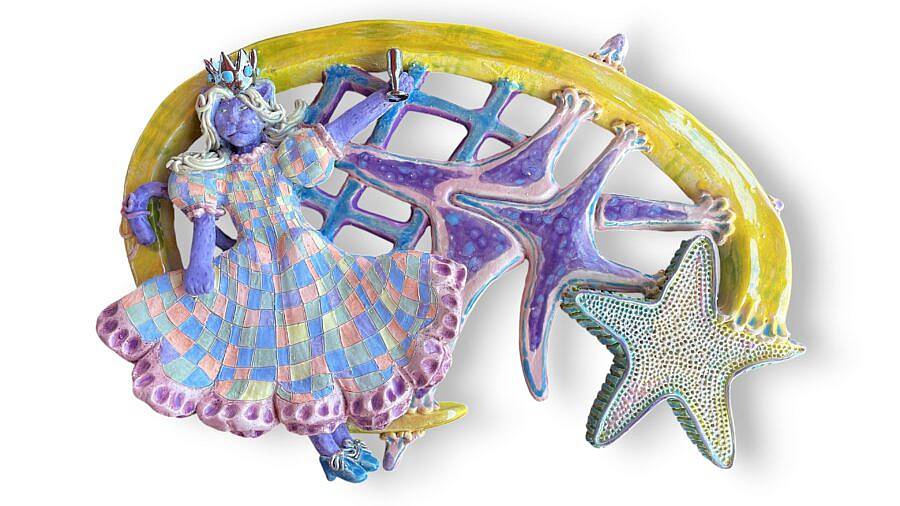
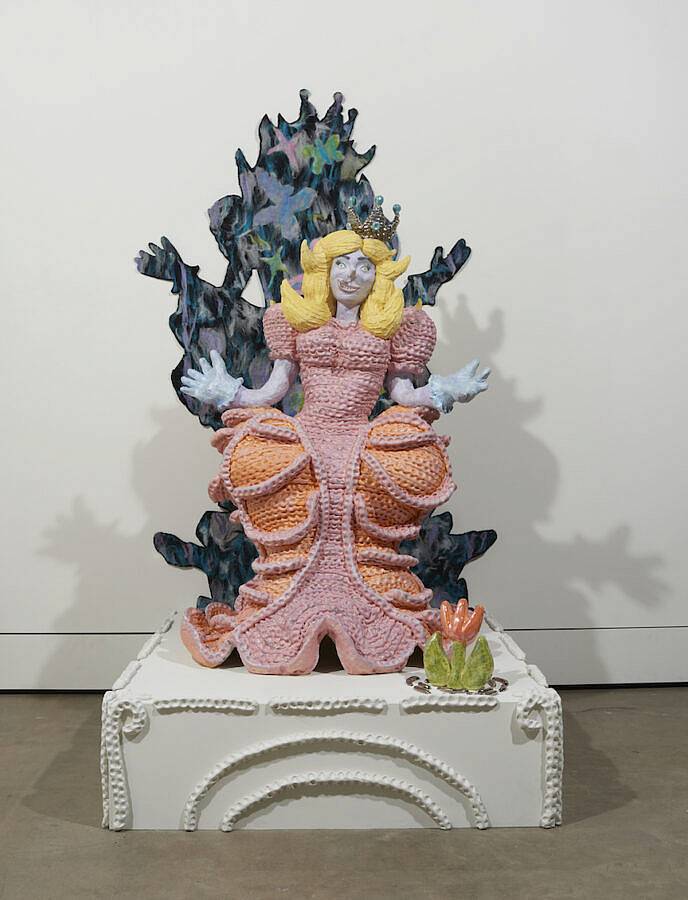
The figures in my work represent an archetype of girlhood shaped by external desire. Something learned early and reinforced repeatedly. They embody exaggerated versions of sassiness and vulnerability at the same time, perhaps as a precursor to their resilience. They exist in a space where performance and sincerity blur together. Through maximal color, texture, and surface, these figures push beauty toward excess, where it begins to feel unstable or deceivingly rotten.
In my early twenties, I began revisiting my own childhood artwork, which prompted me to reflect on how directly and unapologetically I once expressed emotion. Many of these figures are directly referential of those drawings along with the feelings and ideas behind them. Taking these characters which once existed only as quick crayon drawings and bringing them to life on a large scale through the slow process that is ceramics is what separates them from being made by myself and my five year old self.
Does your environment influence your work?
My work aims to synthesize my environment based in reality into its own. The world in which my work exists is one that uses bright, happy imagery to veil discomfort and dismay. This constructed world becomes a way of critiquing the structures of the real one.
In that sense, the work functions as escapism, but not as avoidance. It’s disconnected from reality in order to better expose it, exaggerating certain aspects until they become impossible to ignore.
What was the last show you saw that stuck out to you?
Painted Worlds: Color and Culture in Mesoamerican Art. It is a larger scale museum exhibition currently on view at the Nelson Atkins. It really left an impression on me because it is a reminder of the ancient material history in ceramics and the permanence of fired ceramic objects.
Something one always must consider when making something from clay is that it will be around long after you’re gone, so is it worth it to bring this object into the world?
The show spoke both on the culture and relevance surrounding these ceramic objects and on material innovations in ceramics they discovered 3,000 years ago that we still use today such as the use of terra sigillata and kaolinite.
This is something I think about in my own work. I immortalize, to a certain extent, the characters in my childhood drawings because the originals will not last forever as crayon on paper. My most recent quilts are of a completely different context.They are inherently referential to a practice which has been around since nearly 3000 BCE, only textile wares and withers away over time. They are an object made to be used, much like ceramics, especially throughout history. I believe this idea of functionality is where fine art was born from, which is why it is so important to reflect on, especially when working in materials which are so deeply rooted in both craft and art objects.
What is it that you think might initially draw you towards a work of art?
Upon immediate observation I am drawn to color and material above all else. Color goes so far beyond its surface aesthetic value and really defines the mood of a piece. I am also very interested in material. I think when an artist chooses to use a material it contextualizes the work in a whole different way. For example Liza Lou’s kitchen. The work forces you to get up close to learn that it is entirely made from beads and then your jaw drops thinking about the amount of time and patience that is embedded into the work. Material is both the why and the how. It can be a mystery which is sometimes difficult to solve, adding to the conceptual value of a piece. I believe these tools help us to connect with works of art simultaneously quickly and deeply.
Do you have any rituals when entering the studio?
When I leave the studio, I usually don’t have the mental energy to clean unless absolutely necessary. I do the bare minimum to preserve the work, covering things that need moisture, and then I leave.
The next day I’m in the studio I clean the mess I left myself so I can begin in a space that feels neutral and wiped clean of yesterday’s chaos. After that, I spend a long time taking in the work.
Sometimes too long, staring until I feel disconnected from it, before finally snapping myself out of it and getting to work.
Interview conducted and edited by Liam Owings